Redefining Spirituality, One Church for All by Andreea Nica

Andreea Nica, pentecostalismAs a former lover of Christ and ex-Pentecostalist, I had countless visions and dreams that one day I would be a spiritual leader. While growing up in the charismatic church, it was even prophesied that one day I would become one.

Nearly ten years after leaving the church, I carried a distrust in religion’s relationship with women and its barrier to free thought. My work as a freelance journalist led me to discover a spiritual women’s retreat held in North Bend, Washington. Inspired to experience a non-religious, spiritual gathering, I registered for the retreat held by Center for Spiritual Living (CSL) in Seattle.

CSL is described as a:

“Trans-denominational, inter-generational, not-your-usual church, that was started in 1921. A safe place for ‘the rest of us’ who are looking to connect with God/Higher Power/Universal Presence, but don’t really fit in with any one religion.”

The spiritual center’s core teaching philosophy derives from “Science of Mind” or Religious Science, a New Thought spiritual, philosophical, and metaphysical movement founded by practical mystic Ernest Holmes. The spiritual principles rely on the laws of physical science in establishing its core beliefs. Continue reading “Redefining Spirituality, One Church for All by Andreea Nica”

Identity as an enemy of Feminism by Oxana Poberejnaia

oxanaRita M Gross is her “Buddhism after Patriarchy” says that Buddhism is Feminism. I think I understand what she means.


The goal of Buddhist practice, Enlightenment, is often called Liberation. Liberation can be seen as the goal of Feminism too. In different schools of Buddhism is interpreted differently, but one of the classic explanation is that it is freedom from or absence of anger, lust and ignorance. Enlightenment is also described as a state of ego-lessness.


Rita M. Gross justifiably clarifies the Buddhist understanding of “ego” and “ego-lessness”, which is different from conventional Western notion of ego as “strength” or “scale” of personality. Rita M Gross points out that sometimes feminists say that women need larger egos, not smaller or no egos.

Continue reading “Identity as an enemy of Feminism by Oxana Poberejnaia”

Happy International Women’s Day, Men and Women of the World by Oxana Poberejnaia

oxanaI am writing this on International Women’s Day. I know from living in three different countries what different faces this day can have. And I can see how these different perceptions are informed by each country’s history and political situation. This is a Buddhist principle of dependent co-arising: nothing exists in separation from anything else, all phenomena arise in dependence on everything else.

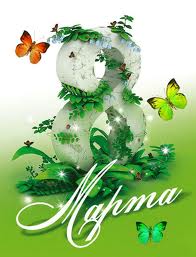
8 Marta - 8 March Russian card
8 Marta – 8 March Russian card

For instance, the Soviet 8th March was a public holiday and culturally it was a day to celebrate femininity, and – separately but connected – awakening of nature in spring. In the US, International Women’s Day was next to non-existing when I lived there in mid-1990s, apart from for hardcore Communists and Socialists, who celebrated it as a milestone on the road to Socialist equality. In the UK nowadays, International Women’s Day takes on a shape of a women-only day, a statement of women’s independence and very often celebration of same-sex love between women.

Continue reading “Happy International Women’s Day, Men and Women of the World by Oxana Poberejnaia”

Sex, Religion, and Discourse: An Interview with Judith Butler

One of my academic joys is interviewing people I find particularly interesting (see most of my posts here). This time I am honored to present a recent interview I did with Judith Butler.

Image from The European Graduate School

Many wonder how gender performance relates to chromosomes, phenotypes, genitalia, and other scientific “evidence” for innate sexual differences. Continue reading “Sex, Religion, and Discourse: An Interview with Judith Butler”

Heart of the Matter by Oxana Poberejnaia

oxanaMy friend whom I teach frame drumming teaches us shamanic journeying. There was an episode in one of my journeys, when, unable to see the way forward, I put the palm of my hand on the ground and went down a hole I was creating to the core of the earth. Since then, this scene came into my mind several times when I was talking to friends about inner truth. Also, the posture itself bears uncanny resemblance to the iconic Buddha posture of touching earth with his right hand.

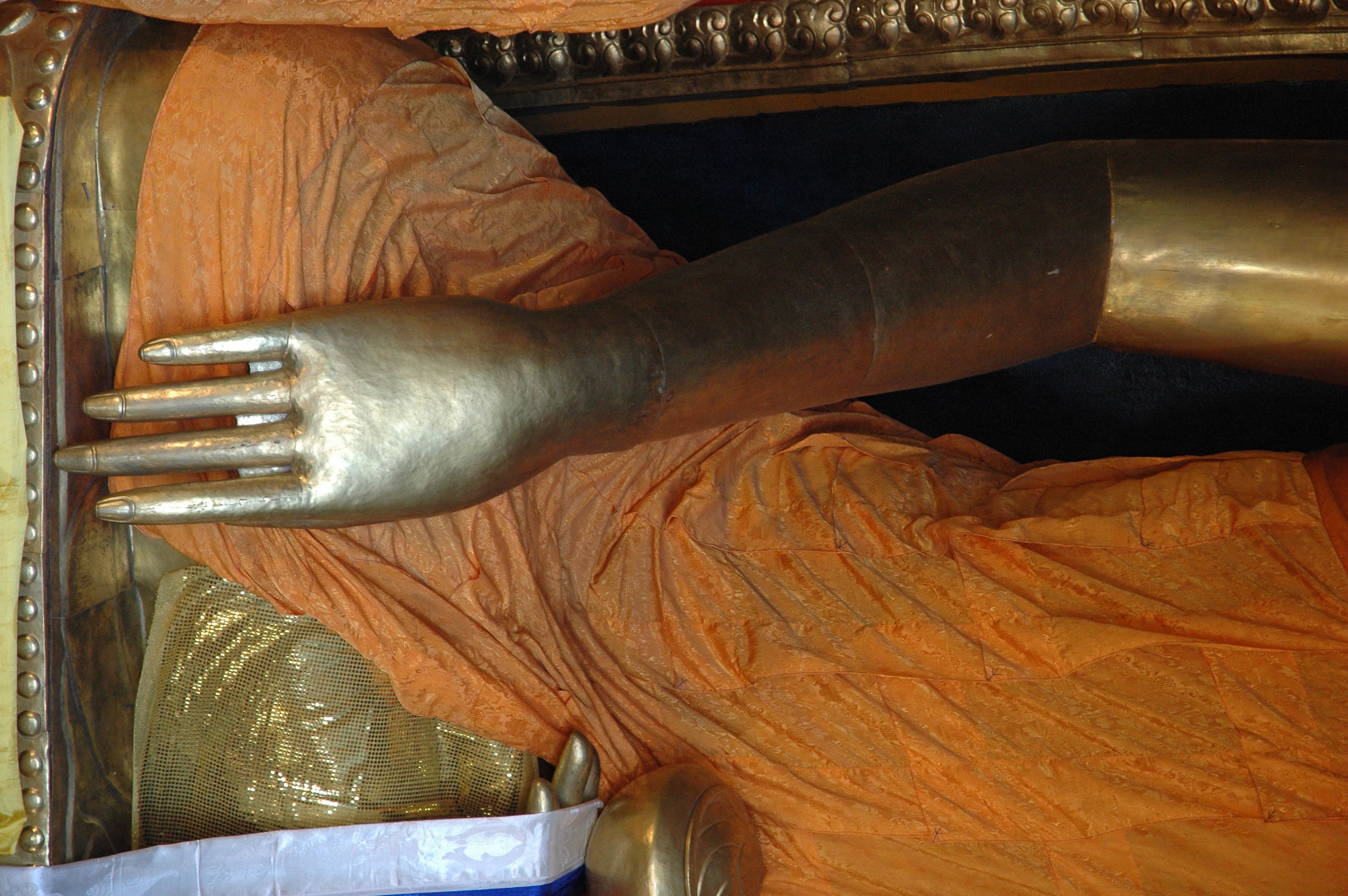
Touch the Earth Mudra

According to a Buddhist legend, on the night of Enlightenment Prince Siddhartha encountered Mara, the Lord of Death, who threw various hindrances the Buddha’s way to prevent him from attaining Supreme Enlightenment.  The final challenge was Mara’s claim that the Buddha had no right to be in the seat of Enlightenment. The Buddha then touched the earth with his right hand to call Her as a witness of his past spiritual achievements and his right to gain Enlightenment.

Continue reading “Heart of the Matter by Oxana Poberejnaia”

Women’s Ritual Dances and My Journey to Healing by Laura Shannon

Laura ShannonSince 1985, I have been researching Balkan folk dances and teaching them in women’s circles all over the world. Common symbols in dance patterns, textile motifs and archaeological artifacts from southeastern Europe have remained the same from ancient times to the present, which leads me to suggest that the dances may be descended from ritual practices dating back to Neolithic times. In my view, these patterns serve as a symbolic language, expressing reverence for the cycle of life. Emphasizing connectedness and continuity, homecoming and support, women’s ritual dances can rekindle ancient values of sustainability, empathy and equality, and provide an antidote to the alienation of self which is epidemic in the western world. In nearly thirty years of teaching, I have found that women all over the world respond to these dances as valuable tools for healing and self-discovery. Continue reading “Women’s Ritual Dances and My Journey to Healing by Laura Shannon”

Yes, You’re a Homophobe by John Erickson

Jesus loved sinners and Jesus would rather be dancing with me in West Hollywood on a Friday night than lugging through a swamp luring ducks into a trap with a duck caller made by a clan who think that my sexual actions are similar to that of an individual having sex with an animal.

John Erickson, sports, coming out.

To be able to walk down the street holding the hand of the one you love is a great feeling and an action that some of us aren’t able to perform without fear.

A line has been drawn in the sand between those who support gay rights and those who do not.  While some call it being on the “right side of history,” I simply now refer to it as not sounding and looking like a bigot in the halls of history and in the various books, Facebook posts, and Tweets that our children will one day read. Continue reading “Yes, You’re a Homophobe by John Erickson”

What Does Jesus Have to Do with Whiteness? by Kelly Brown Douglas

Rev.-Dr.-Kelly-Brown-DouglasIt matters that he consistently affirmed, empowered, and befriended those who were the outcast, marginalized, oppressed, and rejected of his day—such as Samaritans and women.

A firestorm has been set off recently concerning the self-assured observations by Fox News anchor Megyn Kelly that Santa Claus is white and so too is Jesus. These comments, which were in defiant response to a Slate article “Santa Claus Should Not Be A White Man Any More,” by Alisha Harris, have been spoofed by late night talk shows and satirized across social media. Scholars and others have also weighed in on the matter. All have pointed out that Santa is not real and that Jesus was not white.  The fact of the matter is that Jesus was a Jew born in ancient Israel and St. Nikolaos upon which the make-believe Santa character was based was from ancient Myra. The fact of the matter is that neither Jesus or St. Nikoloas were white; indeed both were likely to have had swarthy complexions. While it is easy to laugh at Kelly’s comments or to simply dismiss them as curiously misguided and ill-informed, they point to something even more significant that is worthy of  discussion —the meaning of whiteness and its theological implications.  And so, I offer some random thoughts for further reflection. Continue reading “What Does Jesus Have to Do with Whiteness? by Kelly Brown Douglas”

How I Loved Myself through Charismatic Worship by Andreea Nica

Andreea Nica, pentecostalismBreaking up with your first love can be an excruciating process; especially when it happens to be completely entangled with your being. God was my first love and he stayed for a long while. We had many exhilarating times together, particularly within the branch of Christianity I was raised in: Pentecostalism. I fell in love with God when I uttered his divine language at 13 years of age.

Currently, I’m writing my memoir and narrative nonfiction, Freeligious ™, for which I explore the scientific explanations of my charismatic experiences in the church, which inevitably led to a closer attachment to God. In the Pentecostal church, we were encouraged to connect with God through supernatural phenomena.

Examples include: speaking in tongues (glossolalia), healings, trances (drunk in the holy spirit), visions (hallucinations), prophetic messages (delusions), rebuking evil spirits (paranoia), and many more god-friendly activities. While some of my church peers and most outsiders found the charismatic ordeal to be phantasmical and plain ol’ crazy, I became enchanted by the initiation. The initiation process was quite simple really. As believers in Christ, we must receive the baptism of the holy spirit which usually took the form of speaking in tongues, clinically known as glossolalia. Continue reading “How I Loved Myself through Charismatic Worship by Andreea Nica”

Can Secular Immigrant Assimilation Promote Equality? Pt. 2

Andreea Nica, pentecostalismI often wonder how my life would have been different if I had undergone a secular immigrant assimilation process. My former faith within Pentecostalism not only shaped my identity, but augmented my ability to assimilate into the American culture. Subsequently, this led me to explore how nonreligious narratives help immigrants better acculturate to western society. Despite my interests originating in personal exploration, emergent studies within religion and sociology show that there are many factors that come into play when considering social and cultural assimilation.

Following up on my most recent post, Liberations of Immigrant Women in Western Religious Conversion, I will draw on a comparative analysis to consider secular immigrant assimilation processes. Women’s experiences during their migration process contribute to their cultural and social identity formation. Many studies point to the established idea that religion is a key variable in influencing immigrant assimilation, particularly among the Latino community. “Faith plays an important role in their lives: 74 percent of Latinos say religion provides a ‘great deal’ or ‘quite a bit’ of guidance for them” (Philanthropy Roundtable). Continue reading “Can Secular Immigrant Assimilation Promote Equality? Pt. 2”