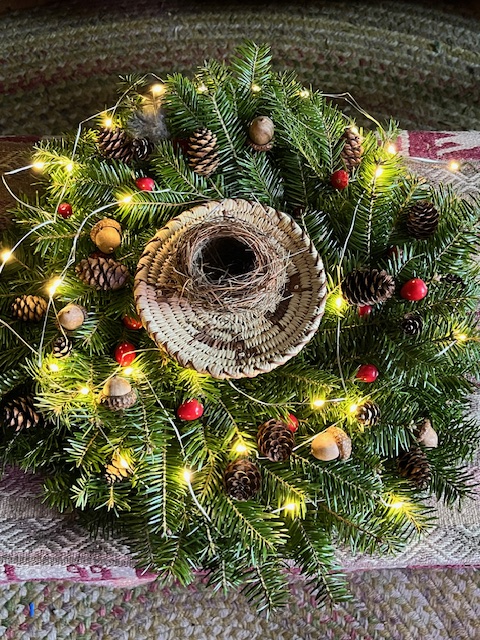
I forgot the
‘Original Instructions’
until She nudged me
Black Bear
Chloe
Green Shoot
alive or dead
She lives on
like the Evergreens
she evolved
with, climbed
to safety
from those
who would harm.

Exploring the F-word in religion at the intersection of scholarship, activism, and community.

I forgot the
‘Original Instructions’
until She nudged me
Black Bear
Chloe
Green Shoot
alive or dead
She lives on
like the Evergreens
she evolved
with, climbed
to safety
from those
who would harm.
Part 1 was posted December 7th. You can read it here.
Commentary:
I love this story because it demonstrates the evolutionary and eternal nature of Woman; her intimate relationship to Nature, her ability to give birth, to mother, to let go, her ability to endure, her need for animals and plants as companions and her willingness to stand her ground until she is able to get what she needs. Changing Woman matures from a passive figure who is acted upon by the forces of Nature into a self-directed female power who knows what she wants, and one who finds peace in choosing relationships with animals, plants and humans on her own terms.
Initially, Changing Woman is impregnated by the wind – the power of the spirit moving across the land – and not through sexual intercourse. Spirit and the Body of the Earth are the two equally creative aspects involved in her birth. The same holds true for her children, who are male, but conceived and birthed in a similar manner without the need for male insemination (no room for Patriarchy to enter here), suggesting to me that all three are parts of one spiritual/bodily whole that cannot be separated. As creative principles (beyond gender stereotypes) they work together as a triad to rid the world of monsters, to make the Navajo world a safe place, and to secure the matrilineal line. According to Navajo mythology securing the matrilineal line is primarily how Changing Woman saves the world.
Continue reading “The Story of Changing Woman, part 2 by Sara Wright”Moderator’s comment: Sara wrote this in April, 2019. It has even more resonance today.
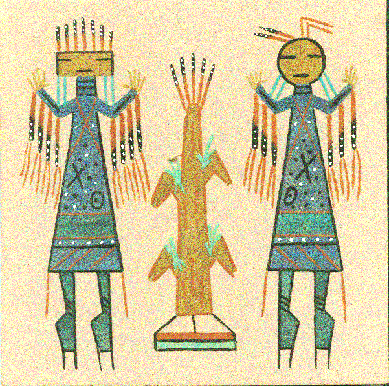
I want to begin by recounting the story of how Changing Woman came to be and why she was so important to Navajo mythology. In these dark and tumultuous times I think Changing Woman’s story has a deep resonance for all of humanity. We seem to have forgotten who we are and are in desperate need of guidance that will help shift our current paradigm.
The Navajo word Diné means the People (every Indigenous group defines its inhabitants by using the same word in their own language).
Continue reading “The Story of Changing Woman, part 1 by Sara Wright”When I offered to write the FAR post for Thanksgiving a month ago, I had no idea how difficult I would find that task to be. I suppose I had a different vision of what these days would be like. I had no idea how heartsick and wordless I would become in the wake of a second and even more bizarre and dangerous Trump presidency. It hardly feels like a time for celebrating a national holiday.
Thanksgiving in the United States and the colonies before has gone through several iterations – from the mythologized feast of the Puritan colonists in Plymouth, Massachusetts with the indigenous Wampanoag following the successful corn harvest – corn the Wampanoag had taught the Puritans how to plant after half of them had starved to death the previous winter; to George Washington’s Thanksgiving proclamation giving thanks for the successful ratification of the US Constitution; to Abraham Lincoln in 1863 acceding to Sarah Josepha Hale’s 36-year quest to establish Thanksgiving as a national holiday — “to heal the wounds of the nation.” Goddess knows we could use that now, but it seems farther out of reach than ever.
Lesser known is the proclamation of a day of thanksgiving by the Massachusetts Bay Company to celebrate their defeat of the Pequot nation following the Pequot Wars of 1636-1638 in which most of the Pequot peoples were killed or enslaved, giving rise to many indigenous peoples observing Thanksgiving as a National Day of Mourning.
Continue reading “Thanksgiving by Beth Bartlett”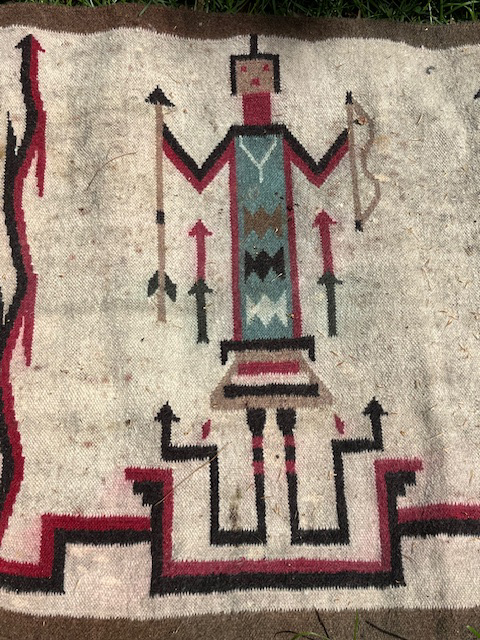
Every year at the end of August I celebrate the Wild Harvest by gathering elderberries to make a medicinal tincture that I use all year long and share with close friends.
This gathering is a process that begins in the spring as I search for new bushes and then later blossoming elderberry flowers in old and new places. As the summer progresses, I continue to monitor the bushes searching for those with berries. Beginning in early August I am on alert for ripening. I am especially mindful because our weather is changing rapidly. If the trend of bad air, fog, and too many deluges continues unabated it’s probable that the times for harvesting berries may shift. In addition, many of the wild places that once supported elderberry bushes have been manicured to get rid of the wild plants by mowing them down, bulldozing the soil to remove all greenery, etc. The rape of wild nature has escalated with time.
This year I have been especially fortunate because I found new clusters bursting out in places they weren’t before. I think the Elder – Berry Woman is helping me. Destroying these precious wild plants and their habitat means that a once common ancient Native plant remedy may be disappearing. Despite horticultural advertising our elderberry bushes do not do well in cultivation, if they survive at all.
Continue reading “Elderberrying with the Yei by Sara Wright”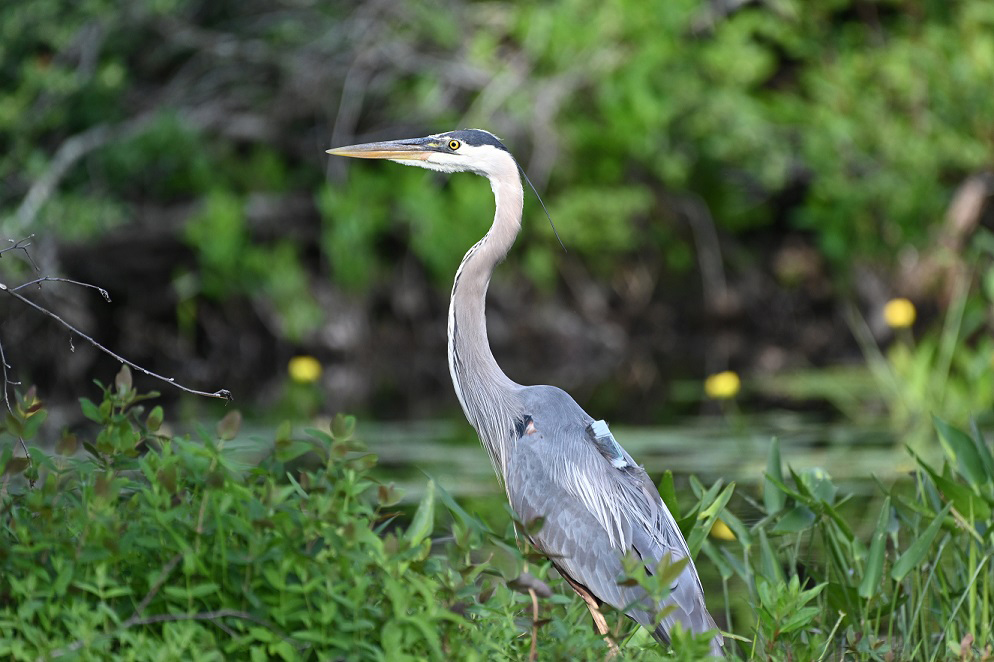
I went into the dark woods today to look for mushrooms. Mycelial threads made visible. Golden chanterelles, lactarias, russulas, waxy caps, corals, spindly fingers burst out of rich moist earth. Not a ghost pipe in sight.
The fungi know who they are and who they are attached to. I feel like a stranger in this land where everyone is related. I feel those connections but cannot name them. This network so mysterious as to be incomprehensible, a living being that stretches across the earth. What branch of fungi evolved here?
Continue reading “Whose Land Am I Living On? by Sara Wright”“Rematriation centers Indigenous Women’s leadership for the restoration and regeneration of land and water. By revitalizing Indigenous knowledge, honoring traditions and renewing annual cycles of life, rematriation directly addresses harms caused by patriarchal extraction and violence.”
Bioneers
Bioneers, is a FREE online publication that has been around since 1990. in addition to its weekly programs this organization is now introducing the ‘Leading from the Feminine’ newsletter whose intent is to bridge divides and to celebrate connection invoking the feminine as leaders. This newsletter exists to bridge divides and celebrate connections within the rich tapestry of visionary women and men who are evoking/ invoking the feminine to lead with courage, vulnerability, intuition and empathy.
Continue reading “What is Rematriation? by Sara Wright”In Part 1 of this series on labelling, I highlighted the difference between naming and labelling, and the search for a personal label as ‘participation ticket’ for life.
In Part 2 on professional and spiritual identity, I looked at what we can learn from the autoethnographic practice of disclosing various selves in research situations. I also discussed the effects of Christianity on the suppression of pagan traditions in northwestern Europe, and nature-based spirituality as part of our generic spiritual DNA.
Today I share a few final reflections including what groups celebrate their differences with ‘prides and games’, and which ones remain invisible? What are the effects of woke ideology on fear of expression and loss of voices, and an invitation for embodied presence as one characteristic of our shared humanity.
Continue reading “Label or Be Labelled Part 3: Toward Embodied Presence”This post continues from Part 1, where I situated this essay as a reflection on Xochitl Alvizo’s article Human, Just Human. There, I questioned the difference between the power of naming versus the pressure to label. I then described my search for a personal identifier as ‘participation ticket’ to life. This feels important nowadays to join the conversation and not be dismissed by default. However, I wondered whether looking for things that set us apart emphasises otherness rather than shared humanity.

Today, I question what can we learn from autoethnography about the many selves we bring to different professional situations and how they might hide more than they reveal. I also describe the challenges of naming nature-based practices in a geographical area where 2000 years of Christianity forced our pagan traditions underground.
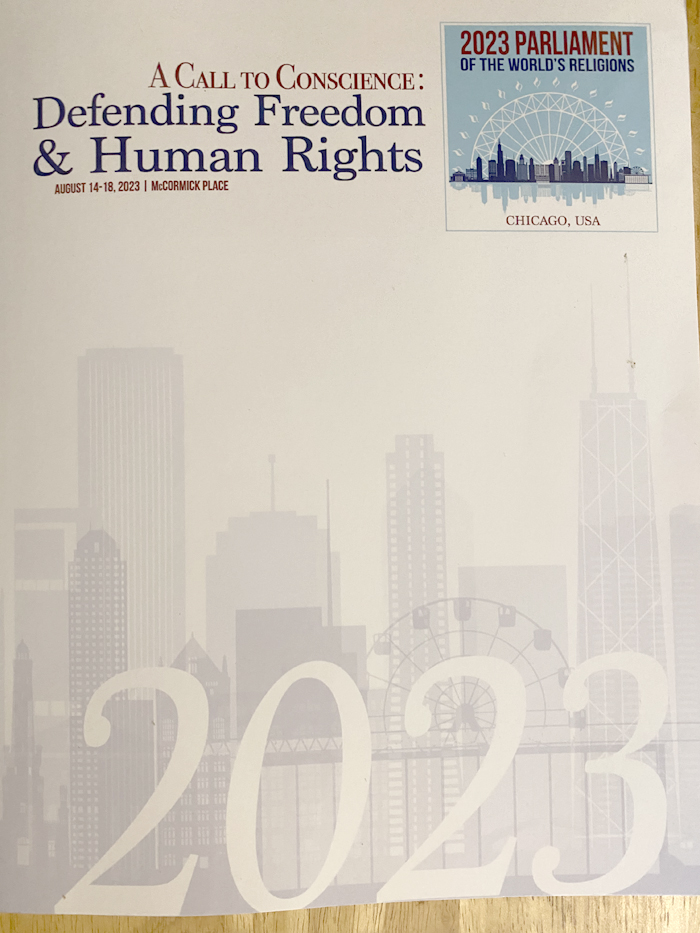
The Parliament of World Religions ran from Aug 14th to the 18th in Chicago. I returned with my head spinning having met new people, connected with inspiring beliefs, discussed fascinating ideas, watched meaningful performances, engaged in sacred play, danced, sang, cried, ate, and mostly experienced . . . just experienced. It is still overwhelming to sort out individual experiences. I am going to write up a few of my impressions, snapshot style. They scratch the surface, not only of my individual experience but of the Parliament in general where upwards of 7,000 people attended. It was incredible
Setting the tableau: As I was going down the escalator, a woman was followed by 2 groups were heading up. The woman was beautiful and young in full Mayan dress with white blouse, long orange skirt along with headdress and belt with Mayan symbols. Her thick dark hair was flowing down her back.
She was followed by five Sikh men who were dressed head to foot in white. Their heads and hair were covered by white turbans.
They were followed by two Buddhist nuns dressed in grey robes carrying beads. Their heads were shaved.
Such scenes were common.
Continue reading “Snapshots from the Parliament of World Religions by Janet Maika’i Rudolph” Feminism and Religion