Preparing for the New Year by Rev. Mary Gelfand and Rev. Mark Gallup

Happy New Year!

Solstice Sunrise
by Joie Granbois, used with permission

In the northern hemisphere, we recently celebrated Winter Solstice – the time of year when the days begin to grow longer and the nights shorter as the Earth begins another orbit of the Sun.  In some cultures, the beginning of a  new year is determined by the Earth’s orbit around the Sun.  Other cultures, such as Hebrew or Chinese, track the beginning of a new year through the lunar cycles.  In most of Western culture, the day we name as the beginning of a new year is not determined by the cycles of Sun or the Moon but instead by a seemingly arbitrary calendar devised by a Roman emperor and modified by a Renaissance pope.  Go figure.

Nonetheless, the turning of the New Year is a powerful time.  It is a good time to slow down, listen to our hearts, be in community, pray and create intentions for the coming seasons of our lives.  What do we need to forgive?  For what are we grateful?  What do we desire to bless for the coming year?

Last year we created a New Year’s worship service for our Unitarian Universalist church here in New England.  This simple service and ritual invites participants to spend a little time spiritually preparing for the coming new year.  If you wish to engage with this simple ritual from home you will need a small totem to interact with.  This could be a stone or a shell—a feather or a tree branch—a flower or a piece of jewelry.  You might also wish to light a candle.  Take a deep breath as we begin with Forgiveness.

Continue reading “Preparing for the New Year by Rev. Mary Gelfand and Rev. Mark Gallup”
Winter Lessons, by Molly M. Remer

Yes, it is December
already and again.
Let yourself notice the milkweed pods,
how they have split their sides
and are sending silky white seed fluffs
into the waiting air.
Witness the trees,
bare and gray and patient.

Yes, it is December
already and again.
Let yourself notice the milkweed pods,
how they have split their sides
and are sending silky white seed fluffs
into the waiting air.
Witness the trees,
bare and gray and patient.
Watch the squirrels,
tails puffed against the chill,
stored nuts in their cheeks.
Listen to the wind
how it whispers and rattles
through the empty branches.
Watch the clouds,
slow-moving white billows
in a pale blue sky.
Be patient with yourself.
Grant yourself grace.
Remember the three invitations
of the solstice season:
to listen,
to wonder,
to be content.
Remember your promise
to keep company with joy.
Remember your vow
to be in devotion
to your own life.
Think about everything
there is to do.
Open your hands.
Feel that thin, whispering
winter wind
skim over your palms.
Take a deep breath.
Allow yourself to marvel
at all this year
has held.
Bless it.
Thank it.
Cup your hands
around your own face.
Say: thank you.
Here you are in the center
of your own life’s unfolding.
There is nowhere else to be.
Be gentle with yourself.
Invite the winter crone to tea.
Look into her eyes.
See yourself reflected there,
your own winter eyes open
to the possibility
of both clarity and delight.

I have been writing for Feminism and Religion for 13 years. In the summer, I compiled a post with 13 summer lessons from 13 years of posts here at FAR. I decided to bookend that post with a Winter Lessons post as well. Here are thirteen lessons to share from past winter posts:

Continue reading “Winter Lessons, by Molly M. Remer”

TOXIC POSITIVITY by Esther Nelson

Psychotherapist Whitney Goodman popularized the phrase “toxic positivity” on Instagram—the ideas of which she eventually gathered into a book with that same title (Penguin Random House LLC, 2022).  The term itself may be fairly new, however, being and staying positive “no matter what” goes way back.

Psychological exploration of the “concept of unrealistic optimism” goes back to at least 1980.  [The] “term toxic positivity first appeared in J. Halberstam’s 2011 The Queer Art of Failure, a work that poked ‘holes in the toxic positivity of contemporary life.’” (Wikipedia) 

Many of us remember Stuart Smalley on the TV show “Saturday Night Live” looking at himself in the mirror while giving himself positive, yet cringe-worthy, affirmations.

My yoga classes are full of vapid affirmations and arrogant advice.  “You are a beautiful person—inside and out.” “You are kind.” “You are caring.” “You love fiercely.”  “You can do ANYTHING you set your mind to.” Really?! Sappy shibboleths and saccharine-laced sayings don’t reach me, other than to make me uncomfortable and squirmy.

Continue reading “TOXIC POSITIVITY by Esther Nelson”

Navigating Arousal and Desire: What do you fantasise about?

Sexuality is a complex topic that blends the personal with the collective and the mundane with the sacred. We often engage with it privately, yet it is intertwined with broader cultural values and beliefs. This makes navigating sexual fantasies a delicate balance of desire, respect and consent.

In today’s world, especially with movements like #MeToo gaining traction, there’s a heightened awareness around the importance of boundaries—both physical and psychological—in the realm of sex and fantasy.

This post explores how we can engage with sexual energy in ways that respects both our own and other’s integrity, that don’t “steal” from others, nor diminish ourselves.

It starts with the power of consent in fantasies, discusses 4 steps to navigate desire without acting on it, and introduces the possibility of archetypal fantasies.

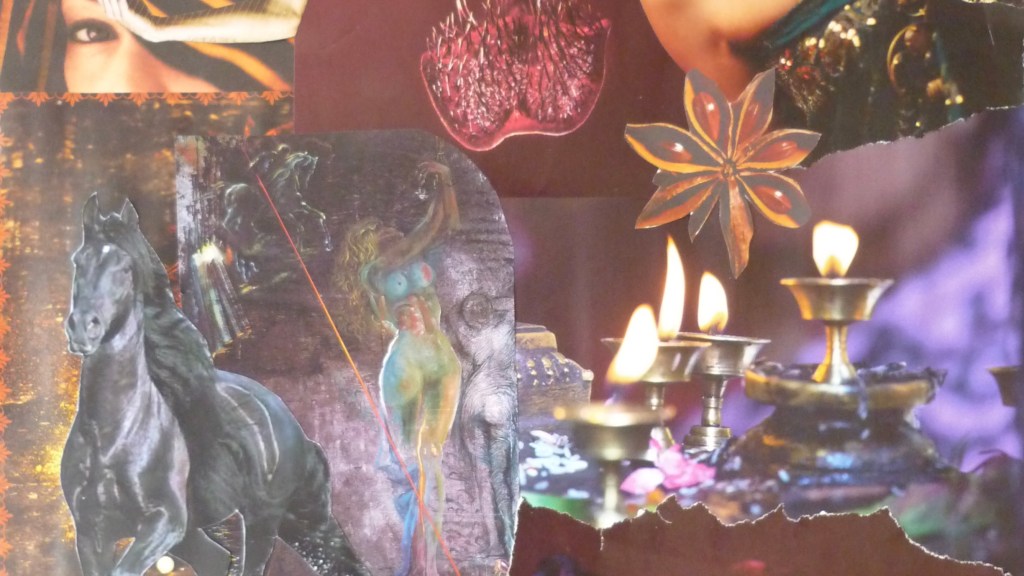
Detail of Passion. Collage by Eline Kieft (2.9.12)
Continue reading “Navigating Arousal and Desire: What do you fantasise about?”

Walking the Chartres Labyrinth

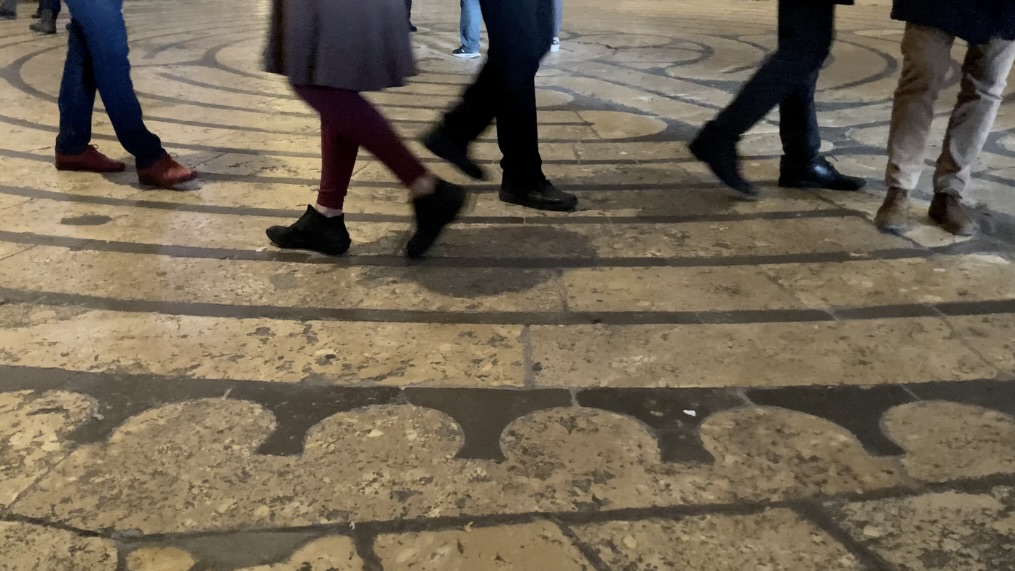
The Chartres Cathedral, located southwest of Paris, is rich in symbolism and history. Featuring stunning stain-glass windows, a famous labyrinth, and a shrine to “Our Lady of the Pillar”, it offers a profound meditation experience. Exploring the labyrinth’s symbolism and personal reflections amidst everyday distractions, the author shares a transformative journey.

Let me take you on a pilgrimage to Chartres Cathedral, share about the ancient symbolism of the labyrinth, and ponder on how to interpret signs and symbols we receive along the way…

Continue reading “Walking the Chartres Labyrinth”

3 Taoist Secrets for Embodying your Life

Taoism is an ancient Chinese philosophy and spiritual tradition that offers a unique perspective on life, existence, and human experience. Where many religious practices aim to transcend and sometimes even punish the body, Taoism cultivates a deep connection with our physical self in ongoing relationship with nature around us. 

This resonates with my own experience, in which I see the body as starting point and place of return for everything we do in life. Leaving the body in order to meet spirit or the divine has never made any sense to me. 

In this article I’ll highlight a few elements of Taoism as an embodied philosophy, specifically zooming in on principles and practices that promote holistic wellbeing and inner peace.

Continue reading “3 Taoist Secrets for Embodying your Life”

Paradigm Shifts: Playing the long game

You’re probably tired of hearing it… We live in a time of major change. But hardly anyone acknowledges that change doesn’t happen overnight. 

In anthropology and ritual studies, the state of change between the old and the new, is called liminal or threshold space. It is the in-between time. I believe we are living in such a time now. Our familiar frames of reference are crumbling, yet there are no clear new ones in place yet. 

In this post I reflect on a few aspects of this long-dance with the unknown.

Continue reading “Paradigm Shifts: Playing the long game”

Activate your Body to Navigate Overwhelm

We live in a time of radical change, in a steam cooker of accelerated alchemy. No wonder most of us struggle with chronic overwhelm.

Beliefs, habits, thought patterns and organisational structures don’t change overnight, and we need ways to boost our resilience in the long arc of paradigm shifts. How can we look after ourselves during this personal and collective dance of change?

In this post I reflect on the connection between movement and health, breathing, and the role of our nervous system. I propose 5 simple steps to minimise and transform overwhelm when it happens.

Continue reading “Activate your Body to Navigate Overwhelm”

My Experience at the Parliament of the World’s Religions: Build the Bubble by Caryn MacGrandle

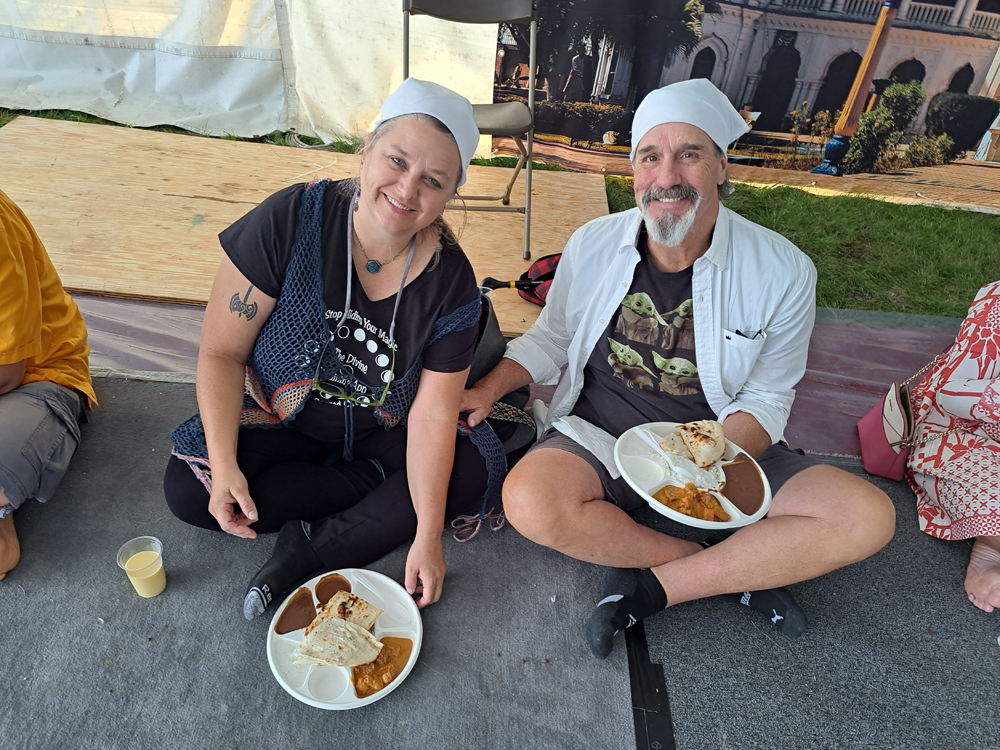
Mid August I went to the Parliament of World’s Religions.  It was one of the most amazing experiences of my life:  7,500 people from all over the world coming together in love.  Christians, Pagans, Sikhs, Jains, Hindus.  All different religions and cultures.  All with the same intention to find common ground and peace between us while respecting our individual rights, religions, preferences, etc.

Langar lunch

The Sikhs fed us with their Guru Ka Langar lunch.  ‘Langar’ started about 550 years ago with a simple, but gigantic act by Guru Nanak the founder of the Sikh faith.  He was given funds to start his business.  Instead, he bought food and served the hungry.  This tradition is carried on by Gurdwaras all around the world to this day.

Continue reading “My Experience at the Parliament of the World’s Religions: Build the Bubble by Caryn MacGrandle”

Finding Happiness Through Nature and Creativity by Judith Shaw

We live in difficult times. Daily we hear of culture wars, real wars, mass shootings, floods, fires and multiple other climate disasters and human clashes. 

How on Earth can one maintain a positive outlook and experience genuine happiness? I’ve discovered a few activities that effectively pull me out of dwelling on past challenges or worrying about future uncertainties. These activities consistently guide me back to a state of inner peace and contentment.

Continue reading “Finding Happiness Through Nature and Creativity by Judith Shaw”