Lessons From Birch & Mother Earth—Grace, Resilience, and Rebirth by Mary Gelfand

When I moved to Maine from New Orleans 15 years ago, I was delighted to discover how many birch trees were on the property where I lived with my new partner.  Previously I had had little contact with these beautiful white trees, other than in pictures and stories.  The name always evoked images of birch bark canoes and messages to fate scrawled with bits of burnt wood.
Face to face, birch trees were as marvelous as I had imagined.  I loved their shape against the blue sky, their beautiful white bark, the graceful way they swayed in the wind, the delicate tracery of their branches in mid-winter.  Once I even saw a pair of mating dragon flies clinging to a branch, using their delicate wings to maintain harmony with the movement of the gentle breeze. Continue reading “Lessons From Birch & Mother Earth—Grace, Resilience, and Rebirth by Mary Gelfand”

Back to Back by Sara Wright

The Predator
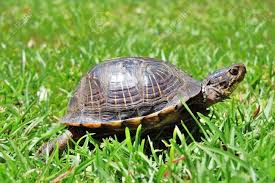
dug a hole
in turtle’s wake
scooped and
sucked down
pulsing life
one dark night.
An empty pit
and shriveled eggs
mark the theft .
Her children are dead.

Vulnerability
and violence
are bedmates
She bears
thirteen squares –
Round House
hovers above her.
Natures Protection.
But how can she
puncture the balloon of
his lies
with her body
to feel the strength
of the shield
she owns?


Sara
 is a naturalist, ethologist ( a person who studies animals in their natural habitats) (former) Jungian Pattern Analyst, and a writer. She publishes her work regularly in a number of different venues and is presently living in Maine.

 Letting Go by Sara Wright

Every year I bring back wood frogs, peepers or toads to this property to increase my amphibian population… this year with a drought underway the peepers captured my heart because a bizarre heat wave hit Maine just after the coldest freeze I ever remember. The poor peepers froze and then steamed and fried under a relentless solstice sun, their vernal pools rapidly disappearing from under them.
Intervening, I scooped up about a thousand and took them to the pond, brought some here to the shaded vernal pool that I dug here many years ago. Amphibians are the most endangered species on earth and I liked the idea of providing a temporary home for some. Continue reading ” Letting Go by Sara Wright”

Midsummer Meditation by Sara Wright

It is past “midsummer” and we are moving into the hottest time of the year without a drop of nourishing, healing rain… When I walk around outdoors I find myself focusing on the many different ferns that grace the forest edges – ferns that hold in precious moisture creating damp places for toads and frogs to hide, places for young trees to sprout, places for the grouse and turkey to hide their nestlings, ferns whose lacy fronds bow low as if in in prayer. Sweet fern covers the hill above and around the brook.

The Ostrich ferns are giant bouquets that sprout up around Trillium rock shielding tender wildflower roots. Maidenhair is being devoured by insects, sadly, the only fern having difficulty here. New York ferns are stiff with ladder like fronds and the few cultivars provide soft shades of dark red, blue and green.  Along my woodland paths the tall pale green bracken stalks have to be pulled although I leave all that I can around the edges to protect the mosses. All the ferns are forever unfurling in a state of becoming, spiral gifts for any discerning eye. Continue reading “Midsummer Meditation by Sara Wright”

The Song of the Forest by Sara Wright

My friend


When He comes
I forget who I am.
My story vanishes.
Boundaries dissolve.
Emerald green,
leaf filtered light,
clear mountain streams,
trees, lichens, moss –
become ‘all there is’.
In the still dawning
animals speak.

Nature’s ultimate gift is that given the chance S/he dissolves the artificial socially constructed boundaries that humans have erected to separate themselves from the Earth who is burning in the Fire, unable to breath, as many of us are beginning to do now.

We have a choice to re-establish interconnection – to become part of the original family that birthed us into life 500 million years ago… regardless of outcome.

Developing an intimate connection with Nature allows us to disappear into the whole. Ironically, dissolution of self is where peace is found.


Sara is a naturalist, ethologist ( a person who studies animals in their natural habitats) (former) Jungian Pattern Analyst, and a writer. She publishes her work regularly in a number of different venues and is presently living in Maine.

Gardening Through the Storm by Tallessyn Zawn Grenfell-Lee

I spend a lot of time thinking about gardens. I think there might be something to them.

It seems strange to talk about gardens during such an intense time. The crucible of injustice, laid so bare during the pandemic, is overflowing all around us in a volcanic eruption of protests and retaliation. And more and more, we understand how it’s all connected – poverty, violence, choking black men, choking women, a choking planet. All connected in a huge, toxic river of greed, fear, destruction, and death.

Continue reading “Gardening Through the Storm by Tallessyn Zawn Grenfell-Lee”

A Ladder to the Stars by Sara Wright

A Ladder to the Stars

Every evening at twilight
she climbs a ladder
to the stars…

Venus is her guide …
As the Evening star
(who also rises at dawn)
this Goddess of Love
is her Muse.

As a woman who
respects herself,
she stands up for others.
She has learned how to Love.

Giving is as natural
to her as breathing;
every gesture is grounded
in caring for people and the Earth…

Continue reading “A Ladder to the Stars by Sara Wright”

Caprine Community by Laurie Goodhart

Two recent posts, Community Immunity by Natalie Weaver on May 6, and Carol Christ’s May 11 essay, Women Invented Agriculture, Potter, and Weaving…, have spurred me to focus and finally share something that I’ve meant to for a long time.  For 30 years I helped my husband realize his dream of a small farm, while I continued working as an artist.  We both came from urban backgrounds and both (separately) charged out into the wild world at age 17, inventing as we went along. That fearless approach continued with the farming many years later.

We started with sheep and cows but soon turned to focussing on goats. We wanted to farm organically from the start (1988) and that, combined with a lack of childhood indoctrination into Big Ag Culture had us devouring all the information we could while carefully observing the animals and applying our shared humanistic approach to daily life to the care of goats. I say this last part so no one imagines a slavelike situation as is often seen in images of dairy farms. Continue reading “Caprine Community by Laurie Goodhart”

Nourishing Wholeness in a Fractured World, by Molly Remer

List for today:

Rescue tadpoles from the evaporating puddle
in the driveway.
Look for pink roses in the field.
Look for wild strawberries
along the road.
Listen to the crows in
the compost pile
and try to identify them
by their different voices.
Plant basil and calendula
and a few more rows of lettuce.
Examine the buds beginning
on the elderberries
and check blackberry canes
to see if the berries have set.
Watch the yellow swallowtail butterflies dance.
Wonder about action and apathy
and what bridges gaps.
Refuse to surrender belief in joy.
Listen for faint echoes of hope.
Feel the tender beat of humanity
pulsing in the world.
Feel the sun on your face
and water seeping
into your jeans.
Remember that even if you have to
move one tadpole at a time,
change is always possible.

It is easy to become exhausted and overwhelmed by the volume of things there are to say, the things there are to think about, to care about, to put energy into, to love, to be outraged about. I want to invite you, at the moment of this reading, to breathe it out, to let yourself come into your body right where you are this second, and put one hand on your heart and one hand on your belly. Remind yourself that you’re whole right here, right now. There is suffering and there is fear and there is pain and there is joy and there is beauty and there is life, and we can hold it all. Let yourself settle and feel, present in this moment, in this unfolding. And, with whatever you feel, whether you feel hopeless or joyful or angry or happy or thrilled or enthusiastic or creative or drained, whatever it is, with your hand on your heart, accept those feelings as okay right now: how you feel, is how you feel; where you are, is where you are; who you are, is who you are. Continue reading “Nourishing Wholeness in a Fractured World, by Molly Remer”

Seeding In by Sara Wright

I watered the soil thoroughly because it was so dry. Like my foremothers and the women who came before them I intended to plant seeds, and May has been a month of bizarre weather extremes. The last waxing moon frost occurred this week with temperatures in the mid 20’s. Finally, it was time…

When I awakened during the night a light drizzle sweetened the air as a solitary gray tree frog trilled from the brook. At dawn I was disappointed that rain had barely wet the leaves and yet the sky was soft with dark gray clouds, and it was delightfully cool, a perfect day for planting.

I felt excitement rising as I gathered my chosen seeds and began raking smooth the damp sweet earth, marveling of the fact that each seed contains the miracle of its own becoming. I was imagining the riot of color that would be visible by early August as I poked each seed into its home, tamped it down, and afterwards, watered again. Nasturtiums and Scarlet Runner beans would provide the back-drop for the perennial flowers in the lower garden all of which had escaped the frost. I was well pleased. Because of the light drizzle the seeds would not dry out today, I thought, with some satisfaction.

Finishing with the rock garden I moved up the hill to my herb patch. I planted four basil plants, the dill seedlings were nestled next to the lettuce, with parsley in between; happily the lemon thyme was recovering from its winter ordeal. Finally I seeded more basil directly into the soil and poked more trailing nasturtiums around the lettuce because the latter would be gone before the nasturtiums were big enough to shade the plants.

This simple little herb patch gave me as much pleasure as having a big vegetable garden once did. It was the relational act of co creating with the earth that mattered.

Afterwards I walked to the pond in the still gray air. I love humidity when it’s cool because the moist air holds the scents of so many trees plants, bushes and flowers. The combined effect is intoxicating. Especially now with the lilacs.

When the rain began I was back in the house. Instantly my eyes witnessed electric green emanating from the trees – all plants were breathing, saturating themselves with moisture. The evergreens stretched their fingers out, and the deciduous trees turned their leaves upward opening them to the sky. The grosbeaks, red wings, and cardinals sang love songs. Everyone loves the Cloud People.

Seeding in officially marks the end of heavy garden work for me. For two months I have been digging and moving plants from the big cottage garden into a smaller one that I can see from the screened and glassed in porch, our summer living room.

Reflecting over the past few years I remembered becoming disenchanted with gardening – the work was becoming too hard – so much so that I thought I was ready to let go. I was wrong. When the grass began to crowd out the delicate spring flowers and other old fashioned perennials so dear to me I realized I was missing my old friends.

At that point I left for the NM desert where I tried to garden in a hostile environment on land that did not belong to me. After attempting to create an oasis in impossible heat and wind I was forced to give up gardening for a second time, this time out of necessity. In that process I had developed a new perspective on gardening in Maine. It might be hard work but the rewards were worth it. I was ready to try again.

When I returned home this spring I knew that necessary construction would ruin what was left of the old fashioned overgrown cottage garden. Trusting that this work will happen ‘sometime’ motivated me to move plant after plant – choosing carefully what to keep and what to let go. The result is that I have created a lovely cottage garden that contains my most beloved perennial flowers. Hopefully I can care for these, at least for a few more years. It’s been quite a process, and I have learned the hard way that gardening is as necessary to me as breathing.

June’s full moon is upon us. Because so many wildflowers are sprouting fruiting bodies besides strawberries I have re named this solstice moon the Berry Moon… There is an old purple Berry Woman that lives in this forested wood inside an Elderberry bush I recently planted who can be coaxed out of hiding if the need is great. I hope she will help me break out of the  paralyzed state I find myself in. I need help believing that I can find the builder, the help I need…

Once, a few years ago she left me a seed…


Sara is a naturalist, ethologist ( a person who studies animals in their natural habitats) (former) Jungian Pattern Analyst, and a writer. She publishes her work regularly in a number of different venues and is presently living in Maine.