My Green Spaces by Esther Nelson

I don’t do well being cooped up (staying at home) all day and every day.  Thankfully the state of Virginia, where I currently live, has kept their parks open during the COVID-19 pandemic.  For two months, I intentionally scheduled a “green space” time into my daily routine.  Usually I’d hike.  Sometimes I’d just sit in the car and look at the natural scenery in front of me.

The James River at Pony Pasture Rapids was my “go-to” place during the pandemic lockdown.  In addition to refreshing themselves by the river, people use Pony Pasture as their launching point for a variety of floatation devices, but mostly kayaks, to paddle around the river.
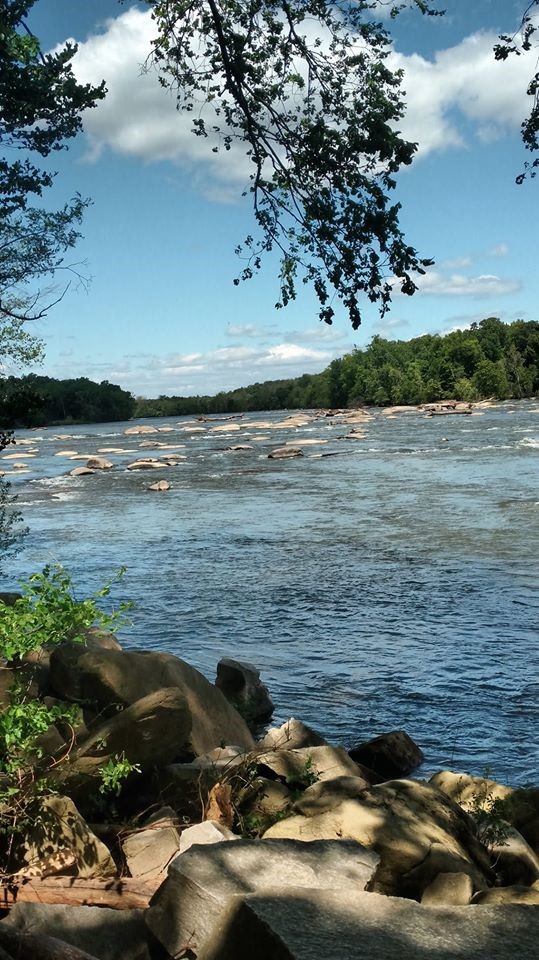
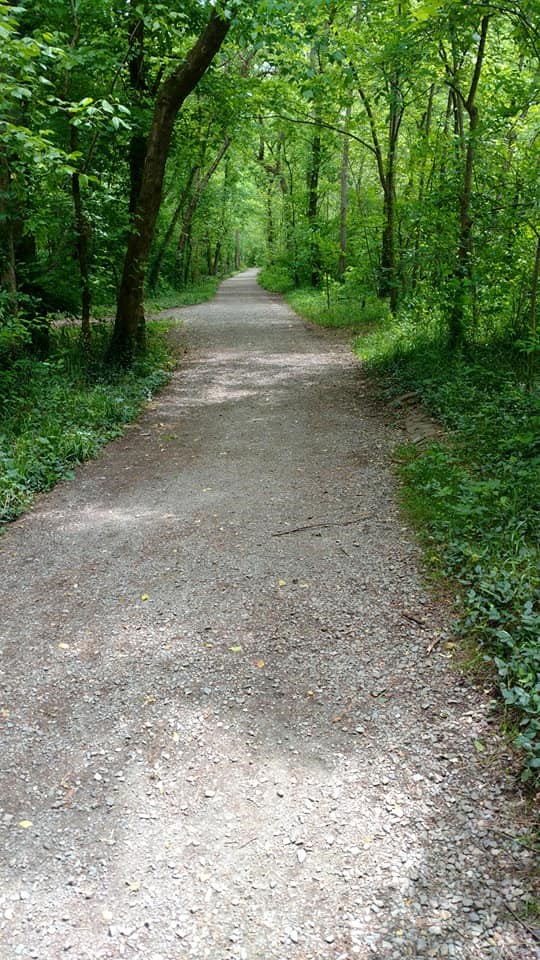
Pleasant Creek Trail is one among many paths along the James River at Pony Pasture.  After meandering a half mile or so, I came upon this view.  I call this scene “Entering the Emerald Forest.”
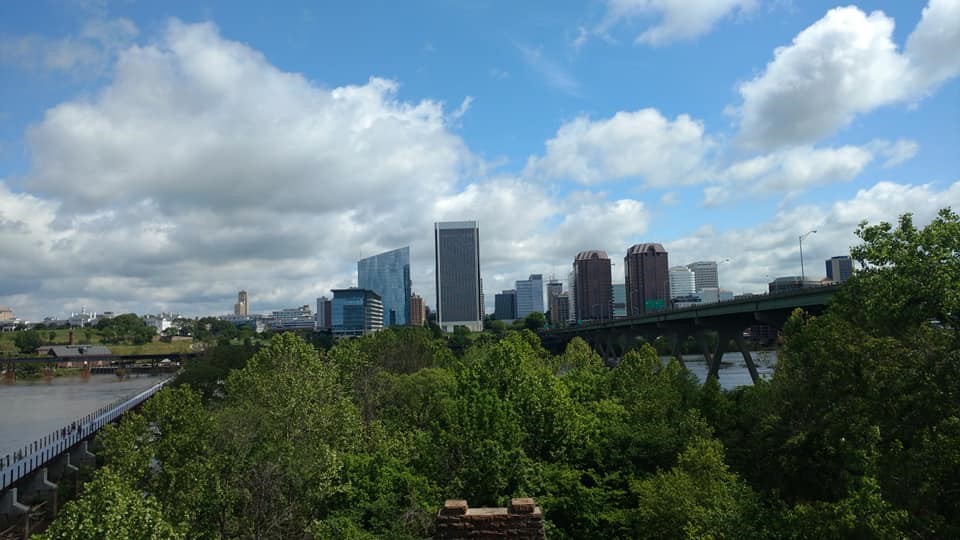
Showcasing Richmond, Virginia, in an attractive cityscape.  I walked along the floodwall to capture this Richmond skyline.
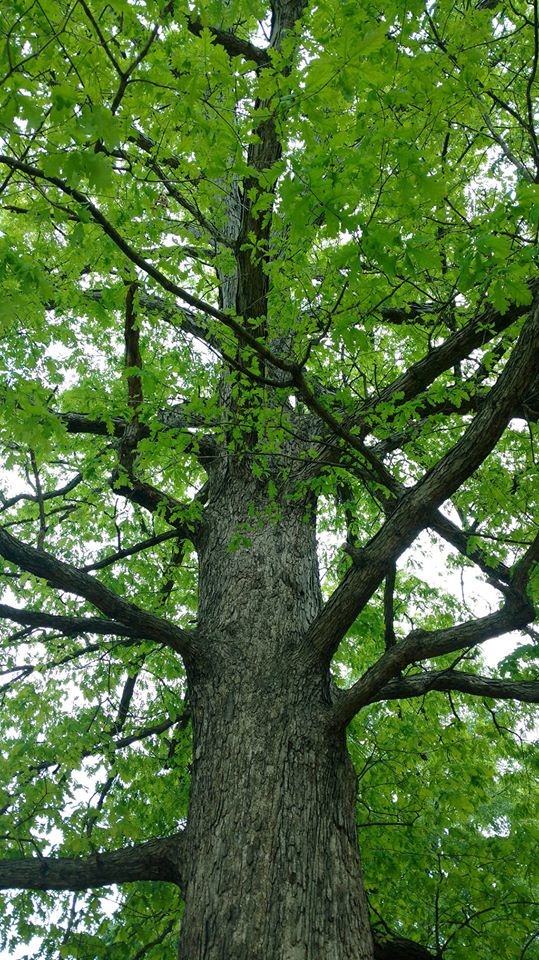
One day, I went to a local park (Maymont) and stared up at this tree like infants do with their mobiles hanging over their cribs.

Straight, sturdy tree trunk

Spreading its leafy branches

Green shelter in place
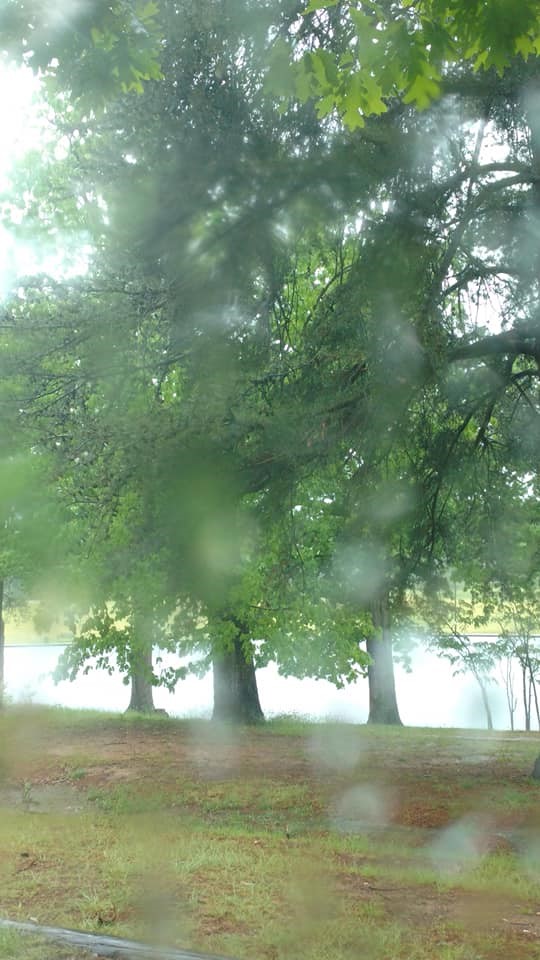
Richmond has had a goodly amount of rain this spring.  This is the James River after several inches of rain throughout the state.

Even when the rain came, I made it a point to get out of the house, sit in my car, dream a bit, and read from my Kindle for two or three hours.
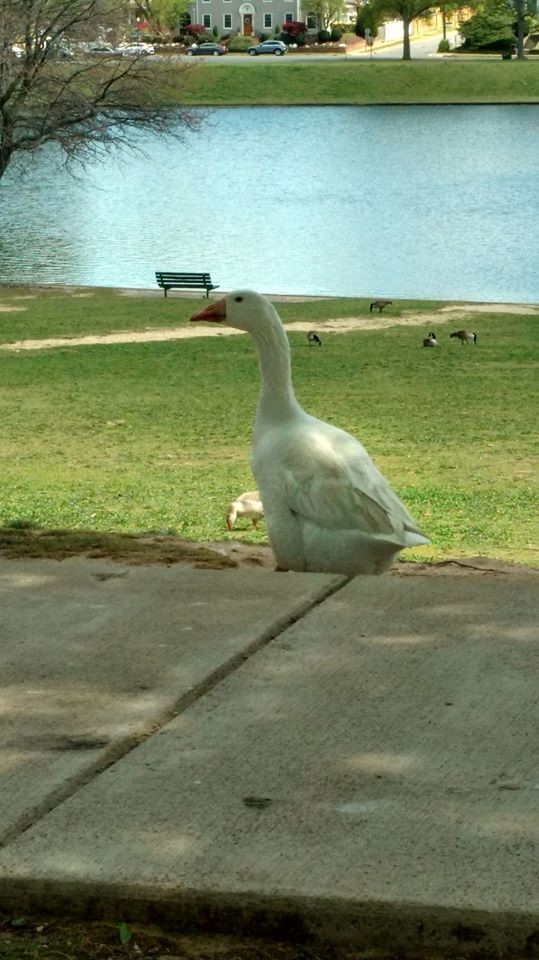
Had a visitor one day while enjoying the sunshine and breathing in fresh air at Byrd park.

Bench-sitting alone
Cold winds blowing through the trees
Mother Goose visits
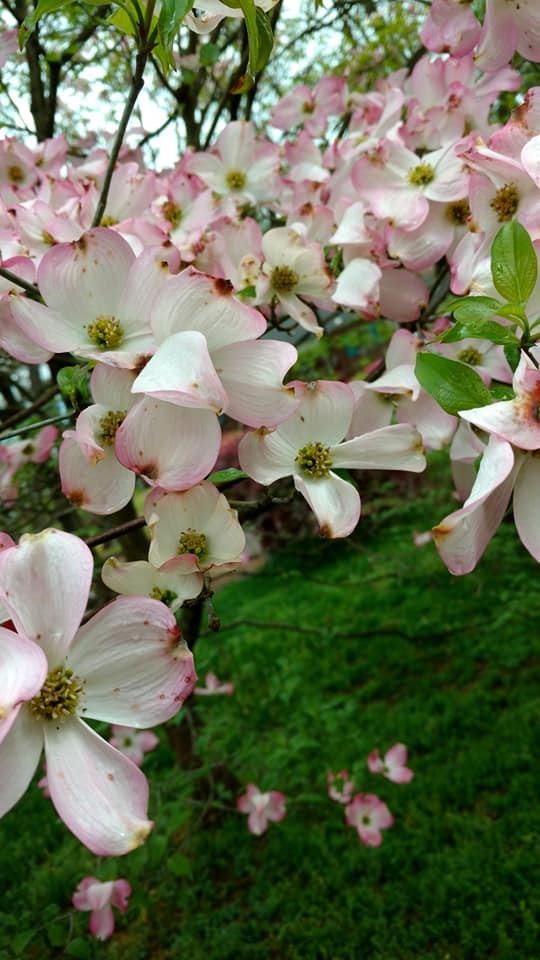
Earlier in the spring, I watched the dogwood tree bloom in my front yard.

Amidst clouds and chill
Nature still blooms pink and white
In my damp front yard
One of my favorite days at Pony Pasture Rapids put me in touch with this family.

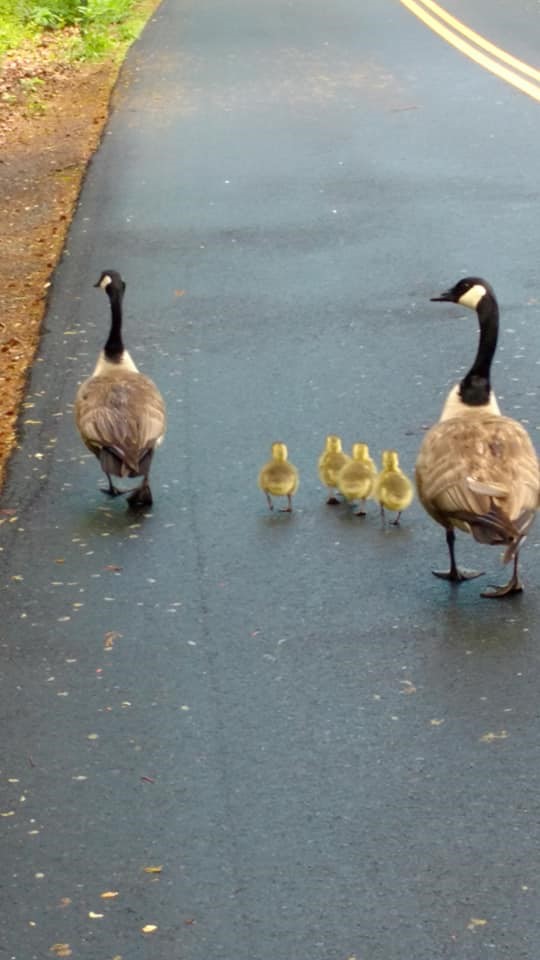
Blessed be!

In sunnier weather, I’d visit beautiful, old Hollywood Cemetery in Richmond.  From the web: “Hollywood Cemetery was designed in 1847 as a “rural” style garden cemetery to escape the grid-like monotony of city cemeteries. Landscape architect, John Notman, specifically left trees and other plants untouched when designing the cemetery’s landscape in order to create a peaceful haven for Richmonders. Today, our 135 acres of valleys and hills are covered with heritage roses, stately trees, and other blooms that live up to the name of a garden cemetery. In 2017, Hollywood Cemetery was named a recognized arboretum with the ArbNet Arboretum Accreditation Program.”

One day I went hunting (and I did have to hunt!) for inscriptions that made me take notice.  There’s such a paucity of creative, interesting text on tombstones.  Of those I’ve seen so far, Andrea Smith Kauder’s is my favorite.  “Neal, Adam and Bryan–I love you very much. I thank everyone for visiting. Now go and be happy.”  Andrea died as a relatively young woman—44 years old.  I think I would have enjoyed knowing her.

And, I’m moving again!  Going to a condominium just three miles down the road from my current address in Richmond, Virginia.  Wonder where in the world I will eventually land.  I can’t seem to settle down in any one spot.  Here I am scrubbing the floor of my new condo in preparation for move-in.  My only green space on this day was the green gloves I used to protect my hands during the onerous chore.

My grandmother, Jessie, often told me, “Only way to clean a floor, honey, is to get on your hands and knees and scrub.”  Jessie was right.  Perhaps a fitting text on my tombstone might reflect the necessity of women’s domestic labor to keep the wheels of society moving.

She cleaned like a fiend

Hoping…yes, always hoping

For a little dirt.


Esther Nelson is an adjunct professor at Virginia Commonwealth University, Richmond, Va. She has taught courses on Human Spirituality, Global Ethics, Christian-Muslim Relations, and Religions of the World, but focuses on her favorite course, Women in Islam. She is the co-author (with Nasr Abu Zaid) of Voice of an Exile: Reflections on Islam and the co-author (with Kristen Swenson) of What is Religious Studies? : A Journey of Inquiry.

Forward, Upward, Inward: A Spiritual Response to Right Now by Rachel Hollander

Brother Francesco, known to the world as Saint Francis of Assisi, left us many sweet and lovely poems and songs. In “The Canticle of the Sun,” he wrote about the gifts of nature. Brother Sun, his light and radiance.  Sister Moon and Stars for their beauty.  Brothers Wind and Air, through fair skies or storms. Sister Water for her humility, purity, and usefulness. Brother Fire, who lights the night, is playful and strong. And Sister Death, whom no one living can escape. And, of course, he included: 
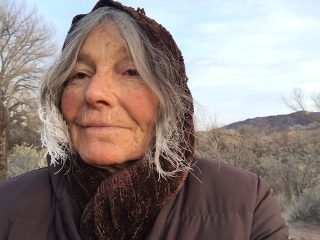
Praised be You my Lord through our Sister, Mother Earth who sustains and governs us, producing varied fruits with coloured flowers and herbs. 

Mother Earth. We live on her, we eat what she provides, we use what wondrous supply she shares with us, and….

We are not the kindest of children. We are not always so Grateful for what our Mother so generously lends to us. Because it is a loan. Do not be mistaken. Mother Earth is not a bottomless well of giving. She is a Mother with expectations; a Mother who gives and then wants to see us give back.

These are tough lesson for humans; some humans, anyway. And never before have we been taught that lesson more clearly than right now. Continue reading “Forward, Upward, Inward: A Spiritual Response to Right Now by Rachel Hollander”

May – A Time of Becoming by Sara Wright

Picture of Sara Wright standing outside in natureReturning home to Maine in April has allowed me to experience winter turning her ancient wisdom filled face towards the maiden of spring. Although the month has been chilly, and until two days ago snow covered tree stripped mountains still held a dusting of snow, all nature is celebrating renewal.

In the woods the maples are turning a deep rose red. Here in the yard all my fruit trees are waiting for May’s rain and the warmth of a waxing solar sun to set fragrant bursting blossoms as are the lilacs. Blood red cardinals sing love songs in my pine forest, whistling up the dawn. Wood frogs croak in the vernal pools, laying jellied egg masses, young foxes race through oak groves crackling leaves in their wake. The goose stands watch over his nesting mate at the pond, a loon does the same, haunting the sky with his song. Continue reading “May – A Time of Becoming by Sara Wright”

La Llorona and the Dark Green Religion of Hope by Sara Wright

Picture of Sara Wright standing outside in natureI recently returned to Maine after what can only be called a harrowing journey from the Southwest. Grateful to feel beloved earth under my feet, I walk along the pine strewn woodland paths to keep myself sane. My animals have been ill, my neighbor was hospitalized briefly, other neighbors deliberately destroyed my garden wall crushing a baby balsam, and used this property as their personal ski slope, the threat of the C/virus looms – there are no words to describe this kind of exhaustion. As a PTSD survivor all my senses are on permanent scream. The simplest task has become monumental. And I am only one of so many…

Each day I attempt to feel gratitude for what is good in my life.

Momentary peace is found in the Dark Green Religion of Hope that I experience walking under every balsam, lichen, wet leaf, deciduous tree, listening to chickadees, phoebes, juncos, and finches, meandering along the swollen brook – Just to see clear mountain waters rushing to the sea reminds me that Nature’s rhythms are my own, and that most of the time I am not breathing with her – unless I take these walks. Somewhere along the way over these last weeks I have lost access to my body (PTSD). Continue reading “La Llorona and the Dark Green Religion of Hope by Sara Wright”

Answering the Call by Joyce Zonana

All along, I’ve believed that Malicroix had something important to offer English-speaking readers: an embrace of solitude, a profound connection with nature, a bold exploration of dream-states. And right now it seems to resonate with our current moment of introspection and reassessment of priorities.

202002_Zonana_JoyceVery early in Henri Bosco’s 1948 novel Malicroix, a young man, Martial de Mégremut, living placidly amid fruitful orchards in a tame Provençal village, receives a letter informing him he has inherited “some marshland, a few livestock, a ramshackle house” from a reclusive great-uncle, Cornélius de Malicroix. Against his family’s strenuous objections–with alarm they speak of “marshes, mosquitoes, miasmas”–Mégremut resolves to travel alone to the remote Camargue to claim his “wild” Malicroix inheritance. The house is on an island, and to reach it Mégremut must cross a rough river, at night, in a frail wooden boat piloted by a taciturn old man who meets him at dusk in the middle of a vast plain.

So begins a deeply internal quest narrative, an initiatory journey that forces Mégremut to come to terms with himself and with the elements–earth, water, wind, and fire–that are ever-present, sometimes terrifyingly so, on the island. For once he arrives, he learns that he must remain there alone for a full three months if he wishes to obtain the inheritance. Torn about whether to stay or leave, he finds that the decision to stay is made of its “own accord,” unconsciously.

Continue reading “Answering the Call by Joyce Zonana”

Earth Day Reflection by Sara Wright

I awakened this morning to frozen raindrops hanging from trees – jeweled beads, snow capped hills, and a cacophony of spring songs – I was serenaded by robins, chickadees, phoebes, goldfinches, and nuthatch tweets as I walked out the door into the early morning sun. I listened for the cardinals, who for the moment were absent. It was cold! 28 degrees at the end of April speaks to anomalies, or more realistically, Climate Change.

Yesterday we had rain, and working in the still damp air is literally a healing experience. The fragrance is a combination of chemicals released by soil-dwelling bacteria, oils released from plants during dry spells and ozone created when lightning splits oxygen and nitrogen molecules that then turn into nitric oxide.

I dug in baby trees that I had rescued from the side of the road the day before. Salt kills tender cedar seedlings if the road crew misses slaughtering them. Around Maine trees are worthless except as an economically viable product, a heartbreaking reality for someone like me. Continue reading “Earth Day Reflection by Sara Wright”

Mother Tree Meditation by Sara Wright

A couple of days ago after an exhausting day of chores I lay out in the sun in my snow pants against the tree I call the “Mother Pine” because she shelters so many creatures from birds to bears. It was late afternoon and the sun was sparkling like a cracked diamond through a myriad of branches over my head. I closed my eyes and listened to an evergreen symphony. The songs produced by pines and other conifers as needles sway and touch soothed me. How much I loved the sound of light winds slipping through the trees.

I had recently returned from the desert where these sounds are totally absent. Instead, ferocious west winds hurl and churn dust and dirt in my face making it impossible to be outside in the winter and spring on many days. Because I have emphysema, I am too often trapped in my house by  polluted desert winds… To be present in this precious breezy moment allowed me to feel a deep abiding gratitude for the songs of trees I love… and Maine in general, although the rape of our forests continues unabated. Continue reading “Mother Tree Meditation by Sara Wright”

Canada Goose by Sara Wright

Canadian Geese have been on my mind a lot lately. This past winter I have missed the skeins of geese that fly back and forth up and down the river appearing every single morning like clockwork. In Abiquiu when winter turned to spring I noted that the geese were behaving in much the same way the Sandhill cranes did before they migrated, splitting into pairs or groups of three and flying erratically. I was puzzled. I didn’t recall witnessing such behavior before this year. I wondered about migration patterns. Were the geese shifting their flight patterns too? Or perhaps the small groups I saw were staying year round? Some days it almost seemed as if these water birds were confused by something.

I saw three Canadian geese on the last predawn walk I took to the river/Bosque in New Mexico – just an hour or two before leaving for Maine. I knew that a perilous journey was ahead because we were driving cross-country from NM to ME. The C/virus was a frightening threat even though I brought all food, and planned to camp/use woods as bathroom. The first morning after my arrival at home I saw and heard three geese honking over my head. I was struck by the odd synchronicity remembering the mother goose tales of my childhood – and later as a graduate student when I learned about their mythology. Continue reading “Canada Goose by Sara Wright”

Persistent Beauty by Molly Remer

I knelt beside a sprinkling
of deer fur
dotted with delicate snowflakes.
Don’t take a picture of that,
my husband said,
people will think it is gross.
I don’t find it gross.
I find it curious.
I find it surprising.
I find a story.
Sometimes I feel like
I have to battle a horde
of demonic trolls
before I can take care of myself,
I tell him,
and yet somehow,
I say,
always,
always,
I find my life is still a poem,
in the quietude,
in the battling,
on my knees in brown gravel
to better see this spray of fur
and how the frost
glows like white stars.


I sit on a stone in the pines and let the winds come, sweeping my hair back and lifting my lamentations from my forehead, where they have settled like a black cloud.

I let the air soften my shoulders and my sorrows, sunshine bright on thick brown pine needles, slickly strewn across the steep hill. Continue reading “Persistent Beauty by Molly Remer”

“Tree of Life” Dream by Sara Wright

Full Seed Moon 3/9/20

I see a beautiful fruit tree that is in full bloom with delicate pink blossoms and a man comes and attacks it violently – Oh, all the blossoms fall away, drifting tears cover the ground. Before this the little tree had bloomed “forever,” but man brought death to the blossoming tree and to the tree of life itself.

Little interpretation is necessary to understand this dream on a collective level. The Tree Holocaust is upon us. The Anthropocene is destroying more forests every second.  Billions of trees. The lungs of the earth. The Beings that gift us with rain. We have less than three percent of intact forest left on this planet.

“Man” represents the age of the Anthropocene – each one of us – male or female. Every human being on this earth is complicit in tree obliteration and the terrifying violence associated with this slaughter. It’s important to note that the tree is weeping. (My sense is that the tree isn’t just weeping for being murdered but that s/he is weeping for those who would annihilate her/him). Continue reading ““Tree of Life” Dream by Sara Wright”