Betraying Bodies by Kelly Brown Douglas

Her name was Tricia Meili. Their names were Yusef Salaam, Raymond Santana, Antron McCray, Korey Wise and Kevin Richardson.  On April 19, 1989 all of their lives were irrevocably changed. They would never meet, but their lives would become forever linked.  When they entered into Central Park on that night, did they know that they were stepping into a haunting history of dismembered bodies?  Tragically, their bodies would become another story to be told in that history.

On that April day in history some 34 years ago one white female body went into Central Park for her routine jog. Five black and brown male teenage bodies went into Central Park to hang out, but soon became a part of a crowd engaged in mischievous if not dangerous and out-of-control harassment of other park visitors. As the night wore on, police were called and arrests were made. It would later be discovered that Tricia was brutally and sadistically raped, but not by Yusef, Raymond, Antron, Korey or Kevin. Yet, the five young teenagers were badgered into confessions, charged with the rape and sentenced to prison. Continue reading “Betraying Bodies by Kelly Brown Douglas”

Are Buddhist Women Happy? Part II by Oxana Poberejnaia

oxanaIn Part I of this post I started asking questions about whether Buddhism in the West is part of patriarchy. Today I offer a possible link between practices of men’s Initiation Rites and some of the elements of Buddhism.

Men’s Initiation Rites

When we consider principle practices of Western Buddhists, primarily daily meditation and meditation retreats we might enquire something like this: since monastic practice is a model for our Western lay practice, do Buddhist monasteries constitute an extension and continuation of men’s long houses, places of men’s initiation rites?

Continue reading “Are Buddhist Women Happy? Part II by Oxana Poberejnaia”

Thanks for Coming (Out): Sexuality, Sports, and Spirituality by John Erickson

I have to be honest, Jason Collins’ admission that he was a homosexual, albeit brave, upset me. While coming out is an completely unique experience to every individual that does it, Jason Collins’ story was just another example of the rampant sexist and heteropatriarachal world that privileges male bodies and sexualities over women’s similar experiences. While I applaud Jason’s story and it’s timing, the first thing I asked to my colleagues was: Where was the hubbub over Sheryl Swoopes or Martina Navratilova?

John Erickson, sports, coming out. Like marking off items on a proverbial checklist, closeted LGBTQ individuals who exist within and outside of the world of professional sports, can recount the numerous things they struggle with in terms of their sexuality.  From fearing of the actual coming out process, dressing in their car or at home to avoid the subtle glances and whispers of individuals in the locker room, to wondering what coming out would mean not only for their game but also for their social and, if they choose, spiritual lives, closeted and out LGBTQ individuals within the multi-billion dollar professional sports industry must grapple with that age old question: what does it mean to be gay and open about it?

The Locker Room

I have to be honest, Jason Collins’ admission that he is a homosexual, albeit brave, upset me.  While I understand that coming out is an completely unique experience to every individual who does it, for me Jason Collins’ story was also an example of the rampant sexist and heteropatriarachal world that privileges male bodies and sexualities over those of women.  While I applaud Jason’s story and the timing, the first thing I asked to my colleagues was: where was the same hubbub over Sheryl Swoopes or Martina Navratilova? Continue reading “Thanks for Coming (Out): Sexuality, Sports, and Spirituality by John Erickson”

(Femen)ism? by Kile Jones

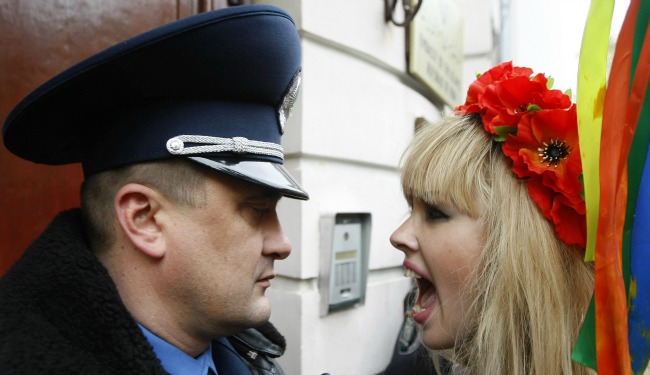
Kile Jones, atheistAs most of us are aware by now, there is a “feminist-sextremist” group from Ukraine called “Femen.”  This group has been very controversial by their public demonstrations of nudity, the words they paint on their bodies, and their explicit condemnations of political structures and organized religions.  They were started by Anna Hutsol in 2008 and have now spread throughout Europe and the Middle East.  The question I pose for this post is: Does Femen harness or hinder the power of the feminist critique?

Image from Konstantin Chernichkin/Reuters

Femen is precisely the kind of movement that pushes us in our understanding of feminism, the means by which it is best expressed, and the issues surrounding moral condemnation and religious sensitivity. Continue reading “(Femen)ism? by Kile Jones”

The Danger of the Patriarchal Domination Mindset: Can We Do Anything About It? by Thea Iberall

The Danger of the Patriarchal Domination Mindset: Can We Do Anything About It? By Thea Iberall The Swallow and the Nightingale

At the confluence of misogyny, prejudice, homophobia, religious intolerance, environmental destruction, and violence is the patriarchy. We all know this and talk about it here from our own perspectives. I come as a scientist and writer. I have a love of history and science as well as a skill at simplifying complicated things. I abhor what some people are doing to our planet and the arrogance with which they do it. Unfortunately, because we want the stuff they are manufacturing, because there are too many of us, and because we are letting them do it, they do it with our blessings. I want to help change this situation with a novel I’ve been working on for almost 15 years.

In the year 2000, I sat in a dinghy in the caldera of the active underwater volcano at Santorini helping my geologist sister count the bubbles coming from below us. The experiment was part of my father’s research into the origins of life. I had had the seed for a novel thirteen years earlier when I heard Mimi Fariña sing The Swallow Song, talking with her about her deceased husband Richard Fariña and how lost his music has become. I began developing ideas, learning about the nightingale connection and discovering a 12th century Sufi master’s epic allegory about god. Sitting in that dinghy, everything coalesced: the story of how western civilization went off course. My book of contextual poems, The Sanctuary of Artemis, explores the roots of Western patriarchal culture and tells some of it. The novel would have a backdrop of a world collapsing as ornithologist Dr. Deborah Wright is unwittingly guided by the Sufi to figure out why the Capistrano swallows are dying. It would include an underlying history of an egalitarian world lost when this volcano erupted in 1628 BC. Richard Farina’s song would be playing throughout the pages.  Continue reading “The Danger of the Patriarchal Domination Mindset: Can We Do Anything About It? by Thea Iberall”

Cosplay and Choice by Sara Frykenberg

Sara FrykenbergCosplay is often a deliberate, interpretive and self-chosen performance of gender and power.  Like drag performers, cosplayers put on a show of the characters they represent; and in my experience, they often do so within diverse, supportive and principally, inclusive communities. 

This week my husband sent me a great blog post he found about cosplay and one woman’s determination that she would no longer tolerate being demeaned, objectified or trivialized because of what she chooses to wear.  Blogger Megan Marie’s post, entitled “What would you do if you weren’t afraid,” inspires me.  She points out and refuses the trappings of rape culture: victim blaming, assumed male control over female sexuality and shame; and claims her right to be who she is.  I, as fellow (what is the female equivalent for fellow???) cosplayer, was also moved by her defense of this creative art.  I have been cosplaying a long time, but I have been too afraid to speak much about this or to directly protest the rejection of these fantasy images within some feminist communities.  So to answer Megan Marie’s question* in her own words, “What would you do if you weren’t afraid? My answer.  I’d write this blog.”

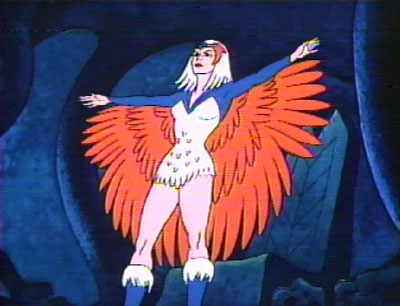
Coplay = costume + play!  It is the recreation of popular characters from video games, comic books, anime, scifi series, fantasy literature or the like.  Cosplayers do this for the fun of it, the craft involved, to express one’s fandom and sometimes, professionally, usually within an arena where fans can enjoy one another’s recreations.  The attempt to embody these characters involves a great deal of work and artistic expression.  Many conventions, like Fanime Con in San Jose, CA, host panels in which fans can learn cosplay skills, such as armor construction, wig making and costume design.  I have cosplayed the following characters: Sailor Star Healer, Eudial and Sailor Iron Mouse from the anime Sailor Moon, Misa

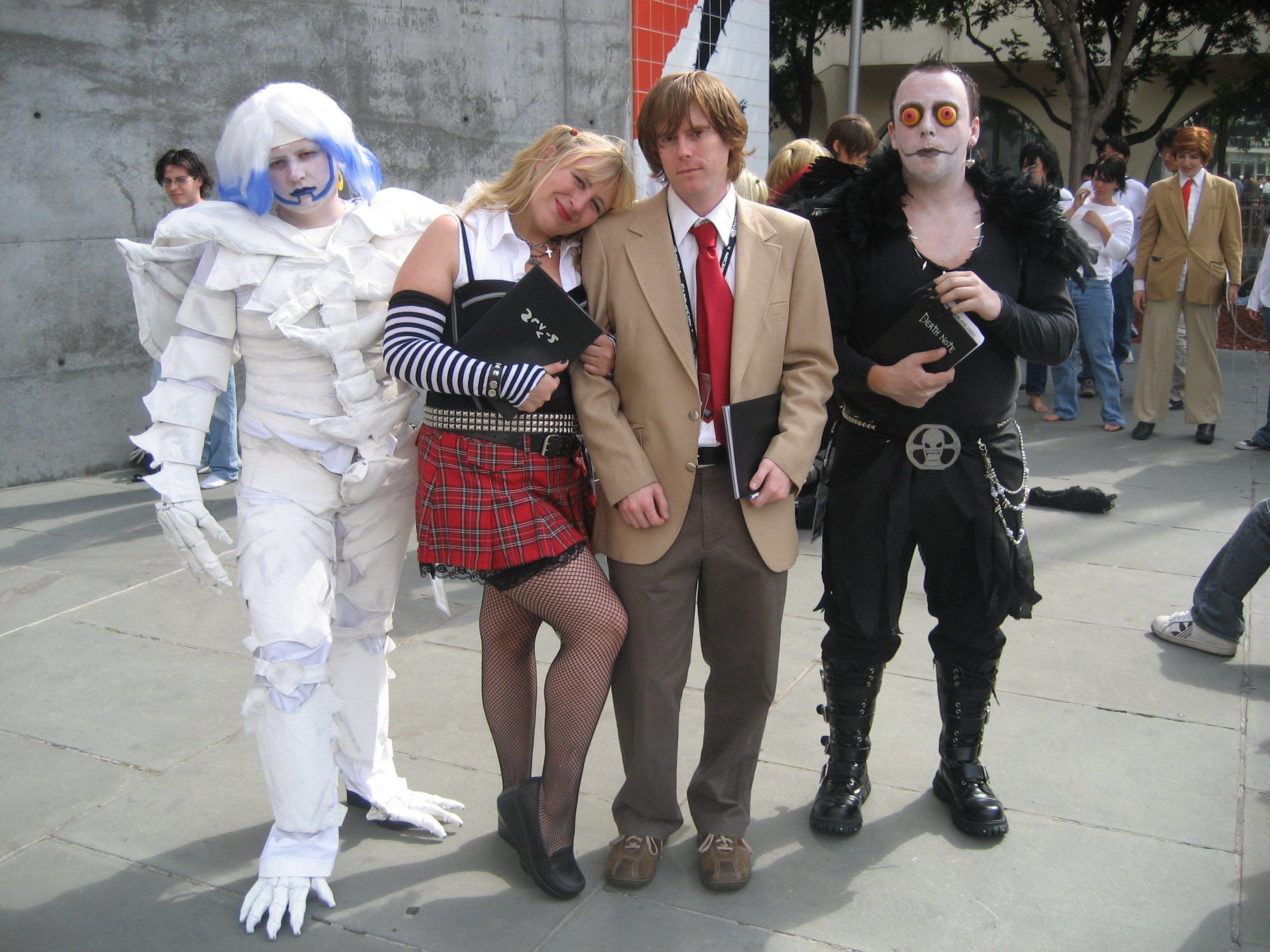
Death Note Cosplay: Misa and Light are in the center, flanked by their respective "Shinigami," or the death gods they are working with
Death Note Cosplay: Misa and Light are in the center, flanked by their respective “Shinigami,” or the death gods they are working with

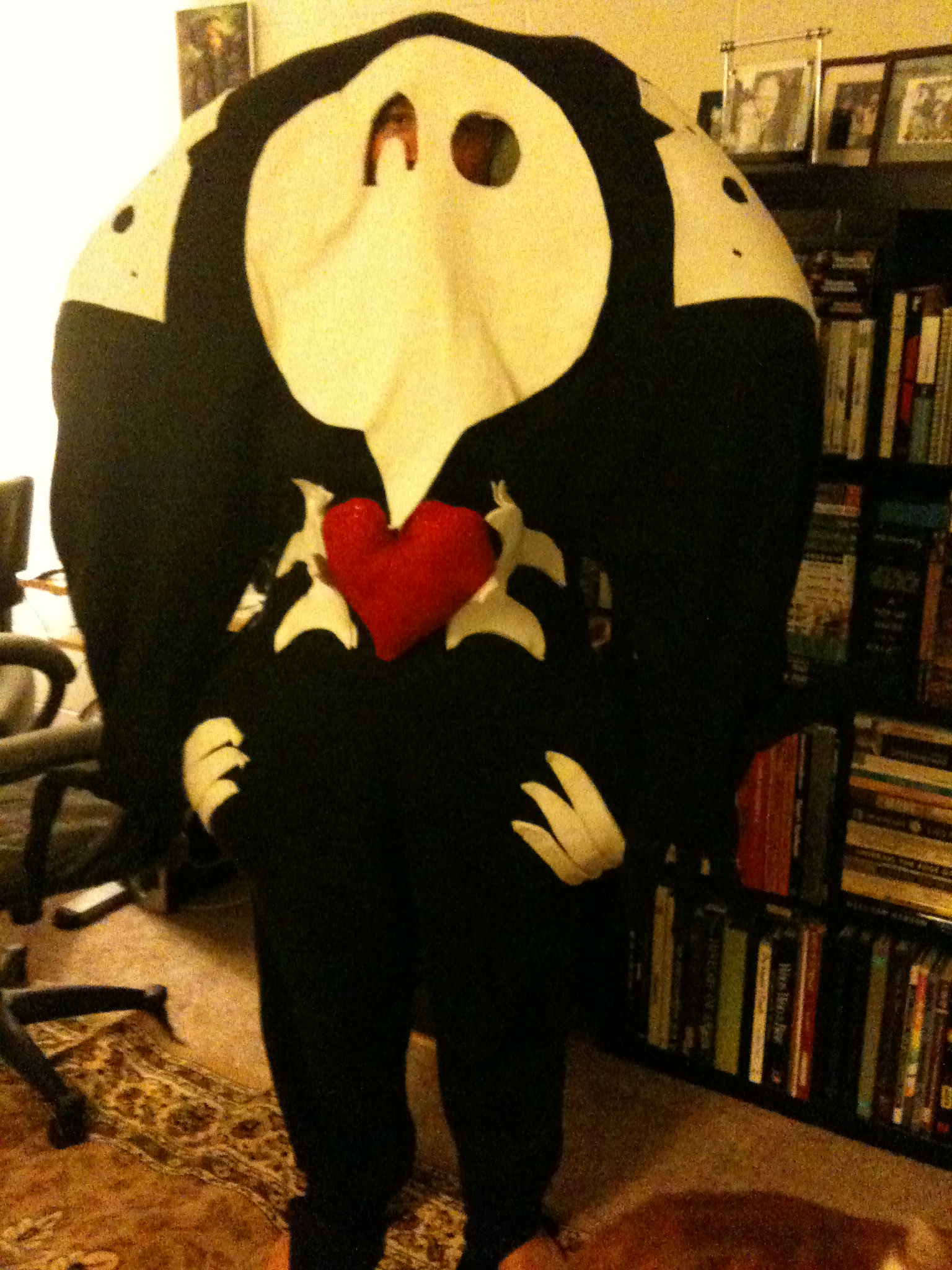
from the manga Death Note, the Sorceress from He-man, a Star Fleet officer from Star Trek: The Original Series, and most recently, a giant “Angel,” Sachiel from Neon Genesis Evangelion.

Sachiel from Neon Genesis Evangelion: I am trying on my almost finished costume here!

I am currently planning a to make a Metroid out of an umbrella and to cosplay Nyan-kitty at the May conference that my husband (who will be playing Tac-nyan), my sister and many of my friends attend.

So, why the feminist-anxiety?  Continue reading “Cosplay and Choice by Sara Frykenberg”

Standing in Cautious Optimism with the Election of the First Jesuit Pope by Michele Stopera Freyhauf

Freyhauf, Feminism, Religion, Durham, Old Testament, Blogger, Bible, Gender, Violence, Ursuline, John CarrollFrom the time Benedict’s successor was revealed, I believed that we were witnessing something different – hopefully change.  Pope Francis I embraces many “firsts” – which is probably why the Cardinals chose him.  Change and reconciliation seem to be at the forefront – something the Church so desperately needs today.  Francis is the first Latin American Pope, first Jesuit Pope, first Pope to use the name of Francis after St. Francis of Assisi, a Saint held in high regard by Catholics.  When I heard his chosen name, I immediately thought of St. Francis, to whom my favorite prayer is attributed.  This is a prayer that inspires me and speaks about how I try to live my life –  as one who strives for peace, and provides love, hope, and compassion.  St. Francis’ story is a powerful story of conversion from a life of great wealth to one of voluntary poverty.  Francis received a revelation from Christ to “rebuild my Church,” in a way that embraces peace and love as well as providing protection for all of creation.  The notion of “Protector” was a major theme in Pope Francis’ homily during his inauguration mass.

As an unlikely choice for Pope, mostly due to his age and health, Francis reminds me of another unlikely advocate for the people – a man chosen to be Archbishop because of his passivity and his ill-health – Oscar Romero.  Romero surprised the people who placed him in office and stirred things up when he became a staunch advocate for the people that he served.  Romero’s “moment of conversion” revealed something spectacular that changed Latin America.  In his role as leader, he found his voice and became a defender for the poor and oppressed.  It is because of Romero that I am hopeful that Francis will provide (or at least start the wheels in motion to provide) changes to the Catholic Church. Continue reading “Standing in Cautious Optimism with the Election of the First Jesuit Pope by Michele Stopera Freyhauf”

Gods of War by Barbara Ardinger

Let’s talk about Mars and Ares. It’s common to think the Greek and Roman pantheons were identical and the gods and goddesses just had alternate names. This is not true. The Roman gods and goddesses personified civic virtues, whereas Greek mythology was largely philosophical.

I’ve been thinking about Carol Christ’s two excellent blogs about patriarchy and its connection to war and our so-called heroes. We read or watch the news today and learn about “our heroes” serving in the Middle East, about warriors who’ve come home and are suffering from deep wounds both physical and emotional. Yes, these men and women do indeed deserve our support…but, still, I ask, Why are people who are trained to kill other people called heroes? It’s a very thorny problem, and I must set it aside as I write this blog. Continue reading “Gods of War by Barbara Ardinger”

Gendercide: Words and Poem by Bernedette Muthien

engender, Bernedette Muthien, gendercide, poetry, violence against women, patriarchy,

gendercide  

 it took a full week

of straitjacketing generations

of genocidal femicidal trauma

for the clay dam wall to explode

and flood me in torrents

of collective grief

a poet with no words

a lifelong activist struck dumb

i choke on love for the dead

thousands of beautiful women and children a year

i puke for my incested cancerous country

and gag grappling for compassion of

perpetrators and the morally blind

in this breathtaking country

so brutally drenched in the blood

of ordinary women and children

i discover anew

that i fail to

swim

my spiritual cadaver

is dragged under by the concrete limbs

of victims perpetrators witnesses

majority blinkered burdens

too busy scrabbling for survival

to fight for justice

as i contemplate the imminent refreshment

of my childhood starvation

my hunger for food agency adventure

leads me to stare the dragon in its ambered eyes

like a mirror of my ever-present shadows

Demon! Patriarchy…

how can I love you to death…?

— Bernedette Muthien (15 feb 2013)

for the billion women martyrs around the world… Continue reading “Gendercide: Words and Poem by Bernedette Muthien”