It is now Monday morning, five days after the new President was elected, despite losing the popular vote.
For many of us, and for me too, losing this election feels like losing everything we have worked to achieve during our whole lives. One of my friends wrote, “I am totally distraught and unable to focus.” My cousin said, “I feel like I am in Nazi Germany in the 1930’s.”
I have been scouring the internet to try to figure out what we can still do to try to create a world that guarantees liberty and justice to all people and all beings in the web of life.
I wanted to stay in bed yesterday morning. I wanted to stay in bed for the whole day. When I heard that Trump won the US Presidential election, I didn’t know how to deal with it. How can I accept this reality? I still don’t have an adequate answer.
Turn to prayer? Yes. Do some writing? Ok. I’ll also take every hug and kind word that’s offered to me. And still, my emotions will be raw for a long time. I cry at random moments. My voice catches unexpectedly. I feel that so many Americans embraced a vision of the country that is intensely hostile to people like me (women, African-Americans, Black Lives Matter sympathizers, liberals, intellectuals). How can I not take that personally? Dismissing the harm of Trump’s open hostility or accepting it in deference to some supposedly higher goal feels like rejection too. It justifies and legitimizes his contempt and denies the seriousness of it. Do we really accept a man who speaks so openly of sexual assault because he promises to bring jobs back? That denigrates women and all assault victims. The hatred directed at immigrants, Muslims, and LGBTQA persons is even more unrestrained and horrifying!
During another week of killings, war, protests, and debates about whether Black Lives Matter or Blue Lives Matter, I’m concerned about the toll it takes on those who are witnessing the violence and fighting for justice.
I’m not on the front lines of these battles, but I can feel my energy draining, nonetheless. Over the past few days, while I’ve stayed informed about the latest tragedies and conflicts, I’ve intentionally limited my exposure to most news and social media outlets. I’ve begun preparing for a contemplative retreat with other women who also care about justice. For me to continue to participate in any effort of transforming society, culture, or the church, I must nurture my mind, spirit, and body.
Audre Lorde put it like this:
“Caring for myself Is not self-indulgence. It is self-preservation, and that is an act of political warfare.”
Self-care is a radical practice of self-love. It is absolutely necessary when engaged in conflict against those who do not show love to you, or worse, those who seek to destroy you. Your survival and your flourishing are defiantly brave. Self-care honors the God who created you, the One who loves you, and the Spirit who sustains you. Continue reading “What My Mothers and Mentors Taught Me about Self-Care by Elise M. Edwards”
“Great art is not a matter of presenting one side or another,
but presenting a picture so full of the contradictions, tragedies, [and] insights of the period
that the impact is at once disturbing and satisfying.” – Pauli Murray
My spirituality is inherently creative. Deep in the creative process, I open more fully to awareness of what is flowing around and in and through me. When I can get there – to that place of fully giving myself over to Spirit as a channel, vessel, and embodiment – creation itself becomes an act of prayer, of devotion, of intense ecstatic ritual to honor, grieve with, or celebrate the Ground of Being behind all expression. I craft, dig, carve, build, dance, drum, and sing. Mostly, my art involves words – spoken and written – to create moments, spark feelings, paint pictures, or shape ideas. Words carry tremendous meaning, unconsciously as well as when we use them consciously, with intention.
My spirituality is inherently personal. While I’m a mystical thinker prone to the kind of abstraction that finds beauty in universal connections and layers of thought and cosmos, the questions that always draw me back into Self are these: How does this grow me? What am I learning that helps me be a better person for myself, my family, my community? How does this enhance my well-being, bring me contentment, or give me tools or strength to expand beyond the trauma, grief, and sadness of paying attention – really paying attention – to the world around me? Does this fill me with more to spill out into the world? More love, more beauty, more passion and fight and solidarity?
Canvassing against North Carolina’s Amendment One in 2011
On an unexpected weekend in June, the city of Orlando was rocked with a string of violent attacks that created an earthquake of shock, grief, fear, hurt, and a sadness too terrible to name, that all ends of our globe have felt. It started with the shocking shooting of the young YouTube celebrity, The Voice reality contestant and established musician 22-year-old Christina Grimmie, gunned down by a deranged young man before he in turn killed himself. It ended with the horrific mass shooting at the gay bar Pulse, where 49 men and women lost their lives, and countless more saw their lives forever altered, shaken, and shattered.
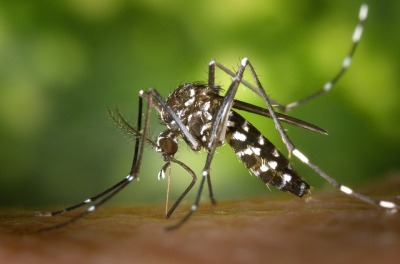
In the face of the Zika epidemic the World Health Organization (WHO) has issued new recommendations for individuals at risk of contracting the virus either through mosquito bites or through sexual contact with an infected person. If someone has traveled to an area where Zika is present, the WHO recommends abstinence or consistent condom use for at least eight weeks or up to six months if a partner shows symptoms. (Only 20% of people infected with the virus are symptomatic.) But for women of childbearing age living in areas affected by the virus, the WHO urges them to speak with their health providers about possibly delaying pregnancy, presumably indefinitely. The Zika virus has been linked to devastating birth defects including microcephaly.
After issuing the revised guidelines Nyka Alexander, spokesperson for the WHO, clarified that the purpose of them was not to discourage all at-risk couples from conceiving, but rather to ensure that they consider the Zika virus and its potential impacts on the timing of pregnancy. “Whether and when to become pregnant should be a personal choice made on the basis of information and access to affordable, quality health services,” said Alexander.
For pregnancy to be a personal choice, women and men must have access to the tools, information, and resources they need to prevent, delay, or plan it. Worldwide more than 220 million women want to avoid pregnancy but have an unmet need for reliable, safe contraceptive methods. The Zika virus has brought significant attention to what has been a public health crisis and an ethical tragedy for decades: that despite modern medical advances 85 million women experience unintended pregnancies each year. Continue reading “What Will the Faith Response to Zika Be? by Katey Zeh”
Ivy Helman’s recent commentary (((Israel))) criticizes what she sees as “a new form of anti-Semitism” from organizations such as Jewish Voices for Peace in their advocacy of the Boycott, Divest and Sanction (BDS) movement. So I begin this account of a recent visit by two Palestinian students to Hawaii with a reminder that the BDS movement is simply using the tools of nonviolent resistance to pressure Israel into giving Arab-Palestinians what Israel insists on for itself: equality, freedom, peace, justice and access to their homes and properties as stipulated by UN Resolution 194. Israel’s continuing land grabs speak to Israel’s sense of impunity. The two Birzeit University students provided a first hand account of what life under Israeli control means to them and their families. It was the kind of opportunity “to share and learn” that Helman says is necessary. And it only reinforced the importance of the BDS effort.
Mai Hasan and Noor Daghlas, students participating in Birzeit University’s Right to Education (R2E) Tour of American universities have stories to tell that are chilling. Stories that make you wonder why you are still in your seat, instead of running out screaming for someone to do something. To stop the madness that is the Israeli occupation of Palestine. Yet both students speak of their experiences with the matter-of-fact intensity of activists who have come to terms with the fact that their journey is long, and that they have survived, while many have not.
“I am here, not to speak about myself, but to speak for those who are no longer with us,” said Mai Hasan when asked whether she herself might face “administrative detention” after the tour. Since the year 2000, the Israeli government has imprisoned over 7,000 Palestinian youth, many for asserting their right to education. Mai, who graduated shortly after her return home, said without hesitation: “If I am arrested because of the truths I tell about the occupation, I will accept it proudly.”
Both students bear witness to the truth that Freedom is a Constant Struggle, the title of Angela Davis’ latest book. They were at the University of Hawaiʻi at Mānoa recently, with the renowned scholar at the same table, speaking to a packed room. The panel discussion took place just a few hours before Davis delivered her keynote address as the spring 2016 Dan and Maggie Inouye Distinguished Chair in Democratic Ideals to an overflow crowd at the Kennedy Theater. The two young Palestinian undergraduates talking about their life under siege in their own homeland, in conversation with the lifelong activist in front of an audience in Hawaiʻi, one of the places made American by occupation, was a statement of what Davis calls the “intersectionality of struggles.” As Cynthia Franklin, professor in the English department at UH Mānoa and organizer of the visit, said in introducing the panel, the event could be viewed through the lens of Davis’ own words that “It is in collectivities that we find reservoirs of hope and optimism.”Continue reading “Education as Resistance by Dawn Morais Webster”
In my previous post, I mentioned a book I am writing about how theological and ethical considerations in architectural design can define good architecture. In that post and in ones to follow, I am acknowledging the feminists and womanists and mujeristas who have influenced me while also opening up the dialogue to the feminists in this community who continue to inspire and guide me to do my best work.
But today, instead of talking about creativity or architecture, I want to discuss how I arrived at the conviction that community decisions about how we ought to live—whether those are decisions about laws, institutional policies, religious practices or architectural buildings—need to include the voices of the diverse people they directly and indirectly influence. Continue reading “What Traci West Taught Me about Dominant and Excluded Voices by Elise M. Edwards”
Recently I saw SOLD, a movie based on human trafficking taking place in Nepal and India. Within the first thirty minutes of the movie I was cringing, holding my hands, shrinking into my chair. Naively, I begged the question how families could sell their innocent children to strangers, even if they are fed the lies of working for pay? I am a mother of two children, who are my heart and soul. Deep inside I feel that if we as a family were in desperate times, I would rather sell myself than my children, or I would escape with them, and if we die, we die together. Yes. So extreme. But I can’t fathom letting my children go. Not for any amount of money, no matter how dire times were. I wouldn’t be able to live not knowing where they were, what they were doing, and with who. Just writing this or thinking about it, churns my stomach inside out.
I feel bad to make such statements and appear as if I am passing judgment on these mothers and fathers, who are living in desperate conditions, not knowing what else to do but to sell their flesh and blood to this multi-billion dollar industry. Many are not even aware and might truly believe that their children will go off to earn money for the family. As I write this I have a more informed position, because human trafficking is not a problem concentrated in a certain area of the world, this is a world wide epidemic with mostly women and children being bought and sold not just far away but here in my backyard, Los Angeles, California. Continue reading “Human Trafficking by Valentina Khan”
I’m currently developing a book that considers how theological and ethical considerations in architectural design can define good architecture. My book discusses five virtues related to the architectural design process that promote human participation in bringing out God’s intention of flourishing for humanity and creation. Those five virtues (or values) are: empathy, creativity, discernment, beauty, and sustainability. In the book, I’ll explain how these virtues orient design tasks to the social and ethical aims of architecture.
In this virtual space, I want to have a discussion about what these virtues mean from a feminist standpoint. In my writing, I draw from theological ethics, architectural theory, and feminist theory to emphasize community discernment and participation. It’s fitting, then, to claim opportunities in my work to acknowledge the feminists who have influenced me while also opening up the dialogue to the feminists in this community who continue to inspire and guide me to do my best work. Continue reading “What Dorothee Soelle Taught Me about Creativity by Elise M. Edwards”