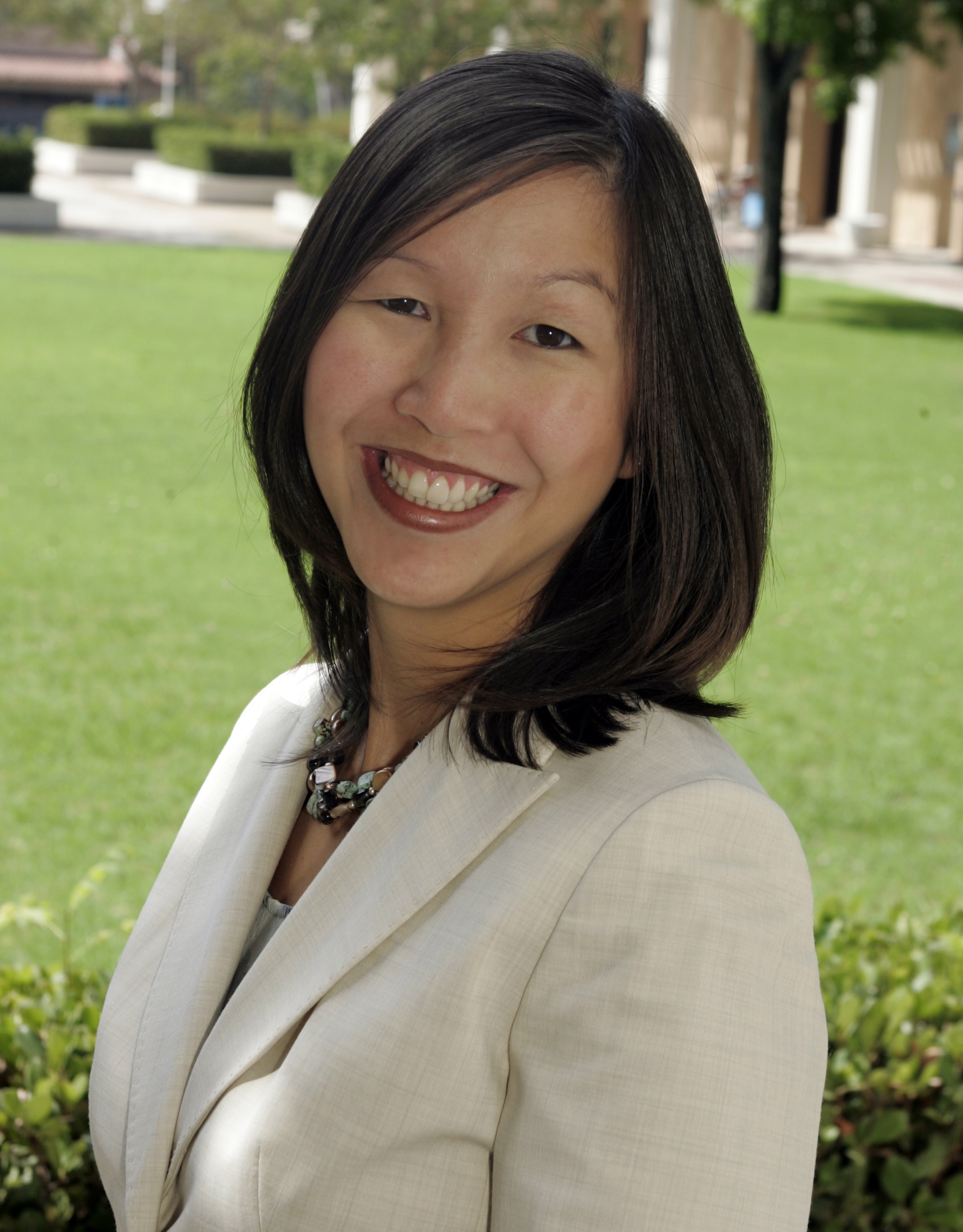
Everywhere I am surrounded by tales of violence by Grace Yia-Hei Kao

 Grace Yia-Hei KaoAs I write this blog, I am nearing the end of my week-long family vacation in Palm Desert. While we’ve had lots of fun splashing around in the pool, everywhere I turn I am bombarded by scenes and memories of violence.

Continue reading “Everywhere I am surrounded by tales of violence by Grace Yia-Hei Kao”

Thanks for Coming (Out): Sexuality, Sports, and Spirituality by John Erickson

I have to be honest, Jason Collins’ admission that he was a homosexual, albeit brave, upset me. While coming out is an completely unique experience to every individual that does it, Jason Collins’ story was just another example of the rampant sexist and heteropatriarachal world that privileges male bodies and sexualities over women’s similar experiences. While I applaud Jason’s story and it’s timing, the first thing I asked to my colleagues was: Where was the hubbub over Sheryl Swoopes or Martina Navratilova?

John Erickson, sports, coming out. Like marking off items on a proverbial checklist, closeted LGBTQ individuals who exist within and outside of the world of professional sports, can recount the numerous things they struggle with in terms of their sexuality.  From fearing of the actual coming out process, dressing in their car or at home to avoid the subtle glances and whispers of individuals in the locker room, to wondering what coming out would mean not only for their game but also for their social and, if they choose, spiritual lives, closeted and out LGBTQ individuals within the multi-billion dollar professional sports industry must grapple with that age old question: what does it mean to be gay and open about it?

The Locker Room

I have to be honest, Jason Collins’ admission that he is a homosexual, albeit brave, upset me.  While I understand that coming out is an completely unique experience to every individual who does it, for me Jason Collins’ story was also an example of the rampant sexist and heteropatriarachal world that privileges male bodies and sexualities over those of women.  While I applaud Jason’s story and the timing, the first thing I asked to my colleagues was: where was the same hubbub over Sheryl Swoopes or Martina Navratilova? Continue reading “Thanks for Coming (Out): Sexuality, Sports, and Spirituality by John Erickson”

Second Class Rape Victims: Rape Hierarchy and Gender Conflict

Deconstructing masculinity isn’t the key to solving social, sexual, and domestic violence across the world but it is a step worth taking when attempting to engage men in affecting change to stop these violent actions since men, statistically are the perpetrators of such crimes that both cause such outcry as well as perpetual silence.

johnThe most disturbing part of the 2006 documentary Deliver Us from Evil isn’t the fact that Father Oliver O’Grady is rewarded by the Catholic Church with a new congregation in Ireland after his short stint in prison for the rape of dozens of children in the 1970s, but rather the hierarchy of gendered victimization which is often created throughout the various rape cases that are both reported and unreported throughout history.

I am often troubled by the ways in which rape cases are discussed and deconstructed via mediums such as blogs, online communities, social media networks, the news, and popular culture.  No series of events troubled me more than the Jerry Sandusky trial, but more importantly, the ways in which the young boys and adult men who were subjected to Sandusky’s abuse quickly overshadowed the other rape cases that are reported on a daily basis, specifically those involving young girls and women. Continue reading “Second Class Rape Victims: Rape Hierarchy and Gender Conflict”

Living Liminality: Of Thresholds and Dwelling Places by Marcia W. Mount Shoop

Sometimes I think it happened gradually.  Other times it feels like sudden change.  Either way I find myself in an in-between space that is my life.

With apologies to Victor Turner and his cultural anthropological appropriation of liminality as a threshold space, I have come to view my liminal living as a more permanent dwelling place these days.  Turner’s category of liminality locates subjects in the betwixt and between as they move from one manifestation of identity in community to a new kind of integration or role in community.   I am starting to wonder, however, if the thresholds are actually dwelling places for some of us in this world.

I don’t know if that means I am actually more marginal than I am liminal.  The margins are margins because they remain on the outskirts and they help define the boundaries.  Margins are permanent.  Am I marginalized if I live at the edges of the communities and identities I use to occupy, perhaps never to return to the bosom of the center? I hesitate to make such a claim mostly because I still occupy privileged spaces not the least of which are those constructed from how whiteness grants access and authority in this world. Continue reading “Living Liminality: Of Thresholds and Dwelling Places by Marcia W. Mount Shoop”

Olympic Inspiration: My Athletic Mirror by Sara Frykenberg

What I realized was that my ability was different from hers and that I really could, as in ‘I had the ability to,’ decrease our time.  I carried our arms differently; and it surprised me.  I’ve never forgotten this sudden sense of myself and of my own power.

Watching the Olympics this week, I found myself very inspired… and very reflective.  You see I was once an athlete.  Not an Olympic caliber athlete, but an athlete none-the-less.  I swam competitively for eight years.  My events were the 100 and 200 freestyle and the 200 and 400 Individual Medley.  I started swimming in 8th grade.  I worked out 30 hours a week through my last two years of high school; and I was relieved when I started swimming for an NCAA division one team in college because the NCAA limited workout hours to *approximately* 20 per week—so I had more time to study.  I was a swimmer and I was completely dedicated to my sport.

But as I got older, my times slowed and I no longer felt successful; so I began to deny myself the title “athlete.”  It’s still hard for me to claim this title (even when applying it to the past) because my body has changed so much, as has my competitive drive.  I am more comfortable identifying as an academic.  Plus, as therapy and my feminist academic studies helped me to realize, I had often used my swimming to physically punish myself, literally. Continue reading “Olympic Inspiration: My Athletic Mirror by Sara Frykenberg”

Title IX and Our Future Leaders and Activists by Paula L. McGee

In January, I wrote a blog about my life and Title IX. Perhaps the greatest celebration that speaks to the power of Title IX is represented by the future feminists that attended the jersey retirement, my dissertation defense, and the graduation. I wrote the blog because I wanted to make sure that everyone was aware that this year is the fortieth anniversary of Title IX.  I also knew that very few people would understand the uniqueness and significance of an African American woman from a working class background having a jersey retired and graduating with a Ph.D.—all in the same year.

In February, my sister and I had our jerseys retired at USC. I wanted the day to be special, so I invited my friends and colleagues. All of my worlds (faith, academics, and athletics) that seldom cross collided. The event turned out to be a celebration of diversity with representatives from the world of politics, athletics, and religion. Claremont Graduate University was actually one of the sponsors. Continue reading “Title IX and Our Future Leaders and Activists by Paula L. McGee”

It is the Best of Times. It is the Worst of Times: An Athlete Looks at Her Life and Title IX By Paula McGee

I expect 2012 to be a great year. Not only do I plan on graduating in May with a Ph.D., but I will also receive one of highest honors in sports. On Sunday, February 19, 2012 in the USC Galen Center during halftime of the USC and UCLA women’s basketball game, USC will retire the jerseys of my twin sister and I.  Most people in my women’s studies and theology world do not really know that I have a twin sister, nor do they fully appreciate that about twenty-five years ago, my sister and I played on one of the most prominent teams in women’s basketball and in women’s sports. We won two back-to-back national championships in 1983 and 1984. We were also the first NCAA national champions (previous women’s teams were American Intercollegiate Association for Women (AIAW) championships). My sister and I played with Cynthia Cooper and Cheryl Miller. Our team was one the first women’s teams to get mainstream acceptance in the larger sports world. We were not just “girls” that happened to play a sport; we were “real” athletes. We received the same media attention and acceptance of any sports team during that period.

Most of my feminist friends—the preachers, scholars, and theologians—have no idea of what it means for a university to retire a jersey. In the sports world, retiring an athlete’s jersey means that no other person in that sport will ever wear that number at that university. The retired athletic jersey hangs in the rafters of the sports facility forever. This honor for an athlete is synonymous to a scholar receiving a named endowed chair in the academy. What is exciting for me is that my jersey will not only be hanging with my sister’s—that alone would be enough to celebrate. USC is one of the few institutions in the country in which the majority of the retired jerseys are the jerseys of women: Cheryl Miller, Lisa Leslie, Cynthia Cooper, and now Pam and Paula McGee. Cheryl and Cynthia are also members of the Naismith Hall of Fame, and Lisa is sure to join them  with that honor very soon. Continue reading “It is the Best of Times. It is the Worst of Times: An Athlete Looks at Her Life and Title IX By Paula McGee”