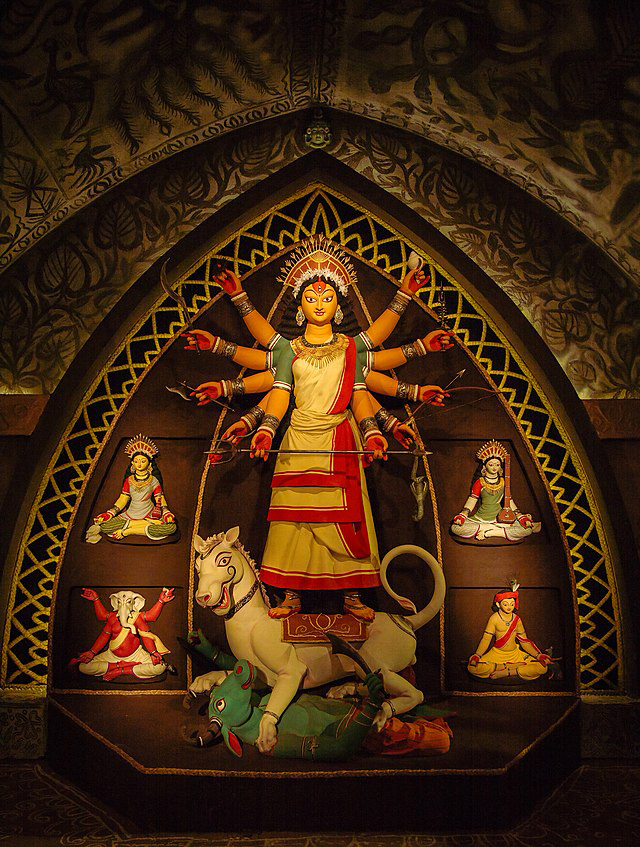
The Vows We Make, by Molly Remer

I make a vow of self-sovereignty,
a declaration of wholeness,
a promise to myself that I will keep:
I vow to listen to my heart,
to claim my power and my voice.
I vow to live my own magic,
to step into the center of my own life
and live from there.
I vow to live a life
that includes space for me,
to stand up for what I need,
to listen to my longings,
to honor my inner call,
to do my own work with trust.
I vow to never abandon myself.
I vow to inhabit my own wholeness
in all ways.

In February, I signed up for a Vow of Faithfulness class with WomanSpirit Reclamation. Guided by Patricia Lynn Reilly (of “Imagine a Woman” and A God Who Looks Like Me fame) and Monette Chilson, the class was based on Patricia’s book, I Promise Myself: making a commitment to yourself and your dreams. Structured as a seven week online women’s circle, the class took us on a deep dive into vow-making, culminating in a vow ceremony in which we made a public (to the class that is) declaration of our own vows to ourselves. As the class unfolded, I found myself reviewing past vows as well as sensing new vows bumping up against my consciousness, whispering to be heard.

Continue reading “The Vows We Make, by Molly Remer”

From the Archives: Awakening to the Mystery of Absolute Beginnings by Carolyn Lee Boyd

This was originally posted on February 1, 2013

As I rise at 5:30 each morning, my spirit reawakens in a between-the-worlds realm of absolute beginnings. For those few minutes of quiet and slowly revealing dawn light, I revel in mystical newness, endless possibility, a horizon that is only the future.  By 7 am, when I can hear cars on the road and see television screens through windows as I walk to work, normal, plodding space-time has taken over, leaving just a shimmer to linger in my memory.

I remember living all day with this feeling of being at the very beginning of my world when I was a young child and everything that I did and thought was for the first time. I believed this sense was lost forever when I was later taught by society, as so many of us are, that I was only the tiniest, most ordinary mite in a world already built many eons ago by people with a much brighter genius than me. 

And then, on my 25th birthday, I heard Merlin Stone speak about When God Was a Woman As I truly envisioned the Divine with a female face for the first time in my life, I felt a joyful excitement as if I had been transported back to that first second in human history when the insight dawned that a sacred presence exists within ourselves and all of creation that is unseen, but real, and that it can be expressed and shared. Because I had never been taught about Goddess or how to interact with Her, I was able to discover and act on what I knew intuitively within myself about Her in a way that was completely my own. With great fervor I began my own individual journey of the spirit and found that this exhilarating profound newness never left me because the territory I was exploring was completely unfamiliar to me in my own experience.

Continue reading “From the Archives: Awakening to the Mystery of Absolute Beginnings by Carolyn Lee Boyd”

From the Archives: Who Owns the Sacred? A Personal Search beyond (European) Indigenous Knowledge by Eline Kieft

This was originally posted on Jan 17, 2020

For almost 35 years nature has been my sacred place. As an 8-year old, I started to pray to Mother Earth even though the protestant tradition in which I grew up only recognised ‘God the Father’. I went outside in my inflatable rowing boat to seek solitude (as an only child in a quiet family!) on a small island in the lake of our local park. I practised rowing and walking quietly to not break the sacred silence. I collected herbs to brew infusions in my little thermos flask with boiled water brought from home. I sung to the moon, and danced my love for all creation back through my moving body. Over the last 15 or so years, I spent many days and nights at Neolithic monuments, dreaming in ancestral burial mounds, time traveling in stone circles in Cornwall, Wales, Scotland, England, Ireland and Brittany. This nature-based practice evolved naturally, and later incorporated my training with the Scandinavian Centre for Shamanic Studies and the School of Movement Medicine. Nature is where I reconnect most easily with the Sacred, and listen to the whispers on the great web of life in which all of nature is a great teacher. Nature, for me, is a strong place of prayer, solace, awe, reverence, gratitude, joy, guidance, reconnection, healing and transformation. 

Continue reading “From the Archives: Who Owns the Sacred? A Personal Search beyond (European) Indigenous Knowledge by Eline Kieft”

Hope Is Giving Birth in the Face of the Dragon by Beth Bartlett

Syrian Baby

The image of the baby born under the rubble of the earthquake in Syria has been haunting me. So has the image in my mind of her mother, giving birth to her baby while trapped after the building, where she, her husband, and their children were sleeping, collapsed.  The baby’s uncle, when digging through the debris hoping to reach his brother and family, found the baby alive, her umbilical cord still attached to her mother. When he cut the cord, the baby let out a cry.  Tragically, her mother had died after giving birth, as had her father and siblings.

Continue reading “Hope Is Giving Birth in the Face of the Dragon by Beth Bartlett”

That Old, Old, OLD Story – The Warts and Wisdom of the Ancient

My grandmother Clarine was an incredible human being. I absolutely could not be more proud to be her granddaughter. She started her first teaching position in 1927 at age 17. She met my grandfather in seminary; but despite her clear talent and call, the church apparently felt one minister was enough for the family and refused to ordain her. Undaunted, she famously wrote a one line reply to the bishop: Well, Moses got along fine without it, and Jesus got along fine without it, so I’ll be fine without it, too.

Continue reading “That Old, Old, OLD Story – The Warts and Wisdom of the Ancient”

Rhiannon by Diane Finkle Perazzo

This poem is dedicated with gratitude to my “Women in the Mabinogi” writing group…


Rhiannon comes to me in my dreams.
She ebbs and flows like the waxing and waning  
of the moon.

Steady hoofbeats, 
clop, clop, clop  
and then, in a rush of beating wings
she vanishes,
leaving a swirl of tiny white petals that spiral like stars.

Continue reading “Rhiannon by Diane Finkle Perazzo”

“A new heart I will give you . . . “: Part Two by Beth Bartlett

You can read part 1 here.

Hope: What is a heart transplant if not hope? In granting the possibility of new life out of death, it is the essence of hope. Yet, hopefulness is also knowing death is imminent and finding a way to live well into that knowledge. The impulse of hope encourages us to go on despite the odds. Hope indeed seems to spring eternal. In my darkest days, something would come along and lift me up. Hope is a testimony of the human spirit, lifting us up, refusing to refuse us. This new heart brought hope to me, and I believe that in our going on together, we carry the hopes of my donor’s loved ones as well. 

Continue reading ““A new heart I will give you . . . “: Part Two by Beth Bartlett”

“A new heart I will give you . . .” : Part One by Beth Bartlett

February is “Heart Month.” Presumably the American Heart Association chose February as the month to raise awareness about cardiovascular health because in February we celebrate Valentine’s Day which we observe by the giving and receiving of hearts of all kinds — heart-shaped Valentines, candy, jewelry – symbolic declarations of love, of giving our hearts to one another. Hearts have long been associated with love. When bringing our emotions to the surface, we “wear our hearts on our sleeve.” When speaking our deepest feelings, we “pour our hearts out.” Feelings of tenderness “warm our heart,” and compassion “pulls at our heartstrings.” When grieving, we feel “heartache,” and loss of love renders us “heartbroken.” The French word for heart, coeur, associates hearts with courage. We “take heart;” we “lose heart;” we “hearten.” We can engage in a task “wholeheartedly,” “halfheartedly,” or our “heart’s not in it” at all. We can be “bravehearted,” “lighthearted,” “tenderhearted,” “hardhearted,” or totally “heartless.”  That’s a lot for the heart to carry.

Continue reading ““A new heart I will give you . . .” : Part One by Beth Bartlett”

Legacy of Carol P. Christ: FORGIVENESS or TRUTH: WHICH IS THE BEST REMEDY?

This was originally posted on March 5, 2012

What happened to you really was bad. This should not happen to any child. It should not have happened to you.

In our culture there is often a rush to forgiveness that precedes acknowledging the harm that has been done. When I was a child and my father yelled at me or withheld love, I was told by mother, “He really does love you. He just does not know how to show it.” She sometimes added, “Even though he will never say he is sorry, you should forgive your father, because he did not really mean what he said.”

Continue reading “Legacy of Carol P. Christ: FORGIVENESS or TRUTH: WHICH IS THE BEST REMEDY?”

Woman’s Sacred Hand – and Handkerchief by Laura Shannon

Berber Hamsa. Photo: public domain.

In my recent post ‘Forty Days After Childbirth, Mary Returns to the World,’ I wrote that ‘the woman’s power to bless and protect, as well as to create, is shown in the symbol of her hand.’ We see expressions of this power in the Orthodox Christian icon of the Three-Handed Madonna, whose third hand is over her womb, and the Hamsa, the hand-shaped talisman common to Jewish, Christian, and Islamic traditions. Also known as the Hand of Fatima, Miriam, or Mary, the Hamsa often incorporates eye or vulva motifs, which also offer protection.

Hand, womb, and eye all signify female creative power, personified in the image of Goddess and revered in Neolithic Old Europe. This life-giving principle is expressed in many ways apart from childbearing: as Carol Christ affirms, early technologies of spinning, weaving, pottery, and agriculture, along with Neolithic religion, were most likely invented by women. 

Continue reading “Woman’s Sacred Hand – and Handkerchief by Laura Shannon”