When I begin my class discussion about defining nature, I often start with a wooden chair or table. I point to it and ask the students, “Is this chair natural?” I pause.
They have already been introduced to the idea that humans are embodied and embedded beings, and therefore dependent on and interconnected to nature. I remind them of those ideas. Then, I ask again, “Is this chair natural?” I continue, “Humans are part of nature and humans made the chair, so would that mean the chair is natural? The chair is made from wood, a natural material. Does that make it natural? I could just as easily sit on a rock or a stump if those were here. They are natural, right?” The discussion begins.
At some point in the discussion, we pause to define what nature is according to the ecofeminists we read for class that day. Mary Mellor, in Feminism and Ecology: An Introduction, defines nature as “the non-human natural world,” (8). It is probably the simplest definition out there. I quite like its simplicity.
Women have been sidelined and marginalized in every established institutional religion in the world. Even in alternative spiritual movements, male teachers and leaders abuse their authority toward their female students and followers. This is why women’s circles and spiritual groups are as relevant and necessary in 2020 as they ever were. Those women who can’t find spiritual community often chose to go it alone on a solitary path. But they are not entirely alone–they follow in the footsteps of a long ancestral line of female seekers and mystics, who rejected a life of slavish obedience to male authority figures in order to contemplate the deep mysteries of the soul on a path of inner revelation.
The Cambridge Dictionary defines mysticism as the belief that there is hidden meaning in our existence, that every human being can unite with the divine. The American Dictionary states that mysticism is the belief that it is possible to directly receive truth or achieve communication with the divine through prayer and contemplation. Continue reading “Mysticism as a Female Path by Mary Sharratt”
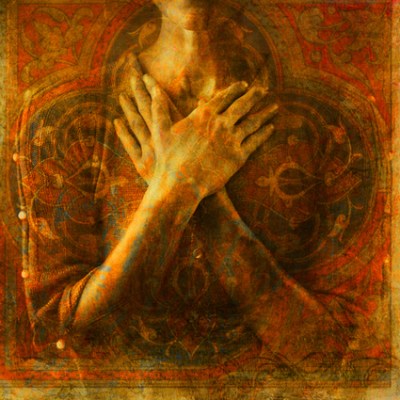
This blog post is the 3rd in a series of looking for female deities in the bible who have been translated out of easy reach or otherwise hidden within its words. In my last blog post I discussed bird imagery and the bible. It is available here.
You can’t complete a discussion about birds without also bringing up Lilith. She appears by name only in one place in the bible; Isaiah 34:14. Isaiah uses the word liyliyth as a feature in a hellish landscape. Although it is also a name, liyliyth is treated as a common noun. The most prevalent translation is “screech owl” although others have included such names as night creature, night monster, night hag, and she-vampire. Continue reading “Yes There are Goddesses in the Bible, Part 3”
Recently, I was given a wonderful gift, a small shiny black pot with Avanyu’s image carved into its micacious clay surface. I have become enamored by the images and the mythology around this powerful serpent. Every day I look at my pot and wonder what specific message Avanyu might be trying to convey to me.
As I began this essay I also wondered how Avanyu’s serpentine aspect might relate to my writing about Medusa? Was he guiding me? I certainly believe he is highlighting the importance of needing to live through the truth of my body. Continue reading “Re-Visioning Medusa: Part II by Sara Wright”
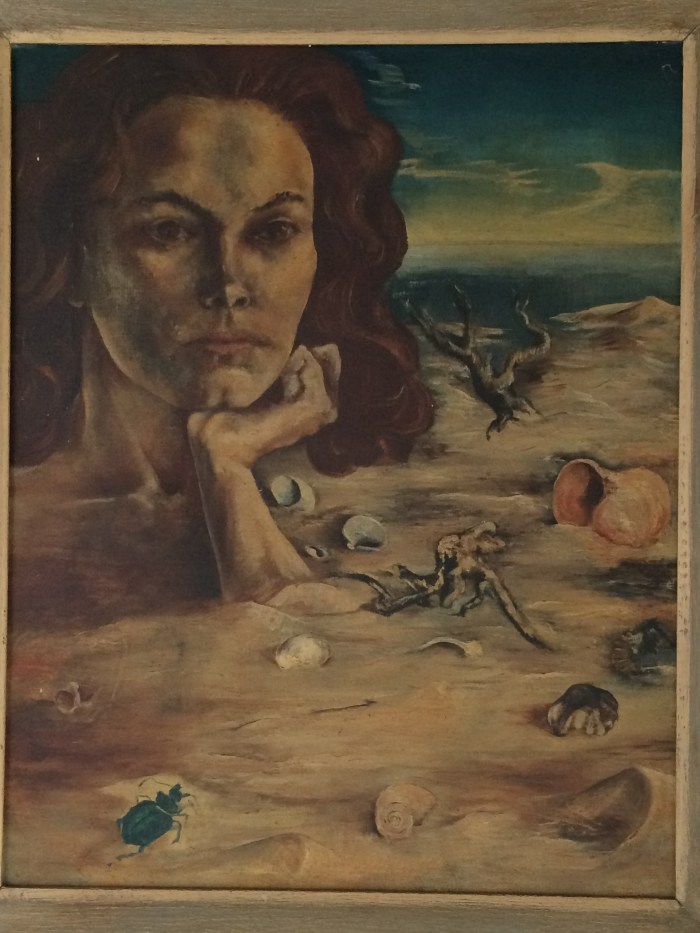
All through my childhood a self-portrait, painted by my mother hung above my parents’ bed. I was fascinated by this image of the stern face of my very beautiful mother with her long wavy chestnut hair. In the painting my mother’s body was buried in the sand up to her neck. Behind her, churning waves cascaded onto the shore. A blue sky was visible. A few seashells were scattered around and a large shiny green beetle was crawling over the sand. On the surface this image of my mother with her long curly hair seemed quite serene but as a child the painting disturbed me. It was as if this painting held a key – but to what? My father loved the painting and often commented on it…
I can remember playing at the seashore. My father would dig holes and bury both his children up to their necks in the warm sand that also held us fast…
When I moved from Lesbos to Crete, I decided to take some 30 large and medium-sized handmade terra cotta pots acquired over the years along with me. As I had been living part-time in Crete for several years, most of the plants had died, but I managed to salvage freesia bulbs, chives, and cuttings from nutmeg-scented geraniums.
My friend Mavroudis helped me empty the soil into feed bags provided by a neighbor who keeps sheep. I decided to move the dirt too, as I didn’t fancy carrying numerous bags up to my apartment. The movers were not too happy about this, and by the time they were deposited higgledy-piggledy on my balconies in Crete, several of the pots were broken and the bags were leaking.
I mended the broken pots with trusty epoxy glue before I got sick, which was lucky, because, since then, I would not have been able to do it. A few weeks after arriving, I felt tired and had trouble eating. I was diagnosed with cancer and began chemo-therapy. I have little physical energy and spend much of my days resting in bed or sleeping. There are still many boxes to unpack and they can wait, but I felt the need to tend the balconies. Continue reading “With Beauty Around Me by Carol P. Christ”
In 1936, Sir Noël Coward (1899-1973), one of England’s greatest and most prolific songwriters and playwrights, wrote a song for a play called Shadow Play, which is part of a series of ten short plays gathered under the title Tonight at 8:30. At one point, Simon steps down to the footlights and sings this song:
Play, orchestra, play
Play something light and sweet and gay
For we must have music
We must have music
To drive our fears away.
You can listen to Coward and Gertrude Lawrence (one of his best friends) singing the song here.
Shadow Play can probably best described as surrealistic: the major characters travel through dreams and flashbacks and flash-forwards as they try to figure out what on earth they’re doing. What do they fear? Probably what they’re doing to themselves with their illusions and delusions. But let’s take the song out of its dramatic context. What did people have to fear in 1936? Franco in Spain. Mussolini in Italy. Hitler in Germany.
From the 1920s to the 1950s, Coward wrote dozens of plays, many of them comedies, and acted in them, too. He also wrote more songs than I can count, most of them witty (“Sail Away”), many ironic (“Mad Dogs and Englishmen”), some romantic (“I’ll See You Again”), that not only advance the plots of the plays but also possibly distract listeners from whatever misery is happening in “real life.” As Amanda says in Private Lives, “[It’s] strange how potent cheap music is.” (Irony: she’s talking about “Someday I’ll Find You,” https://www.youtube.com/watch?v=_i3DDHL_dnw a romantic song Coward wrote that is playing offstage.) During the war, Coward also wrote and acted in popular movies to cheer his audiences.
Now let’s move into 2020. What do we have to fear? Here’s my current short list.
That Trump will refuse to leave the White House in January and Washington will turn into a literal war zone.
That patriarchy, misogynism, nationalism, white supremacy, and the gun lobby will get stronger and noisier.
That our school-age children will never go back to school as we know school and grow up to be illiterate and innumerate.
That climate change will destroy our blessed Mother Earth and all our kin, both animal and vegetable.
What can you add to my list? What do you fear today?
We all know, of course, that music by itself will not solve any of these problems or literally drive our fears away. But music is powerful. As William Congreve (an early 18th-century playwright) wrote, “Musik has charms to soothe a savage breast.” (No, that line isn’t from Shakespeare and, no, it’s not “savage beast.”) Music can help feel less savage…but well, yes, it can also sway us to be more savage (ask the Nazis about that). During this pandemic, perhaps music can heal us emotionally, perhaps help us deal with staying at home and meeting our friends only via Zoom. Music can both stimulate and soothe our poor, worn-out minds. Music can lift us out of depression and help us forget to worry for a while. Listening to and participating in music (maybe virtual bands and orchestras or choruses) will surely help us survive individually, maybe collectively.
Shakespeare often tells us how good music is for us. Two brief examples:
Music oft hath such a charm
To make bad good….
(Measure for Measure, 4.1)
Let there be no noise made, my gentle friends;
Unless some dull and favourable hand
Will whisper music to my weary spirit.
(2 Henry IV, 4.5)
I quit watching the Sunday TV talk shows several months ago, and now I don’t watch more news than I must to more or less keep up with what’s going on. I fill my evenings with music. What I’m totally insane about is musical theater. My all-time favorite shows are 42nd Street (Arlen and Dubin—all that tapdancing!), Ragtime (Flaherty and Ahrens), The Fantasticks (Jones and Schmitt—“Try to Remember”), Bright Star (Martin and Brickell), the balletic American in Paris (the Gershwins—“inspired by” and better than the movie), and Rent (Larson—“Seasons of Love”). How many of these shows do you know? Back when we could still go to the theater and see live actors, I saw all of these shows; now I have them on DVD, along with a gazillion others. I also like folk music (especially Pete Seeger and Arlo Guthrie…can you hum “Alice’s Restaurant”?) and classical music (especially Mozart’s Magic Flute because Papageno is so earthy and pagan). Oh, gee, another fear—what if theaters and real symphony orchestras are gone forever?
Now it’s your turn to consider the benefits of music in your life. What music do you listen to? When do you listen? Does this music help drive your fears away? Make yourself some new playlists and schedule more music into your days and nights. And remember—“we must have music.”
Barbara Ardinger, Ph.D. (www.barbaraardinger.com), is a published author and freelance editor. Her newest book is Secret Lives, a novel about grandmothers who do magic. Her earlier nonfiction books include the daybook Pagan Every Day, Finding New Goddesses (a pun-filled parody of goddess encyclopedias), and Goddess Meditations. When she can get away from the computer, she goes to the theater as often as possible—she loves musical theater and movies in which people sing and dance. She is also an active CERT (Community Emergency Rescue Team) volunteer and a member (and occasional secretary pro-tem) of a neighborhood organization that focuses on code enforcement and safety for citizens. She has been an AIDS emotional support volunteer and a literacy volunteer. She is an active member of the Neopagan community and is well known for the rituals she creates and leads.
I am a fairly private person; but I do like nice hugs. I grew up in a home that involved so much intentional love and affection that I came to see it as a normal part of any loving relationship. I’m pretty sure I startle my friends sometimes by saying such affectionate things; but they endure, and many of them claim to appreciate a nice hug, too.
I know there are plenty of people who have experienced unhealthy or abusive touch; in fact, I’m one of them. I also know that the way to heal those wounds is usually through healthy touch, in relationships of trust.
I lived with my mother until I was 11 years old. In all that time, she never once told me to “be good,” and I can count on one hand the number of times she ever punished me for anything. She was strict, and she often used the infuriating answer “Because I said so,” but she called us her “angels,” and we got along wonderfully.
Then one day, I was abruptly moved in with my father, against my will (and against my mother’s will). Suddenly, without understanding why, I was always in trouble. When I least expected it, I would be chastised and punished. I was not allowed boundaries – my clothes were borrowed without asking, my belongings given away to my half-siblings without asking, my mail opened and read, my phone conversations eavesdropped onto, and I was lectured regularly about the bad things I probably wanted to do and must not do and would be punished if I did them. Continue reading “Feminist Parenting: How you treat children is how you see yourself – Part 1 by Trelawney Grenfell-Muir”
My sense of direction is, at best, poor. In spite of that, I love a road trip. With the advent of affordable GPS (Global Positioning System) devices, driving long distances has become easier. Unfortunately, that tool (GPS) is not always reliable. Sometimes I get lost. I have a hard time figuring out how to get back on track. Like Blanche DuBois in “A Streetcar Named Desire,” I’m forced at times to depend on the “kindness of strangers.” Getting lost, though, becomes part of my road trip adventure.
I recently drove (for the third time) from Richmond, Virginia, to Las Cruces, New Mexico. I’ve chosen a different route each time. On this trip, I kept the mileage under 400 miles/day. That gave me time to look around the places I stopped for the night. This trip wasn’t nearly as taxing as those where I pushed to cover as much ground as possible in a day. I also made it a point to stay out of Texas due to the state’s high COVID-19 numbers and that added a couple of hundred miles to the drive. Continue reading “Where Am I Going? by Esther Nelson”



 This blog post is the 3rd in a series of looking for female deities in the bible who have been translated out of easy reach or otherwise hidden within its words. In my last blog post I discussed bird imagery and the bible. It is
  Read Part I of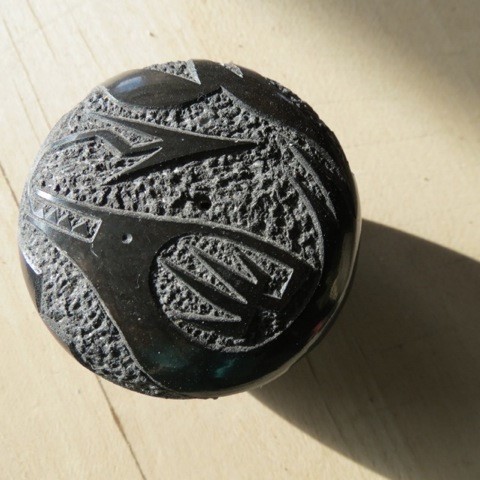

 When I moved from Lesbos to Crete, I decided to take some 30 large and medium-sized handmade terra cotta pots acquired over the years along with me. As I had been living part-time in Crete for several years, most of the plants had died, but I managed to salvage freesia bulbs, chives, and cuttings from nutmeg-scented geraniums.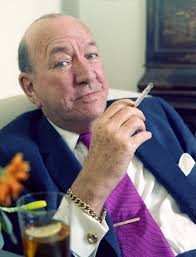
 Barbara Ardinger, Ph.D. (
 I am a fairly private person; but I do like nice hugs. I grew up in a home that involved so much intentional love and affection that I came to see it as a normal part of any loving relationship. I’m pretty sure I startle my friends sometimes by saying such affectionate things; but they endure, and many of them claim to appreciate a nice hug, too.
 I lived with my mother until I was 11 years old. In all that time, she never once told me to “be good,” and I can count on one hand the number of times she ever punished me for anything. She was strict, and she often used the infuriating answer “Because I said so,” but she called us her “angels,” and we got along wonderfully.
 My sense of direction is, at best, poor. In spite of that, I love a road trip. With the advent of affordable GPS (Global Positioning System) devices, driving long distances has become easier. Unfortunately, that tool (GPS) is not always reliable. Sometimes I get lost. I have a hard time figuring out how to get back on track. Like Blanche DuBois in “A Streetcar Named Desire,” I’m forced at times to depend on the “kindness of strangers.” Getting lost, though, becomes part of my road trip adventure.
 Feminism and Religion