

 About six months ago I was hired to write a curriculum for a Jewish organization on biblical women in ancient and contemporary midrash. Midrash—the ancient process of creative interpretation of sacred text that began two thousand years ago and continues to this day—has been one of my fields of expertise, and women in midrash is a particular specialty. I knew the first lesson I wrote would be on Eve (Chava in Hebrew), the first woman of Genesis. Yet as I began to write lessons, I started with Sarah and Hagar, then proceeded to Rebekah and Lot’s wife, Rachel and Leah, even Asnat (Joseph’s wife) and Naamah (Noah’s wife). It became clear over the months that I was avoiding Eve. Whenever I began to think about beginning “her” lesson, I grew anxious and immediately began to think of something else. Only when I had already written six of my ten lessons did I finally, reluctantly, begin to research ancient legends and modern feminist poems on the first foremother of the Bible.
Why was I avoiding Eve? In part, because she seemed like such a huge topic. Generations of Jews (and, of course, Christians) have had a great deal to say about Eve, her creation, the fruit of knowledge, the serpent, Eve’s relationship with Adam, and more. How would I encapsulate it all? And then there was Lilith, Eve’s alter ego, and all of the legends about her. Choosing a handful of midrashim out of this vast corpus seemed impossible. Plus, there was a whole literature about the relationship between Eve and ancient Near Eastern myth I wanted to allude to—Eve as a kind of human version of the Goddess with her Tree. How to choose what to put in and what to leave out? Continue reading “Eve, Revisited by Jill Hammer”
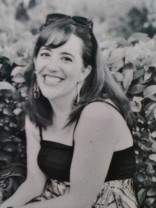 It’s July which means we have collectively endured 7 months of uncertainty, turmoil, darkness, and light. America, we are still battling all aspects of the virus: rising numbers of infected, those that deny its existence, those refusing to wear masks to help to stop the spread, and everyone else doing their duty by staying at home, washing their hands, and wearing masks. Yet, something else has added to the mix and the COVID19 pandemic; social media. Social media has taken on a whole new level for activism and resistance.
 — for Alex, a nurse I met who is also a poet, and all nurses
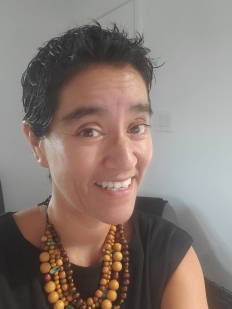 Hello FAR friends,

 When I wrote Murder at the Rummage Sale, my agent warned: “You have to have a sequel in mind!” I was supposed to write a second domestic cozy, same setting, same characters, different victim. But what came to mind was a memory. When I was a troubled teen visiting England, my uncle gave me a map and let me go sightseeing in London on my own. It was early winter 1968, the war in Vietnam was raging. I did not want to be an American; so I faked an accent, wore an eccentric hat, and called myself Eliza Doolittle. When a man picked me up, I did not know how to break out of character. I ended up drunk in his flat. I just managed to fight off rape. The man must have figured out that I didn’t add up and could land him in trouble. He took me back to my uncle’s office. The kernel for All the Perils of this Night is: what if he hadn’t? What if, like so many others, I had been trafficked? I couldn’t shake that “what if.” So I wrote the standalone sequel, no domestic cozy but what I would call a numinous thriller.
 I was released from a national hospital in Crete on Friday afternoon after a seven day stay. During that time, I had over fifteen tests, including several ultrasounds, two CTs, a colonoscopy, a gastroscopy, and an excruciating forty-five minute MRI.
 I hardly knew you.

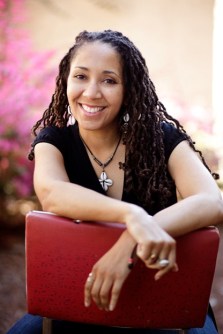 In national quarantine and sheltering-in-place or is it “safer-at-home,” all I could think about was that we were living in a scene from the late Afrofuturist writer Octavia Butler’s book
 A conversation I often have with students is focused on the ways mission and purpose are inextricably linked with our roles as human beings. Understanding what it means to say that human beings have a specific purpose can feel overwhelming and spiral us into an existential crisis; a hallmark of a “Messina class,” according to one of my students.

