

As I delved into Indigenous knowledge research, Amazigh traditions, and decolonial studies, I learned from amazing researchers and feminist scholars in history, archaeology, ecology, and more. Still, I came to realize that feminism is a lineage rooted in many traditions and experiences, and extending through numerous expressions. It is older than modern feminist movements, and echoes – in reality – very ancient practices, those of priestesses, grandmothers, and daughters, holding, still today, high principles.
Across generations, these women carry, protect, adapt, and transmit the knowledge necessary to preserve and sustain life. They are not only activists, writers, scholars, storytellers, therapists, mothers, sisters, and daughters, but also act as a bridge between the past and the future, spirit and matter, heart and mind, humans and other-than-humans.
Women in this lineage ensure the continuity of high values, defend the sacred, and fight for the ancestors and the next generations; this is why I would like to mention some of these women and some of their contributions that “form and inform” me as I continue the path, hoping that one day I, too, can be a knot in the feminist lineage.
==
Intergenerational act-ivism
Mother and daughter speak as knots in the feminist lineage:
Mother: What we are involves a tradition
Daughter: Our positionality involves responsibilities
Mother: We guard our bodies, lands, tongues, and traditions
Daughter: We defend cultures, and preserve nature in
all its forms: children, animals, forests, and trees…
Mother: We are custodians of knowledge
Daughter: We recenter marginalized voices and create alternative epistemologies.
Mother and daughter, together, hold hands to shake the world.
===
Vicki Noble

Vicki Noble is a visionary leader, author, artist, and feminist healer. She is best known as the co-creator of the iconic Motherpeace Tarot and the author of Motherpeace: A Way to the Goddess, Shakti Woman: Feeling Our Fire, Healing Our World, and The Double Goddess: Women Sharing Power. She made several lesser known but highly impactful contributions, including in The Rule of Mars: Readings on the Origins, History and Impact of Patriarchy, and Foremothers of the Women’s Spirituality Movement. She has dedicated her life to empowering women for five decades and continues to inspire many in their path.
What drew me to Noble’s work was not only her exploration of the Amazon’s history and legacy, but also her fire, her passion, and her ability to see patterns, with a higher vision that helps retell our history. Her work does not stay within disciplinary borders; she moves between spirituality, archaeology, history, genetics, mythology, and women’s experience. She showed me, as an Indigenous researcher, that knowledge does not need to be fragmented, and that it is possible to be free from imposed academic boundaries while remaining deeply connected to the divine inspiration. Vicki Noble helped me understand that being a bridge is a strength. She inspired me to embrace my own role as an interdisciplinary bridge between Indigenous knowledge, academia, spirituality, feminism, and history.
Marija Gimbutas
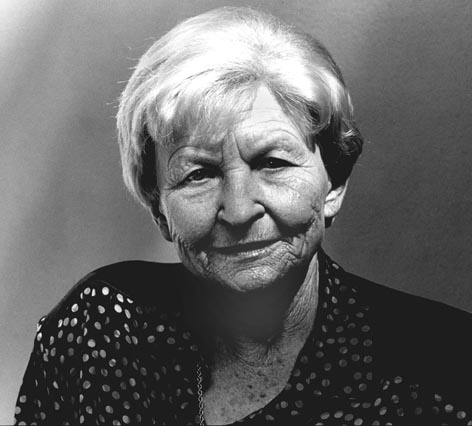
Marija Gimbutas is an archaeologist and a pioneer of interdisciplinary research. She created a new field of study called archaeomythology, which I mention in Indigenous Rising. Her most revolutionary theory was that of Old Europe, according to which a peaceful, egalitarian, matriarchal civilization existed in Neolithic Europe for over three thousand years.
Marija Gimbutas is a legend in our field. While she is not defined or remembered as a feminist, her research inspired generations of women because it gave voice to something many of us knew but didn’t have the knowledge or voice to articulate: the insight that creation begins with the feminine. Her work gave me confidence in archaeology again, not as a practice that dismisses women, but one that begins with and by women.
What inspires me about Marija Gimbutas is also her courage. She was ahead of her time and faced endless criticism and opposition, yet she continued her work until the end, and her influence continues beyond her death. As a researcher, I am often expected to justify my knowledge, and my expertise is questioned in ways that men’s expertise often is not but contemplating how Gimbutas held her ground taught me that it is possible to stay open-minded to other perspectives while maintaining confidence in one’s work and intuition. She showed me how to persevere and stay focused on what needs to be done instead of defending who and what I am.
Heide Göttner-Abendroth
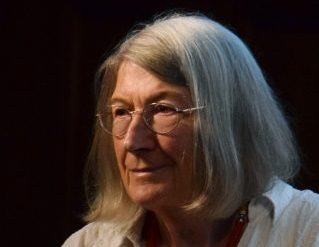
Heide Goettner-Abendroth is a philosopher and researcher on culture and society, focused on matriarchal studies. She has published on philosophy of science and extensively on matriarchal society and culture, and through her lifelong research on matriarchal societies has become a founder of Modern Matriarchal Studies. She founded the “International ACADEMY HAGIA for Matriarchal Studies” in Germany and has served as its director since 1986. Her long-term research on matriarchal societies helped identify structures and mechanisms that still exist in various parts of the world today. Through her work, I discovered perspectives completely absent from my education; I didn’t know that the Tuareg preserve important matriarchal characteristics, as do the Kaybylie and the Chaoui. Through her work and my own discoveries about my Amazigh ancestry, I began to understand that fragments of matriarchal cultures still survive in North Africa. This realization changed my perspective completely.
I began to see that despite Islamization, colonialism, and modernization, many North African societies continue to preserve social structures where mothers occupy a central place. Yet French colonialism violently weakened many traditional values, generated deep transgenerational traumas, and disrupted cultural foundations for many generations.
Heide Göttner-Abendroth encourages me to look for what remains and to reweave the surviving fragments for my people: the love and protection of life, the importance of community, and the central role women play in maintaining economic and social balance.
Françoise Vergès.
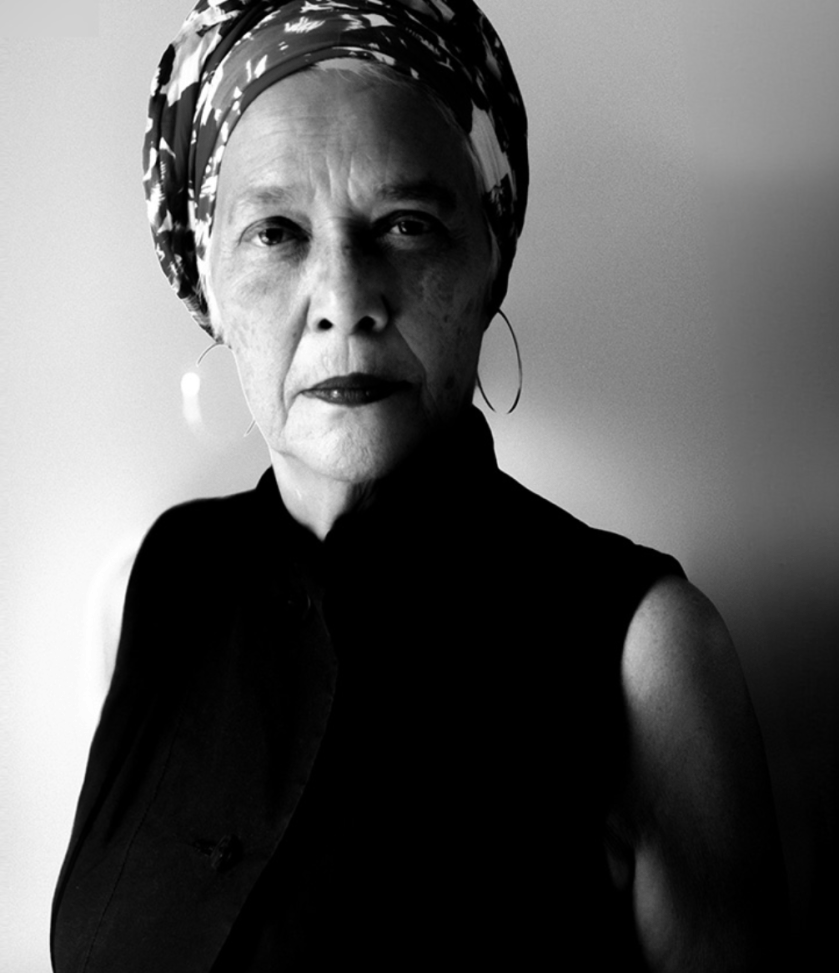
Françoise Vergès is a political theorist, curator, and writer; she writes on the racist fabrication of premature death, decolonial feminism, the impossible decolonization of the Western Museum, climate disaster, and antiracist, anticapitalist politics of vital needs. Her work represents what decolonial feminism can be at its best: creative, courageous, innovative, politically, socially, and intellectually engaged. Her writings on decolonial feminism, decolonizing museums, and, more recently, the economy of death, continually challenge us as researchers to look again at what we think we know. What I appreciate most about Vergès is that she demonstrates that feminism is not a fixed body of knowledge. It is a continual reinvention of our gaze, our perspective, and our relationship to the world.
As someone who works between cultures and traditions, I also admire her ability to build bridges between communities and nations that suffered and continue to experience colonial violence. She has also shown me something important about intergenerational transmission as she continues to militate and introduce complex topics to the younger generations. Through her example, I also see how important it is to think differently and speak truth to shine a light on patriarchal, colonial, corrupt systems; indeed, one of our most important feminist responsibilities is not only transmitting information, but also a logic and way of thinking.
Other researchers and feminist writers continue to influence my work, such as bell hooks, Barbara Alice Mann, Kaarina Kailo, and many more. Each crossed boundaries, challenged dominant narratives, and remained committed to a vision and a mission.
I like to think that being connected through the feminist lineage means that, at some point, we all gather, intersect, and meet along the way, becoming a much-needed community that transcends time, language, and distance. This community also makes it comfortable for me to embrace multiple feminisms: Indigenous feminism, ecofeminism, decolonial feminism, spiritual feminism, and many others. I do not see them as conflictual or competing perspectives, but as branches, or extensions growing from a related root.
Most importantly, this community and lineage helped me understand that several women have guarded this root for a long time, and that the future now depends on our willingness to continue this work.
Blessings.
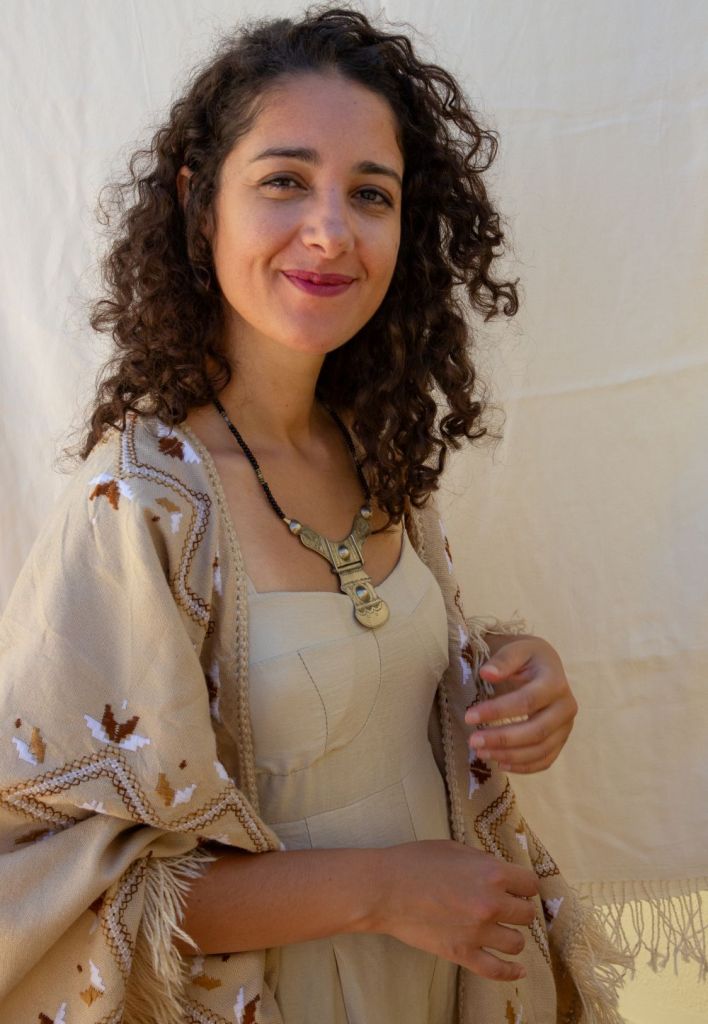
BIO: Ouassima Touahria: Author and publisher, she holds an MBA specializing in the theory of knowledge in multicultural contexts and an MA in Women’s Studies. She is a decolonial researcher and matriarchal studies scholar. Her work bridges decolonialism and Indigenous studies through creative and feminist methodologies. Born in North Africa and shaped by the landscapes of mountains, waters, and winds, she carries a deep connection to her ancestors, land, and memory. She explores how colonialism and patriarchy fractured Indigenous epistemologies and how land-based practices, ceremony, myth, and embodied writing can restore what was silenced and heal what was broken. Her writing is both an act of rebellion and a reclamation, a way to return to the body and lands as sites of memory and sovereignty. She is the author of Indigenous Rising and Amazons Rising.
Discover more from Feminism and Religion
Subscribe to get the latest posts sent to your email.

