

 She looked away and stared out the window, trying to hold back the tears in her eyes. “The tents,” she said and shook her head looking down at the ground. The tears were coming, but softly. I asked her what the tents represent. She shrugged her shoulders and said into the camera phone: “The bodies I guess. They don’t have enough room for the bodies.”
In this time of the coronavirus, as in Italy and Spain, New York City has room neither in the hospitals nor the morgue for the bodies that are dying. Up from 25 a week, to 24 a day, bodies are being buried on Hart Island, or City Cemetery, where the unclaimed and unidentified have been interred for decades. Others are waiting in refrigerated trucks for friends and family members to collect them. This New Yorker along with thousands of others have seen the stark reality, one that left even Trump sick at heart.
We are witnessing a global pandemic. Evidence of the ravages of the coronavirus lies all around us. The response to the virus has made physiological, economic, and psychological impacts on our lives. We have changed our working styles, dealt with lowered income, or lost our jobs. Staying secluded at home, we have taken on new roles for which we were not prepared; many of us have become sick, and some have died. We are together witnessing a major world disaster.
What does it mean to be a witness? What will it mean to carry that witnessing forward to future generations to mark this historic event so that when something like it happens again, future generations will have the tools they need to respond more quickly, adapt more easily, recover more rapidly? For this generation, just as those who researched and learned from the Spanish Flu, we bear witness. Continue reading “The Practice of Bearing Witness by Stephanie Arel”
 This Easter was a challenging time for many of us. I could never have imagined that my daughter Sarah and I would end up spending the holiday at home alone — or that we would have hot dogs and tater tots for Easter dinner
 Feminist spirituality is often disparaged in academic feminist and progressive communities. Many of the strongest critics are Marxists, but there is a general agreement that religion is the opiate of the people, a false belief system that diverts energy from the difficult work of creating justice in this world. This view is rooted in the habit of thought known as classical dualism in which spirit and nature, spirit and body, and this world and the next are viewed as antithetical. From this, it would seem to follow, feminist spirituality focuses attention on an imagined spiritual world as opposed to the material world in which real people live and interact with each other. Nothing could be farther from the truth.
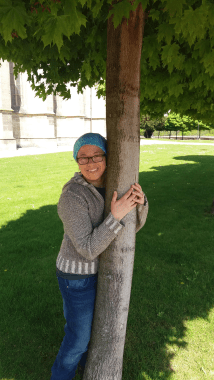 In my last
 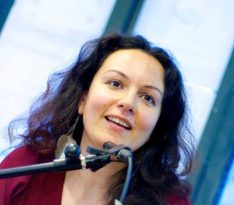 The moment we live right now is one of its kind in the history of humanity. There´s an expansive wave of uncertainty, fear of death, panic and, at the same time, an expansive wave of creativity, hope, compassion and unity. We´ve never been so isolated from each other and yet so close…

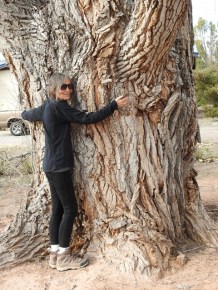 Full Seed Moon 3/9/20
 Over the past few weeks of lockdown in Greece, I have asked myself numerous times: if we can shut down the world economy because of a virus, why don’t we shut everything down until we end war or find real solutions to global climate change? In my mind the horrors of war are much worse than the horrors of disease and dying and the threat and reality of global extinctions pose a much greater threat to humanity (not to mention nature) than the Coronavirus.
 As I’m writing this early in March, the CDC has recently said of the outbreak of the coronavirus (Covid-19) that it’s a question of “not if but when” the epidemic will strike the U.S. As we know, it started in China, where it was underreported. Some U.S. cities are setting up quarantine centers, the Faux New Channel is now proclaiming conspiracy theories about the origin of the virus, and Mr. Trump has appointed Mr. Pence to be Coronavirus Czar. Which would be fine if either man believed in science.
