

 My Name Is Isis by Susan Morgaine is the fourth book in the My Name Is series from The Girl God; a series of picture books for children. The series serves as a child’s gentle & colorful introduction to one particular Goddess per book.
In My Name is Isis, Susan Morgaine invites her young readers into a dialogue with the Goddess. For example, when sharing Her role as Great Mother & Protector, Isis asks “Do you have brothers or sisters — or a pet — that you help take care of?” inviting the reader to consider what it means to be nurturing and protective of someone they love. The conversational style is engaging and creates an opportunity for a child to see characteristics of the Divine within themselves.
The cover art and design of this particular book is not my favorite in the My Name is series. I find this one unappealing to children in comparison to the earlier volumes. However, the illustrations inside the book are luminous and include many beautiful examples of women’s bodies that serve to normalizing the sacred nature of diverse feminine forms. Many of the symbols, animals, and features associated with Isis are also depicted, such as Isis as a kite, searching the world for Her missing husband.
Parents should be aware that as a part of exploring Her story, the text does touch on death & the loss of loved ones. It does so gently and encourages children to know that their deceased loved ones live on in their hearts. Sensitive children who struggle with the concepts of death, dying, or grief may need help processing these few pages.
I especially loved the pages about Isis as Teacher and her firm, loving admonishments to “treat your teachers with honor and respect as they show you the things you must learn.” Teachers need a Great Goddess looking out for them and the incredible work they do every day. So, this was a sweet addition to the aspects of the Goddess Susan explores and the lessons she and Isis convey to their audience.
Overall, this truly is a lovely picture book that Pagan/Goddess parents could use to introduce young children to Isis as Great Mother, Teacher, & Healer. Hopefully, Susan Morgaine will write more future volumes in the series, bringing young Pagan children into conversation with more Goddesses. Continue reading “My Name is Isis BOOK REVIEW by Kay Bee”
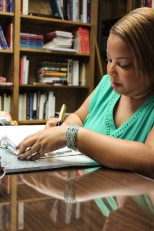
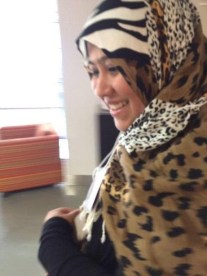 Before coming to the U.S., I felt disconnected from feminist theory. I thought this framework labels women as haters of men and seekers of obscure rights. I was not sure who could identify with it or belong to it. For me, it was just a scholarly concept women used to justify their rights. I could not perceive it as an empowering tool, even if it is being so popular. While there is no problem having the concept to be loud and popular, this loud voice did not speak for me. I could not let it represent me or speak on my behalf. Every time I google it, I see angry faces, naked women, people yelling, women in chains, and much more. Instead of accepting it, I resisted it.
 I recently told my 4-year-old son the following, “son, I pray you fall in love with someone you call your best friend. I pray you both never cross the line and say mean and terrible things to each other, I pray you are not constantly apologizing for your bad behavior, I pray you will complement and enhance each other’s best qualities, and lastly, I really hope you fall in love with a teacher!”
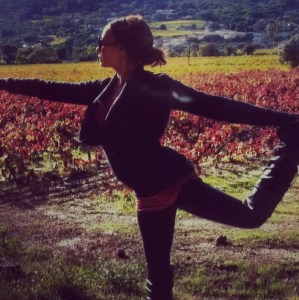 happened when, after a tedious and challenging few years of getting myself through law school, I rewarded myself with an entire summer off to become certified to teach yoga. Yoga got me through sticky times in my young adulthood, from soured relationships, to poor scores on my legal exams. It also kept my feet on the ground when I was flying high, whether from planning my wedding or completing my studies. Yoga was the antidote in my life. I cherished not requiring medication for all the different feelings I’ve had throughout my adult life; whether it was anxiety, depression, loss of focus, too much energy, or the run of the mill aches and pains, I always turned to yoga. The feeling of stretching and flushing out toxins, negative energy, frustration, while building strength and teaching myself how to breath, were all things I wanted to learn in more depth and, eventually, to teach.
  The symbol of the Goddess is as old as human history. The most ancient images of the Goddesses from the Paleolithic era are neither pregnant nor holding a child. In Neolithic Old Europe the Goddess was most commonly linked with birds or snakes and only rarely portrayed as mother. Yet we tend to equate the Goddess with the Mother Goddess. I suspect that images of the Virgin Mary with Jesus on her lap and prayers to God as Father have fused in our minds, leading us to think that the Goddess must be a Mother Goddess and primarily a Mother.
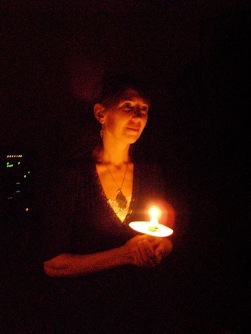

 The past few weeks, I’ve been sitting with the many layers held by the concept, and the manifest reality, of mother, mothering, and motherhood. Mother is seen in the divine feminine, in the cosmos, and in the sea and the glow of the moon. She is held in our genes and our histories and the eyes of our children. She is found in archetypes of healing, nurturing, and comfort, as well as in stories of criticism, coldness, and abuse. She is the soft one who tends grief and holds hands and braids hair, and she is the unbreakable one whose labor and caregiving is taken for granted in most areas of her life. We carry our mothers with us in our DNA, in our stories, and in the way we navigate the impacts of intergenerational trauma.

