This article was originally published by The Beltane Papers issue #30 February 1998. FAR is republishing it with permission from the author in order to digitally archive this important work. Part 1 is available here.
 The indigenous Brazilian tribes worshiped all Mothers and believed they created life without the male presence. All Goddesses were virgins, but their virginity was only a symbol of independence and self-sufficiency, without any physical meaning. In some myths, the virgins are impregnated by numinous energies, manifested as animals (snake, birds, porpoise), forces of Nature (rain, thunderbolts, rays of light), ancestors or Deities. As other native people, they weren’t aware of the male participation in the conception and respected and revered the menstrual blood as something sacred, filled with magical powers, because after the “supernatural” ceasing of the monthly flow, life was created. Only after the interference of the white settlers and the massive Catholic indoctrination that the native cosmology was distorted, the Father assumed the main place, the Son became the second one in the divine hierarchy and the Mother was transformed in a suffering and silent virgin. Even so, many native traditions survived in the legends, folk beliefs, shamanic healing and magical practices as the Pajelança and Encantaria.
Besides the “Good Mother”, some of the native legends also mention the “Terrible Mother”, Boiuna, the Giant Snake of the Amazon River. The bottom of the river was her habitat and she appeared only at night, destroying boats and devouring people. Her terrifying aspect and her connection with the darkness, death and night are, as a matter of fact, features of the Dark Goddess, the Reaper, who controls the eternal cycle of birth, life, death and transformation.
Another manifestation of the Dark mother is Caamanha, “Mother of the Woods”, protector of the wild life who punished all intruders and violators of her domain. In other myths, she was transformed either in the Curupira or the Caapora, strange male beings, with twisted feet, who walked backwards, thus acting as guardians by misleading hunters or even attacking them.
In some Guarani myths we find mentions to the “Mother of Gold”, described as a beautiful woman or a brilliant globe, which seduced the gold prospectors and took them deep in the mountains, far away from the gold mines. Considered a Guardian of Mother Earth’s treasures, she sometimes manifested herself as Boitatá, who could appear as a phantasmagorical snake, with a luminous body and huge eyes, or only as a giant head, floating over hidden treasures, frightening or punishing those who destroyed Nature in search of fortune. Continue reading “The Brazilian Great Mother by Mirella Faur (Part 2)”


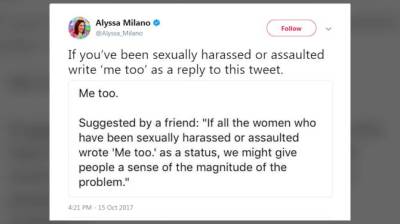
 My “me too” went out for all to see way before Facebook existed, way before there were hash tags and internet pages for unveiling our secrets to the world. In all the years that have passed since I first spoke publicly and published about my experiences with sexual violence, there has been a steady stream of people (mostly, but not all, women) who have come to me with their #metoo.
 I was at a dinner party for twelve lovingly prepared by two ex-pat friends, when the subject of Woody Allen’s most recent film came up. I don’t remember which one of them it was, because, as I said at the time, “I vowed never to see a Woody Allen film again as my response to the way he treats women in his films and in his personal life.” I was immediately challenged by–it seemed to me at the time–everyone else at the table.
 A few days ago, at the
  I needed to check out a camera for an assignment. I was in the small equipment room looking at equipment I clearly did not know how to use yet. But, I was required to check out a camera and start. I was excited to begin.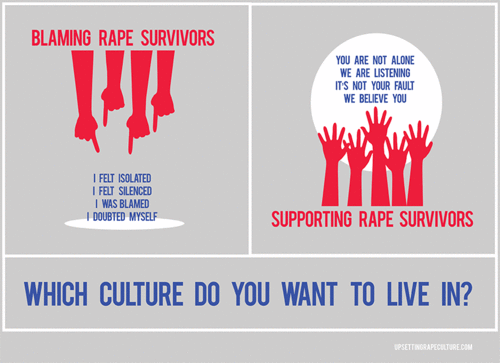

 In the times of our environmental crisis, I long for rituals, literature, music that can help me navigate the challenge of figuring out how to help, that can inspire me, keep this reality in my mind. I would love to write earth-based poetry myself, but I’m not nearly as connected or intimate or hopeful within my soul as such a task might require.
