

I recently accepted a new position at my local public library and yesterday the duties of that position happened to include staffing our library’s Eclipse Viewing Party. From about 10am to 1pm, I answered countless questions about the eclipse, helped people of all ages make pinhole projection viewers out of everything from cardstock to saltine crackers, loaded & reloaded NASA’s footage that we live streamed on the big screen, & handed out moon pies. And, of course, encouraged the couple hundred folks who had descended on our little library to be good neighbors and share the fifty pairs of NASA-approved eclipse glasses we’d managed to get our hands on the week prior.
The eclipse was stunning. We were able to experience the temperature drop, the change in the quality of light, and a safe view of the peak of the eclipse, which was at about 80% here in the Four Corners area. But what really struck me about the experience was the spirit of community I witnessed.

Folks shared eclipse glasses with each other freely, passing them around beyond the friends or family they had come with to people they didn’t necessarily even know. “Did you get to take a look?” was a phrase I heard everywhere I went as I wove through the crowd, helping wherever I was needed. “Here, use these and then pass them on.” Kids broke moon pies together, splitting them into pieces to share with those who hadn’t snagged one before we ran out of those as well. People spotted shadows of the eclipse naturally projected onto the ground or on one gentleman’s white cowboy hat by the sun’s light as it passed between tree leaves and happily showed each other. Elders taught children they didn’t know how to use their pinhole projectors just like they did when they were young. Everyone cheerfully & excitedly helped each other get a different perspective on this moment in time in order to better appreciate the ever-shifting relationship between our Earth, Moon, & Sun. Continue reading “When Community Eclipses Polarity by Kay Bee”
 Asked the secret of her long and happy marriage, Dorothy Hartshorne, wife of the philosopher Charles Hartshorne, posed a question: “What do you think you must never do in a marriage?” The young woman thought for a moment and replied, “Never hurt each other?” “Oh no,” Dorothy responded, “you will hurt each other all the time. What you must never do is bore each other.”
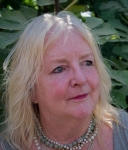 Carol gave this blessing at the wedding of Shelby Carpenter and Mark Miller on August 3, 2017 in Molivos, Lesbos.
 These days I find it hard to write – I feel plagued with negativity, and the news and violence and overall hateful actions of others have weighed deeply on my soul. While I personally am ready to celebrate a milestone birthday, am another year closer to completing my Ph.D., witnessed the graduation of one daughter, experienced the independence of another, a milestone for my twins, as well as my father’s successful completing of another orbit around the sun after a year plagued with health issues – rather than joy, my heart is filled with pain – pain of the election, pain of the failure of our political system’s supposed checks and balances, pain of violence and bigotry like that enacted in Charlottesville, pain of terror attacks in England, Spain, Finland, France, etc. Where we ought to be united, we are divided. Thus, I write from a place of remembering – a place of strength – a place to say I count (as you count) – and I begin this blog in the voice of Enheduanna, where she becomes the first voice in history to reveal herself – her name, by simply stating – – “I AM.”
  In the wake of Charlottesville, and following
 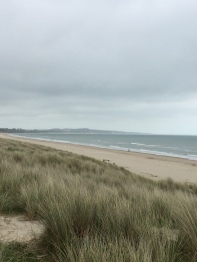 My idleness has been cured as I take a new job teaching college English to high school students at a charter school for eight hours a day. At exactly my 80th and last job application since January 2017, I received the offer just a few hours after my interview and had just a few days to pack up my life and leave. Traveling through desolate flatlands, relieved tornado season was quelled at late summer, I would finally embark on a full-time job, my last one having been almost a decade ago.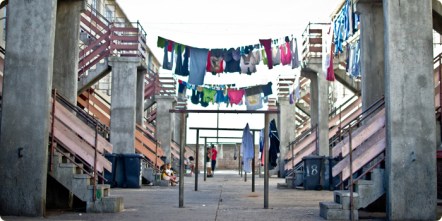
 Since patriarchy is atrocious, and capitalism is currently driving the earth to a very real catastrophe, we can get passionate about these issues. We can get angry. We can get self-righteous.
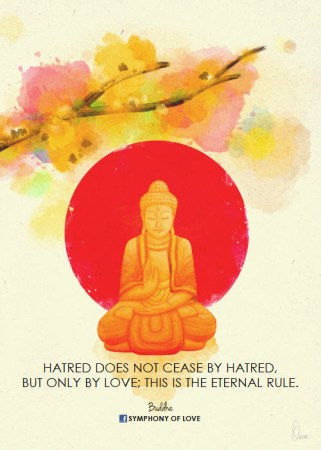 However, as one of the most famous verses of Dhammapada goes:

 Katey Zeh, M.Div is a strategist, writer, and speaker who inspires communities to create a more just, compassionate world. She has written for outlets including Huffington Post, Sojourners, Religion Dispatches, Response magazine, the Good Mother Project, the Journal for Feminist Studies in Religion, and the United Methodist News Service. She is the co-host of
  Despite having thought
 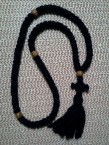 During this time, I came across the Greek Orthodox prayer rope (komboskini) that had been spontaneously removed from her person and given to me by the Mother Superior of the
  It is in our hearts –one’s sense of superiority exists within. We are all and each capable of hate and bigotry.
 Feminism and Religion