

“When I dare to be powerful–to use my strength in the service of my vision–then it becomes less and less important whether I am afraid.”
–Audre Lorde
“The purpose of life is not to maintain personal comfort; it’s to grow the soul.”
–Christina Baldwin
When teaching childbirth classes, I would speak to my clients about shifting the common fear-based “what if” 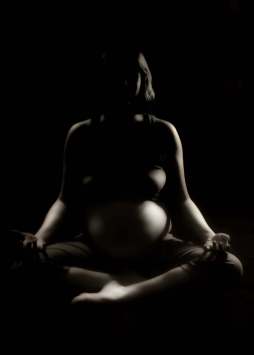 cultural dialog of birth to “positive” anticipation rather than fears, encouraging them to ask themselves questions like: “what if I give birth and it is one of the most powerful, thrilling moments of my life?” While I stand by this practice, I also think about the what ifs that crawl out of our dark places and lodge in our hearts. The what ifs that snake around the edges of our consciousness in the early hours of the morning. The what ifs we try to push down, down, down and away. The what ifs that stalk us. The what ifs so very awful that we fear in giving voice to them, we might give life to them as well.
We may feel guilty, ashamed, negative, and apologetic about our deepest “what ifs.” We worry that if we speak of them, they might come true. We worry that in voicing them, we might make ourselves, our families, our communities, our work, or philosophies, our faiths, or whatever look bad. We want to be positive. We want to be blissfully empowered, confident, and courageous. And, guess what? We are. Sometimes that courage comes from looking the “what ifs” right in the eye. Sometimes it comes from living through them. My most powerful gift from my pregnancy with my daughter, my pregnancy-after-loss baby, was to watch myself feel the fear and do it anyway. I was brave. And, it changed me to learn that.
What if we can learn more from our shadows than we ever thought possible? There is power in thinking what if I can’t do this and then discovering that you CAN.
Continue reading “What If…She’s Stronger than She Knows…by Molly Remer”


 Kavannah is a Jewish concept meaning intention or motivation, perhaps most associated with Hasidism. Hassidism teaches that prayer and the fulfillment of mitzvot connects one more with the Holy One if the right state of mind is cultivated before participating in said activity. While going through the motions (prayer, mitzvot, etc.) is important and still technically fulfills the mitzvot, it is not as spiritually beneficial to the individual as is doing those tasks with kavannah. Praying and fulfilling mitzvot within a certain mental space more fully connects you to the divine. Judaism is not alone regarding this religious insight. Clearly there is something to it.

 One of the first things my American friends and family ask me when they learn I used to be married to an Indian man is: was it an arranged marriage? I understand the intrigue, the bewilderment and even horror that the phrase “arranged marriage” can conjure up in unfamiliar Western minds. Images of forcing women to marry strangers encountered upon the street or child betrothals or women being dragged to the wedding site to be married off to mustachioed men are likely to flash before one’s eyes. While such incidents may have occurred from time to time, and in the past, as with child marriages, the long-established concept of “arranged marriage” is very different and not as frightening as may seem.
 The Handmaid’s Tale on Hulu has become my latest guilty pleasure. I rarely watch television and when I do my channel is set to MSNBC. But the news has been almost too much to handle. I still find myself living in disbelief that we are a nation under the Trump Administration. And it seems that if you miss one day of the news cycle, you’ve missed a year with all the Trumptastic failures that continue to arise.
 This year the summer solstice occurs on Tuesday, June 20 in the Northern Hemisphere. (In the Southern Hemisphere, it’s the winter solstice and it occurs on June 21.) For us in the Northern Hemisphere, the summer solstice is the longest day of the year. The word “solstice” means “sun stands still.” It’s when the sun reaches its highest point in the sky and seems to stand in the same place before it begins moving toward the winter solstice. We like to think that the primary solar deity is Apollo, but there’s a whole crew of solar gods who are born near the winter solstice and live for a season in great honor, after which they’re sacrificed, spend a season underground, and are reborn.
