 Historical note: I took the name Formosus (r. 891-896) from one of the popes of the Dark Ages. After his death, his body was exhumed, dressed in papal vestments, and put on trial for political crimes. The corpse was found guilty, and the vestments were torn off it. Then it was thrown into the Tiber. A monk pulled it out, and it is said that the corpse was then burned.
Of course, if the fisherman in this story resembles anyone in modern politics….
Near the bend of the great blue river where it empties into dark sea, there once lived a fisherman and his wife. Although they were so poor they lived in a rickety hovel on the bluff above of the river, the fisherman’s wife was smart and thrifty and the fisherman himself was unusually devout. He always managed to save a brass coin to drop into the basket at the church of the new religion in the town. Of course, the fisherman also found time to pay frequent visits to the public house in the town, where he had many friends with whom he often sang long into the night. He had also gained a bosom companion at the new church. This was a dwarf named Formosus, who held an ambiguous ecclesiastical office. The fisherman visited Formosus whenever he had a new thought, and the pair often retired to the public house to continue thinking together.
Every morning the fisherman climbed down the path to the riverbank to catch fish for his wife to sell. One morning, when he cast his line into the sparkling blue water, he felt something heavy on the hook. He pulled and pulled, and eventually a great, shiny dolphin rose out of the water. Now everyone knows that dolphins almost never leave the dark sea or swim in inland rivers.
“This is a great miracle!” said the fisherman. “I’ll have to tell my friend Formosus about this and get his interpretation of this miracle.” He took great care to pull the hook out of the dolphin’s lip without tearing it. After apologizing to the fish for hooking it, he released it back into the river. During that afternoon, he caught only a few small fish. “Oh, well, At least we can eat them for supper.”
When he stopped at the church to see Formosus on his way home, the dwarf was not there. The fisherman soon found his friend at the public house. When he told him about the dolphin, the first words the dwarf said were, “Fool! It must have been a magical fish. When you released it, why didn’t you ask it for a favor?” Continue reading “The Wages of Greed and Hubris by Barbara Ardinger”


 Of all my Holy Women Icons, Mother Teresa joins Blessed Mary in being one of the most familiar, and often the one least cited for the cause of feminism. Joining Virginia Woolf , the Shulamite, Mary Daly, Baby Suggs, Pachamama and Gaia, Frida Kahlo, Salome, Guadalupe and Mary, Fatima, Sojourner Truth, Saraswati, Jarena Lee, Isadora Duncan, Miriam, Lilith, Georgia O’Keeffe, Guanyin, Dorothy Day, Sappho, Jephthah’s daughter, Anna Julia Cooper, the Holy Woman Icon archetype, Maya Angelou, Martha Graham, Pauli Murray, La Negrita, Tiamat/tehom, and all my other Holy Women Icons with a folk feminist twist is this holy Catholic nun.


 The title of this post is meant to reflect where I am in the semester, temporally speaking: halfway. Actually, the idea that I am halfway is a bit of a shock to me, considering I feel like I just started! I have a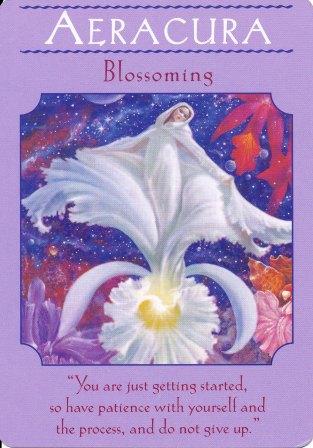
 I concluded
  It’s been almost two years since I lost someone I loved. The relationship was short, tortured, unhealthy (as all my romantic relationships have been, but that’s another story…) However, I fell particularly hard for this one. When we separated, the pain was unthinkable. I was surprised by how deep it ran. I didn’t know until he was gone how much I really cared about him. I became physically sick, and even now there are days when I only have to bring him to mind to conjure a familiar pressure behind my eyes and in my throat.
 This weekend those of us not performing the ritual pilgrimage, or Hajj, will enjoy the Festival of the Sacrifice of Eid al-Adha. Celebrated on the 10th day of the 12th lunar calendar month, it tends to creep up without warning, since we operate on the solar Gregorian calendar. The next day I jump a plane to Southeast Asia so my attention is already diverted.
 When I was about eight years old, I dreamed one night that I stood inside the workings of an immense instrument, so big it filled the sky. It was crafted of wood and gold, and although there was no obvious source of light, it was brightly illuminated. I could have confused it for the inner workings of a clock except that I could hear the sweet music it produced resonating throughout its cavernous hollows. It was curious to me that there seemed to be no atmosphere there either to breathe or to carry sound. Within it, I did not perceive any movement. And, there was no actual melody that it produced, which could be sung or repeated. There was only an enveloping harmonic thrumming. The sound was multiplicative and voluminous although not piercing. I understood it in the dream to be cosmic, structural, primordial, and generative. When I awoke, I had the feeling that I had seen something divine. It was not heaven. It was not God. It was more like the instrument of the universe, or the universal instrument, created as a first work among creation
