The Great Commandment for Women: Love and Care for Yourself as You Love and Care for Others by Carol P. Christ

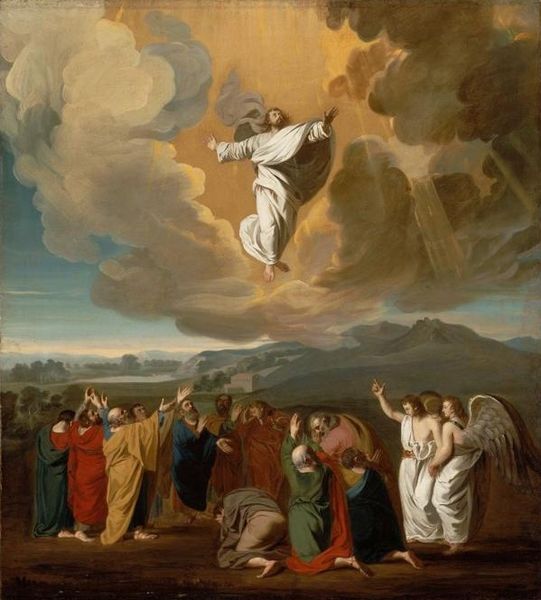
carol-christA rabbi known as Jesus of Nazareth taught that you should  “love God with all your heart and your neighbor as yourself.”  Charles Hartshorne, philosopher of relationship and a twentieth century advocate of the “two great commandments,” added that it should be understood that this means that God wants you to love yourself too.

I quote Hartshorne’s midrash on the great teaching often because, sadly, too many women—and some men too–have been taught to love their neighbors at the expense of themselves, to care for others, but not to care as much for themselves.  Continue reading “The Great Commandment for Women: Love and Care for Yourself as You Love and Care for Others by Carol P. Christ”

Let’s Build an Altar for Springtime by Barbara Ardinger

Barbara ArdingerWith spring springing up all over and warm days coming back in the colder climates, let’s build an altar to celebrate life. Now don’t worry—I’m not advising you to worship idols and do anything to insult your god. We’re not building a churchly altar, but one based on the concept of love respect for the earth we live on, the powers of Mother Nature, and the indisputable fact that we are all kin. This altar represents no disrespect for any religion, faith, sect, or denomination. Its purpose is to focus our awareness that the galaxy, the universe, the earth, the continent we live on, the town we live in, and spaces where we live and work are all sacred. The purpose of this altar is to remind us every day that every religion is sacred and that even the most humble among us have a place on the planet.

We start by considering the four elements—fire, air, water, and earth—which go back at least as far as classical Greek philosophy. Long ago, people believed that everything partook of these four elements. They looked around and saw the elements in action every day: ovens and lightning, soup and rivers, breezes and birds, gardens and hills. The four elements became the four humours, which came to the principles of medieval medicine that ruled our temperaments. The elements are also prominent in alchemy and astrology. Continue reading “Let’s Build an Altar for Springtime by Barbara Ardinger”

Brigid, Archetype of Inspiration and Activation by Stephanie Anderson Ladd

Stephanie AL_London_photoBrigid, Goddess of the Fire, greets us on Brigid’s Day, February 1. She is a Celtic sun goddess whose light burns brightly, illuminating the darkness of the land, of a heavy heart, and the dark night of our soul. With her shining light to guide us, we are lifted out of the Underworld darkness where we tend to descend in Winter, to the light of the World above, teeming with life as Spring begins to unfold her wet wings.

Brigid is a beloved goddess throughout the British Isles, particularly Ireland, where she is seen as the Mother of the Land and Her people. As a feminine archetype, she activates our solar, active nature. Much like the sun rising from below the Earth’s horizon, she urges us to come out of hiding and shine our light on the world. This may be done in a quiet manner, such as sitting by the hearthfire and doing needlework, finding inspiration by a walk in nature and writing a poem, moving about the kitchen making soup, getting busy with an art or craft project, or in big ways by taking on new roles as healers, artists, and leaders and calling others to join us. Continue reading “Brigid, Archetype of Inspiration and Activation by Stephanie Anderson Ladd”

Women’s Ritual Dances and My Journey to Healing by Laura Shannon

Laura ShannonSince 1985, I have been researching Balkan folk dances and teaching them in women’s circles all over the world. Common symbols in dance patterns, textile motifs and archaeological artifacts from southeastern Europe have remained the same from ancient times to the present, which leads me to suggest that the dances may be descended from ritual practices dating back to Neolithic times. In my view, these patterns serve as a symbolic language, expressing reverence for the cycle of life. Emphasizing connectedness and continuity, homecoming and support, women’s ritual dances can rekindle ancient values of sustainability, empathy and equality, and provide an antidote to the alienation of self which is epidemic in the western world. In nearly thirty years of teaching, I have found that women all over the world respond to these dances as valuable tools for healing and self-discovery. Continue reading “Women’s Ritual Dances and My Journey to Healing by Laura Shannon”

Etain, The Shining One – Celtic Sun Goddess/Goddess of Transformation by Judith Shaw

gugg jude72Etain (pronounce Ay-deen), a Celtic Goddess called “Shining One”, was originally a Sun Goddess before becoming a Moon Goddess and one of the White Ladies of the Fae.  Her story, which lasts over one thousand years, reveals Her place as a Goddess of Love, Transformation and Rebirth.  Elements sacred to Etain are the sun, dawn, the sea, rain, water, butterflies, apple blossoms, and swans. She is associated with healing and the transmigration of souls.

Etain shows us that we can overcome even life’s most difficult circumstances. She teaches us that though beauty, wealth and position might fade away we can regain our shining light. She lights our way on the path of transformation, guiding us toward balance, wholeness and rebirth. Continue reading “Etain, The Shining One – Celtic Sun Goddess/Goddess of Transformation by Judith Shaw”

A Sojourn in Antartica by Marcia Mount Shoop

Marcia headshotOk, so it’s not Antarctica, it’s Indiana, but it sure feels like Antarctica lately.

At least it’s what I figure Antarctica must feel like: bone chilling wind that can cause hypothermia and frost bite in a matter of minutes; everything as far as the eye can see white—sometimes no horizon, or blue sky, or any distinction between the celestial world and ours. Continue reading “A Sojourn in Antartica by Marcia Mount Shoop”

“Talking Taboo”: Register for WATER’s Feminist Conversations in Religion Teleconference

Talking-Taboo-Part-TwoWATER’s Feminist Conversations in Religion Series

Presents

“Talking Taboo”
Part Two

An hour long teleconference with

Grace Biskie
Gina Messina-Dysert
Tara Woodard-Lehman
Katey Zeh

Wednesday, February 5, 2014 1-2PM EST

The book, Talking Taboo: American Christian Get Frank About Faith edited by Erin Lane and Enuma Okoro, is creating lots of conversation. WATER is excited to feature two teleconferences to start 2014 by looking at the issues many people consider taboo. Join authors Grace Biskie, Gina Messina-Dysert, Tara Woodard-Lehman, Katey Zeh, and let’s “talk taboo.”

Grace Biskie is a passionate, big-dreaming, extroverted communicator. She holds a bachelor of arts in speech communications and is half way through a Masters of Divinity from Western Theological Seminary. She has served high school and college students in the nonprofit sector for over fifteen years. She blogs regularly at http://www.gabbingwithgrace.com. Currently, Grace is working on her first book entitled, Detroit’s Daughter, a memoir.

Gina Messina-Dysert, PhD, is Dean of the School of Graduate and Professional Studies at Ursuline College. Gina is also Co-founder and Co-director of Feminism and Religion, an international project that explores the “F-word” in religion and the intersection between scholarship, activism, and community. She is the author of the forthcoming book Rape Culture and Spiritual Violence, and coeditor (with Rosemary Radford Ruether) of the forthcoming anthology Feminism and Religion in the 21st Century.  Gina’s twitter is @FemTheologian and her website is http://ginamessinadysert.com.

Tara Woodard-Lehman is an ordained Presbyterian minister. Since 1998 she has ministered to and with young adults and university students. Over the past four years Tara has served as the executive director of Westminster Foundation and Presbyterian Chaplain at Princeton University. Tara also serves on the pastoral staff of Nassau Presbyterian Church in Princeton, New Jersey.

Katey Zeh is an advocate for reproductive justice in faith communities. She wrote her honors thesis on theology, ritual, and motherhood at Davidson College. In 2008, she graduated from Yale Divinity School with her Masters of Divinity. Currently, she directs a grassroots education and mobilization initiative focused on improving global maternal health for The United Methodist Church. Katey serves on the Board of Directors for the Religious Coalition for Reproductive Choice in Washington, DC.

TalkingTabooA recommended resource is the book Talking Taboo, in particular the following chapters:

  •      “A Woman Undone,” by Grace Biskie, pp. 191-198
  •      “No Women Need Apply,” by Gina Messina-Dysert, pp. 93-97
  •      “Broken in Body, Slain in the Spirit,” by Tara Woodard-Lehman, pp. 74-79
  •      “A Pregnant Silence,” by Katey Zeh, pp. 186-190

HOW TO REGISTER

Email “Register Me Teleconference” towaterstaff@hers.com by Tuesday, February 4, 2014 in order to receive dial-in information.

WATER, The Women’s Alliance for Theology, Ethics and Ritual
8121 Georgia Avenue, Suite 310 | Silver Spring, MD 20910
301.589.2509 | water@hers.com | www.waterwomensalliance.org

Please consider making a secure online donation to WATER. Thank you!

Slavery and God/dess by amina wadud

amina 2014 - croppedWell the Golden Globe awards have been handed out.  I don’t have a television, so I didn’t actually watch, but a quick google search gives the results.  Highest honors go to a movie about blacks as slaves and whites as criminals.  That’s appropriate. 

But this is feminism and religion, so let me get to the point.  It’s about a chance discussion on social media about the “merciful god” and historical institutions like slavery (holocaust, or oppressions like misogyny, homophobia, Islamaphobia and others…).

My view of the divine, the cosmos and of the world is shaped by my slave ancestry.  Recent area studies about Islam in America estimate that one third of the Africans forced to the Americas were Muslim.   My first African relative on US soil identified as Moor (another term used for “Muslim”).  But Islam did not survive slavery. Continue reading “Slavery and God/dess by amina wadud”

Yes me! Creating a Website for the Goddess Pilgrimage to Crete by Carol P. Christ

I am grcarol-christateful to the founders of Feminism and Religion for creating a community of which I am part. I am also grateful to them for introducing me to web skills, including how to create a hyperlink, add photographs to a text, choose search terms, and design a web page.  These skills served me well when it came time to design a new website for the Goddess Pilgrimage to Crete.

When I mentioned to a friend that I was looking for someone to design our new website, she responded, “If you want it to represent your vision, you need to do it yourself.”  Later, when one of my colleagues suggested an idea for the website that was definitely not part of my vision, I realized that I could not give the job to anyone else. Still, I didn’t think I had the skills to create a website myself. Continue reading “Yes me! Creating a Website for the Goddess Pilgrimage to Crete by Carol P. Christ”

The Winding Road of Life by Jameelah X. Medina

Jameelah MedinaA while back my family and I went up to the mountains to Lake Arrowhead Village. My metaphorical thinking took me on a fantastic mental voyage replicating our way up the mountain. I give thanks to Allah for the power of thought and imagery.

As we ascended the mountain getting closer and closer to Lake Arrowhead Village, that winding road mirrored the road of life, the life of a Muslim, my life.

Our lives are like winding roads, bending left and right, vacillating between high and low levels of faith , right and wrong, sin and repentance, over-consumption and charity, animalistic and angelic, ignorance and knowledge, pride and humility, blessings and trials, and the small and large defeats and victories in battles with our nafs [ego].

Yes, yes, I know; that road we took was just a road, but the symbolism cannot be denied. That road is like the road of belief, the road of knowledge, the road of love, the road of sabr [patient perseverance], the road of success, essentially, the sirat al-mustaqim, the straight path, though there is nothing physically straight about it. Continue reading “The Winding Road of Life by Jameelah X. Medina”