Painting Isadora Duncan By Angela Yarber

A dancing woman stands center stage, her arms outstretched in natural, free, and unbound movement, as her heart cries out to us…

In May of 1877 a dancing, feminist, revolutionary was born.  She was not constrained by the corsets, morals, or traditions of her time.  Barefoot, clad in flowing garments, with a diaphanous scarf in hand, she stepped onto the stage and rocked the world: the world of dance, the world of women, and the world of religion.

Born in San Francisco as Dora Angela Duncan and known to us as Isadora Duncan, or Holy Isadora.  This wild woman rejected the rigidity of ballet, conventional roles for women, and traditional religion.  After feeling constrained by the pointe shoes, corsets, and unyielding technique of American ballet, Duncan left for Europe, intent on revolutionizing the world through dance.  She claimed, “I have come to bring about a great renaissance of religion through the dance, to bring the knowledge of the beauty and holiness of the human body … (Duncan quoted by Terry Walter in Isadora Duncan).” Continue reading “Painting Isadora Duncan By Angela Yarber”

Lust in the Heart by Linn Marie Tonstad

Linn Marie TonstadLove the sinner, hate the sin. We are all familiar with the bludgeon this statement represents in Christian circles. It functions as a way to maintain one’s goodness and Christlikeness (supposedly!), while simultaneously condemning and persecuting those who find themselves drawn to live lives outside the constraints of heteronormativity in all its variations. The statement hardly needs to be deconstructed – it proves its own emptiness in relation to the way sexuality is understood as identity in the contemporary context. (There are Foucaultian reasons to be unhappy with this understanding of sexuality – one of the disciplinary functions of power on his account is the desire to find a name that will express one’s true identity – but we’ll save that for another day.)

Instead, I think we should consider a much more fundamental contradiction in the way Christian churches today speak and think about sexuality. In many mainline congregations in the US-European context, the debate has been framed around celibacy versus “practice” for persons identifying as gay and lesbian. Excluding the fringe ex-gay movement and its horrors, there are three typical positions that churches take up. One, celibate gays and lesbians may participate fully in church life. Two, married and monogamous gays and lesbians may participate fully in church life. Three, neither marriage nor monogamy are required for gays and lesbians (or anyone else) – the latter is perhaps not a frequent position for churches to take, at least officially, other than in the MCC. For most mainline denominations, the fault line lies between those who assert the ‘vocation’ of celibacy for gay and lesbian persons, and those who permit marriage. Continue reading “Lust in the Heart by Linn Marie Tonstad”

A Calling, A Vocation by Elise M. Edwards

Elise Edwards

In my previous post The Feminist Influence, I began discussing what a feminist perspective might bring to a theological study of architecture.  I asserted that a feminist perspective on the ethical function of architecture offers at least two contributions: (1) it provokes questioning about what flourishing is for all peoples and the Earth, and (2) it provokes examination of systems of power and privilege and how they are constructed into our built landscape.  I think a feminist vision of architecture could help all of us (even those of us who are not design professionals) promote design that respects and responds to our environment, addressing the harm we have done.  I do want to give some thought, though, to what it means especially for architects and other design professionals. Continue reading “A Calling, A Vocation by Elise M. Edwards”

Lady of the Trees by Mama Donna Henes

Donna Henes, Urban Shaman, Queen of my  self, crones,

Her roots reach to the very center of the Earth where they wind around the sacred wells, the deep source of wisdom…

Possessing the potent powers of fertility, growth, resilience and longevity, the tree is widely seen as the progenitor of the world. Family Tree. The Tree of Life. The tree goddess was seen as a sylph, an airy tree spirit who resides among the green leaves, sustaining and nurturing the vegetative forces. She is the symbol of the flow of life, a Mother Goddess who is Herself the Tree of Life.

The Maasai people claim their descent from an original parent tree. For the Slavs, the world tree is the symbol of all relationship, and as such, is held as the central philosophical image in that culture. The Maya of Central America understand themselves to be part of a great celestial ceiba tree. This silk-cotton tree, which stands for all life is the pole at the center of the Earth and serves to hold up the heavens. The Koran refers to the cosmos as a tree. Continue reading “Lady of the Trees by Mama Donna Henes”

What About Contraception in Pope Francis’s Promise to the Poor? by Dawn DiPrince

Pope Francis, at nearly every opportunity – including the choice of his name, has symbolically expressed a commitment to the poor. In just a little over a month, he has declined the customary gold papal cross, the ermine-trimmed red velvet cape, and the showy red loafers worn by his predecessor. He has refused the palatial papal penthouse apartment and is currently living in a two-room suite among the Vatican’s cardinals.

In additional to a more austere lifestyle, Pope Francis has spoken out about the world’s poor. His namesake is St. Francis of Assisi, who famously worked for the poor and for peace. The Pope claims he was inspired to take the name Francis when remembering a friend’s urging to “not forget the poor.” More to the point, Pope Francis has stated that he wants “a Church which is poor and for the poor!” Continue reading “What About Contraception in Pope Francis’s Promise to the Poor? by Dawn DiPrince”

Rituals Of Spring and Greek Easter by Carol P. Christ

carol p. christ 2002 colorThough I am not a Christian any more, I don’t want to sit home alone on Easter Day.  Besides being a Christian ritual, Greek Easter is a time to eat lamb with family and friends, and to celebrate the coming of spring by feasting out-of-doors in flowering fields or in a garden filled with flowers, bees, butterflies, and birds.  Such rituals have been celebrated from time immemorial.

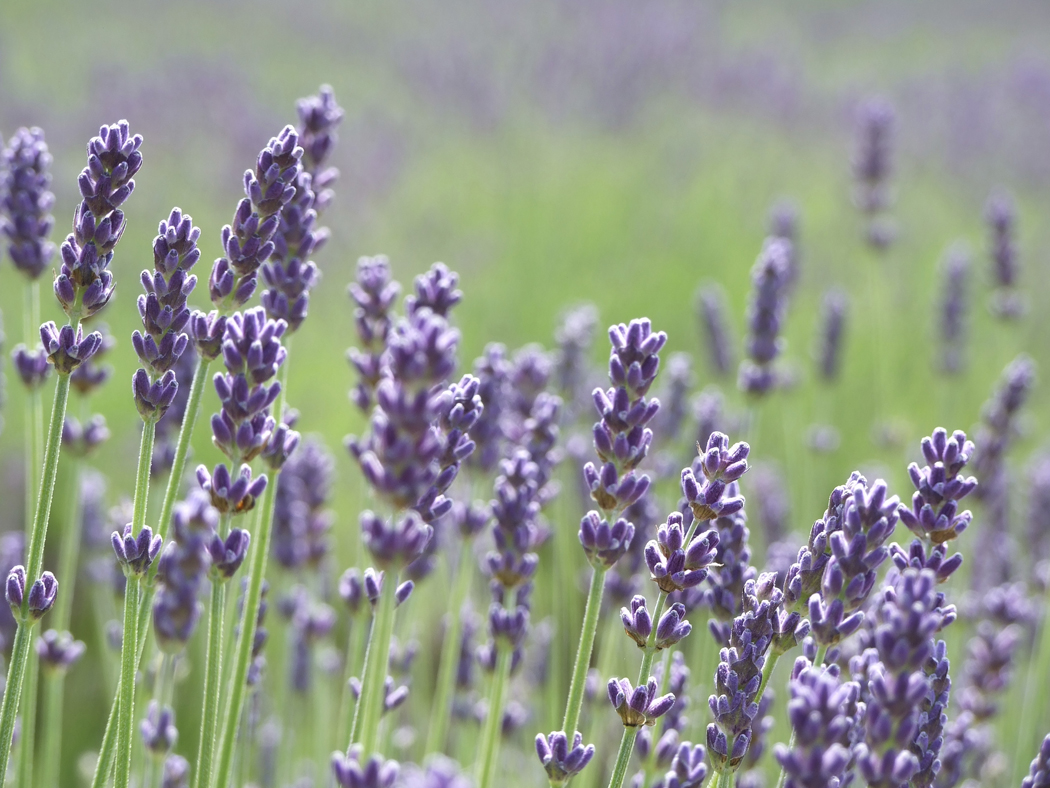
lavenderGreek Easter came late this year, only yesterday, May 5.  I prepared for an Easter party in my garden for weeks.  My garden is planted with herbs and aromatics—lavender, thyme, oregano, rosemary, curry plant, rue, sage, cistus, rose-scented geranium, sweet william, cat mint and several other kinds of mint, bee balm, and roses and fruit trees, including lemon, bitter orange, pomegranate, olive, quince, and cherry.  Everything blossoms in spring, attracting bees and butterflies.

purple sageI began weeding and pruning about 6 weeks ago.  This year I had to remove many overgrown lavender plants.  For the last 3 weeks in addition to ongoing weeding and pruning, I have been replanting lavender which I have promised myself to prune “way back” in the fall, along with purple sage, blue daisies, and thyme.  Though there is bare ground in some parts of the garden, in other parts mature plants and trees are in full flower. Continue reading “Rituals Of Spring and Greek Easter by Carol P. Christ”

The Language of Flowers by Barbara Ardinger

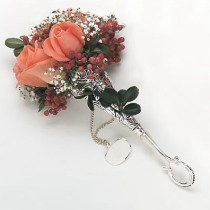
Instead of sending a billet-doux to your honey, present a tussie-mussie, a small bouquet wrapped in a lace doily or a fancier holder. Say you have a friend having a birthday and he already has too many neckties and she already has too many kitchen gadgets. Give them flowers or potted plants. The white camellia signifies “unpretending excellence.” Ivy, “with its clinging habit, is a feminine symbol” (sic., p. 53). The lily means purity. The peony symbolizes abundance. The primrose is a token of affection and respect. Get the idea? Your friends will be delighted by the flowery language.

William Shakespeare, The Winter’s Tale
A fancy tussie-mussie

     Here’s flowers for you:
Hot lavender, mints, savory, marjoram,
The marigold, that goes to bed wi’ the sun,
And with him rises weeping: these are flowers
Of middle summer….
          —William Shakespeare, The Winter’s Tale Continue reading “The Language of Flowers by Barbara Ardinger”

(Femen)ism? by Kile Jones

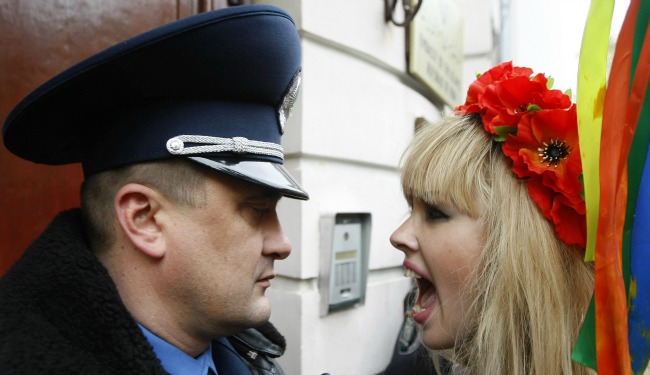
Kile Jones, atheistAs most of us are aware by now, there is a “feminist-sextremist” group from Ukraine called “Femen.”  This group has been very controversial by their public demonstrations of nudity, the words they paint on their bodies, and their explicit condemnations of political structures and organized religions.  They were started by Anna Hutsol in 2008 and have now spread throughout Europe and the Middle East.  The question I pose for this post is: Does Femen harness or hinder the power of the feminist critique?

Image from Konstantin Chernichkin/Reuters

Femen is precisely the kind of movement that pushes us in our understanding of feminism, the means by which it is best expressed, and the issues surrounding moral condemnation and religious sensitivity. Continue reading “(Femen)ism? by Kile Jones”

For the Love of Gaia by Jassy Watson

For the Love of Gaia Jassy WatsonOn January 26, 2013 a rare, devastating tornado hit our community in Queensland, Australia, a coastal town on this sub-tropical coast. My family experienced nature’s elemental force firsthand and hopefully will never again. The tornado viciously shattered houses, peeled away roofs, uplifted cars and trees, and took down power lines, tearing apart everything in its path. With absolutely no warning, literally out of the blue, it formed over the churning sea, rapidly intensifying before striking land, awakening the vulnerability and fragility of all life in its midst.

When it struck, our four kids and I were waiting in our car while my husband ducked into a mate’s house to borrow a tool. We heard the sound of a roaring jet plane overhead, as my husband came running, screaming at us to get out of the car. Turning to my left, in a vision imprinted forever, a spiral of debris flew toward us. Scrambling, we got the kids out of their harnesses and safely indoors. I lagged behind, taking care of the children first, and fell out of the side door of the van with the wind’s impact. As I got up to run, a large piece of roofing tin flew straight for my head. I dove, seeking safety under the front of our running car. My life flashed before my eyes. All of us in a state of shock, the tornado was gone as quickly as it had come, we were unscathed except for a few minor cuts and bruises. It was only a few moments before the immediate danger passed. We ventured outside to inspect the damage, destruction surrounded us. Continue reading “For the Love of Gaia by Jassy Watson”

Protecting our Families: How the U.S. Falls Short in Protecting New Mothers (and Fathers) by Michele Stopera Freyhauf

Freyhauf, Feminism, Religion, Durham, Old Testament, Blogger, Bible, Gender, Violence, Ursuline, John CarrollLast weekend, I had the privilege of speaking at the National Convention for American Mothers, Inc. about motherhood in the 21st Century.  Because this is such a vital issue for mothers that live in the U.S. (since a large majority of families have two full-time wage earners), I thought it would be appropriate to share my speech here.  With the understanding that this a forum for feminism, I believe that this topic fits this forum because it continues to show how unequal the treatment is between the sexes – whether it is pay, position in employment, healthcare, education, or simply balancing the responsibilities of family/career.  For those that live in the United States, there is often a sense of exceptionalism, and as I clearly demonstrate in this speech, we are certainly a far cry from being role models that when it comes to protecting mothers (whether by birth or adoption) and families.

As a side note:  One topic that was not explored, due to lack of data, is how maternity/paternity leave impacts same sex couples who become new parents – I have to believe that this is a topic to also examine (and I am would encourage any feedback here).  

Recently the United States ranked 25 out of 165 countries for being the best place to live if you are a mother.  This number is up from 31 a year ago and places us between Belarus and the Czech Republic.

You may be asking yourself, Why isn’t the United States in the top five or even in the top ten? The answer to that question becomes evident once we examine how that determination is made. The categories examined are:

  • Mother’s education;
  • Child’s Health;
  • Economic status;
  • The Election of women to government office;
  • Breast feeding programs.  In the United States 75% of mothers breastfeed their babies, 35% continue to breastfeed after six weeks. The number shrinks because mothers usually return to work and find it difficult to to pump at the office;
  • Maternal death rate is another factor, which stunned me when I found out that the US has the highest maternal death rate of any industrialized nation. Approximately 1 in 2,100 women are at risk of dying during child birth;
  • Infant death rates is another category.  Infant deaths are estimated to be 8 per 1000 births – a number that throws us behind 40 other countries;