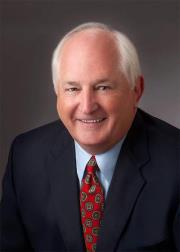
Proposition 35: Prohibition on Human Trafficking and Sex Slavery—Criminalizes the Sex Worker and not the Trafficker, By Cynthia Garrity-Bond

But beyond the sound bites and hyperbole of Proposition 35 resides a poorly written law that further criminalizes and discriminates against sex workers and their consensual adult clients.

The importance of the upcoming November 6 election cannot be overstated. Beyond defeating the Republicans War on Women, maintaining the Affordable Care Act and resuscitating a broken economy, brought on by eight years of Bush’s laissez faire policies, California residents will vote on thirteen propositions. Two of them address criminal justice, Prop 34 “End the Death Penalty” and Prop 36, repeal of the “Three Strikes” law of 1994. Both propositions seek to correct bad laws that are unjust, as well as fiscally exacting on the state.  The “Three Strikes” law, in its attempt to be tough on crime, instead gives life sentences to non-violent offenders.  To date there are 8,800 prisoners currently serving life terms for a third felony conviction—for some, petty theft or drug possession resulted in a life sentence.  The “Three Strikes” law was poorly conceived, written, and implemented, just as Proposition 35, the Prohibition on Human Trafficking and Sex Slavery or Californians Against Sexual Exploitation (CASE ACT) is.  Continue reading “Proposition 35: Prohibition on Human Trafficking and Sex Slavery—Criminalizes the Sex Worker and not the Trafficker, By Cynthia Garrity-Bond”
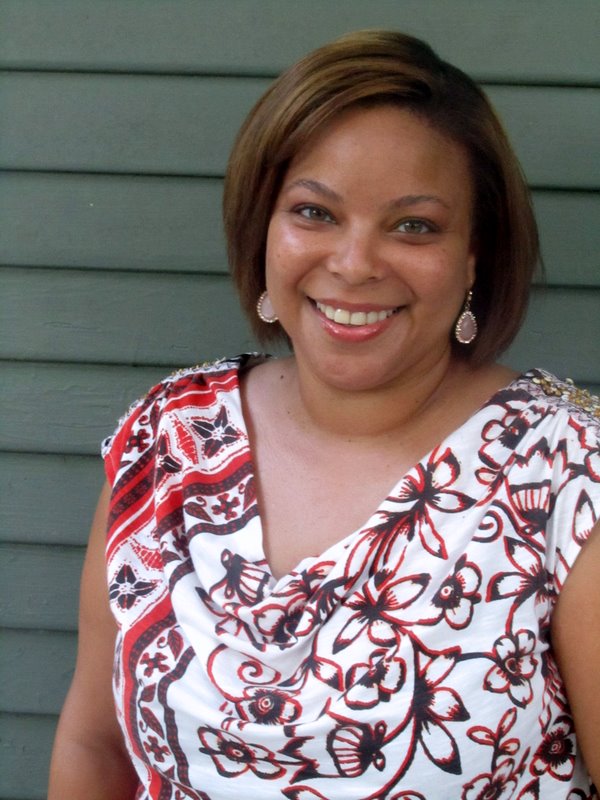
Working to Bring about the End by Elise M. Edwards

I was reminded that the idea of eschatological reversal can be a powerful image in the promotion of justice if we believe that we already are, or that we should be moving towards the ultimate end that remedies current injustices.

I started teaching a course in Introduction to Christian Ethics a couple weeks ago for a class of graduate students who are pursuing their M.Div. and other Masters in religion degrees.  We are spending some time talking about the use of Scripture in ethics, so I reviewed Richard Hays’ 1996 text The Moral Vision of the New Testament: A Contemporary Introduction to New Testament Ethics.  It got me thinking a lot about the role of eschatology in ethics. (Eschatology is the area of theology concerned with “last things,” like the end of the world, heaven, hell, death and eternal judgment.)

Continue reading “Working to Bring about the End by Elise M. Edwards”

IN THE NEWS: Religious, Atheist, and Political Feminists – Unite?

This post is the first of a new weekly feature on Feminism and Religion that will be published every Wednesday. “In The News”  is designed to invite discussion on topics that are showing up in news and media outlets and are relevant to feminism and religion

Diane Winston recently wrote an op-ed piece for the Los Angeles Times regarding the role of faith in politics. She comments that recent poll results give the impression that religion is not playing a significant role in the current elections, for how else does one make sense of the fact that the Republican Party’s ticket is made up of a Mormon and a Roman Catholic? However she is quick to point out that although religious labels may be passé, “the religious values that inform who’s taxed, what’s regulated, how jobs are created and when or where we help those in need,”  are still very much the driving force behind how people vote and with whom they form coalitions. Thus, in the U.S. seemingly incompatible religions as well as denominations within those religions have come together in an effort to control and legislate women’s bodies and autonomy. As the editors of the Religious Dispatches asserts, “the Moral Majority couldn’t have come together without a big interfaith effort.”  

But theirs are not the only religious voices on the scene. Continue reading “IN THE NEWS: Religious, Atheist, and Political Feminists – Unite?”

8 Simple Rules for Being a Queer Godfather by John Erickson

Becoming a Godfather was more than just a reentry into the Catholic traditions I had long given up but rather a journey back in time that would grant me the ability to rewrite the wrongs I felt as a kid growing up in a tradition I not only didn’t understand but also didn’t feel like I belonged in.

I often wondered why I wasn’t asked to be the Godfather of my niece and nephew.  It made perfect sense to me that I would be the best person to guide and provide spiritual care for either of them as I was the only member, in both my family and my brother-in-law’s, getting a PhD in Religion.  I didn’t think there would be much to it.  I would go, hold my nephew, and watch a priest pour water over his head, and then go and enjoy some very sugary cake in my sister’s backyard.

On August 18th, 2012 my wish came true and I became the Godfather to my sister’s second child, Drew.   I had always believed that there was nothing to being a Godfather.  That it was a title in name only and a tradition that many individuals bestowed upon members of their family as ritualistic habit rather than a sacred institution of spiritual care and upbringing.  Boy, was I wrong. Continue reading “8 Simple Rules for Being a Queer Godfather by John Erickson”

LET’S ASK MITT IF MORMON PATRIARCHAL BELIEFS AFFECT HIS VIEWS ON WOMEN’S EQUALITY by Carol P. Christ

Why has Mitt Romney’s Mormon faith mostly been a non-question in his political life?  John Kennedy was asked if he would obey the Pope or make his own decisions, Jimmy Carter was asked how his Baptist faith would affect his Presidency, and Barack Obama was asked if he agreed with the sermons of his preacher.  Why is the press afraid to ask Mitt Romney if he agrees with the patriarchal teachings of his church and if so, if this affects his views on the rights of women?

Like other patriarchal institutions, the Mormon Church believes that women’s place is in the home.  Every Mormon man is a priest and a patriarch in his own home.  Mormon belief teaches that men are to make the final decisions in the family, that only they can be leaders in the church, and that they are the members of the Mormon community who should speak and act in the public (non-home) dimensions of life.  Traditional Mormons believe that “ [The] LDS [woman is] always [to] accept counsel from her husband, and not as just his opinion, but as God-inspired revelation.”  Continue reading “LET’S ASK MITT IF MORMON PATRIARCHAL BELIEFS AFFECT HIS VIEWS ON WOMEN’S EQUALITY by Carol P. Christ”

Alcohol is a Feminist Issue Too. By Ivy Helman

Sex sells.  The sexual objectification of women is used in advertising to sell anything from auto parts to cologne to alcohol.  Despite the myriads of feminist critiques of women’s sexual objectification to sell products, it still exists.  Open a Vogue Magazine or walk into an Abercrombie and Fitch store.  Women are posed half, to almost totally, nude in sexually suggestive ways trying to entice the generic person in patriarchal society, the “average” male (usually white, middle-class and heterosexual) to buy the product. Sometimes that same sexually suggestive pose is meant to also sell a product to the “average” woman as well with the mistaken notion that she will look as attractive and satisfied as the model if only she own the product too.

One of my part-time jobs is as a clerk at a liquor store where there are a good number of sexually explicit ads for alcohol.  I also have three other part-time jobs teaching in the Women’s and Gender Studies Program at Boston College, in the Religious and Theological Studies Department at Merrimack College and in my shul’s religious school.  My combined income from the four jobs barely covers rent, food and bills and some months when I don’t get paid from teaching I use the little savings I have to make ends meet.

Recently I have noticed how silenced my feminist voice has become in the liquor store because of my precarious financial situation.  I am hesitant to speak up about the sexist ads for fear of losing my job.  This muted feminist voice is a class issue within feminism.  Specifically, classism affects one’s ability to stand up for one’s self when one’s livelihood is on the line.  Often, I find myself thinking about this as I sell customers vodka or beer.

But I also spend a lot of time at the liquor store thinking about religion.  Continue reading “Alcohol is a Feminist Issue Too. By Ivy Helman”

Painting Virginia Woolf by Angela Yarber

As I painted her icon, I knew that “the room of one’s own” must engulf more space on the canvas than she did, her heart beating in the room and outside of it, and her arms outstretched as though she is inviting other women into the room.

I first encountered her in the lyrics of a song.  The Indigo Girls shaped my adolescence, molding me into a young feminist as I sang in harmony with other teenage girls:

 They published your diary

And that’s how I got to know you

The key to the room of your own

And a mind without end
And here’s a young girl

On a kind of a telephone line through time

And the voice at the other end

Comes like a long lost friend
So I know I’m alright

Life will come and life will go

Still I feel it’s alright

‘Cause I just got a letter to my soul

Emily Saliers and Amy Ray (the Indigo Girls) were singing about Virginia Woolf, naming the song after her.  As I belted out the lyrics with my soon-to-become-feminist friends, I had yet to learn who Virginia Woolf was and how her life and work had shaped my own.  All I knew as I harmonized those many years ago was that this woman must be special if the Indigo Girls dedicated a song to her.  I felt a longing to know her, to learn more about her, for her to call me on that telephone line through time and tell me I’m alright.  Accordingly, Virginia Woolf is our Holy Woman Icon for September. Continue reading “Painting Virginia Woolf by Angela Yarber”

It’s Junk Science by Brian Froelich

Let’s be honest. It’s not about the junk science. There were some crazy things said recently but they were crazy with a purpose.

Republican Rep. Todd Aikin (who is a policy blood brother to Republican Reps. Paul Ryan and Chris Smith) effectively said a woman’s subconscious can determine if she gets pregnant. He said as a result of a rape a women’s body can shut down its reproductive mechanisms. Of course this is junk science. And Republicans quickly reacted to the predictable public uproar by castigating Rep. Aikin and seeking his resignation from the race. (Two interesting exceptions to that list were former Presidential candidate Mike Huckabee and current Congressional candidate Rep. Chris Smith. Huckabee by his stout defense and Smith by his silence.)

But this had nothing to do with Republicans’ regard for science. In fact science is held in very low regard in the Republican party. This is best exemplified by the fact that the Republicans appointed Rep. Aikin to the Congressional Science Committee. Continue reading “It’s Junk Science by Brian Froelich”

Is the Republican Party Platform Truly Pro-Life? by Michele Stopera Freyhauf

As many feminists invest their life fighting for women’s rights to be the center of attention – no one could predict the occurrences of this election year.  In my previous post “Rape is Not a Political Platform – Rape is a Violent Crime!” Carol P. Christ made a comment about women’s issues and politics:

 “I have been waiting all my life for women’s issues to become central in an election campaign, but I guess I should have been more specific in my wish: this is not the format I imagined…”

Christ’s reaction is like so many others in the election; no one could have imagined such a bizarre and backwards slide being lobbied against women’s rights.   Issues being bantered around continue to be rooted in a purported pro-life stance.  This ranges from trans-vaginal ultrasounds, definitions of “legitimate” rape, and now using an Ob/Gyn’s “best guess” to define the gestational age of a baby from the time of a woman’s last period.  This is not a game – this is semantics, this is politics, this rhetoric, and frankly, this needs to stop. Continue reading “Is the Republican Party Platform Truly Pro-Life? by Michele Stopera Freyhauf”

Hijacking the Nuns? by Kate Conmy

When stuck between a vow of obedience and a hard place known as the Vatican, sisterhood may be our only prayer. Since April 18, 2012, the U.S. nuns have been cast into the headlines as the Vatican’s Congregation for the Doctrine of the Faith (CDF) released a harsh assessment of the Leadership Conference of Women Religious (LCWR), an umbrella organization, representing 80% of U.S. sisters.  Accused of “radical feminist themes,” “corporate dissent,” and among other things, not taking an official stance on some hot Catholic issues, nuns have become frontrunners of a revolution.

The groundswell of support and solidarity pouring forth from faithful Catholics and the media has been unprecedented by all standards; when the secular feminist website Jezebel is calling for Sr. Simone Campbell , executive director for the Catholic lobby group, NETWORK, for president, the issue has clearly gone beyond the choir. The movement has taken on the adage “we are all nuns,” expressing a shared sense of oppression by the Catholic Church. If the second largest religious domination in the U.S. (10%) is “former Catholic,” then this shared sense of betrayal by the Vatican may not be new, but it has found new energy in the conflict between Rome and the American nuns. Continue reading “Hijacking the Nuns? by Kate Conmy”