The Future of Sorjuanista Studies in the Americas: Challenges and Possibilities by Theresa A. Yugar

I had nearly resolved to leave the matter in silence;
yet although silence explains much by the emphasis of leaving all unexplained, because it is a negative thing, one must name the silence,
so that what it signifies may be understood.
Failing that, silence will say nothing,
for that is its proper function, to say nothing.[i]
La Respuesta/The Answer (al Soldado, or The Soldier)
Sor (Sr.) Juana Inés de la Cruz
(November 12, 1651 – April 18, 1695)

Today, I honor the legacy of mid-17th century Mexican Catholic nun, scholar, and poet Sor Juana Inés de la Cruz. She was born in the central valley of Mexico in the Viceroyalty of New Spain, now in modern-day Mexico. She was the daughter of Doña Isabel Ramírez de Santillana and Don Pedro Manuel de Asbaje. They had three daughters: María, Juana, and Josefa. Doña Isabel also had three other children – Antonia, Inés, and Diego – with Diego Ruiz Lozano. Sor Juana Inés was raised with her siblings on their family’s hacienda of Nepantla which was managed by their strong-willed mother Doña Isabel.

Continue reading “The Future of Sorjuanista Studies in the Americas: Challenges and Possibilities by Theresa A. Yugar”
Legacy of Carol P. Christ: Forty Years and Counting: Women and Religion in the Academy

This post was originally published on Oct. 21st, 2011

Carol P. Christ is a founding mother in the study of women and religion, feminist theology, women’s spirituality, and the Goddess movement.  She teaches in the Women’s Spirituality program at CIIS and through Ariadne Institute offers Goddess Pilgrimages to Crete. Her books include She Who Changes and Rebirth of the Goddess and the widely used anthologies Womanspirit Rising and Weaving the Visions.

The receipt of an invitation to the Fortieth Anniversary Celebration of the Women’s Caucus in the American Academy of Religion and the Society for Biblical Literature this week, takes me back to the summer of 1971.  At the first meeting of Women Theologians at Alverno College (which was followed up at Grailville in succeeding years), I proposed that we form a feminist caucus in the field of religion, as had already been done by feminists in several other fields.

Since I was one of the few women at Alverno who had attended the annual meetings in the field of religion, I was delegated to call Harry Buck, then director of the AAR, to ask for space on the program. Harry, who continued to support the work of women in the field through lecture series at Wilson College and the magazine Anima which he founded, offered not only space at the meetings, but a print-out of the names and addresses of all of the members of the AAR who were not obviously male. I invited all of them to come to a feminist meeting at the AAR in Atlanta. It is hard to imagine now, but before 1971, the women who attended the AAR in any given year could probably have been counted on one hand. Continue reading “Legacy of Carol P. Christ: Forty Years and Counting: Women and Religion in the Academy”

The US Election Results and Justice: What Will You Do? A Jewish Feminist Perspective by Ivy Helman

I met with a new friend/colleague of mine this past week.  We were discussing the election results, and I was discussing the work I do in the field of religion.  Living and teaching in Central Europe, I have quite a lot of experience navigating the study of religion in a place that is quite atheist and/or actually anti-religion.  In fact, it has been somewhat of a struggle to have the study program, Gender Studies, in which I teach, recognize its importance.  Many of my colleagues, I think, are under the impression that religion is personally not important and/or just not that important in general.  Yet, as I have mentioned here, and as my new friend brought up as we sat over coffee, religion underpins so many aspects of our patriarchal society.  

Continue reading “The US Election Results and Justice: What Will You Do? A Jewish Feminist Perspective by Ivy Helman”

From the Archives: Humpty Had A Mother by Barbara Ardinger

This was originally posted on June 5, 2016

Humpty Dumpty sat on a wall,
Humpty Dumpty had a great fall;
All the king’s horses and all the king’s men
Couldn’t put Humpty together again.

From her mouth to our ears.

Humpty1

You see that kid sitting over there on the wall? The one wearing the Jester’s hand-me-down suit? The Jester also gave him that funny name. That kid is looking for his father. That kid is my son.

My father the King is a tyrant, and he has more bastards than any other king in our nation’s history except for one other King, a long time ago. (Maybe these Kings try to populate the land all by themselves.) I’m one of his bastards. My mama travels with the Players, and after I was born, she traveled on and left me here. Oh, the Players come back every year, and she always tells me about her adventures, like when they went to visit that Prince up north, the one who was pretending to be crazy and got killed in a duel. My father the King lets his sons take the name Fitzroy, but us girls? What do we get? We’re lucky we get to live in the palace. That’s thanks to the Queen, who is kind and protective of all the King’s children, legitimate or not. I’m part of her court. A minuscule part, but she knows who I am and has answered my prayers several times. I’ll never rise in society. But I’m making plans for my son.

Continue reading “From the Archives: Humpty Had A Mother by Barbara Ardinger”

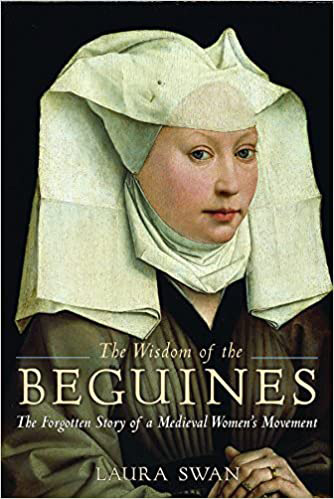
The Wisdom of the Beguines: The Forgotten Story of a Medieval Women’s Movement by Laura Swan, part 2 by Theresa C. Dintino 

Part 1 was posted yesterday

Praying people out of purgatory

Beguines excelled at this. By the Middle Ages, the belief in many Christian circles was that one did not go directly to heaven but to a sort of “holding place” after death to be cleansed of their sins before being allowed into heaven. Eventually “the medieval church also taught that people could pray for the souls in purgatory and that their prayers would effectively aid those souls in their transition from purgatory to heaven”(108).

It’s important to note that these women were esteemed by the communities they lived in as spiritually gifted, able to intercede with God on their own without permission from the church, clergy or men. This is radical for the time.

“Beguines, as we have seen, were understood to have extraordinary spiritual powers. People believed that having a beguine intercede before God on their behalf was an assurance that their petition was heard by God—and perhaps in no instance more than for “those poor souls in purgatory.” And beguines believed that they did indeed exercise the authority to release countless souls from purgatory. Many of the stories included in the vitae of beguines grapple with the fate of the deceased in purgatory (or hell)”(109).

Continue reading “The Wisdom of the Beguines: The Forgotten Story of a Medieval Women’s Movement by Laura Swan, part 2 by Theresa C. Dintino “

The Wisdom of the Beguines: The Forgotten Story of a Medieval Women’s Movement by Laura Swan, part 1 by Theresa C. Dintino 

Moderator’s Note: This piece is in co-operation with The Nasty Women Writers Project, a site dedicated to highlighting and amplifying the voices and visions of powerful women. The site was founded by sisters Theresa and Maria Dintino. To quote Theresa, “by doing this work we are expanding our own writer’s web for nourishment and support.” This was originally posted on their site on July 5, 2022. You can see more of their posts here. 

Around 1200 AD in Europe, communities of women often called beguines began to form. These women were not nuns, they were devout and devoted to the tenets of Christianity but did not belong to any church. They were independent communities of women who often created their own industry, trade or other means to produce income. They were self-sufficient and generally concerned with helping the poor, especially women. They lived in convents. This was the origin of that word.

“These women were essentially self-defined, in opposition to the many attempts to control and define them. They lived by themselves or together in so-called beguinages, which could be single houses for as few as a handful of beguines or, as in Brugge, walled-in rows of houses enclosing a central court with a chapel where over a thousand beguines might live—a village of women within a medieval town or city”(2).

Continue reading “The Wisdom of the Beguines: The Forgotten Story of a Medieval Women’s Movement by Laura Swan, part 1 by Theresa C. Dintino “

The Deep Practice of Being by Xochitl Alvizo   

I have arrived.
I am home;
in the here;
and the now.

I am solid.
I am free.

In the ultimate,
I dwell.


– Thich Na Han 

When you realize that [love for this tender human life] is always here, then there really is nowhere else to get to, there’s only being in this life, learning to love it, again and again, moment by moment.  
– Jeff Warren 

I have tried to be more intentional in my practice of this recently—of being at home with myself and of loving this life this moment. I am trying to learn how to let myself be with myself in whatever I am experiencing, especially in the midst of external stresses and internal grief.  

Continue reading “The Deep Practice of Being by Xochitl Alvizo   “

Witch Power? part 2 by Sara Wright

You can read part 1 here

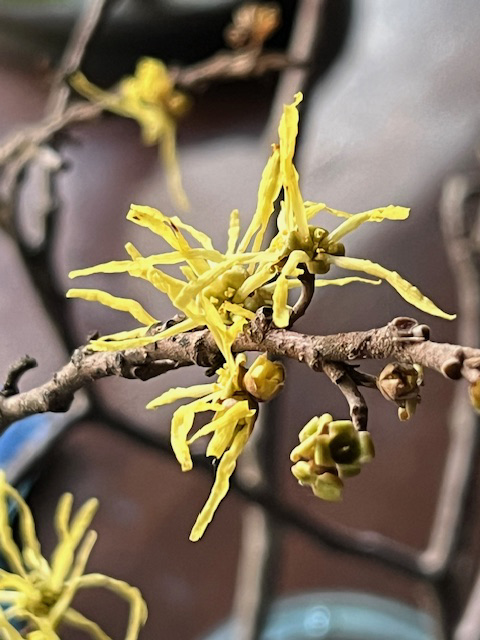
Witch hazel flower

After being nailed as a witch I separated myself from the word and witch power in general. The word witch had a very dark side and could be used in the same frightening manner as it had been during medieval times to label and to expel any woman who lived on the edge (source of my original sense of unease). Especially one who lived alone in the woods and loved animals like I did.

 Why had I been singled out? I was an outsider whose crime was to animate nature. Anything associated with nature was suspect if not ‘evil’.

 Feminists beware. If you claim to be a witch – recall that the word is loaded. Personally, I think the label has backfired reducing our overall power as women. Perhaps making us more suspect than we already are.

Continue reading “Witch Power? part 2 by Sara Wright”

Legacy of Carol P. Christ: Is the Prophetic Vision of Social and Ecojustice the Fruit of the Poisonous Tree?

This post was originally published on Aug. 26th, 2011

Carol P. Christ earned her BA from Stanford University and her Ph.D. from Yale University.  She is a founding mother in the study of women and religion, feminist theology, women’s spirituality, and the Goddess movement and work has revolutionized the field of feminism and religion.  She has been active in anti-racist, anti-war, feminist, and anti-nuclear causes for many years.  Since 2001 she has been working with Friends of Green Lesbos to save the wetlands of her home island.  She drafted a massive complaint to the European Commission charging failure to protect Natura wetlands in Lesbos.  In 2010 she ran for office in Lesbos and helped to elect the first Green Party representative to the Regional Council of the North Aegean.  She helped to organize Lesbos Go Green, which is working on recycling in Lesbos.

My hope for the new blog on Feminism and Religion is that it can become a place for real discussion with mutual respect of feminist issues in religion and spirituality.

I agree with Rosemary Radford Ruether who argued in a recent blog “The Biblical Vision of Ecojustice” that the prophets viewed the covenant with Israel and Judah as inclusive of nature. Indeed in my senior thesis at Stanford University on “Nature Imagery in Hosea and Second Isaiah,” in which I worked with the Hebrew texts, I argued that too. I also agree that the dualism Rosemary has so accurately diagnosed as one of the main sources of sexism and other forms of domination comes from the Greeks not the Hebrews. I agree that Carolyn Merchant is right that nature was viewed as a living being in Christian thought up until the modern scientific revolution. I agree with Rosemary that it is a good thing for Christians to use sources within tradition to create an ecojustice ethic. I am happy that there are Christians like Rosemary who are working to transform Christianity.  Finally, I am pleased to admit that I have learned a great deal from her.

Continue reading “Legacy of Carol P. Christ: Is the Prophetic Vision of Social and Ecojustice the Fruit of the Poisonous Tree?”

How Will Catholics Vote?

Will Catholics be “salt” and “light” in the 2024 election? Cardinal Dolan fails to show the way.

Dawn Morais Webster, the Pope off to his summer palace, Castel Gandolfo. He tells the world he will now become just a “humble pilgrim.”

Donald Trump’s parade of vulgarity, racism, misogyny and grift is always on display. He is proud of it. His outrageous lies are his version of “truth,” or as his running mate JD Vance would say, they come “from the heart.” It’s easy to condemn Donald Trump but the more urgent question is how will our vote stack up against our professed values, and for believers, how does it square with our faith?

I am deeply ashamed that Catholics were enablers of Trump’s rise to power. And that Catholics, by a slim but crucial margin, still support Trump over Kamala Harris in seven battleground states, according to a National Catholic Reporter survey of self-identified Catholics.

Continue reading “How Will Catholics Vote?”