In the middle of the night in waking sleep, I asked my great-great grandmother Annie Corliss to tell me the story of how she met and married James Inglis. This story came through me in a place I have come to call the Dreamtime. The Aboriginal term feels right. As I understand it, this is not a place where the dead speak to the living but rather a space where boundaries blur as the ancestors speak in us.
Annie Corliss’s Story: As It Might Have Been
My mother decided to come to America after my father died. My brother Hudson was 7 and my brother Hugh was a baby. I was 13. Mother had a little money, and she said we would have a better life in America. We left Ireland on a boat that took us to Liverpool. There we boarded the big ship Continent that took us to America. The trip took about 6 weeks. While we were at sea, first Hudson, and then Hugh died. Their bodies were wrapped in the blankets that had covered them in the filthy cabins on the ship. The priest said a few words of blessing, and they were dumped into the cold angry sea. Every day, another body was thrown overboard, sometimes two. So much grief, so many tears in the night. After Hudson died, Mother wouldn’t let go of Hugh, so afraid was she of losing him. After he died, she would not stop crying. I kept telling her she still had me. She didn’t care anymore. “America is cursed,” she kept repeating. (1) Continue reading “As It Might Have Been: Ancestor Stories in the Dreamtime by Carol P. Christ”
During my ancestor research, I have seen the word “tenement”—with the implication of poverty, filth, and disease–handwritten onto more than one death certificate. Last month, I visited the Lower East Side where my Irish 2x great-grandmother Annie Corliss lived in the tenements near the docks with her husband the Scottish seaman James Inglis and their nine children.
Though the tenements where they lived in the vicinity of Cherry Street a block from the East River have been torn down to build public housing, my newly discovered third cousin Hattie Murphy still lives in the area. She arranged for me to visit the “Irish Outsiders” house in the Tenement Museum on nearby Orchard Street in order to gain an understanding the conditions of life in the tenements in the middle of the nineteenth century.
Tenement housing, which was a euphemism for apartment living in crowded and impoverished conditions, was often built on 25 x 100 foot lots that had been intended for single family homes. These several story buildings with four windows on the front of each floor were divided into small three-room apartments eight to a floor, each with one window facing the street or the back alley.
Buildings like this may look charming from the outside, until you imagine living your whole life in a small apartment set behind only one of these windows.
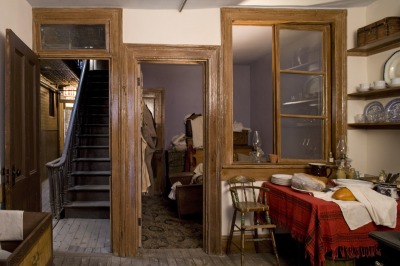
In the apartment we visited, the window was in the sitting room in the front, the bedroom was in the back, and the kitchen was in the center. The kitchen included a coal stove that was the only heating for the house. Laundry hung above the stove, and, as our guide explained, dirty diapers with only “number one” were simply pinned up to dry. Coal dust hung in the air and fell upon everything. Even in the summer when the windows were open, fresh air rarely reached to the kitchen, let alone to the bedroom in the back. Our guide remarked that the smells of cooking, coal, babies, and unwashed bodies would have been overpowering. Despite their poverty, the women purchased pretty dishes, often chipped, at second hand stores, and proudly displayed them.
This photo shows the communal staircase, the open door of the apartment, kitchen and bedroom. The window inside the apartment was added to improve air circulation due to health regulations. Blue Willow pattern dishes on display upper left.
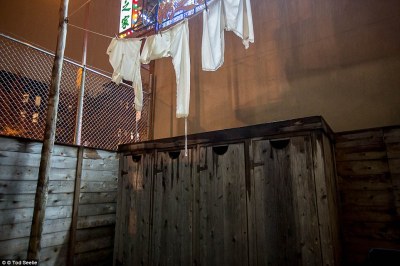
Our visit began in the back “garden” where there were four toilets for twenty-two families. I shuddered to imagine trying to clean them or to run down to use them in the middle of the night. There was a pump for fresh water. The guide handed around a bucket filled with pebbles to give us an idea of the weight the housewives and their children had to lug up flights of stairs numerous times each day. No wonder baths were infrequent. I remember an older Greek friend telling me how they used to wash with a cloth from the waist up one day and from the waist down the next. Annie’s family may not even have managed that.
Outdoor toilets in the back “garden” serving twenty-two families.
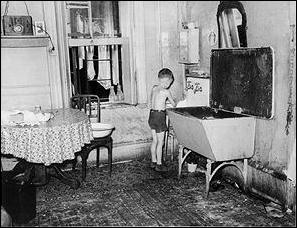
Our tour included a description of a sick and dying baby and a funeral with the baby’s body laid out in the sitting room. My 2x great-grandmother gave birth to nine children of whom, unusually, the first eight lived to adulthood. Annie must have understood that hygiene is heath. Her days would have been spent fighting to keep her house and her children as clean as she could.
Boy washing in tenement kitchen. The sink doubled as a work space.
The bedroom in the apartment we visited had a small double bed pushed up against two walls, with just enough room to walk past it to get to a small closet and a few trunks crammed in the space against the back wall. When James the seaman was home, this would have been the marital bed, but when he was gone, the younger children slept with their mother, while the older ones wrapped themselves in sheets and blankets near the stove or in the sitting room.
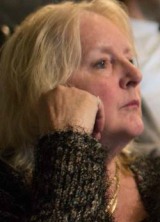
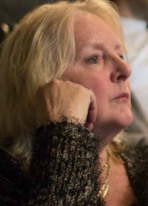
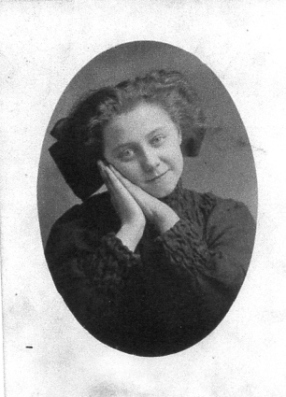
Annie, at the time of her marriage
Anne, age 20, and James “Ingles,” mariner, age 25, husband and wife, living in the area of the docks, appear on the 1855 New York State census. In fact, Annie was perhaps 15, while James was 17. I suspected this was an unusually young age to marry, and research proved me right. The average age for Irish marriages at the time was 20 for the bride and 25 for the groom. Annie would have had every reason to lie about her age for reasons of propriety.
Documents I have only recently found show that Ann “Carless,” age 13 arrived in New York with her mother Mary on January 16, 1854. Her two younger brothers, one 7 and the other an infant, died on the ship. As I could not find Ann’s mother Mary after that, I assume she died soon after arriving, leaving her young daughter on her own.
Annie lived her whole life in America in tenements in the the unsavory area near the docks—filled with bars, drunken sailors, prostitution, and crime. She died at the age of forty-five of a stroke, leaving her husband and eight children. Because of her, I am here.
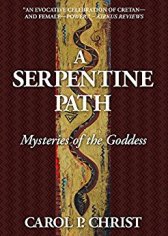
This is a great day for me as I announce the publication of A Serpentine Path: Mysteries of the Goddess. It is the first —but certainly not the last—book from the new FAR Press, directed by Gina Messina and Xochitl Alvizo, two of the founders of www.feminismandreligion.com. The release of my book is the fruit of friendship and collaboration that has been nourished in the blog community. I hope you will join with us in celebrating our joint venture by ordering the book, telling your friends about it, sharing it Facebook and Twitter (links below), reviewing it on Amazon, and letting Gina and Xochitl know if you can review in a magazine, journal, or blog.
Here is an excerpt from the preface to whet your appetite.
*
A Serpentine Path is a story that begins in despair and ends in rebirth and regeneration. It depicts a turning point in my life, a psychological and spiritual breakthrough that opened me to living the rest of my life in grace and joy. Though I am tempted to say it was a journey from darkness to light, that would be inaccurate, for mine was a journey into the darkness and out again. The path of life is never straight or narrow, and the circle of light and darkness is never-ending.
When I began the journey described in A Serpentine Path, I did not feel loved, I did not want to live, I could not write, and I believed the Goddess had betrayed my faith. As I completed the book, I knew I was loved, I wanted to live, I was writing, and I understood that the Goddess had never abandoned me. Though my life has had its ups and downs since then—as all lives do—I have never forgotten that I am loved, I have wanted to live, I have not stopped writing, and I feel the Goddess ever-present in my body, in my breath, and in my connections with the living and the dead. Though my story is deeply personal, my struggles with love and death, trust and control, are widely shared.
A story of finding the Goddess, A Serpentine Path is part of a growing genre that is developing as women explain to themselves and others why they left the patriarchal religions of their origins for a more nourishing spiritual vision that affirms both women and the earth. A Serpentine Path documents the first of the Goddess Pilgrimages to Crete I have been leading twice a year since then. For the women who have traveled with me, it will evoke many memories. For those who have dreamed of a pilgrimage to the Goddess, it offers an opportunity to imagine the journey. I now know a great deal more about ancient Crete, the folklore and customs of traditional Crete, and the rocks, trees and plants of Crete, than I did when I began. But I learned the mystery on my first pilgrimage. Because we are all deeply connected to each other, I know that the path to the mystery I discovered is not mine alone.
In early December 2016 I visited central Williamsburg in Brooklyn, New York, where my 2x great-grandparents Thomas and Anna Maria Christ and their son George and his family, including my father’s father Irving John, lived for over fifty years. I had compiled a list of all the known addresses of the family in Williamsburg from census and death records. The family lived in a several block square area surrounding Most Holy Trinity Roman Catholic Church on Montrose Street for all that time.
Most of the buildings at the addresses where the family lived had been torn down and replaced with housing projects in the mid-twentieth century. Some of the remaining ones are being torn down today, as this area of Williamsburg is being gentrified. Still, enough of the old buildings remain to give a sense of what the neighborhood was like in the 1800s. Continue reading “Ancestor Connection in Williamsburg, Brooklyn by Carol P. Christ”
The Refugee Crisis: Through the Eyes of the Children by Robert and Robin Jones. Santa Barbara, CA: Blue Point Books, 2016. $19.95. Website: http://www.throughtheeyesofthechildren.com
Arriving in Molivos, Lesbos for a summer break, Robert and Robin Jones quickly became caught up in the refugee crisis engulfing the island that had been their second home for over forty years. Initially Robin and Robert provided water to weary refugees walking along the roads of Lesbos, grateful to have arrived in Europe. Soon, Robin, an artist who holds a certificate in art instruction, began providing marking pens and paper to recently arrived refugee children awaiting transport to processing centers at the other end of the island.
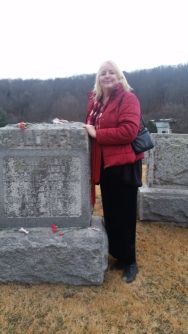
In the past week I visited Cherry Ridge, Honesdale, Wayne, Pennsylvania in the Pokonos, where I was welcomed by my third cousin Marcia Perry Gager whose family never left the place where our ancestors settled. Marcia and I have been corresponding about our family’s history since Ancesty.com connected us about three years ago. During that time, together with another cousin, Debra Ball, we have managed to decipher the complicated history of Henry Iloff, his two wives, and their eighteen children.
My visit to Honesdale began at John’s Evangelical (formerly German) Lutheran Church. Following a last-minute discovery that the baptism, marriage, and funeral records of the church were not in the Wayne County Historical Musem archives as I had been led to believe, I made a call to the “emergency number” of Pastor Richard Mowery the day before our scheduled visit, not knowing how he would respond to this “not-really-emergency” invasion of his personal space. Continue reading “Down on the Farm by Carol P. Christ”
At Thanksgiving and the solstice holidays many of us are reminded that we are the “black sheep” of our families. In my case this means that I am too “assertive,” too “aggressive,” too “demanding,” too “political,” too “willing to upset my father,” too “opinionated,” too “feminist,” and so on.
“In the English language, black sheep is an idiom used to describe an odd or disreputable member of a group, especially within a family. The term stems from the genetic effect in sheep whereby a recessive gene occasionally manifests in the birth of a sheep with black rather than white coloring; these sheep stand out in the flock [emphasis added] and their wool was traditionally considered less valuable.” (Wikepedia, “Black Sheep”)
In these these days when many of us are gripped by paralyzing despair as we come to terms with the election as President of a racist, sexist bigot who has created a climate of fear and promises to undo much of the progressive legislation of the past fifty years, I find it appropriate to reiterate an insight that has sustained me through many years of sadness and disappointment about the state of our world.
“Hope is not to be found in optimism so much as in a primal understanding of what matters most.” In other words, the reason for hope is not to be found in the knowledge or rational calculation that our efforts will succeed in saving life on earth but rather in the conviction or inner knowing that it is right to try. Continue reading “The Reason for Hope Is the Creative Process of Life by Carol P. Christ”
It is now Monday morning, five days after the new President was elected, despite losing the popular vote.
For many of us, and for me too, losing this election feels like losing everything we have worked to achieve during our whole lives. One of my friends wrote, “I am totally distraught and unable to focus.” My cousin said, “I feel like I am in Nazi Germany in the 1930’s.”
I have been scouring the internet to try to figure out what we can still do to try to create a world that guarantees liberty and justice to all people and all beings in the web of life.
Many women are drawn to the image of the Sacred Marriage—perhaps especially those raised in Roman Catholic or Protestant traditions where sex is viewed as necessary for procreation but nothing more, and who learn that the naked female body as symbolized by Eve is the source of sin and evil. In this context, the positive valuing of sexuality and the female body found in symbols of the Sacred Marriage can feel and even be liberating.
Jungians have claimed that the Sacred Marriage is an archetype of the wedding between the “masculine” and the “feminine.” Many women have been attracted to this idea as well. It “softens” the radical feminist critique of patriarchy and male dominance. Rather than “castrating” the “phallocracy” as Mary Daly urged, we can think in terms of the “marriage” of qualities traditionally associated with male and female roles. Women, it is said, can use a good dose of ego and assertiveness traditionally associated with the masculine, while men need to have their dominating rational egos tempered by feminine qualities like care and compassion. Continue reading “Sacred Marriage or Unholy Cover-up? by Carol P. Christ”


 In the middle of the night in waking sleep, I asked my great-great grandmother Annie Corliss to tell me the story of how she met and married James Inglis. This story came through me in a place I have come to call the Dreamtime. The Aboriginal term feels right. As I understand it, this is not a place where the dead speak to the living but rather a space where boundaries blur as the ancestors speak in us.
 During my ancestor research, I have seen the word “tenement”—with the implication of poverty, filth, and disease–handwritten onto more than one death certificate. Last month, I visited the Lower East Side where my Irish 2x great-grandmother Annie Corliss lived in the tenements near the docks with her husband the Scottish seaman James Inglis and their nine children.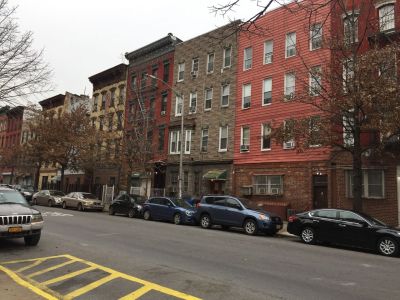
 This is a great day for me as I announce the publication of
  In early December 2016 I visited central Williamsburg in Brooklyn, New York, where my 2x great-grandparents
  The Refugee Crisis: Through the Eyes of the Children by Robert and Robin Jones. Santa Barbara, CA: Blue Point Books, 2016. $19.95. Website:
  In the past week I visited Cherry Ridge, Honesdale, Wayne, Pennsylvania in the Pokonos, where I was welcomed by my third cousin Marcia Perry Gager whose family never left the place where our ancestors settled. Marcia and I have been corresponding about our family’s history since Ancesty.com connected us about three years ago. During that time, together with another cousin, Debra Ball, we have managed to decipher the complicated history of
  At Thanksgiving and the solstice holidays many of us are reminded that we are the “black sheep” of our families. In my case this means that I am too “assertive,” too “aggressive,” too “demanding,” too “political,” too “willing to upset my father,” too “opinionated,” too “feminist,” and so on.
 In these these days when many of us are gripped by paralyzing despair as we come to terms with the election as President of a racist, sexist bigot who has created a climate of fear and promises to undo much of the progressive legislation of the past fifty years, I find it appropriate to reiterate an insight that has sustained me through many years of sadness and disappointment about the state of our world.
 It is now Monday morning, five days after the new President was elected, despite losing the popular vote.
 Many women are drawn to the image of the Sacred Marriage—perhaps especially those raised in Roman Catholic or Protestant traditions where sex is viewed as necessary for procreation but nothing more, and who learn that the naked female body as symbolized by Eve is the source of sin and evil. In this context, the positive valuing of sexuality and the female body found in symbols of the Sacred Marriage can feel and even be liberating.
