

This was originally posted July 14, 2014

Besides being advocates of social justice, the prophets of Israel were advocates of “exclusive monotheism,” exclusively “male monotheism,” “religious othering,” and “religious prejudice.”
Many progressive Jews and Christians find inspiration in prophets because of their insistence that their God cares about the poor and “the widow at the gate.” For progressive Christians, Jesus stands in the prophetic tradition, and the core of his message is “concern for the poor.” For progressive Jews the prophetic tradition is the root of their concern for human rights.
Those who locate their spirituality and concern for social justice in the prophets can point proudly to Martin Luther King and the many priests, ministers, and rabbis, as well as ordinary Christians and Jews who marched with him as exemplars of the prophetic tradition.
But the prophetic tradition also has a nasty underside.
For some Christians and Jews “the Goddess” provokes a visceral reaction—calling to mind the prophets’ condemnation of the people of the land for ignoring the poor while heading off to worship “on every high hill and under every green tree.” Both Jews and Christians have been taught to associate “nature worship,” “paganism,” “polytheism,” and—if the word is spoken at all—“the Goddess” with those who “go against” the traditions of “ethical monotheism” and “social justice” advocated by the prophets. From there it is only a short step to other negative and pejorative terms such as “idolatry,” “cult,” “orgiastic,” and “lack of ethics.”
For those who locate their spirituality and concern for social justice in the prophets, such terms are likely to spring to mind when they are confronted with contemporary women’s spirituality and the Goddess. Goddess feminists have been dismissed by Christian feminists as “narcissists” and “navel-gazers” who are concerned with their “personal psychological” issues rather than with “issues of social justice.” I know of Jews who are progressive on other issues who dismiss contemporary Goddess worship as “a cult.” Such attitudes came to the fore in the backlash against the Re-Imagining Conference. Because of these prejudices, experimentation with explicitly female images for divinity in has come to virtual standstill in churches and synagogues.
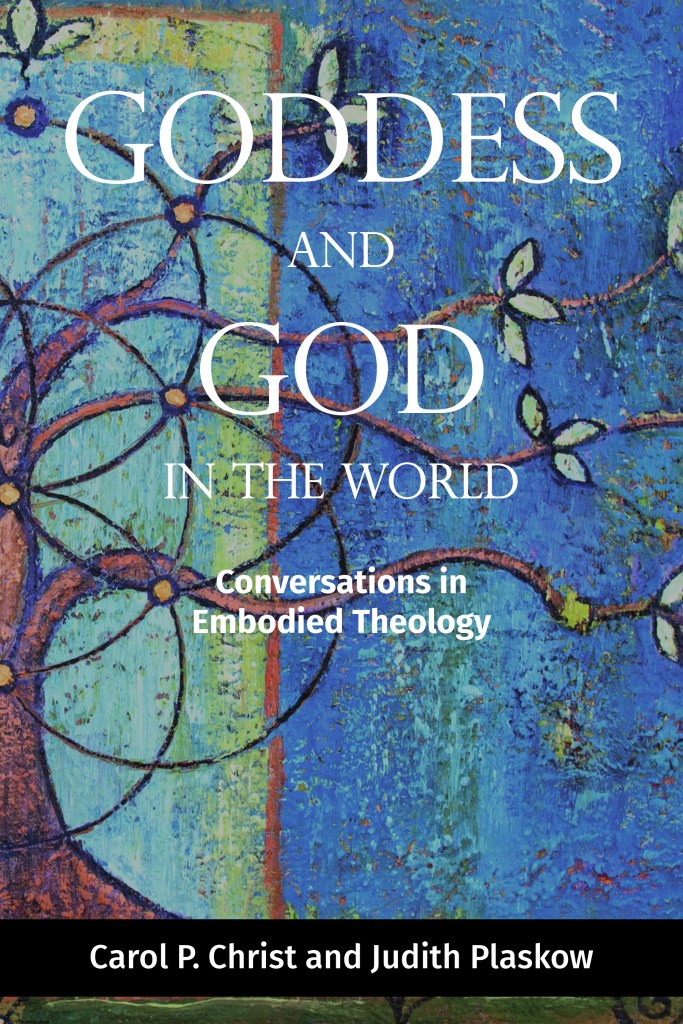
In the past week I have been working on a draft of the conclusion to the book Judith Plaskow and I are writing, now with a new tentative title Two Views of Goddess and God for Our Time. In it we consider* the dual legacy of the prophets as an example of why a more complex understanding of the inheritance from traditions is necessary.
Some feminists and other progressive religious thinkers have argued that while texts and traditions contain elements that reflect the standpoints of those who wrote or received them, there is still an “essential core” of texts or traditions that can be called revelatory and authoritative. For some Reform Jews the notion of “ethical monotheism” is considered revelation, while the laws of Deuteronomy and Leviticus as interpreted by the rabbis are not considered essential to “the Jewish message.” Similarly, for some liberation theologians, “concern for the poor and oppressed” as expressed in the prophetic tradition and the actions and teachings of Jesus are considered revelatory, while the development of a male hierarchy within the church is not attributed to the “core message of Jesus.”
Both of us were convinced by Mary Daly’s argument that in fact it is impossible to separate a “liberating” core from “the rest” of the Bible and tradition. Distinguishing her position from those of some other liberation theologians—including some feminists–Elizabeth Schussler Fiorenza argues that it is “wo/men seeking liberation” who find a message of liberation in the words of Jesus and the community centered around him. In other words, the message people find in the words of Jesus and the Jesus community is affected by standpoint: those who are not seeking liberation themselves may read the New Testament differently, choosing different texts on which to base their interpretations.
Picking up on this insight, Judith argues that Jews–and by extension Christians, Goddess feminists, and others—are the ones who determine what is “essential” for them in texts and traditions. Thus, Judith would argue, progressive Jews like herself may choose to find Jewish meaning in the prophets’ concern for the poor, while choosing to criticize the prophets’ vendetta against those who worshipped (the Goddess) on every high hill and under every green tree. The fact that both “traditions” are found in the prophets makes it clear that contemporary choices–not the text itself—determine where meaning will be found. For Carol it is as important to criticize the warlike aspects of Goddess symbolisms and traditions as it is to argue that “women need the Goddess.” Thus she has felt it important to insist that Goddess feminists become aware that we are not simply choosing Goddess instead of the patriarchal God, but that we also can and must make choices about which aspects of Goddess traditions we wish to affirm.
While I do not choose to situate my own concern for social justice in the legacy of the prophets, I respect those who do. However, I think it is important for them to recognize and actively criticize the negative underbelly of the prophetic tradition. Besides being advocates of social justice, the prophets were advocates of “exclusive monotheism,” exclusively “male monotheism,” “religious othering,” and “religious prejudice.” The prophets are “the source” of the negative polarity between “pagan” and “polytheistic” worship of (unnamed) “Goddesses” “in nature” vs. “ethical monotheism” or the worship of “one God who demands justice.”
As the saying goes, “those who do not know their history are doomed to repeat it.” Sadly some Jewish and Christian feminists do repeat this aspect of their history when they imagine that they hold the moral high ground as advocates of justice in relation to their Goddess sisters who–they say–“worship nature” and focus on “personal issues” while ignoring issues of “social justice.” This characterization is inaccurate and dismissive–and it “fits right in” with the prophetic tradition of “religious othering” and “religious prejudice.”
*Though based in our joint work, the words of this first draft are mine.
Discover more from Feminism and Religion
Subscribe to get the latest posts sent to your email.


Carol knows how to get to the heart of any matter while demonstrating her superb scholarship and philosophy…”For Carol it is as important to criticize the warlike aspects of Goddess symbolisms and traditions as it is to argue that “women need the Goddess.” A thousand times YES! I notice that in the last few years feminists seem to be increasingly drawn to the war – like aspects of the goddess – ok – I get it – we feel powerless – terrible things are happening – the women’s movement is at a standstill perhaps marginalized like never before – split as much from within as without – BUT the answer does not lie in ‘adopting’ patriarchy in disguise and that’s exactly what we do when adopt these war-like aspects of the goddess without assessing what we are doing or why…
LikeLiked by 1 person
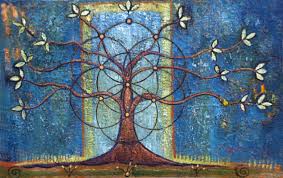
PS… that beautiful Tree of Life of Judith’s is a perfect visual companion to this essay. An image of wholeness in the largest sense of the word.
LikeLike