The Gendered Dimensions of the Water Crisis in Iran: Impacts on Women’s Health, Livelihoods, and Security

Moderator’s Note: This post has been brought to you in cooperation with the NCRI women’s committee. NCRI stands for the National Council of Resistance of Iran. You can learn more information as well as see this original article by clicking this link. A description of their Council can be found at the end of this post.

The water crisis in Iran has moved far beyond a simple environmental issue — it has become a humanitarian, ecological, and economic disaster.

While at first the problem seemed to be the result of drought and declining rainfall, its true causes ran much deeper: entrenched corruption and mismanagement at the heart of the ruling establishment. Until these systemic roots are addressed and removed, Iran’s present — and its future — will only become more precarious.

A significant number of researchers and international observers emphasize that 70 to 80 percent of the current crisis stems from mismanagement, unsustainable policies, lack of transparency, and corruption. As one report notes, “Iran’s water crisis is not a crisis of resources; it is a crisis of decisions—decisions that have made the land thirstier and the future darker. This crisis, alongside the erosion of public trust in governance, is a symptom of structural and managerial failure.” (Newsweek, August 1, 2025; The Times, December 8, 2022; Reuters, April 27, 2021)

Continue reading “The Gendered Dimensions of the Water Crisis in Iran: Impacts on Women’s Health, Livelihoods, and Security”
Water Dance by Janet Maika’i Rudolph

A woman’s water breaks before she gives birth. Holy water confers blessings. Water is the purifying agent of baptism. When we’re “in the flow,” we’re being creative. Water is often depicted with qualities that signify life and healing. But water is also violent and destructive.

Think of what Hurricane Katrina did to New Orleans in 2005, and Superstorm Sandy to the Northeast in 2012. The movement of the Earth shapes these violent tempests. Earth is in perpetual orbit and rotation thereby continuously invigorating the air and waters.

There is a mythological vision of a defined space where the mixing of elements occurs. It is a cauldron. Magical cauldrons contain the raw materials that are necessary for the creation and sustenance of life. Our precious Earth can be considered The Grand Cauldron of Creation, a vessel encircling all these elements. Add in motion, or agitation, or rotation and you not only get storms, but the recipe for genesis.

Continue reading “Water Dance by Janet Maika’i Rudolph”

Witch Hazel, a Tree that Belongs to Women! part 1 by Sara Wright

Yesterday, I was on my way home at dusk when the clouds parted and the mountains were drenched in deep gold. Still waters mirrored earth, land, sky.

I soaked in the last of the fall color that is still striking in a few protected places, gathering in images of still waters to remind me that nature is home.

Why do I need this visual reminder?

  Yesterday I read an article that queries the issue of human cruelty triggering the usual overwhelm. Every day it’s something. I force myself to stay present to what’s happening on a peripheral level. To do this, I need to keep myself grounded in the rest of nature to help me deal with what’s happening to this planet and her people. I am struggling hard to maintain some sort of balance despite the pain and chaos.

I have no answers to what is happening cross culturally on a global level unless we begin to re-establish a heart- level connection with humans and the rest of nature. The warnings I receive have become more dire making it impossible for me to block them out.

When I can surrender to nature’s beauty, I can also locate myself as a speck in the life of a five -billion year old planet even if it’s just for a few seconds at a time. My love for my dog, the birds at my feeder, free roaming bears, the kindness of neighbors and friends,   also help me to feel that I am being given a gift.

Continue reading “Witch Hazel, a Tree that Belongs to Women! part 1 by Sara Wright”

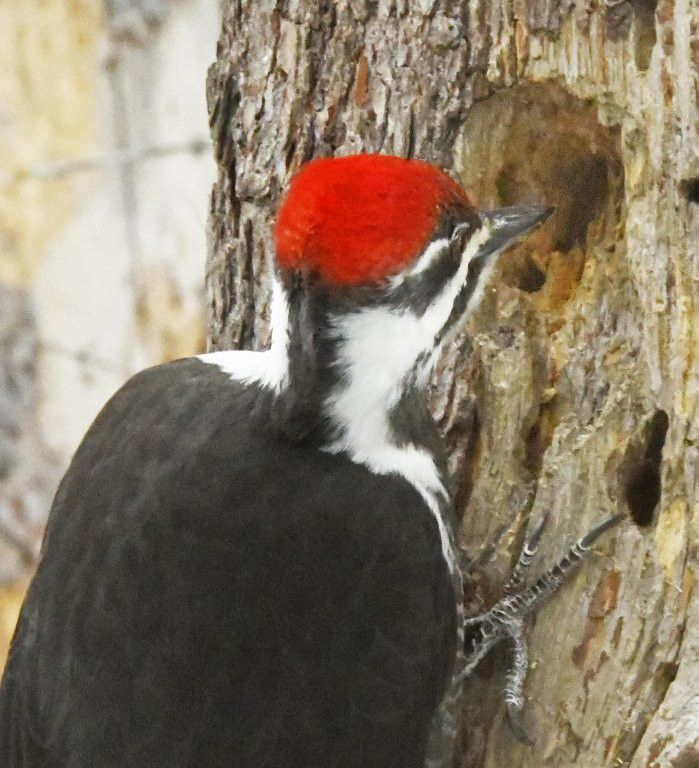
What the Woodpeckers are Trying to Tell Me by Sara Wright

Pileated Woodpecker

Every morning, I awaken to the chirp of woodpeckers. Sapsuckers, downy and hairy woodpeckers are constant visitors climbing up and down the crabapple trees. The chickadees can’t get to the feeder because as soon as one species leaves another arrives.

At first, I enjoyed woodpecker presence and their antics but during the last week I have found the escalating chirps disturbing.  Some days especially around 4 PM a pileated woodpecker joins the other three; this one is drilling a hole in the side of the cabin.

When my pileated friend started drilling on the house, I was forced to acknowledge that undealt with personal issues were being  highlighted by the behavior of these birds, and that someone in me was stuck in denial.

Since my relationship with nature is deeply personal too many sightings of any creature indicate the need to pay closer attention.

Continue reading “What the Woodpeckers are Trying to Tell Me by Sara Wright”

Samhain and the Waters of Hurricanes Helene and Milton, part 2 by Susan Foster

Part 1 was posted yesterday

On Samhain we are given the opportunity to come together in community to grieve our losses. We grieve for all those we have known personally who have passed over. But this year we also grieve for all those who lost their lives and homes in Hurricanes Helene and Milton and in the many other disasters around the world. We grieve as well for the other losses that occurred—of homes, of jobs, of community, of pets (many of whom also died or were separated from their owners). The losses are so enormous and overwhelming that we need the support that community provides to cope with them. We need to bind together in the strength of community to express our sorrow. Being aware of the death from so many natural disasters helps us to listen to the earth to see what She is telling us, to hear Her crying because She is weakened and out of balance, breaking apart under the strain.

 Feeling the earth’s grief from the hurts inflicted upon Her enables us to take stock of our policies, to change our course while we still can. As we float downstream on our raft, we can ignore what we see around us until we see the rapids ahead and say to ourselves, before we plunge over them, “Why didn’t we change course earlier?”

Continue reading “Samhain and the Waters of Hurricanes Helene and Milton, part 2 by Susan Foster”

Samhain and the Waters of Hurricanes Helene and Milton, part 1 by Susan Foster

Moderator’s note: While Samhain is past for this year, we are still in the section of the Celtic calendar which makes this blogpost, and its part 2 which will be posted tomorrow, relevant.

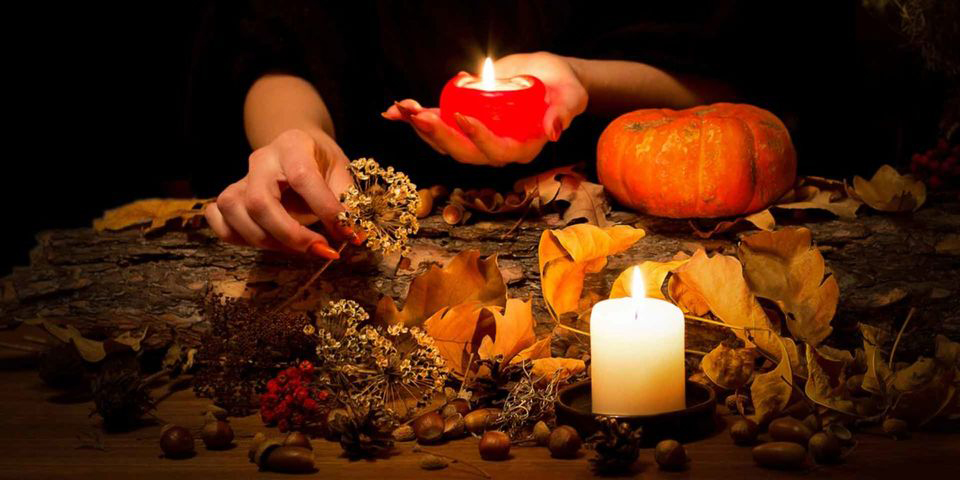
Samhain is an ancient Celtic festival, in fact the most sacred celebration in the Celtic year. Samhain is the New Year of the Celtic calendar. It is one of the eight holidays of the Celtic year—the solstices, equinoxes, and cross-quarter days—all of which mark the turnings of the seasons. Samhain is a time when the harvest had been completed; all the grains and late-maturing vegetables have been gathered in; the fields have been cleared, the old cast off, the fields lying fallow over the cold and dark of winter in order to make room for the eventual springing forth of new life. The New Year, begins in darkness at Samhain, is a reminder that all life emerges from the darkness, that death precedes rebirth. It is a time when the veil between the worlds of the dead and the living thinned, so that the presence of those who have gone before us is more clearly felt or even seen. It is a time to remember the ancestors as well as those newly departed—to grieve our losses, to let go so that we can move forward.

Samhain is the precursor of our Halloween. It was brought to this country by Irish immigrants during the potato famines in the 19th century. They brought their Celtic customs with them, but by that time Samhain was known as Hallows Eve, since the Irish were good Catholics. It struck a responsive chord with the American people, who called it Halloween. They adopted many of its customs, including lighting candles in gourds or pumpkins and dressing in costume. Today Halloween is celebrated as a spooky and fun time, observed with trick-or-treating and mischief-making, but originally it was a solemn holiday—a time to commune with the beloved dead, to honor the ancestors with food and drink, and to acknowledge death as part of a never-ending cycle of birth, death, and rebirth.

Continue reading “Samhain and the Waters of Hurricanes Helene and Milton, part 1 by Susan Foster”

Archives from the FAR Founders: Extending Compassion and Vegetarianism by Xochitl Alvizo

This was originally posted on June 26, 2013 and continues to be a story I love retelling!

“I did not know to recognize you as individuals when I bought you, but I know to recognize you as individuals now…”

I had been a vegetarian, and sometimes pescatarian, for more than 10 years before becoming vegan. Despite the length of my vegetarianism, in all that time I had not been inclined to go vegan. First, I really didn’t know too much about veganism and only began meeting a few vegans about five or six years ago here in Boston, none of whom had shared a compelling enough reason for their choice (at least not compelling to me). Further, I had no imagination for life without cheese or Cherry Garcia ice cream(!), and so I happily continued with my vegetarian ways. Then enters Carol Adams…

Continue reading “Archives from the FAR Founders: Extending Compassion and Vegetarianism by Xochitl Alvizo”

Celebrating Lammas in Troubled Times by Nan Lundeen

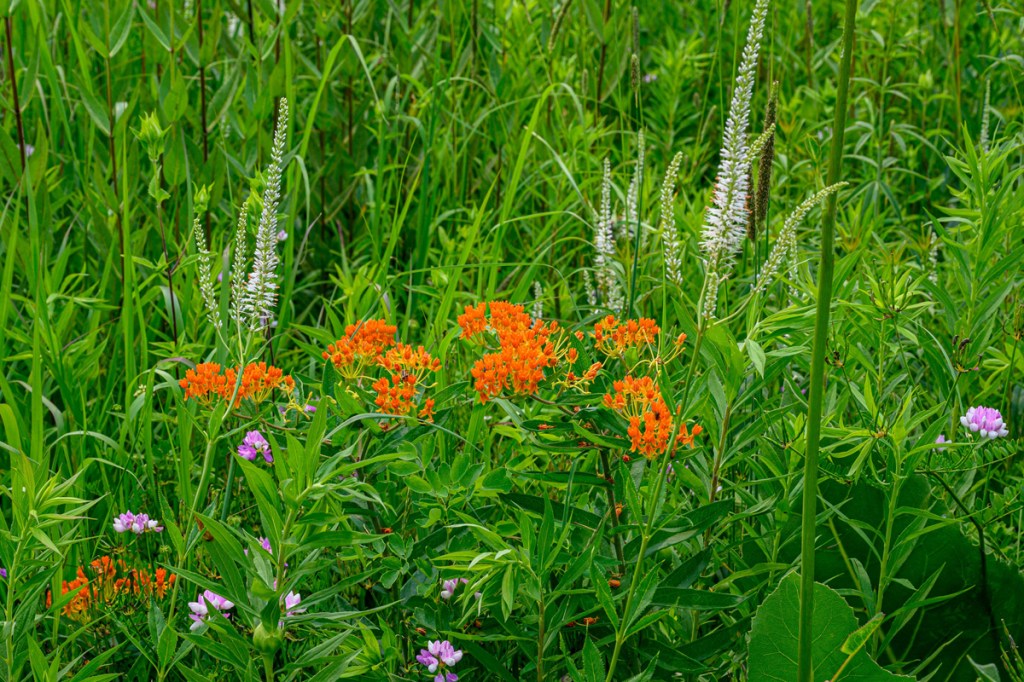
Tallgrass Prairie at Fernwood Botanical Garden, Niles, MI
credit: Ron DeKett

Lammas, that Celtic Earth-based spiritual tradition, has long been dear to me. Having grown up on an Iowa farm in the 1950s, I am accustomed to living close to the rhythms of the land. Gratitude for Earth’s first fruits comes naturally. The tradition calls for ritually baking a loaf from the first-harvested grain of the season, usually corn, and blessing it. It is a harvest festival and a time of gratitude and joy.

Continue reading “Celebrating Lammas in Troubled Times by Nan Lundeen”

From the Archives: The Three Mothers: Feminine Elements and the Early Kabbalah by Jill Hammer

This was originally posted May 22, 2108

For over ten years, I’ve been teaching a work of early Jewish mysticism known as Sefer Yetzirah, or the Book of Creation.  There are widely differing opinions on the book’s origin and dating, but many scholars date it to the sixth century.  Its core concept can be described simply: the Divine used the Hebrew letters as metaphysical channels to create the different aspects of reality: the directions, the elements, the planets, the months of the year, and so forth.  Each letter is a channel by which God creates a unique form or entity, and meditating on the letters provides us with a connection to divine creative power. In its discussion of the letters, Sefer Yetzirah shows a strong connection to feminine imagery, and thus helps the later kabbalah develop its own link to the feminine.

Continue reading “From the Archives: The Three Mothers: Feminine Elements and the Early Kabbalah by Jill Hammer”

From the Archives: Answering the Call by Joyce Zonana

This was originally posted on April 30, 2020

Very early in Henri Bosco’s 1948 novel Malicroix, a young man, Martial de Mégremut, living placidly amid fruitful orchards in a tame Provençal village, receives a letter informing him he has inherited “some marshland, a few livestock, a ramshackle house” from a reclusive great-uncle, Cornélius de Malicroix. Against his family’s strenuous objections–with alarm they speak of “marshes, mosquitoes, miasmas”–Mégremut resolves to travel alone to the remote Camargue to claim his “wild” Malicroix inheritance. The house is on an island, and to reach it Mégremut must cross a rough river, at night, in a frail wooden boat piloted by a taciturn old man who meets him at dusk in the middle of a vast plain.

So begins a deeply internal quest narrative, an initiatory journey that forces Mégremut to come to terms with himself and with the elements–earth, water, wind, and fire–that are ever-present, sometimes terrifyingly so, on the island. For once he arrives, he learns that he must remain there alone for a full three months if he wishes to obtain the inheritance. Torn about whether to stay or leave, he finds that the decision to stay is made of its “own accord,” unconsciously.

Continue reading “From the Archives: Answering the Call by Joyce Zonana”