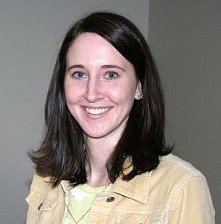
Navigating the Academy with an Accent by Amanda Pumphrey

“Where are you from?” I wish I had a dollar for every time someone has asked me that question since moving to California. I would be able to make a substantial payment towards my student loan debt by now. No one knows I’m “different” here in SoCal until I open my mouth. My thick Southern accent happens to be my signifier.

Before I moved to Claremont to begin graduate school, I never considered my accent a problem. Despite the fact that when I moved outside of my hometown to college only two hours away, some of my friends teased me about my accent. Since I grew up in the very southwestern corner of Georgia, I lived right along the Alabama border. Some of my college friends from other regions of Georgia thought I sounded more Alabamian. Still, mostly everyone I went to college with had some form of a Southern accent and that was okay. It was safe. It was normative.  Continue reading “Navigating the Academy with an Accent by Amanda Pumphrey”

Practice What You Preach by Corinna Guerrero

The underlying principle that links a feminist critique to every other critical lens since the rise of feminist discourse is the “hermeneutic of suspicion.” Essentially,  a hermeneutic of suspicion identifies the disconnect between rhetoric and a lived reality. The lived lives of women are different than the pontifications espoused directly and indirectly by the traditionally patriarchal social, political, cultural, religious, and educational structures in which individuals participate.

I like to think that I live my life bucking these structures whenever possible because the roles a woman plays in her own life should: 1) be determined by her; and 2) if she negotiates more “traditional practices” (e.g. marriage, motherhood, etc.) then these practices do not limit her to traditionalist practices (e.g. staying at home, spousal servitude, etc.). Granted, I used the two most generic examples of traditional and traditionalist practices, but the point is still valid. When I go to holidays with my extended family there are very few questions or comments about my PhD program, but many comments about the fact that I do not make a plate of food  for my husband.   Continue reading “Practice What You Preach by Corinna Guerrero”

Goddess Communities in Australia by Patricia Rose

Australia has a very diverse and rapidly expanding number of people for whom the Goddess, however She is understood, is significant. The 2006 census revealed that there were over 30,000 Pagans or followers of other earth-based religious traditions in Australia and, given the way in which religions are classified in the census, this is undoubtedly a serious underestimation. We await the findings of the 2011 census with great interest.

Prior to European settlement in Australia, Aboriginal and Torres Strait Islander peoples followed their own rich spiritual beliefs, which were based on the forces of nature, a reverence for the land and its creatures, and the influence of ancestral spiritual beings. Recently, non-indigenous Australians have become increasingly interested in the indigenous connection to the land and indigenous spirituality.

While it is important not to appropriate indigenous culture, Goddess women and men in Australia are keen to express their spirituality in ways that are relevant to this land and to the Australian culture. We recognize the need to become more attuned to the ways of Australia, to her seasons and her natural cycles, and we can learn from the experiences of indigenous peoples, garnered from millennia of living on and with this land. Continue reading “Goddess Communities in Australia by Patricia Rose”

Walking in the Footsteps of Mary by Najeeba Syeed Miller

As I walked into the “House of Mary”http://en.wikipedia.org/wiki/House_of_the_Virgin_Mary
in Turkey, our guide said, “As many Muslims as Christians come to visit this last home of Sayyidah Maryam (form of respectful way to refer to Mary, Mother of Jesus). The veracity of the historical claims of whether this was her home continue to be debated, but the relevance of her role in Muslim narratives continues to inform my community, and is also cherished by those of us who are mothers.

A Mother’s Heart
The verses of Surah Maryam in the Qur’an are oft recited throughout the history of Muslims and at times had great significance. Some scholars point to the bridge that these verses helped to build between the Muslims who were fleeing persecution and the Christian Abyssinian Negus (king) who gave these early Muslims asylum and safety in his Christian country.Beyond the way that the Jesus (or Prophet Esa, upon him be peace is referred to in Arabic and by Muslims) figures into Muslim religious history, so too does his mother hold a place of significance. Continue reading “Walking in the Footsteps of Mary by Najeeba Syeed Miller”

Goddess Meditation: Pattini by Laura Loomis

I first became interested in Goddess spirituality because of my love of storytelling.  Centuries-old stories yield multiple layers of meaning, and can be told many different ways to get at different truths.  In this respect, the written word is both a blessing and a curse.  It preserves stories that might otherwise be lost; who knows what tales were told about the Venus of Willendorf, or the giant heads on Easter Island?  But it also gives rise to the idea that there is a single “right” version of sacred stories.  Adam and Eve can be a meditation on choice and responsibility, but the insistence on taking the story literally can turn it into a command to disbelieve science.

I’ve been working on some meditations about the connection between Goddess spirituality and political activism.  Last weekend, with people across the country rising up against Proposition 8, I was reminded of a story from Sri Lanki, about the Goddess Pattini.

Pattini (also called Kannaki or Kannagi) began life as an ordinary woman, in a less-than-perfect marriage.  Her husband Kovolan was a philanderer, lured away from her by a beautiful young dancer.  After he’d burned through all their money, the dancer left him broke and alone.  A wiser Kovolan returned to Pattini and begged her forgiveness. Continue reading “Goddess Meditation: Pattini by Laura Loomis”

On Being a Gay Male Theologian During the War on Women by Dirk von der Horst

For some time, a prominent strand of gay and feminist theory and theology has taken it almost as axiomatic that gay men, lesbians, and straight women have a common stake in dismantling patriarchy.  While I have always understood my own work as a gay theologian in terms of that common struggle, recent developments point to a significant challenge to keeping that bond intact in the larger sphere of political activism.

At the end of last year, National Public Radio deemed 2011 an extraordinary year for gay rights.    Buzzfeed listed 40 reasons why it was the best year for gays ever, beginning with a Gallup poll showing that for the first time a majority of Americans supported same-sex marriage.  The list also included the repeal of Don’t Ask Don’t Tell and several firsts for openly gay elected officials.  Even the world of professional sports is becoming more accepting: in a recent tweet, Ravens’ linebacker Brendon Ayanbadejo equated support for same-sex marriage with playing in a Super Bowl when asked about his life’s greatest accomplishments.

Simultaneously, we saw a steady legislative assault on women’s reproductive freedom.   Continue reading “On Being a Gay Male Theologian During the War on Women by Dirk von der Horst”

Feminism and Religion: Where Do Nontheists Fit? By Bridget Ludwa

What is a woman to do when she no longer finds any type of theism relevant to her, but as a human being still needs community, ritual and sense of the sacred that theistic religion inherently provides?  The most vocal representatives of atheists are men, such as the voices of Richard Dawkins, Sam Harris, and the late Christopher Hitchens.  I’m happy to have these voices, because they’re brilliant and well-spoken, but where are the women?  My partner shares the same belief system as I do, but he does not feel the same need for community as I do.  Is it gender?  What ratio of women to men do you observe when you look at who is spending their time and energy making sure your local Catholic Church functions?  In questioning if women are more spiritual than men, Caroline Kline observed that women outnumber men in religious observance.  For the sake of argument, let’s accept for a moment that women are more inclined than men to seek community, ritual and a sense of the sacred.  What is a nontheist woman to do?

I wanted to go through some articles posted on here before diving into this question, maybe I would find a satisfying answer and that would be the end of it.  Carol Christ consistently poses the divine gender question, and admittedly I’ve been very drawn to a feminine manifestation of the divine.  The idea of Mother resonates with me more than Father (a father whom many believe could only “save” humanity via human sacrifice).  Part of my rejection of theism does indeed stem from this issue of gender.  For many who find traditional theistic concepts unnerving, Christ’s reevaluation of the divine is gratifying and empowering.  As empowering as this reevaluation is, however, the concept of any deity, male or female, still did not settle with me.  Continue reading “Feminism and Religion: Where Do Nontheists Fit? By Bridget Ludwa”

Residing in a Liminal Space: Finding a scholarly home at the Institute for Thealogy and Deasophy by Patricia ‘Iolana

For years I was outside of traditional academia.  I can no longer count the times I have heard that my research and my theories were highly radical and would never find a home or a place of acceptance.  Early in my career, while still in the States, a number of my colleagues tried to convince me to take a traditional theological stance, and join the world of orthodox faith tradition.  What my well-meaning colleagues never considered was that in asking me to alter my way of being, they were asking me to deny myself, my understanding of the Numinous, and negating that there were other people in the world who think and feel as I do.  I would rather cut off my nose to spite my face. Needless to say, I continued on, even though it often meant blazing my own trail off the safe and ‘beaten path.’ I trusted that I was on the right path and that the Divine would lead my way.  In other words, I had faith—loads of it, and in the end it paid off.

For a while, I had been part of the academia.edu community (if you aren’t familiar with it, it is like a Facebook for scholars where academics can share and follow research).  I joined in the hopes that I would reach like-minded people and find an academic home.  One day in the summer of 2010, I received a message asking me if I wanted to contribute a chapter on a new book about Thealogy.  The message from Angela Hope said she wanted to claim and expand the field, and I was eager to speak with her.  Our conversations lasted for hours, days, and weeks.  We found a kindred sisterhood, and she shared with me her idea to create an institute for other like-minded scholars and practitioners – a place that was supportive of liminal theories and research – a place that dared to push boundaries.  And as we wished, so we gathered.   Continue reading “Residing in a Liminal Space: Finding a scholarly home at the Institute for Thealogy and Deasophy by Patricia ‘Iolana”

The Heart of the Labyrinth by Daniel Cohen

This is how they tell the story.

They tell that the Minotaur was a monster, half man, half bull, who dwelt in the labyrinth. They tell that Theseus was a brave youth who determined to kill the Minotaur. They tell that Ariadne was a princess who fell in love with Theseus and gave him a thread to guide him. They tell that Theseus marched unfearingly into the labyrinth, braving the bellowing monster at its heart, and that he met the Minotaur and slew it. They tell that he emerged a great man who in later years won the love of many women and gloriously conquered many lands.

This is what they do not tell us. Continue reading “The Heart of the Labyrinth by Daniel Cohen”

The “Tenting” God and the Tenacity of Hope by Sheila E. McGinn, Ph.D.

Easter Sunday 2010 marked the last Mass at Historic Saint Peter Church in Cleveland, Ohio. After over 150 years of continuous use, the oaken doors of this sacred space on 17th and Superior were closed and locked. In rich irony, the building that once had been the womb of a vibrant inner-city Catholic community closed like a tomb on the very day when the Christian church around the world celebrated the feast of Christ breaking the bonds of death and rising triumphant from the grave. The official ecclesiastical act of “suppression” that closed the church building was intended likewise to roll the stone across the grave of the vibrant parish community that inhabited that domus ecclesiae. But Christians know that Resurrection happens. Easter cannot be stopped, not even by bishops.

Almost before he set foot in the door of the Chancery in Cleveland, Bishop Richard Lennon announced his intention to close one-third of the 180+ parishes in the diocese. Sixty-three parishes were to be selected for elimination based on the criteria of declining membership and financial dependency. Not surprisingly, many of the faithful were quite disturbed at this announcement. The diocesan spokesman sought to reassure them: “We don’t close parishes; we close empty buildings.” “Alright,” I thought, “maybe this won’t be so bad as it sounds.” And at first, that looked to be the case. Continue reading “The “Tenting” God and the Tenacity of Hope by Sheila E. McGinn, Ph.D.”