Nurture life.
Walk in love and beauty.
Trust the knowledge that comes through the body.
Speak the truth about conflict, pain, and suffering.
Take only what you need.
Think about the consequences of your actions for seven generations.
Approach the taking of life with great restraint.
Practice great generosity.
Repair the web
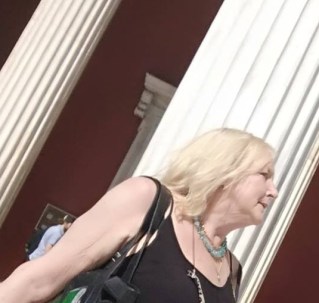
In Rebirth of the Goddess, I offered Nine Touchstones of Goddess Spirituality as an alternative to the Ten Commandments. The Nine Touchstones are intended to inform all our relationships, whether personal, communal, social, or political.
The fifth touchstone, “Take only what you need” may be the most difficult one for modern human beings to follow. Those of us not living in traditional un-modernized villages have more things, from cars to big houses, to clothes to electronic devices, than we really need. Those of us in the middle and upper classes have so much more than we need, that the mind boggles when we begin to think about whether we need everything we have or want to have.
In capitalist societies, advertising is geared to cause us to want things we don’t really need, whether it be a new pair of shoes when we already have than we can wear to the most up-to-date ipad or smart phone when the one we have still works just fine. For many of us “shopping therapy” is our first response to boredom, anxiety, or depression. Buying something brings an adrenaline rush that temporarily makes us feel better.
In some indigenous cultures, the notion of taking only what you need is rooted in a deep feeling for and understanding of the interdependence of life. These cultures teach the young that taking from the web of life always has a cost. Yes, you can pick the plants you need to eat and the others you need as herbal remedies. But when you do, you thank the plant whose life you have taken, by leaving a gift. You would learn never to pick all of the plants in a particular area because you always leave some for others and some to die and go to seed so there will be the same plants in the same place the next year. You would never throw food away because you would not have taken or prepared more than you needed, and if you had something left over, you would offer it to a neighbor.
If you grew and picked flax or sheared wool and spun it into thread and then wove the fabric that would become your sheets and blankets and clothing, you would learn to treasure what you have as the work of your own or your mother’s or grandmother’s hands, and you would not consider these precious items to be disposable. In fact you might feel sad when something wore out, knowing that you would never have the joy of using or wearing it again and knowing that you cannot replace the tangible memories associated with it.
How far we have come from this mentality, for many of us, in only a few generations. We are always looking for the newest and so ready to throw out or replace anything that we ourselves or others might consider dated or old-fashioned.
We are destroying ecosystems and using up the world’s resources to meet our needs. The notion that the world should be our resource is part of the problem. If we do not curb our need and our greed, species will continue to go extinct and the generations that come after us will struggle to survive. This is a political, not only a personal issue. We must move towards a green sustainable energy and green sustainable economies.
It is not likely that anyone reading this blog—myself included—will ever reach the state of being where we consistently take only what we need. But we can try little by little to appreciate what we have and not to keep wanting and then buying the things we do not need. We can live with so much less than we think we can. If we could stop having to have what we think we want, we might find that there is more than enough to go around. We might be able to create a world where no one has to go without and where everyone can experience the joy and grace of life.
Also see: Ethics of Goddess Religion: Healing the World , Nurture Life: Ethics of Goddess Spirituality, Walk in Love and Beauty: A Touchstone for Healing, Trust the Knowledge that Comes through the Body: Heal Yourself, Heal the World, and Speak the Truth About Conflict, Pain, and Suffering
Carol P. Christ is an internationally known feminist writer, activist, and educator currently living in Lasithi Prefecture, Crete. Carol’s recent book written with Judith Plaskow, Goddess and God in the World: Conversations in Embodied Theology, is on Amazon. A Serpentine Path: Mysteries of the Goddess is on sale for $10.98 on Amazon. Carol has been leading Goddess Pilgrimage to Crete for over twenty years: join her in Crete. Carol’s photo by Michael Bakas.



 Candide, ou l’Optimisme (in English, Candide, or Optimism) is a satirical, picaresque novel published in 1759 by François-Marie Arouet, better known as Voltaire, who was possibly the smartest author of the Age of Enlightenment…but he annoyed so many courtiers and public officials that he was forever traveling around Europe to get away from their threats of arrest and bodily harm. A picaresque novel is an adventure novel with a clever,
  tricky hero who somehow survives and makes us like him. Voltaire wrote his novel primarily to criticize the optimism of the German writer Gottfried Wilhelm Leibniz, who said that because God is always benevolent, everything that happens is always for the best. This presumably includes the bloody Seven Years War (Protestant vs. Catholic, fought mostly in Germany and France) and the Lisbon earthquake of 1755, which occurs both in Lisbon and in the novel. Even though Voltaire was accused of blasphemy and heresy, among his other sins and crimes, Candide was enormously popular throughout Europe, a popularity that continues to this day.

 In
In 
 Having seen the image of a toddler crying while law enforcement questioned her mother, my daughter was filled with fear, anxiety, and confusion. After tearfully asking if she would be taken away from me, my nine year old followed up with the question, “Will Donald Trump go to heaven?”

