Truths My Mother Taught Me by John Erickson

I never gave much credence to religion but through my mother, I met G-d, and through her I understood that I’m not a feminist because of the books I’ve read but rather because of the woman I call mom.

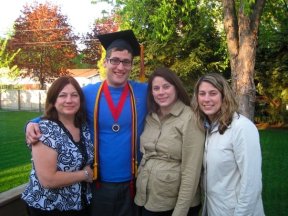
Graduation PhotoThe first question I always get asked when I’m in feminist spaces is: “What inspired you to become a feminist?”  Although I could go into the various histories revolving around men’s involvement in the early stages of the women’s movement to the similarities between the LGBTQ and women’s movements, my simple answer has always relied on one person: my mother.
I’ll be the first to admit (as well as many other people who will join me in the same chorus) that my mother deserves Sainthood for having put up with all the shenanigans I have, and still continue to, put her through. From running away from our local Catholic church the moment she dropped me off at Sunday School, to swearing like a sailor on leave at a very early age in front of Father Schmidt (who still fondly remembers me and the list I brought in with me to the confessional booth). Continue reading “Truths My Mother Taught Me by John Erickson”

WANGARI MUTA MAATHAI AND SACRED MOUNT KENYA by Carol P. Christ

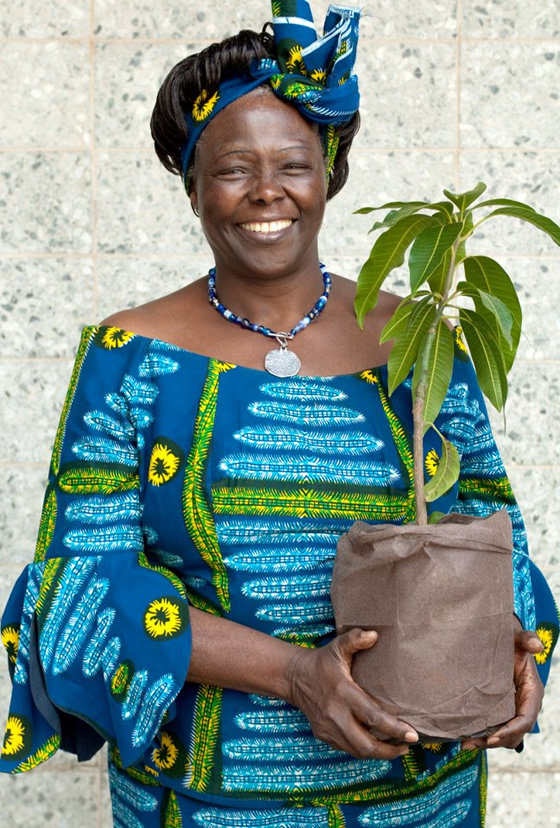
carol-christWangari-Maathai-1September 25, 2013 is the second anniversary of the death of environmental, peace, justice, and democracy advocate and Nobel Peace Prize recipient Wangari Muta Maathai.

Wangari Muta was born in 1940 in a round hut in rural tribal Kenya.  Wangari’s tribe considered the fig tree to be holy, and she was taught that one is never to cut a fig tree down or to use its branches for firewood.  Wangari spent many happy childhood hours in the shade of a fig tree that grew by a nearby stream.  Fig trees play an important role in the ecological system of the Rift Valley of Kenya.  Their roots penetrate the hard rock surface of the mountains to find underground water, thus opening channels where the water flows upward to fill streams and rivers.

As an adult Maathai learned that the fig tree she played under had been cut down by a settler with the result that the river had dried up.  This was happening all over Kenya on a massive scale to make room for cash crop plantations.  Rivers were silting up and widespread erosion threatened to turn the fertile Rift Valley into a desert. Crops were failing, animals were starving, there was no wood for cooking fires, and rural people were suffering.

Maathai  says that as she was thinking about this problem “It just came to me: ‘Why not plant trees?’ … This is how the Green Belt Movement began.”  Continue reading “WANGARI MUTA MAATHAI AND SACRED MOUNT KENYA by Carol P. Christ”

Unjust Wars and ‘Innocent’ Bodies by Kelly Brown Douglas

According to a recent online CNN report (15 September 2013) an 8 year old girl in Yemani died from internal injuries after her wedding night. Apparently this was not the first time a young Yemeni girl died under these circumstances.  Despite the fact that there have been various attempts to outlaw child marriage in Yemani, it remains legal.  For some families steeped in poverty, the “innocent” bodies of  young girls becomes a way to make money as these girls are sold for marriage to older men. One Yemeni woman lamented, “this is what poverty can do to people” (CNN online 15 September).

All around the world there are stories of young girls and women whose bodies are being “legitimately” violated.  Even in those places where the violence against women’s bodies is considered a crime, the redress for these crimes fall short of justice.  The story of the Yemeni girls and others like it have raised many theological questions in my mind concerning  notions of innocence,  the meaning of violence, and the implications of just war.  In this blog, I will share my rather fragmented thoughts on these issues as an invitation to conversation. Continue reading “Unjust Wars and ‘Innocent’ Bodies by Kelly Brown Douglas”

Interview an Atheist at Church Day by Kile Jones

Kile Jones, atheistAs some of you may know, I run a project called “Interview an Atheist at Church Day.”  This project aims at bettering understanding and furthering dialogue between atheists and Church-going religious persons.  So far we have had over a dozen interviews take place, and we have more in the making.  If you are a pastor interested in interviewing an atheist during service, or an atheist willing to be interviewed, please contact us here.

Our most popular interview so far is with Neil Carter (atheist) at a church in Mississippi.  You can read up on it here and watch it below.  At Feminism and Religion, I have made it my task to highlight some strong atheist women, and discuss some of the ways in which they can work together with religious women (sometimes this can cause a little friction).  Gretta Vosper, a pastor in Canada, is just such a woman.  She was interviewed as an atheist IN HER OWN CHURCH!  If you are not familiar with her work, I highly recommend it.  Another strong atheist woman who has participated in this project is Sarah Kaiser.  She works with the Center for Inquiry promoting LGBTQ rights. Continue reading “Interview an Atheist at Church Day by Kile Jones”

Earth Connection & Healing the Bees by Jassy Watson

Jassy_Agora1-150x150

I’m an avid gardener. I must, need, long to have my hands in the soil. The sweet smell and feel of the earth connects me to something greater, to a sense of ‘other’; a source divine. I am interwoven, connected, at one and in reverence of a greater mystery.  When I think about my connection to the earth and its origins, I find it is a connection I have had my entire life. As a young girl I spent many hours, days, in fact years, exploring the Australian bush – it was my backyard. Some of my most prominent memories are the smell of Eucalypt and the crescendo of cicada song that would permeate my entire surroundings throughout summer. As a teen, time and time again, I bushwalked our families property that backed onto mountainous National forest. I often sensed the indigenous ancestral spirits of our land watching attentively.

It is this deep connection that I have to the earth that not only leaves me feeling exultant, it leaves me troubled. I am troubled by the continuing problems caused to the environment. I admit to feeling quite disturbed recently when I read a number of reports about the persisting problems with the Fukushima Nuclear plant – radiated water still leaking into the ocean. Birdlife and ocean animals found suffering from radiation burns. Should we even be eating fish from the pacific? I can’t begin to fathom the enormity of the repercussions from this disaster that will be seen for many generations to come. My inner activist wants to be out there on the frontline, riding the waves on the Rainbow Warrior, tied to an ancient tree in protest of lopping; but I know my place is here, nurturing my little ones. So what can I do with these troubled feelings, with the frustration and with the love I have for Mother earth and all her beings? Action starts from home. So I let it fuel my fire and I get creative. I paint, I write, I garden; with intention. My intention is to play a role, no matter how small, that aids in the healing of the planet. I hold hope that it inspires other to do the same. Continue reading “Earth Connection & Healing the Bees by Jassy Watson”

The Institutional Silencing of Women by Natalie Weaver

Natalie Weaver

On July 26, 2013, I had the opportunity to hear Rev. Helmut Schüller speak at the City Club of Cleveland’s Friday Forum.  He spoke to a convened audience of around 150 people, in addition to the much greater broadcast audience, and he responded to questions that ranged from wholly supportive, to sincerely questioning, to highly critical.  I myself sat with a group of vowed religious women from Pittsburgh who seemed enthusiastic about Rev. Schüller’s Austrian Priests’ Initiative, while behind me sat a table of obvious, vocal critics.

Rev. Schüller’s initiative, now represented by over 400 priests, began in 2006 as an effort to mobilize priests to lead the way for change in the Catholic Church in at least four crucial areas: women’s ordination; married priesthood; same-sex marriages; and lay participatory voting in the election of their bishops.  Of course, Catholics have been having these conversations long before the Priests’ Initiative.  What makes Father Schüller’s work different is that it is an “insider job.”  He argued that the laity have done their part, and now it is time for the clergy to speak, even at some personal and professional risk to themselves. Continue reading “The Institutional Silencing of Women by Natalie Weaver”

A Dream Too Far . . .? by Kelly Brown Douglas

Not too long ago I heard an interview with Eugene Allen’s son.  The recently released movie, The Butler is inspired by Eugene Allen’s life in the White House. Mr. Allen served in the White House through the terms of 8 presidents. His story first came to light after President Obama’s first election when a feature article appeared about him in the Washington Post. This feature told of how he never missed a day of work during his 36 years of service at the White House and it recalled what he witnessed from his position as butler when some of the most momentous decisions were being made, especially for black folks between1952-1988, his tenure of service. There are clearly many compelling things about his story, but there is one thing that stood out for me that actually did not come from him or the movie, but from an interview with his son. During this interview his son recalled the January morning in 2009 that he and his father, as invited guests, witnessed Barack Obama being sworn in as the 44th President of the United States.  He said that he leaned over to his father and asked him if he ever dreamed that he would live to see a black man become President. He said his father responded, “I didn’t dream that I could have that dream.”  To dream such a thing was a dream too far for Eugene Allen. He could not dream the dream.

Continue reading “A Dream Too Far . . .? by Kelly Brown Douglas”

The Hot Seat by John Erickson

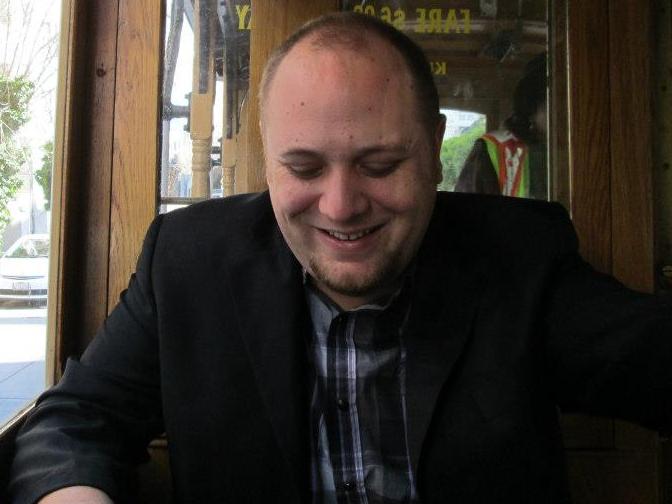
Being a man in feminism isn’t easy and that’s how it is supposed to be.

men_feminist_mainI’ve been thinking a lot about what it means to be a male feminist lately.  As the only man to be a permanent blogger on this very site until my colleague and friend Kile Jones came on board, I took my role, as a man in a traditional feminist (online) space very seriously.  Although the ongoing struggle to be a male feminist is one continually wrought with dialogues about power and positionality (amongst a host of many other topics), I am often conflicted when I see male feminists take advantage and destroy the hard work that many, specifically on this site and beyond, worked hard to build and defend.

Not wanting to reopen old wounds or start new online battles, men have been involved in feminism for quite some time.  From James Mott chairing the first women’s rights convention, to radical feminist Andrea Dworkin’s life partner John Stoltenberg, to Michael Kimmel and Michael Kaufman’s life long work to legitimize not only men in feminism but also what it means to be a man who works for gender equality, being a man in feminism isn’t easy and that’s how it is supposed to be. Continue reading “The Hot Seat by John Erickson”

Matriarchal Societies of Peace Make Sound Social Policy by Carolyn Lee Boyd

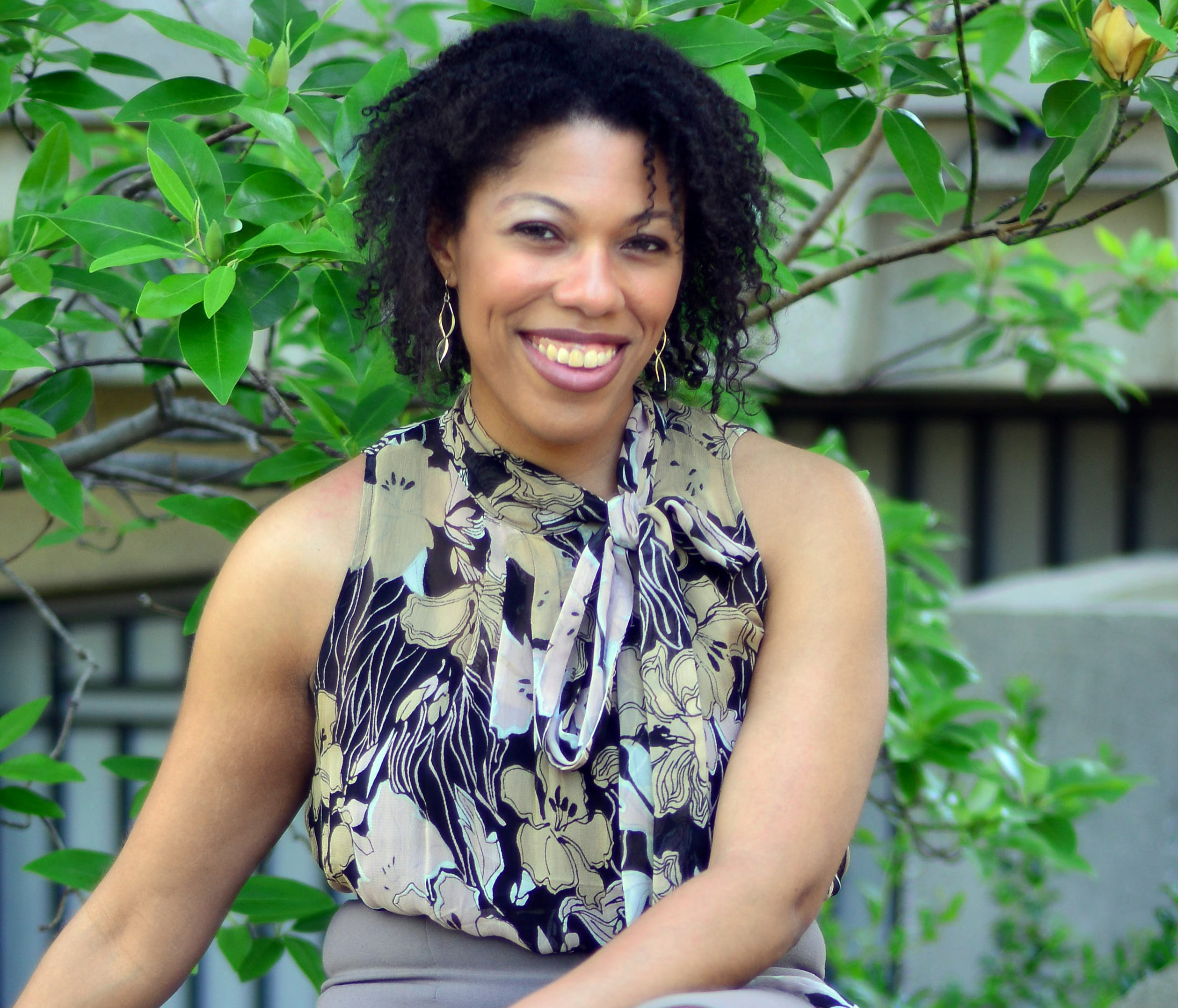
carolyn portrait

The true measure of a society’s success should be the well being of those who live in it.  Are they healthy and happy? Do they have their basic needs met? Are they free from the fear of violence? While the matriarchal “Societies of Peace,” as described the book of the same title edited by Heidi Goettner-Abendroth, represent many differing eras and places and each is unique, in general they succeed in creating such lives for those who live or lived in them. Carol Christ recently explained what characterizes these matriarchal societies:

Matriarchal societies have 4 characteristics in common:
1) They practice small-scale agriculture and achieve equality through gift-giving as a social custom.
2) They are egalitarian, matrilocal, and matrilineal. Women and men are defined by their connection to the maternal clan which holds land in common.
3) They have well-developed systems of consensus decision-making that insure that everyone’s voice is heard and considered.
4) They honor principles of care, love, and generosity which they associate with motherhood and teach both genders to express. They often view the Earth as a Great Mother.

The Philadelphia Ordinations and Pope Francis in Rio by Alla Renée Bozarth

Alla Renée Bozarth, Philadelphia 11, Philadelphia ordinations

On July 29, 2013,  I read the feminist theologian Mary Hunt’s fine account of Pope Francis’ visit to Brazil, with commentary on his informal conversation with press people on the way back to Rome.

When asked for a statement about the role of women in the Roman Catholic Church, a question which indirectly refers to women in the priesthood and episcopacy, he reiterated the position that the door to the ordination of women is closed. In response, I was inspired to write in the way that most intensely felt responses come out~ as a poem.

As I wrote, I couldn’t help but hear an older poem, “Water Women,” in the background. Perhaps the fact that Pope Francis had been to Rio, the Spanish word translated into English as river, inspired this association. Perhaps it was reinforced because Mary Hunt, whose article had moved me, was the co-founder and co-director of the organization WATER (Women’s Alliance for Theology, Ethics and Ritual). I wrote the poem “Water Women” a few years after the historical Philadelphia Ordinations, in which eleven women put a significant crack in the stained glass ceiling barrier in the Episcopal Church by being ordained to the priesthood on July 29, 1974. That fait accompli event opened the doors to the ordination of women into all three Holy Orders. The Roman Catholic Women’s Ordination Conference began later that same summer. I wrote “Water Women” in response to a question asked of me and others in a small group of Roman Catholic and Episcopal feminists during a press conference, just as I wrote “Pope Francis in Rio” on the 39th anniversary of the Philadelphia Ordinations because of a press conference, this time with Pope Francis during his flight back to Rome.

Continue reading “The Philadelphia Ordinations and Pope Francis in Rio by Alla Renée Bozarth”