

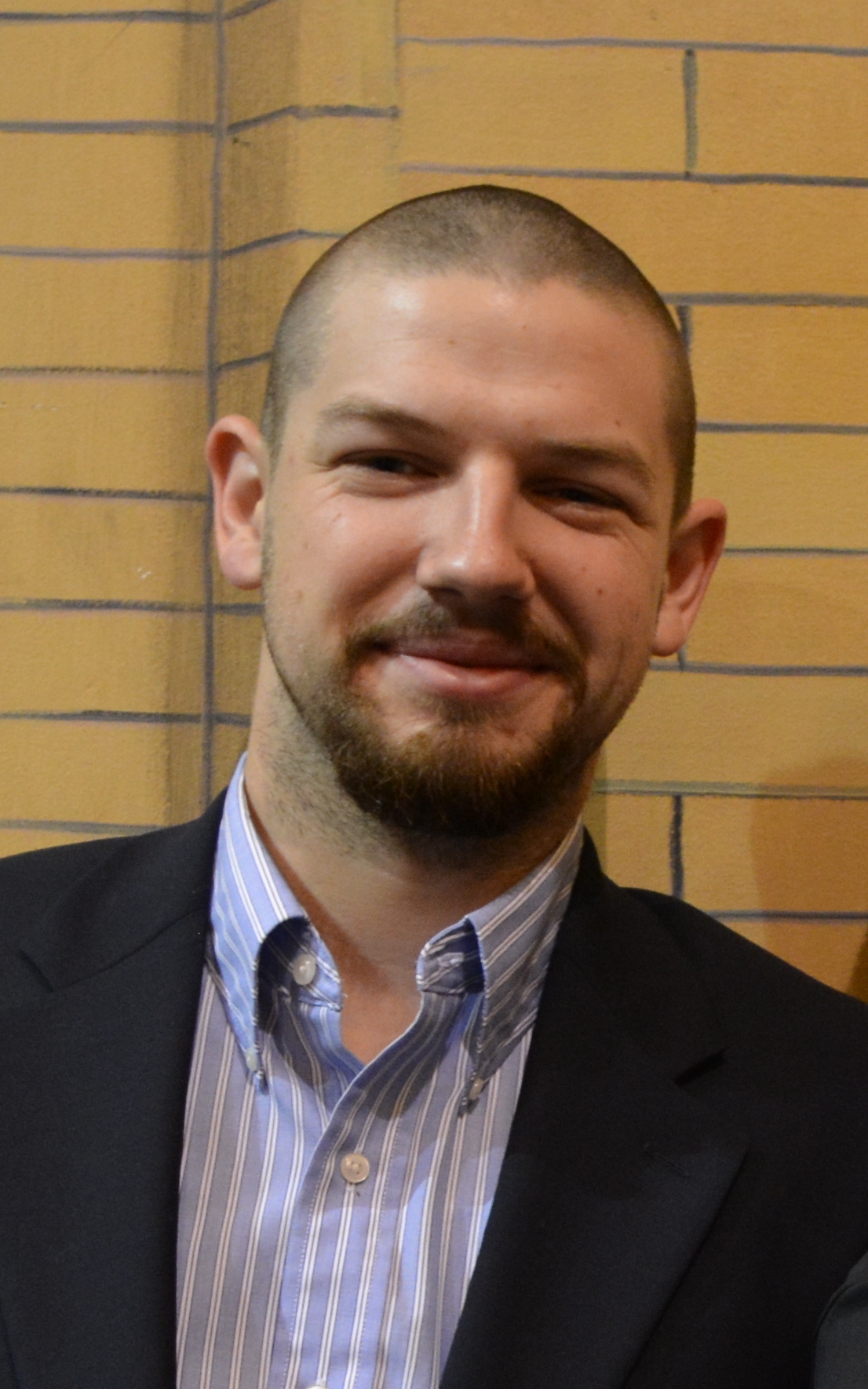
 At some point in most of my days, I will center myself down with a glass of whiskey. It is not the effects of the wonderful spirit that draw me to it so much as the myriad of flavors contained therein. A good whiskey is like a good person; it will unfold with layers over time. A good whiskey is always the same, always reminding you of why you loved it in the first place, but always fresh, exciting, and nuanced. The experience of whiskey is a deeply spiritual one for me, and one that helps inform the way I move in the world. Despite the fact that many whiskey-lovers experience whiskey in similar ways, whiskey brings with it negative binaries, especially in the United States. Chief among these binary stereotypes are the two myths I despise the most: whiskey is a man’s drink and whiskey is antithetical to religion. As someone who tends bar for a living, I see these myths perpetuated all too often. “I don’t want that fruity drink; do I look like a chick to you?” “Of course I want another drink. What am I? A Christian?” Statements like these motivated me to start writing about whiskey in the first place, and Fred Minnick’s recent book, Whiskey Women: The Untold Story of How Women Saved Bourbon, Scotch, and Irish Whiskey, and the increasingly progressive whiskey-blogging community have helped me gain the courage to spread the gospel of the history and meaning of whiskey especially as it relates to women and religion. Continue reading “Women, Religion, and Whiskey by Phil Conner”
Category: American History
To Have and to Hold: Gay Marriage and the Religion Question
If a conservative religious traditions can’t give their mothers or sisters full equality, how can we expect them to give a GLBT individual the time of day?
 Outrage. Anger. Fear. Hatred. These are just a few of the words that flashed across my Twitter feed as I woke up on that fateful Wednesday, June 26 morning when the Supreme Court of the United States ruled that the Defense of Marriage Act (or DOMA) was unconstitutional and that supporters of Proposition 8, the hotly contested voter initiative in California that banned same-sex marriage, had no standing. People were mad. However, it wasn’t just the typical kind of mad that is associated with hatred, it was a type
  of mad that was met with impossible anguish because what I was reading and feeling was a result of one thing: there was nothing more they could do.
What does all this mean? Questions from friends and family were filling up my inbox and although I wanted to take a moment to just hit “Reply All,” and input the words: Equality, I had to hold back and start to examine the notion that although equality may now be firmly on the proverbial table, there is still a lot of work to be done, specifically for gay marriage and those wanting to marrying inside the traditional church spaces they grew up in and not just the ones that have come out as open and affirming in recent years towards LGBT individuals. Continue reading “To Have and to Hold: Gay Marriage and the Religion Question”
Re-membering the Revolution by Xochitl Alvizo

This post includes information about a conference scheduled for next spring at Boston University: A Revolutionary Moment: Women’s Liberation in the late 1960s and early 1970s. The Call for Papers is due July 1st – just two days away!
I remember how Mary Daly used to ask me where the feminists were – what were they up to today? I would try to update her on the things I was aware of here in Boston, events at the Women’s Center in Cambridge, conferences by Women, Action, and the Media, the latest publication of Rain and Thunder: A Radical Feminist Journal of Activism and Discussion, and the myriad of things happening within feminist theology with which I was most familiar. Nonetheless, Mary was never satisfied with my responses, “Where is the revolution?” she would ask. At the time, I didn’t quite understand her disappointment. I could tell she wanted me to update her on something big – she wanted to hear of sweeping changes, lots of them. I often thought that the changes were already there, that big things had taken place and were incorporated into the daily life of society. I was always vexed that I couldn’t give her the answer she was looking for – but also, I didn’t know exactly what she was looking for. Then one day she asked me to find her a book that was on one of her shelves – she didn’t know which shelf – so I went searching, and in that search I discovered a world that gave me a glimpse of the revolution Mary wanted and I understood a little bit more why Mary was dissatisfied with feminism today. Continue reading “Re-membering the Revolution by Xochitl Alvizo”
God Doesn’t Live Here Anymore: Gay Bars and the Growing Divide Between Sexuality and Spirituality by John Erickson
oes God exist within the LGBTQ community anymore or has the community itself abandoned God for all-night raves, dance clubs, alcohol, and hypersexualized and over commoditized fetishized forms of femininity and masculinity? Oftentimes, I find myself answering yes to the above questions. After surviving hate crime after hate crime and endless batches of newly elected conservative politicians hell bent on ignoring medical and social epidemic plaguing the very country they were elected to serve and protect, why would a community, oftentimes linked to sin itself, believe in a holy entity?
My good friend and fellow Feminism and Religion Contributor Marie Cartier’s forthcoming book, Baby You Are My Religion: Women, Gay Bars, and Theology Before Stonewall argues that American butch-femme bar culture of the mid-20th Century should be interpreted as a sacred space. Specifically, gay bars served as both communal and spiritual gathering spaces where butch-femme women were able to discover and explore not only their sexuality but also their spirituality. An opus of an academic accomplishment based off of the amount of in-depth interviews she conducted, Professor Cartier explores lived religion in an area that has become all too common within the LGBTQ community: the bar
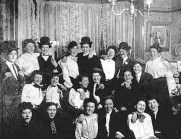
The Palms, the last local and only lesbian bar to be found in city of West Hollywood, CA is closing its doors and I can’t help but wonder where its patrons or parishioners will now go? Continue reading “God Doesn’t Live Here Anymore: Gay Bars and the Growing Divide Between Sexuality and Spirituality by John Erickson”
“Free-Speech or Speech-Free?” by Kile Jones
 [This post is written in response to the chilling effect taking place in the U.K. since the Woolwich Attack. It is also in response to the uses of the Public Order Act of 1986.]
In any “liberal democracy” that has constitutional protections for “free speech,” there will also be laws against “inciting violence,” “hate speech,” “threats,” “slander,” “libel,” “harassment,” and other “speech codes.” This is because the government, or those who voted on the passing of such laws, worry about the potential threat un-regulated speech will have on the levels of violence and disharmony in society. They worry about people being able to yell “fire!” in a theatre, which can cause (which is a key word here for legal reasons) physical harm, not being held liable for such speech. As much as I understand these worries, I am of the opinion that the potential evils brought about by a lassez-faire approach to speech morally outweigh the evils of blasphemy laws and censorship. Continue reading ““Free-Speech or Speech-Free?” by Kile Jones”
Thanks for Coming (Out): Sexuality, Sports, and Spirituality by John Erickson
I have to be honest, Jason Collins’ admission that he was a homosexual, albeit brave, upset me. While coming out is an completely unique experience to every individual that does it, Jason Collins’ story was just another example of the rampant sexist and heteropatriarachal world that privileges male bodies and sexualities over women’s similar experiences. While I applaud Jason’s story and it’s timing, the first thing I asked to my colleagues was: Where was the hubbub over Sheryl Swoopes or Martina Navratilova?
Like marking off items on a proverbial checklist, closeted LGBTQ individuals who exist within and outside of the world of professional sports, can recount the numerous things they struggle with in terms of their sexuality. From fearing of the actual coming out process, dressing in their car or at home to avoid the subtle glances and whispers of individuals in the locker room, to wondering what coming out would mean not only for their game but also for their social and, if they choose, spiritual lives, closeted and out LGBTQ individuals within the multi-billion dollar professional sports industry must grapple with that age old question: what does it mean to be gay and open about it?

I have to be honest, Jason Collins’ admission that he is a homosexual, albeit brave, upset me. While I understand that coming out is an completely unique experience to every individual who does it, for me Jason Collins’ story was also an example of the rampant sexist and heteropatriarachal world that privileges male bodies and sexualities over those of women. While I applaud Jason’s story and the timing, the first thing I asked to my colleagues was: where was the same hubbub over Sheryl Swoopes or Martina Navratilova? Continue reading “Thanks for Coming (Out): Sexuality, Sports, and Spirituality by John Erickson”
(Femen)ism? by Kile Jones
As most of us are aware by now, there is a “feminist-sextremist” group from Ukraine called “Femen.” This group has been very controversial by their public demonstrations of nudity, the words they paint on their bodies, and their explicit condemnations of political structures and organized religions. They were started by Anna Hutsol in 2008 and have now spread throughout Europe and the Middle East. The question I pose for this post is: Does Femen harness or hinder the power of the feminist critique?
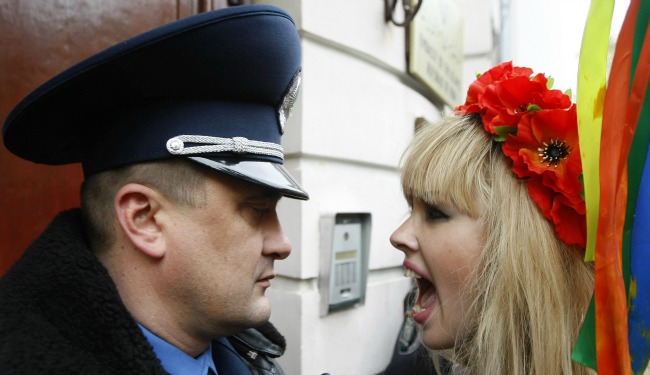
Femen is precisely the kind of movement that pushes us in our understanding of feminism, the means by which it is best expressed, and the issues surrounding moral condemnation and religious sensitivity. Continue reading “(Femen)ism? by Kile Jones”
Second Class Rape Victims: Rape Hierarchy and Gender Conflict
Deconstructing masculinity isn’t the key to solving social, sexual, and domestic violence across the world but it is a step worth taking when attempting to engage men in affecting change to stop these violent actions since men, statistically are the perpetrators of such crimes that both cause such outcry as well as perpetual silence.
The most disturbing part of the 2006 documentary Deliver Us from Evil isn’t the fact that Father Oliver O’Grady is rewarded by the Catholic Church with a new congregation in Ireland after his short stint in prison for the rape of dozens of children in the 1970s, but rather the hierarchy of gendered victimization which is often created throughout the various rape cases that are both reported and unreported throughout history.
I am often troubled by the ways in which rape cases are discussed and deconstructed via mediums such as blogs, online communities, social media networks, the news, and popular culture. No series of events troubled me more than the Jerry Sandusky trial, but more importantly, the ways in which the young boys and adult men who were subjected to Sandusky’s abuse quickly overshadowed the other rape cases that are reported on a daily basis, specifically those involving young girls and women. Continue reading “Second Class Rape Victims: Rape Hierarchy and Gender Conflict”
 Feminism and Religion