Touch the Earth by Chasity Jones

I was recently asked how I reconcile being a Christian with also being a critic of Christian theology, traditions, and culture. I am asked this often and my answer is always the same. I have not found reconciliation and might always be finding a way to reconcile this – an endless cycle of trying to make my heart fit into a structure in which centers whiteness and domination.

This time is different though. When I was asked my mind immediately returned to the Earth. Nature. Creation. How I have always longed for a plot of sacred Earth of my own in which I would continually give birth to and create life in various ways. How so far this dream has seemed from my brown fingertips. Never in my almost twenty-nine years, have I imagined I would have the opportunity to own my own land. However, in the last few years since I worked and lived on a farm and have been manifesting with lunar energy and ritual that one day I would harvest and care for a land of my own. A land that I would pass down to my children. A land in which we would find God. A land which would sustain us.

Continue reading “Touch the Earth by Chasity Jones”

On Tazria-Metzora and Covid: Saving Lives, Saving Worlds, and Saving the World by Ivy Helman

It is often said that every year when you read the same Torah passages, you are in a different place, spiritually and otherwise.  Therefore, one will always be learning new meanings and discovering new insights from them.  No more is that true than in this week’s Torah parshah Tazria-Metzora.  

Tazria-Metzora (Leviticus 12:1- 15:33) is a double parshah containing a list of rules concerning ritual purity and impurity, mostly having to do with leprosy.  The parshah begins with the requirement for women a certain number of days after childbirth to immerse in a mikvah as well as offer animals for sacrifice at the temple.  Then, it commands the circumcision of a boy child at 8 days of age.  The next three chapters discuss an extensive list of what has to be all possible encounters with leprosy, including the infection of a home itself. The parshah prescribes various interactions between lepers, homes with leprosy, and the kohenim.  Mostly, the kohenim decide if the skin lesions people or houses have are leprosy, another skin disease or harmless.  If diseased or if the lesions are inconclusive, the people and houses enter quarantine. The kohenim also consult on whether a leper or house is healed and how to go about atonement.  For atonement, former lepers immerse in the mikvah and pay for the kohenim to offer specific sacrifices at the temple. Homes also undergo a type of ritual purification by the kohenim when they have been healed of leprosy. This double parshah ends with immersion requirements for emissions of semen and menstrual blood. 

Historically, there are two considerations, which I have discussed in other posts, to address first. To begin with, there is the ancient world’s understanding of disease as punishment for sin.  This sin can either be the sin of the diseased person or punishment from generations past.  For more about how this cycle of sin, punishment, repentance and atonement work as well as my thoughts on it, see here.    

Continue reading “On Tazria-Metzora and Covid: Saving Lives, Saving Worlds, and Saving the World by Ivy Helman”

Grown Little Girl, Grow Little Girl by Chasity Jones Selenga


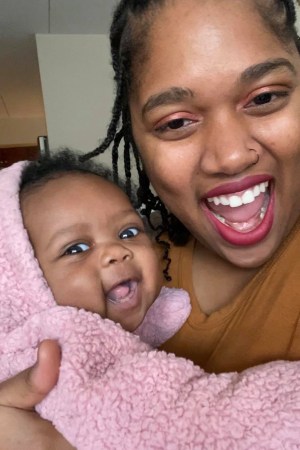
I have newly found myself a wife and in the throes of motherhood. In many feminist circles, I have encountered anti-family and anti-wifehood sentiments. The understanding is that to be a wife, and, to be a wife that chooses to start a family, is an oppressive position to occupy as well as the antithesis of the feminist movement. Though I am not typically a fan of tough physical, emotional, soulful labor, these two positions have been the highlights of my life so far.

My daughter embodies both my husband and me, physically. However, she is and will become her own person-soul. She is so young, but her soul is eternal, and has experienced eternity. I am here to help her navigate remembering who she is. She inhabits the intersection of Blackness, divinity, femininity, and infinity. Motherhood has greatly increased my capacity of appreciation for women and what women are capable of doing. Especially from the intersection of Blackness and woman-ness. From the capacity to create, labor, and deliver life to the task of raising Black children in a country that would have them annihilated, emotionally traumatized, and made to accept they are inferior.

Continue reading “Grown Little Girl, Grow Little Girl by Chasity Jones Selenga”

Another Bow to Hestia by Carol P. Christ

I am not big on New Year’s resolutions, but this year I have vowed to change one of my habits. I have always been house-proud and love using my artistic flair to decorate my home in beauty. I have had a cleaning lady most of the time for many years, so my homes have been relatively clean. The living room and dining room have always been ready to receive guests. But I didn’t always do the dishes or clean the surfaces in the kitchen right away, clothes I had worn often sat on chairs before I hung them up, and I didn’t make the bed every day.
Now that I think about it, this habit goes back to my childhood and teen-age years, when my not picking up things in my bedroom was a bone of contention between me and my mother. Joyce Zonana wrote recently about how she rejected her mother’s role as homemaker and “dutiful” wife when she was young. Only now during the Covid crisis, she writes, is she beginning to enjoy the traditional women’s work of cooking regularly and knitting.

When I was a teen-ager, I sewed all of my clothes (both because we didn’t have a lot of money and because, as I was very tall and very skinny, most ready-made clothes didn’t fit). I was a second mother to my baby brother. For me, those were the fun parts of women’s work. But I hated washing dishes and cleaning the house, and I did not learn how to cook. I suppose I recoiled from the repetitiveness of those tasks. I was also aware that my father ruled the roost, and though I would never have criticized him, I knew that one of my mother’s jobs was to please him. Laura Montoya’s meditation on her grandmother’s life in a recent blog reminds us that the failure of homemakers to meet their husbands needs or wants can lead to violence.

When I went away to college, I learned to disparage all of women’s work, including the parts of it I had loved. I was taught that the “life of the mind” was the highest pursuit and that the “life of the body” was secondary. I now see this aspect of university culture as brainwashing of the highest order. Continue reading “Another Bow to Hestia by Carol P. Christ”

Homebound by Joyce Zonana

When my parents left Egypt, they left behind everything they’d grown up with, all the objects that carried their deepest associations and memories. They taught me to scorn such “things”—what others value as mementos or souvenirs—rightly reasoning they can be lost in a moment. But while we have them, it is lovely, I’m learning, to let the spirits embedded within them, the memories and feelings they evoke, surround and comfort us. As I move through this house, I feel bound to my own and others’ histories, embedded in a rich and complex life that nurtures and sustains me. And as I sit still and knit, I sense that I am knitting (knotting) up the by now long, loose threads of my own life, shaping them into a coherent and satisfying whole.

Joyce ZonanaWhen I was growing up, home was the last place I wanted to be. It’s not that ours was an abusive or angry household: both parents loved me and my mother labored to create a calm, clean space to contain us all. It’s just that I felt suffocated.

Part of the problem was that we were immigrants. My parents were struggling to find their way in an alien culture, and, with little else to hold onto, they clung to their customs and traditions. I wanted to be “American,” to mingle with classmates, to venture into the vastness (New York City!) just beyond our door. The Middle Eastern culture from which we hailed had strict rules for women and girls, and my mother expected me to follow them. She herself was an excellent cook, a creative seamstress and scrupulous housekeeper, a devoted and dutiful wife. I rejected all of it, refusing to cook, ripping out seams, balking at my weekly chores of dusting and vacuuming and ironing. Instead I dreamt of life as a writer, a renegade, an outlaw. My role models were hobos and witches and gypsies; more than anything, I yearned to be free, longing to “walk at all risks,” like Elizabeth Barrett Browning’s Aurora Leigh.

Continue reading “Homebound by Joyce Zonana”

Gratitude and Hope: With a  Lot of Help from My Friends by Carol P. Christ

Last Friday my oncologist gave me the best birthday present I could have imagined. (My birthday was 7:30 pm last night December 20, California time.) Without going into details, my latest CT scan was so much more positive than the last one that it feels like a miracle. I have reason to hope.

Today I am full of gratitude. I am grateful to my doctor Dimitrios Mavroudis who is the head of Oncology at the University of Crete and at the Pagni Hospital in Heraklion. I am grateful to medical science for the chemotherapy that is healing my body.

I am grateful for the national health system of Greece that is covering the cost of my treatment because I am a Greek citizen even though I never contributed to the national health insurance.

I am grateful to the nurses at the Pagni hospital who are unfailingly kind as they take my blood and regulate my chemotherapy.

I am grateful to Vera Dervesi, my cleaning lady and now friend, who with her husband Eddie, took me to the hospital where I was diagnosed, and who has helped me finish unpacking and moving in to my new apartment, and for her sweet presence in my home that soothes my soul. Continue reading “Gratitude and Hope: With a  Lot of Help from My Friends by Carol P. Christ”

Women’s Spiritual Power Is All Around Us by Carolyn Lee Boyd


Carolyn Lee Boyd

In this most challenging time, women are showing the world what women’s spiritual power can do. They are guiding nations, states, and communities through the pandemic and towards environmental sanity; feeding the hungry bodies and spirits of their neighbors by organizing community assistance projects; offering hope and care to vulnerable family members; and leading and healing in so many other ways. They are calling on their inherent, profound belief in their own sacredness and that of others to gain access to the strength and clarity that leads to wisdom and effective action.

Yet, finding and using your spiritual power is easier when it is affirmed by the people and subtle messages you experience every day.  In our society, too often girls and women may struggle to find encouragement to identify and use their spiritual power, whether because of present or past experiences or the sheer overwhelming nature of our individual and societal challenges.  Yet, symbols of women’s spiritual power are all around us, everyday, and can help guide us to that deep well within we have all carried since birth.

Continue reading “Women’s Spiritual Power Is All Around Us by Carolyn Lee Boyd”

Feminist Parenting Part 3—Les Misérable Mothers, why is this so %$@# haaaaard?! by Trelawney Grenfell-Muir

Life has been challenging lately – I’m sure you can relate. Normal emotional and financial stress are worsened by COVID-19 and the election— and I’ve often said that there’s nothing like motherhood for making us feel like failures…  It’s as though our brains are incapable of seeing anything but the things we have left undone or done badly. And it is often excruciatingly hard to be a calm, patient parent when the kids start getting wild, or someone breaks something, or the <expletive> online form won’t <expletive> work on my <expletive> phone.
…Why is it so hard to feel “good enough?” Could it be because patriarchy benefits from making the female class feel constantly insecure and unworthy? Continue reading “Feminist Parenting Part 3—Les Misérable Mothers, why is this so %$@# haaaaard?! by Trelawney Grenfell-Muir”

Glimpsing La Vièio ié Danso – “The Untouchable Wild Goddess” – in Jóusè d’Arbaud’s Beast of Vacarés by Joyce Zonana

Nearly a century later, d’Arbaud’s words still have the power to startle and delight, vividly evoking Earth’s sacredness.


Early in Jóusè d’Arbaud’s 1926 Provençal novella, The Beast of Vacarés, the narrator, a 15th century gardian or bull herder, describes how in summer la Vièio ié danso—the Old Dancer— “can be glimpsed on the dazzling salt flats” that surround the Vacarés lagoon in the Camargue region of Southern France.

In a note, d’Arbaud explains that la Vièio is how locals refer to mirages in this liminal landscape where earth, sea, and sky merge. “Mirages are common in the Camargue,” he tells us:

They begin with a vibration in the air, a trembling that runs along the ground and seems to make the images dance; it spreads into the distance in great waves that reflect the dark thickets. How not to see in this mysterious Vièio, dancing in the desert sun, a folk memory of the untouchable wild goddess, ancient power, spirit of solitude, once considered divine, that remains the soul of this great wild land?

The untouchable wild goddess . . . once considered divine . . .”

Nearly a century later, d’Arbaud’s words still have the power to startle and move us, vividly evoking Earth’s sacredness. Here is a man, himself a bull herder in the region he so lovingly describes, who seems to have been a devotee of the Goddess, the “ancient power” he venerates and bring to life for his readers. Indeed, in an early poem, “Esperit de la Terro” — “Spirit of the Earth”— d’Arbaud explicitly dedicates himself to the old gods sleeping below the earth, vowing to “defend” and “aid” them. How extraordinary to discover this writer making such a commitment, well before the rise of our recent feminist spirituality and ecofeminist movements. D’Arbaud speaks directly to our current environmental, theological, social, and political concerns.

Continue reading “Glimpsing La Vièio ié Danso – “The Untouchable Wild Goddess” – in Jóusè d’Arbaud’s Beast of Vacarés by Joyce Zonana”

Poem: In These United States- The Court Supreme By Marie Cartier

We have nine justices usually but one of our most beloved, and notorious,

Ruth Bader Ginsberg, RBG, has gone to the Summerland, across

the Rainbow Bridge, to the afterlife—wherever that is for her, she’s

gone there. May her memory be a blessing. May her memory be a revolution.

And we are left with eight, five conservatives and

three liberals. RBG was liberal. Our current Pennsylvania Avenue occupant has already

nominated someone to replace RBG. This someone believes that god

speaks to the wife through her husband, the wife is submissive to the husband in all things,

she must submit in all things to her husband.

Sigh. As someone joked, this someone is walking through and slamming shut,

all the doors that RBG kicked open.

This nominated replacement believes that a woman has no choice in the matter of pregnancy,

and being gay is (once again) a sin in the eyes of the law, as well as her church.

This RBG replacement is Catholic, I guess.

I’m Catholic, too.

Maybe you’ve seen that meme on social media?

“I’m Christian. Oh…classic Jesus or Republican Jesus?”

That’s a joke: Ha. Ha.

Continue reading “Poem: In These United States- The Court Supreme By Marie Cartier”