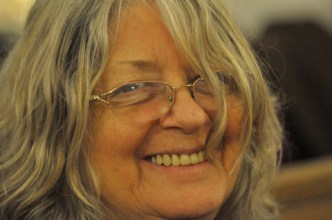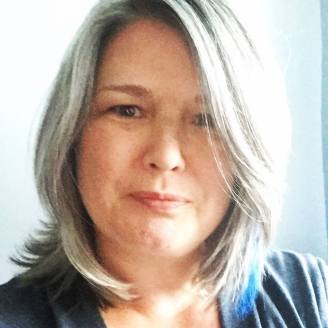
Hard Work without Getting Anywhere by Elisabeth Schilling

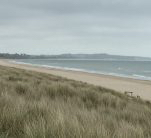
BeachWhen my students read about the Buddhist concepts of non-resistance, non-attachment, and living in the present, one of the first protests I end up addressing is how these ideas seem to negate progress, goal-setting, or success. What my students don’t yet see is how clinging to a particular end can hinder creativity and the pleasure of the journey to a degree that sometimes compromises success.

For instance, when writers create for academic purposes, they/we can feel desperate to finish a project.  We can feel overwhelmed by the need for perfectionism or by the fear of failure. Perhaps even the hard work it takes layered with the uncertainty of really getting anywhere is what stirs feelings of resistance. Writing seems to transmit the energy frequencies of the writer, and what I do not want is for any reader of mine to feel that kind of struggle. Instead, I hope for narratives with at least some level of warmth, compassion, and generosity.

Roshi Pat Enkyo O’Hara, zen spiritual practitioner and author, says that we know we have done something well when we have been nourished by the experience of the doing. Wow. I love this. Yet how forgetful I can be when getting to that sticky spot in my own writing, when I could pause to take a deep breath or walk around the neighborhood or do whatever it might take to refresh and reset my mind. Continue reading “Hard Work without Getting Anywhere by Elisabeth Schilling”

“You Look Trim” and Resisting the Tyranny of Thinness by Xochitl Alvizo

Incarnation, Goddess spirituality, Xochitl Alvizo, god became fleshI caught myself reinforcing the norm. The ever present default of focusing on women’s body size and prioritizing their weight gain and loss. I did this with a colleague/friend of mine. After not seeing one another for most of the summer, my first comment to her was about her thinning waistline.

We greeted each other excitedly as we discovered the unexpected surprise that we were both attending the same pre-semester training. But following our warm greeting, and just as we went to sit down with our lunch, I commented to her that she looked more trim. She responded, “That’s the best compliment anyone could have given me – thank you!”

My heart sank a little as I realized what I had done. The first time I see her in months, of all that she is and all the amazing qualities she has, my attention and commentary went to her waistline – to paying attention to the size of her body. I felt such disappointment in myself. And in that moment it also hit me that I wasn’t only doing this with her, I had recently been doing this with myself as well. Continue reading ““You Look Trim” and Resisting the Tyranny of Thinness by Xochitl Alvizo”

A Maternal Perspective Towards the Body by Elisabeth Schilling

IMG_0617Separatism and dualism do not usually serve me. I understand that denying unity and reducing the multi-prismatic complexity of existence muddies up our vision of reality and can sometimes clog up the channels to compassion. So knowing that this perspective is not universal, but temporarily (at least) healing to me, a particular body with a life situation that gives me access to this kind of thinking, I explore taking a maternal perspective toward my body.

In Roshi Pat Enkyo O’Hara’s Most Intimate, she mentions the “freedom of experiencing myself [the self] as relationship” (23). I was confused when I first read this.  Relationships are usually outside of me or with me, but not what I am. Yet, after thinking about it, I know that I have been in relationship with myself. We (my body and whatever the “me” is) have been simply so enmeshed and mottled with my perspective of possession, owning, unrealistically demanding and having authority over that body, that it was just not a healthy relationship. Continue reading “A Maternal Perspective Towards the Body by Elisabeth Schilling”

Body Sovereignty: Tracing the Relationship Between Feminism & Fat by Sydney Bell

Sydney BellAcknowledging and responding to feminine divine energy is an inherently radical, feminist act. With age my feminism and spiritual path have become inexorably intertwined and I have become more comfortable and confident in my identity as a daughter of the goddess, a priestess, and as a feminist. My feminism is continually being shaped by a call to serve the goddess in a variety of ways, particularly in response to an activating third element in my feminist goddess path (no surprise for fellow triad lovers who practice a Celtic spiritual path).  This third activating element is my relationship with my body and my work to reclaim Body Sovereignty.  

As with many readers of this site, mine is not an uncommon journey. I’ve heard the stories of  women whose feminism and/or goddess path has either sparked or been sparked by their desire to have a positive relationship with their body and break free from oppressive cultural body norms.  I believe many feminists realize societal expectations of beauty are restrictive and contain a harmful element of required thinness. Yet even among feminists there seems to be a reluctance to engage in a collective response to weight stigma and the oppression and injustice faced by fat people. This is perplexing considering the available data demonstrating inequities in areas like educational attainment, employment, income, and access to healthcare due to body size (see list of data sources below).

When trying to understand this strained relationship between feminism and weight stigma I’ve found it helpful to look at the historical relationship between the two.  A great resource is Amy Farrell’s book Fat Shame: Stigma and the Fat Body in American Culture. Farrell takes us to the early years of the feminist movement and suggests that the politics of fatness or body size was not explored by the first feminists.  Interestingly, as the fight for women’s right to vote raged in the early 19th century, Farrell points out that the attack used by both the suffragettes and those working against women’s right to vote was to publish political cartoons with unflattering ‘fat’ images representing their respective opponents. It wasn’t until the second wave of feminism in the 60’s and 70’s when Susie Orbach’s ground-breaking work Fat is a Feminist Issue opened up the discussion of body size through a gendered lens and set the tone for early feminist thinking about body size.   Continue reading “Body Sovereignty: Tracing the Relationship Between Feminism & Fat by Sydney Bell”

What Will the Faith Response to Zika Be? by Katey Zeh

tiger-mosquito-49141_640

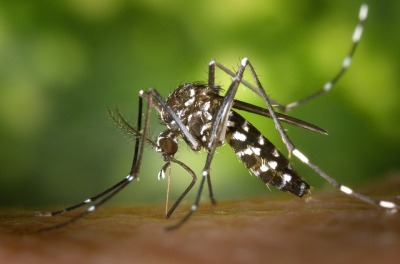
In the face of the Zika epidemic the World Health Organization (WHO) has issued new recommendations for individuals at risk of contracting the virus either through mosquito bites or through sexual contact with an infected person. If someone has traveled to an area where Zika is present, the WHO recommends abstinence or consistent condom use for at least eight weeks or up to six months if a partner shows symptoms. (Only 20% of people infected with the virus are symptomatic.) But for women of childbearing age living in areas affected by the virus, the WHO urges them to speak with their health providers about possibly delaying pregnancy, presumably indefinitely. The Zika virus has been linked to devastating birth defects including microcephaly.

After issuing the revised guidelines Nyka Alexander, spokesperson for the WHO, clarified that the purpose of them was not to discourage all at-risk couples from conceiving, but rather to ensure that they consider the Zika virus and its potential impacts on the timing of pregnancy. “Whether and when to become pregnant should be a personal choice made on the basis of information and access to affordable, quality health services,” said Alexander.

For pregnancy to be a personal choice, women and men must have access to the tools, information, and resources they need to prevent, delay, or plan it. Worldwide more than 220 million women want to avoid pregnancy but have an unmet need for reliable, safe contraceptive methods. The Zika virus has brought significant attention to what has been a public health crisis and an ethical tragedy for decades: that despite modern medical advances 85 million women experience unintended pregnancies each year. Continue reading “What Will the Faith Response to Zika Be? by Katey Zeh”

What Traci West Taught Me about Dominant and Excluded Voices by Elise M. Edwards

Elise EdwardsIn my previous post, I mentioned a book I am writing about how theological and ethical considerations in architectural design can define good architecture.  In that post and in ones to follow, I am acknowledging the feminists and womanists and mujeristas who have influenced me while also opening up the dialogue to the feminists in this community who continue to inspire and guide me to do my best work.

But today, instead of talking about creativity or architecture, I want to discuss how I arrived at the conviction that community decisions about how we ought to live—whether those are decisions about laws, institutional policies, religious practices or architectural buildings—need to include the voices of the diverse people they directly and indirectly influence. Continue reading “What Traci West Taught Me about Dominant and Excluded Voices by Elise M. Edwards”

A Crone’s Life, an Embodied Experience by Deanne Quarrie 

Deanne Quarrie, D.Min.In January of 2013, I wrote an article here for FAR called Embody the Sacred. In it I wrote,

“If we are to fully embrace living a magical life it is important to remember how to live in our bodies comfortably and safely. If we re-awaken all of our senses, our awareness is expanded and our perceptions clarify and develop. Without this, our magical life will not develop as it could. Our enjoyment of all that is Sacred will be impeded, as if walled in and separated from all that is possible.”

I would like to rephrase this statement just a bit to reflect where I am in my thinking now.

If we are to fully embrace living, it is important to remember how to live in our bodies comfortably and safely. If we re-awaken all of our senses, our awareness is expanded and our perceptions clarify and develop. Without this, our lives will not develop as they could. Our enjoyment of all that is Sacred will be impeded, as if walled in and separated from all that is possible. Continue reading “A Crone’s Life, an Embodied Experience by Deanne Quarrie “

Body of Nature by Oxana Poberejnaia

oxanaIn the medieval European philosophy, woman’s body was seen as a vessel filled with sins, while man was regarded as a more spiritual being. This is one of the reasons why the concept of body is reassessed in feminist studies and why body is elevated in neo-paganism and Goddess spirituality. My fear is that nowadays body can be treated as an instrument for social advancement.

OLYMPUS DIGITAL CAMERA

We still live in a society that is deeply hostile to women’s bodies. Alla Demidova, an actress I respect for her talent and her critical mind, did a programme of Christmas-related poetry. I could not listen to more than five minutes of it.

The poems have been all written by men. I am not saying that men do not have the right to write about birth. I am saying that our prevalent image of Christmas should not be based on male view alone. In this sense I much better like the Carol from “The Vicar of Dibley” (one of my favourite British comedy series, about a female Vicar), which describes the movement of baby Jesus through Mary’s birth canal.

Continue reading “Body of Nature by Oxana Poberejnaia”

Seeing Through My Nipples by Karen Moon

Karen 2006

This article is inspired from my Facebook group’s book study of Women Who Run with the Wolves by Clarissa Pinkola Estes, specifically Chapter 11: Retrieving a Sacred Sexuality.

I confess that I had never before heard of the term ‘seeing through your nipples.’ I continue to think on that. But I tell you what though; I do know the power of a nipple. And I can definitely say that it made me take one definitive path in life that has led me right here.

I’m going to take a moment and also ‘speak through my vulva’. I get that, too. It’s raw, and it’s honest. And I hope I don’t offend as it’s always so ‘touchy’ this talk of breastfeeding. But I am not meaning any of this in a judgmental way. I just wanted to speak of my experience personally. I wish I had had these stories before I became a mother so I could try them out, test them on my tongue and make a decision that worked for me without some of the trials I went through.

When I had my first child, way back in 2000, we were living in an apartment east of San Francisco in the rolling green hills. My mother-in-law came for the birth as my mom was on vacation somewhere in South America with my stepfather.

I had planned on breastfeeding, and my mother-in-law decided to ‘humor’ me. She is one of those tough New Jersey, Brooklyn born and raised women who have no idea how something like breastfeeding could actually work. She doubted the value of it. She wanted to see the can, the formula inside it, a nicely sanitized bottle and a chart with three hour intervals. And she was quite the persuasive lady. Continue reading “Seeing Through My Nipples by Karen Moon”

Breastfeeding and the Abject? by Sara Frykenberg

The trappings of motherhood are all too powerful reminders that, as Catherine Keller reminds us in her book From a Broken Web, mother goddesses have to be continually slain for patriarchal heroes to be born. Indeed, she suggests that conceptions of Western selfhood are based upon this symbolic matricide—so it is no wonder that breast milk might be considered abject…

IMG_3269Once upon time formula companies and complicit medical experts launched a serious campaign to sell more formula, telling a generation of mothers that this product was both superior to breast milk and far better for baby and mother. Some were convinced, others found formula a good alternative to breast milk given their employment status, hormonal changes, their particular baby’s needs,personal choice, difficulty producing their own milk, or the like; and still others chose to breastfeed despite criticism, like my mother-in-law, who received scorn and derision from medical personnel as the only breastfeeding mother in the hospital in which she gave birth in 1970.

Despite this effort, science has finally “proven” that breast milk, when it is possible to give it, is better for your child than synthesized alternatives. Wow. Well, the politics of believability aside, women in the U.S. are now encouraged to trust their own bodies to feed their babies and give the breast a try. In fact, every new book, article, website and internet forum, birthing class teacher and hospital nurse will tell you that “breast is best,” repeatedly, for months, asking you about your breastfeeding plan, and urging you to keep trying until you and baby get it right. A counter-campaign, this vigorous encouragement is working to undo the attitudinal changes within popular culture that placed a stigma on the breastfeeding woman. Continue reading “Breastfeeding and the Abject? by Sara Frykenberg”