It’s been just over a week. Last Tuesday night to be exact. That’s the night the four of us huddled around our beloved companion of sixteen and a half years and said goodbye.
Buck became a part of our family when he was three months old. We were living in Oakland, California at the time. My son was five and my daughter had just turned one. My husband was coaching for the Raiders and he was gone all the time. It wasn’t a great time to get a puppy on paper—but our hearts said otherwise, so we did.
Just a little over a year earlier I had said goodbye to Tino. He’s the Blue Heeler that found me in a dream when I was living in Santa Fe, New Mexico. That morning I woke up and just had to get a puppy. It was a visceral pull. And I went to the Santa Fe Human Society and there was the puppy from my dream. He didn’t look like any dog I had ever seen until my dream the night before.
—The importance of admitting how painful this subject is
—Reminders that I am NOT saying all men are bad or maleness is bad, because men and maleness are truly inherently beautiful and divine
—The necessity of facing honestly just how scary and horrifying the epidemic of violence against females is in our world today
—The truly evil, vicious destruction pornography is causing to female bodies and male psyches in training many, many males to rape and abuse females, and grooming females to normalize and comply with rape and abuse by males
Dedicated to Carol Christ, 1945-2021, who taught so many of us how to love the Goddess
She is called “Nude Woman” and currently lives in her natural museum house in Vienna. Nude woman. She is art, but she is not in an art museum. And there are questions: why was she originally painted red? Why are her breasts so large? Why is her stomach so large? Why does she fit in a human hand? What was her purpose? Was it to entice men, or to comfort women? Historians disagree. Is her hair woven? Or is it a hat? Why does she have no eyes? No feet? Why is she there?
I offered up morning prayers at dawn this July morning to the song of cardinals, rose breasted grosbeaks, and just barely rippling waters. The air was sweetened by water. Peace filtered through the green – seedlings, lichens, mosses, grasses, ferns, trees, clear mountain waters. Silence, except for the birds’ benediction.
I honored my body with a poem. I also repeated my hope that my house will get the necessary structural help she needs, that the work will be completed. At the brook I experienced my body rooting into forested soil… I am loved here; I belong here – at least for now.
The drought drones on, although today at least we have light rain falling, for which I am profoundly grateful, especially because the dreaded 4th of July weekend is ahead – if only the rain will continue the deafening explosions might be tempered. In case this does not happen the dogs and I are going to retreat to the silence and peace of the woodlands to spend our nights in the car, the back of which has been turned into a comfortable bed.
One of the key factors to me that differentiates feminist spiritual paths from many dominant religious traditions and frameworks is the recognition and acknowledgement of the body as a source of wisdom, a source of pleasure, a source of learning, and a source of knowing. Not viewed as unclean, dirty, or as something to be mistrusted or transcended, we can return to our bodies again and again, dropping down into our bellies, bones, and blood, returning to center, and returning home to ourselves. Those who embark into thealogy quickly realize that it is a spirituality better lived than analyzed. My own experience of my goddess-oriented path is an intensely embodied one. I am here on this earth, in this body, my feet on the ground, my eyes on the sky, listening, feeling, and sensing. This, to me, is sacredness in motion, this is the Goddess right in front of me, she is witnessed in the very fact that my pulse beats in my wrist and that my eyes alight on those three crows coasting lightly into the treetops.
Sara Avant Stover, writing in the Book of SHE says: “Our bodies aren’t indentured servants here to labor for us until we take our dying breath. They are sacred chalices . . . . Our bodies always tell the truth and hold the information we need to thrive” (p. 43).
And, one of my favorite quotes of all comes from Camille Maurine in Meditations Secrets for Women who writes: “Your body is your own. This may seem obvious. But to inhabit your physical self fully, with no apology, is a true act of power.
At one time, I would have focused my attention primarily on women and encouraging women to trust their bodies, to listen to their bodies, and to honor their bodies. I’ve come to see that a goddess-centered approach to ethics, values, and embodied spiritual experience includes all people who have a body. In my heart of hearts I would like all people to value their bodies, honor their bodies, trust their bodies, and listen to their bodies. I think if this was true, the fundamental way in which we relate to, treat, and care for one another would change and the feminist values of cooperation, compassion, and empathy would come to form the foundation of society. Every single one of us begins life within someone else’s body. We enter the world through someone’s body. And, we have a body that interacts with other bodies for our entire lives. This is altogether simple, obvious, and profound. Our bodies are our seats of reality, of being human, of being present in the world. A life firmly rooted in concept of the body as sacred, no longer allows room for violation of or harm to others.
Carol Christ writes in Rebirth of the Goddess: “The rituals and symbols of Goddess religion…[bring] experience and deep feeling to consciousness so that they can shape our lives; helping us broaden and deepen our understanding of our interdependence to include all beings and all people; binding us to others and shaping communities in which concern for the earth and all people can be embodied.”
When I talk to other people about self-trust and building self-trust, I often encourage them to check in with their bodies for a physical response to a decision, idea, choice, or happening. Where does it land in your body? What do you feel inside when you think about making this decision or taking this action? Does your body respond with a “yes” or a “no” when you think about this idea? For me, the sensation comes in my chest, around my heart—a lightening or expansion or a contraction or heaviness. This is not what all people will experience, perhaps you feel the answer in your belly, in your head, around your jaw. Perhaps you feel it as a color, sensation of warmth or coolness, or as a “rightness of being.”
I must also acknowledge that many people have experienced some form of physical trauma or abuse in their lives and that these experiences can complicate our relationships with our bodies, our sense of intuition, and our trust in ourselves. If your body has been a site of violation, it may be more difficult or complex to connect to this body-based sense of “knowing” or intuition that I reference and I do not wish to oversimplify what can be a complex and multilayered personal experience of embodiment.
If you mentally walk through your body, what do you see?
What is your body as home like for you? How re-sourced is it?
What needs attention within you?
Do you have a sense of your inner and outer ground?
What do you feel in your belly, right now?
I have been leading a process this year called #30DaysofGoddess and one of the things I suggest on some of the days is to offer a “body prayer.” Since people have asked for additional guidance with what that means, I sat on my yoga mat one morning and let a body prayer emerge. After I moved through the motions, I typed it out and I offer it to you now (as well as prayercard version of it). May it nourish you.
A Body Blessing: Fold your hands in front of your heart, feel your palms warm and your pulse beat. Kiss your fingertips. Raise your hands and cradle your face with love and then, move one hand to the top of your head and one to your heart. Pause. Cross your arms over your chest, one hand on each shoulder and sway back and forth gently. Kiss your palms and lay them upon your belly. Run your hands down your legs. Wiggle your toes. Fold your hands in prayer pose and bring them back to your heart-level. Breathe deeply and then open your hands. Gaze into them. Envision the day’s potential nestled there. What do you see in your own cupped palms? Kiss your fingertips again and whisper what it is you need to hear. Say: thank you.
Note: I do have a companion video about the body as home here.
Molly Remer’s new book Walking with Persephone is now available for pre-order from Womancraft Publishing. Her prayerbook, Whole and Holy: a Goddess Devotional was published in November. Molly has been gathering the community to circle, sing, celebrate, and share since 2008. She plans and facilitates women’s circles, seasonal retreats and rituals, mother-daughter circles, family ceremonies, and red tent circles in rural Missouri. She is a priestess who holds MSW, M.Div, and D.Min degrees and wrote her dissertation about contemporary priestessing in the U.S. Molly and her husband Mark co-create Story Goddesses, original goddess sculptures, ceremony kits, mini goddesses, and more at Brigid’s Grove. Molly is the author of Womanrunes, Earthprayer, Sunlight on Cedar, the Goddess Devotional, She Lives Her Poems, and The Red Tent Resource Kit and she writes about thealogy, nature, practical priestessing, and the goddess at Patreon,Brigid’s Grove, Feminism and Religion, and Sage Woman Magazine.
*Trigger Warning – Reference and description of distressing violence against women at the hands of police*
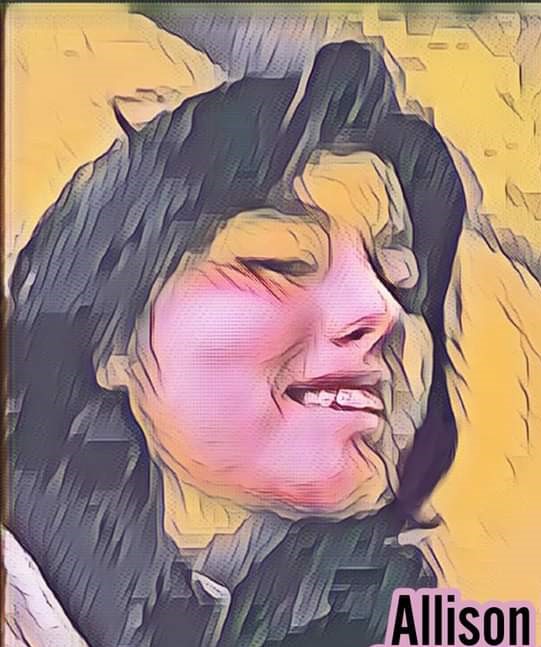
Alison Melendez was 17 when she was sexually abused last week by a group of Colombian policemen. She was captured for allegedly being part of the protest groups in Popayán, a city in the south of my country Colombia, South America. The next day Alison was found dead. The official version states that she committed suicide. In the social networks, there is a video of four policemen carrying Alison to the detention center, each holding one of her extremities. One can hear Alison screaming, “Four were necessary to carry me? Four against one woman? Cowards!” The next day – before she was found dead – she posted on Instagram that she was not part of the protests that night. She was walking to a friend’s house when the police showed up. She started recording their actions, they saw her and went mad, so they captured her. When she resisted, four of them took her to the police station. In the post, Alison mentions how they groped her to the soul.” In the video, one can see how her pants came off while they were carrying her, and the policemen did not care. They just kept walking. The last time we see Alison in the video is inside the station. Then cameras were turned off.
*End Trigger Warning*
Alison is one of the 18 cases of sexual violence reported during the protests that started last April 28 in different cities of Colombia. In addition, there are 87 reports of violence and abusive behavior against women protesting. Alison’s case has been more visible, but it is easy to find several videos of police officers beating, harassing, and capturing women in the protests on social media. We have been witnessing this terrible violence full of indignation and impotence, despite protesting is our legitimate right as citizens.
A moss-soft ballad sung from a mountain top to the sunrise. A parent’s lullaby to soothe a newborn to sleep. Thousands of voices rising together to banish injustice from our planet. A single wavering melody infusing inspiration into a moment of despair. Whenever we open our mouths to sing, no matter how tuneful or discordant our song, we have instant access to a well of power to transform ourselves and others.
Over the years, I’ve been amazed at how often singing denotes spiritual power in myths and stories about goddesses and holy women from across the globe and throughout time. These are just a few examples from around the world. You may know others.
This past year (2020) has been a year of tremendous upheaval and unwelcome change for most of us due in large part to the COVID-19 pandemic. It’s the second time in my life (first time I was in my 40s) where I’ve responded to stress with anorexic behavior—not consuming enough calories to sustain a healthy weight.
At the end of July 2020, I was diagnosed with stage 3 aggressive cancer. As of this week, I will have been receiving a very high dose of chemo (5 hours on the drip every 3 weeks) for 6 months, with 2 treatments to go. When I was diagnosed with cancer, I was in a state of shock. As I was about to leave the oncologist’s office, I said to the doctor, “stage 3 is pretty bad, isn’t it?” He responded, “Well, it could have been stage 4.”
As I understand it, the prognosis for becoming cancer free for stages 1 and 2 is good, for stage 4 it is unlikely, while for stage 3, the chances are something like 50-50. Although my primary oncologist declines to make predictions, I was told by a junior doctor that with the type of cancer I have, my chances were about 40% that the surgery that would follow chemo would remove all of the cancer.
Despite the fact that my chances were less than 50-50, for the most part I remained optimistic that I would be one of the lucky ones. I have not suffered depression, nor have I been overcome with anxiety. Although my primary doctor and the others I have seen are not interested in discussing the effects of prayer, meditation, and visualization, to a one they have said that “attitude” makes a big difference.
“The body is a nation I have not known.
The pure joy of air: the moment between leaping
from a cliff into the wall of blue below.”*
Oh, the pure joy of being weightless – I leapt to the stars, flung myself with abandon into the deep until the fire started burning and I was forced to surface for air…
I was a stranger to my body, escaping messy feelings by living through my mind. I dressed her, made her behave – learning that I must have control at any cost. I cultivated a winning smile to cover anguish I could not name. Buried all fear. This last one backfired during infancy. I lived pure terror. I had no Voice. It was years before I realized who stole it. Continue reading “The Body is a Nation by Sara Wright”





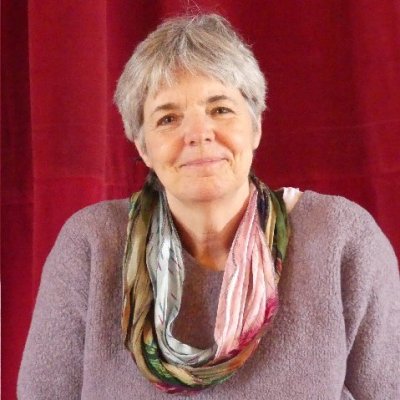
 At the end of July 2020, I was diagnosed with stage 3 aggressive cancer. As of this week, I will have been receiving a very high dose of chemo (5 hours on the drip every 3 weeks) for 6 months, with 2 treatments to go. When I was diagnosed with cancer, I was in a state of shock. As I was about to leave the oncologist’s office, I said to the doctor, “stage 3 is pretty bad, isn’t it?” He responded, “Well, it could have been stage 4.”

