Holy Women Icons Bearing the Light of Advent by Angela Yarber

There’s nothing like the holiday season to bring out everyone’s least feminist self. In one of the courses that I teach—Gender, Food, and the Body in Popular Culture—students are assigned to examine gender roles throughout the holiday season through the lens intersectional ecofeminism. Inevitably, almost every student returns from holiday break with the same assessment: mom, grandma, and a kitchen full of women prepare, cook, and clean every family meal; women do the holiday shopping; men in the family watch sports. Of course, this isn’t true of everyone. There are plenty of families who subvert and dismantle stereotypical gender roles, but the holidays seem to heighten these roles, undergirding them with some kind of nostalgic and theological weight that claims that if mama doesn’t arduously prepare her famed casserole, the season will be ruined. Otherwise committed feminists find themselves singing carols filled with sexist language and participating in holiday rituals that they would critique any other time of the year. Subversion be damned because we want our traditional family holiday!

I’ve long struggled with creative ways to subversively approach the holidays as a queer clergywoman, parent, artist, and author. People like their nostalgic and heart-warming traditions, even when they sometimes smack of patriarchy, racism, and heteronormativity. I’ve confronted this as a preacher and worship planner, often to raised eyebrows or angry phone calls from congregants who just want to sing the carols without the preacher changing the words, or dismissing the notion of a virgin birth, or hanging enormous paintings of pregnant women all over the sanctuary.

Continue reading “Holy Women Icons Bearing the Light of Advent by Angela Yarber”
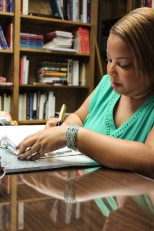
High Stakes for Women in Leadership: A Reflection and a Prayer by Elise M. Edwards

elise-edwardsA few weeks ago, I was asked to give the invocation for a luncheon at my university.  Baylor University was celebrating our presidential inauguration and there were several events leading up to the installation of the university’s 15th president. The inauguration was historic because it ceremonially marks the beginning of a term for our first female president, Dr. Linda A. Livingstone.

As I write, it is a year after Hillary Rodham Clinton lost the election for President of the United States of America. Like many of us, I’m still coming to terms with the choice my nation made, and how we came to it.  I’m thinking about women in leadership, especially occasions such leadership marks a first, a departure for an institution or system marked by male privilege.

What does it mean when an institution is willing to deviate from its long-established patterns of leadership and entrust its governance to women?

Continue reading “High Stakes for Women in Leadership: A Reflection and a Prayer by Elise M. Edwards”

Tonight Is Guy Fawkes Night by Barbara Ardinger

Mark Twain is reported to have said that while history does not repeat itself, it often rhymes. Let’s see what rhymes we can find in Tudor and Jacobean England and Trumpean America. Here’s the history lesson. What has changed in 400 years?

After about a thousand years of Roman Catholicism in the British Isles (with a few thrusts toward reform, like the 14th century theologian John Wycliffe, who translated the Bible into medieval English), it is Henry VIII who is usually given credit for “reforming” the English church, i.e., declaring his independence from the Roman church and the pope in 1534. While Henry still called himself a good Catholic (and even condemned Martin Luther), it was the Tudors and their advisors that thrust a militant and puritanical Protestantism on the people.

The Tudor dynasty, which lasted just over a century, began with the victory of Henry Tudor (who became Henry VII) over Richard III at Bosworth Field in 1485. (Shakespeare turned Richard’s story into a Tudor propaganda play. In real life, Richard was a good king.) Henry’s second son, Henry VIII, was a tyrant who is best known today for his six wives. He was also more interested in luxury (in his day synonymous with vice) and self-aggrandizement than anything else.

Continue reading “Tonight Is Guy Fawkes Night by Barbara Ardinger”

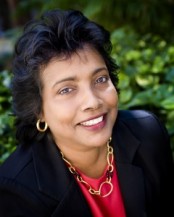
Catholic Bishops: Corporate Executives or Prophets? by Dawn Morais Webster

Dawn Morais Webster, the Pope off to his summer palace, Castel Gandolfo. He tells the world he will now become just a “humble pilgrim.”

This is a moment to drive the merchants of hate out of the Temple, as Jesus did.  But will the United States Conference of Catholic Bishops (USCCB) bear prophetic witness? Do they have it in them to proclaim the Gospel?

I am a Catholic from Malaysia who has lived in the United States for nearly two decades. I became an American citizen two years ago.  Every day I look for two of the Big Ideas –Catholicism and American democracy—to which I am forever tethered, to be rearticulated by new, principled leaders. And they are: not by those who command the pulpit or political power but by those who live the Gospel through their faith-inspired service to the community.  People like Sister Erica Jordan who asked House Speaker, the conspicuously Catholic Paul Ryan to explain how he translates Church teaching into health care and tax policy. He could not.

Continue reading “Catholic Bishops: Corporate Executives or Prophets? by Dawn Morais Webster”

Discerning is the Journey by Katie M. Deaver

This past weekend I had the privilege of officiating for the wedding of a dear friend.  Despite having undertaken all of my graduate and doctoral degrees at a seminary, I had not seriously considered ordination since the beginning of my master’s program when I discerned that my calling was to the academic side of theology rather than to leadership of word and sacrament. When my friend called me nearly two years ago to ask that I officiate her wedding, it never occurred to me that something as simple as an online ordination process would push me toward further vocational discernment… and yet, I think, just maybe, it has.

As a long time church musician I am accustomed to being a part of people’s special days.  I have certainly played or sang for more than a few weddings, as well as other services that mark some  of the various stages of  life – baptisms, confirmations, funerals.  I’m no stranger to carefully (and prayerfully) crafting these types of services to fit the families and individuals involved, but I imagine I do leave a certain amount of professional space between myself and these events in most cases.

Continue reading “Discerning is the Journey by Katie M. Deaver”

Introducing the Kindreds Podcast by Katey Zeh

What do we mean when we call girls “bossy”?
How do we deconstruct the myth that women can’t get along?

What are the real costs of emotional labor?

Kindreds is a podcast for souls sisters. In each episode my co-host Ashley Peterson and I take on big questions connected to our faith and our feminism from our respective homes in Mississippi and North Carolina. From the question of “Should I have a kid?” to “What does it mean to make a feminist choice?” we explore issues of gender, culture, and the church.

My favorite part of every episode is when we lift up the incredible people doing the work of justice in the world as our “Kindreds of the Moment.” We’ve featured folks like Dr. Willie Parker, the people of the Faith Matters Network, and Eileen Matthews, creator of the #100DaysofFeministAds campaign. Continue reading “Introducing the Kindreds Podcast by Katey Zeh”

The Spirit and Jarena Lee: Inspiration to Break Boundaries by Elise M. Edwards

elise-edwardsI am so frustrated that we are still fighting to affirm women’s place in leadership.  I’ve been thinking about this struggle in the context of church ministries (especially preaching) and social activism, seeing a stark contrast between the way institutional churches and universities promote and subvert women’s authority and the ways movements like Black Lives Matter do.

Particularly, I’ve been struck by the ways that more radical movements employ language and practices that are based in spirit more than hierarchical authority.  I have found a theme emphasizing equality in humanity’s access to spirit in both historical and contemporary movements and writings about religious experience.  I’m certainly not the first one to notice or discuss how appeals to Spirit have empowered those excluded from dominant systems of power to challenge constrictive social structures, but I would like to share how this dynamic has become more visible to me so that, together, we might find encouragement, inspiration, and food for thought.

Continue reading “The Spirit and Jarena Lee: Inspiration to Break Boundaries by Elise M. Edwards”

Announcing the 2017 Rosemary Radford Ruether Conference by Grace Yia-Hei Kao

On October 7, 2017, five distinguished panelists will speak at a one-day event: the Rosemary Radford Ruether Conference for Justice and Peace. Co-sponsored by the Friends of Sabeel—North America (FOSNA), Claremont Area FOSNA, Claremont School of Theology, and the Women’s Studies in Religion program at Claremont Graduate University, the conference will be held at Pilgrim Place (Decker Hall)–the retirement community for folks serving in religious or charitable organizations where Dr. Ruether currently resides.

Continue reading “Announcing the 2017 Rosemary Radford Ruether Conference by Grace Yia-Hei Kao”

A Middle: Understanding the Relationship between Violence and Power by Katie M. Deaver

In my last post here on Feminism and Religion I unpacked the three primary understandings of atonement theology as well as some of the feminist critiques of those understandings.  In this post I’d like to focus a bit more on how the relationship between power and violence influences how Christian women view the atonement.

In her book, On Violence, Hannah Arendt puts forth a new analysis of the relationship between power and violence.  Arendt’s analysis, though primarily focused around concepts of the potential for worldwide destruction and war following major global occurrences such as the Second World War and the struggles for civil and women’s rights within the United States context, supplies an interesting framework with which to consider this relationship as it relates to domestic violence.    Continue reading “A Middle: Understanding the Relationship between Violence and Power by Katie M. Deaver”

The Intersections of Faith and Reproductive Justice by Katey Zeh

The Intersections of Faith & Reproductive Justice

Last week I participated in a panel discussion hosted by the Center for American Progress (CAP) on the intersections of faith and reproductive justice. These conversations are critically important, particularly in these political times when threats to our bodily autonomy and right of conscience are sanctioned by our current administration, Congress, and many state legislatures.

The framing of these public discussions is always interesting and somewhat troubling to me. Often progressive spaces like these do recognize that many people of faith support reproductive health care, but with that understanding is the assumption that supporting the full spectrum of reproductive healthcare, including access to safe abortion care, necessitates some kind of moral reckoning for religious people.

Continue reading “The Intersections of Faith and Reproductive Justice by Katey Zeh”