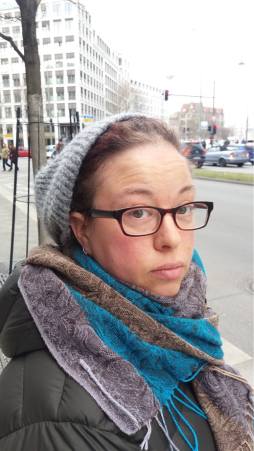
Reflection for the End of the Year by Sara Frykenberg

At my school, a religious institution, we start every faculty meeting with a reflection, meant to inspire us, make us think, help us to connect, etc.  I am admittedly, sometimes very uncomfortable with these reflections. I don’t always like corporate ‘prayer’ because of my  past experiences in an abusive faith. They make me uncomfortable, defensive; even though I understand the value of collective ritual. Challenging me to face these feelings, my department chair asked me to give a reflection for our faculty assembly. So I did so by sharing the way I know how to share (in a collective way) best: in a blog. And here I present these reflections, my blog, with all of you as well. My thoughts about taking the year apart, and putting ourselves back together again at the end of the year:

(Reflection has been edited slightly in terms of length and clarification for presentation to this online audience.)

Faculty Assembly Reflection: Sara Frykenberg, April 2018 Continue reading “Reflection for the End of the Year by Sara Frykenberg”

On Belief and Action by Ivy Helman

29662350_10155723099993089_8391051315166448776_oMy birthday was last Wednesday.  Perhaps more than any other time of the year (yes, even more than Rosh Hashanah and Yom Kippur), the days and weeks leading up to my birthday are filled with personal reflection.  Not that religious and secular new years don’t give me pause to reflect, but I think the lack of buzz around this personal event seems to offer me more space and time to think.

This year more than past years, I’ve been thinking about beliefs: what I believe in; how ideas and concepts that were important to me last year are less so this year and vice versa; how beliefs motivate me to act or not; what role belief plays in my life; why some beliefs demand solid resolve and others not so much; and so on.  I wanted to share with you some of my personal reflection. Continue reading “On Belief and Action by Ivy Helman”

Bible Study Back in the White House after 100 Years – And… They Still Hate Gays and Women! by Marie Cartier

So, I am perusing my twitter feed and I come across this headline:

White House Bible Study Led by Pastor Who Is Anti-Gay, Anti-Women and Anti-Catholic

The opening paragraphs read like my LGBTQ+ religious studies nightmare:

“The first Bible study group held for the U.S. Cabinet in at least 100 years is led by a pastor who believes homosexuality is ‘illegitimate,’ who doesn’t believe women should preach and has described Catholicism as a ‘false’ religion.

Ten members of the Cabinet, including Vice President Mike Pence, Secretary of State Mike Pompeo, and Education Secretary Betsy DeVos, sponsor the study group, which holds meetings lasting between one hour and 90 minutes every Wednesday, according to BBC News. It unfolds at a location in Washington, D.C., that is kept secret for security reasons.

Its leader is Ralph Drollinger, a pastor and president of Capitol Ministries: an organization which aims to ‘evangelize elected officials and lead them toward maturity in Christ.’”

Continue reading “Bible Study Back in the White House after 100 Years – And… They Still Hate Gays and Women! by Marie Cartier”

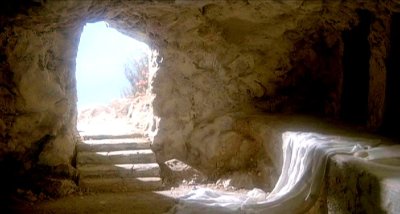
The Doubt of the Empty Tomb and the Hope for Tomorrow by Katie M. Deaver

I recently had the opportunity to travel to my undergrad institution on a student recruitment trip.  During this trip I was able to preach during the college’s weekday chapel service.  Despite the fact that I have lived, studied, and worked within a seminary community for the last seven years I had not actually written (not to mention preached!) a sermon since I was a senior at this very college… to say the least I was a bit nervous.  As it turned out the sermon writing went well, and I also felt positively about the preaching experience.  But even though the writing and preaching are over I can’t stop thinking about the topics I choose to speak about.

The scripture lesson I used was Luke chapter 24 verses 22-24 “Moreover, some women of our group astounded us.  They were at the tomb early this morning, and when they did not find his body there, they came back and told us that they had indeed seen a vision of angels who said that he was alive.  Some of those who were with us went to the tomb and found it just as the women had said; but they did not see him.”

These verses offer a quick recap of the Easter story that comes earlier in chapter 24 of Luke.  The women go to the tomb with the spices that they have prepared, but when they arrive they discover that the stone has been rolled away and the body of their friend and teacher is not there.  Instead, there are two men in dazzling clothes who ask the women “Why do you look for the living among the dead?”

Continue reading “The Doubt of the Empty Tomb and the Hope for Tomorrow by Katie M. Deaver”

Death is a Gift, and Christ is a Hag by Trelawney Grenfell-Muir

My father is dying, and I am haggard with grief and exhaustion. Over a month of frantically arranging child care, driving to the ICU in the middle of the night, fighting to protect my Dad from neglect and malpractice, chasing case managers, begging doctors, negotiating with nurses, sensitive, depleting, agonizing family debates about hospice and DNR, and hour after hour sitting and holding my Dad’s hand, singing, comforting, soothing, reassuring. Washing his face. Massaging salve into his feet and legs. Continually checking to see if he is too cold, too warm, in pain, breathing ok. Weeping as I drive home through snow and rain and dark, watching car accidents happen just one lane over, trying to soothe my frazzled and anxious little children, support my husband in his degree program, and not lose my own career entirely.

So when my daughter asked me, “Mummy, why does Grampy have to die?” I felt dizzy for a moment with my exhausted, overwhelmed, haggard inability to have an instant, perfectly formulated response to provide comfort and meaning for my child. Finally, I said, “Because, darling, if no one died, no one could live. All of us, our bodies are made from the food we eat, which is made from plants, which is made from dirt, which is made from everything that has died. Death is the only way for life to exist. Death allows life, births life, IS life. Death is our only path and connection to eternity.”  Continue reading “Death is a Gift, and Christ is a Hag by Trelawney Grenfell-Muir”

Announcing PANAAWTM 2018 by Grace Yia-Hei Kao

As a faculty advisor and member of the local and steering committees, I’m excited to announce that the 33rd annual conference of PANAAWTM (Pacific, Asian, and North American Asian Women in Theology and Ministry) is fast approaching–April 12-14, 2018, to be exact.

This year’s theme, “Embodied Selves: Inter-religious Engagements,” showcases PANAAWTM’s desire to broaden beyond our traditional (Christian) focus and audience. Not coincidentally, we will be meeting primarily in the Fish Interfaith Center at Chapman University.

Continue reading “Announcing PANAAWTM 2018 by Grace Yia-Hei Kao”

Introducing the 2018 Progressive Asian American Christian (PAAC) Lent Devotional by Grace Yia Hei Kao

I’ve been part of an exciting online community for the past 1.5 years called Progressive Asian American Christians (PAAC) that was founded by two women: Lydia Shiu, a pastor (at City Church San Francisco) who originally created the PAAC Facebook group, and Liz Lin, a writer whose viral blog, “The Loneliness of the Progressive Asian American Christian,” is largely responsible for populating it.

PAAC describes itself thusly:

PAAC is a community for socially, politically, and theologically progressive Asian American Christians (of East, Southeast, South, and West Asian descent, as well as Pacific Islanders and Native Hawaiians) to support each other and talk about faith, identity, and current events. Continue reading “Introducing the 2018 Progressive Asian American Christian (PAAC) Lent Devotional by Grace Yia Hei Kao”

Questions that Matter: What is Feminism? by Elise M. Edwards

elise-edwardsIt certainly is a busy time of year for me, but I’m fortunate that many of the events I am participating in offer a chance to share what is important to me.  Next week, I’ll be speaking to a group of students in one of my campus’ residence halls about feminism and Christianity.  For this informal setting, I was allowed to choose my own topic under the broad heading of “Questions That Matter.” I’ve decided to take on the f-word in religion and attempt to explain why it’s important to me and how it relates to my religious identity.  Although I’m still trying to figure out what to say, I’d like to share my thoughts so far and get some insight from you. Continue reading “Questions that Matter: What is Feminism? by Elise M. Edwards”

In Light of Women by Mary Jane Miller

Why are so few women mentioned in the great feast days like Pentecost, the Last Supper, the Baptism of Christ, etc.? God made no commandment that they not be included.
Inquisitive women like myself have always been around Christ listening to His message. There they were, cooking and cleaning at the Last Supper, at the wedding at Canon and when He fed the five thousand. When Christ invited the children to come to him, you can be sure the mothers were there, too.
Beginning as early as the fourth century the dominant Christian leaders, all men, twisted and distorted Holy Scriptures to thwart the ascendant positions for women within the religious hierarchy and in christian societies in general. Yet, the underlying teachings of Jesus Christ, the Apostle Paul, Moses and the prophets, – all call for the proper and equitable treatment of God’s children. Without a doubt, God and Christ love all of humankind with no gender bias. When women listen to scripture we naturally fill in the gap, or adjust the gap knowing in our hearts and souls, we are not inferior to men.

Continue reading “In Light of Women by Mary Jane Miller”

Just How Rotten Are Things in Denmark? by Marcia Mount Shoop

The Shakespearean quote, “something is rotten in the state of Denmark,” comes from a palace guard. After watching Prince Hamlet walk away with the ghost of Hamlet’s murdered father, the former King, the guard has a sinking feeling about how screwed up things are in his country.

And if you remember the play at all, things were pretty rotten. By the end of the story just about everybody dies. Revenge, misunderstandings, accidents, and lust for power are just a few of the causes of death. The guard was right. Something was rotting away at his country—something that was vacating people’s integrity and trust, something that was not afraid to use violence and lies to get its way, something that was blind with a hunger for more and more power no matter the cost.

Continue reading “Just How Rotten Are Things in Denmark? by Marcia Mount Shoop”