List for today:
Rescue tadpoles from the evaporating puddle
in the driveway.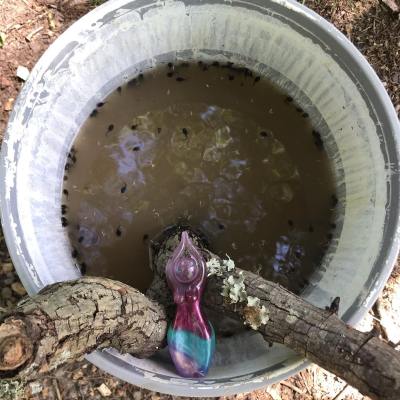
Look for pink roses in the field.
Look for wild strawberries
along the road.
Listen to the crows in
the compost pile
and try to identify them
by their different voices.
Plant basil and calendula
and a few more rows of lettuce.
Examine the buds beginning
on the elderberries
and check blackberry canes
to see if the berries have set.
Watch the yellow swallowtail butterflies dance.
Wonder about action and apathy
and what bridges gaps.
Refuse to surrender belief in joy.
Listen for faint echoes of hope.
Feel the tender beat of humanity
pulsing in the world.
Feel the sun on your face
and water seeping
into your jeans.
Remember that even if you have to
move one tadpole at a time,
change is always possible.
It is easy to become exhausted and overwhelmed by the volume of things there are to say, the things there are to think about, to care about, to put energy into, to love, to be outraged about. I want to invite you, at the moment of this reading, to breathe it out, to let yourself come into your body right where you are this second, and put one hand on your heart and one hand on your belly. Remind yourself that you’re whole right here, right now. There is suffering and there is fear and there is pain and there is joy and there is beauty and there is life, and we can hold it all. Let yourself settle and feel, present in this moment, in this unfolding. And, with whatever you feel, whether you feel hopeless or joyful or angry or happy or thrilled or enthusiastic or creative or drained, whatever it is, with your hand on your heart, accept those feelings as okay right now: how you feel, is how you feel; where you are, is where you are; who you are, is who you are. Continue reading “Nourishing Wholeness in a Fractured World, by Molly Remer”


 I have just returned from the brook where I offered up my Toad Moon prayers to the song of the Hermit thrush and to the rippling waters – first honoring my body with a poem written just for her, and then by repeating my hope/belief/intention that the search has ended and my house will get the structural help she needs without invasive machines scarring my beloved trees and land… I release my doubt – a plague that has incarcerated me for months.
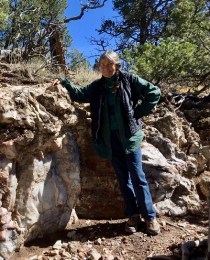 Four years ago I made a radical decision to spend a winter in New Mexico. Maine winters were long and I was 71 years old. An unfinished experience 25 years ago had left me with a longing to spend more time in the desert. Although I had formed a deep and abiding relationship with my land in Maine over a period of almost 40 years and had constructed a small log cabin on this beautiful piece of property that has a brook on three sides, woods and fields, I wondered if at this stage of my life I should consider moving….
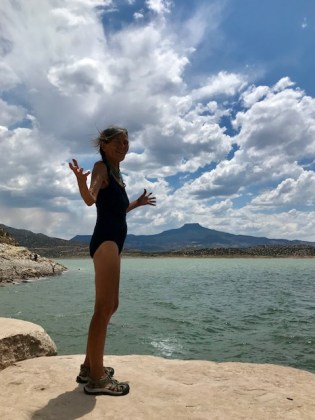 I was deeply moved by
  The fierce light of the white star pierced her thick white fur as the mother froze. She was trying to imagine how her cubs could make the jump from one jagged ice flow to another in the cracked deep blue waters.
 When I moved to Maine from New Orleans 15 years ago, I was delighted to discover how many birch trees were on the property where I lived with my new partner. Previously I had had little contact with these beautiful white trees, other than in pictures and stories. The name always evoked images of birch bark canoes and messages to fate scrawled with bits of burnt wood.
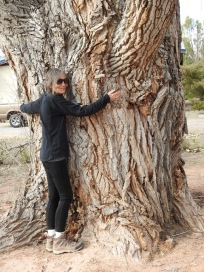 It is past “midsummer” and we are moving into the hottest time of the year without a drop of nourishing, healing rain… When I walk around outdoors I find myself focusing on the many different ferns that grace the forest edges – ferns that hold in precious moisture creating damp places for toads and frogs to hide, places for young trees to sprout, places for the grouse and turkey to hide their nestlings, ferns whose lacy fronds bow low as if in in prayer. Sweet fern covers the hill above and around the brook.
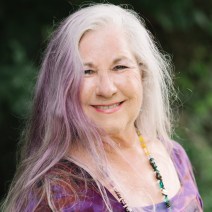
 Sara is a naturalist, ethologist ( a person who studies animals in their natural habitats) (former) Jungian Pattern Analyst, and a writer. She publishes her work regularly in a number of different venues and is presently living in Maine.
 I spend a lot of time thinking about gardens. I think there might be something to them.
