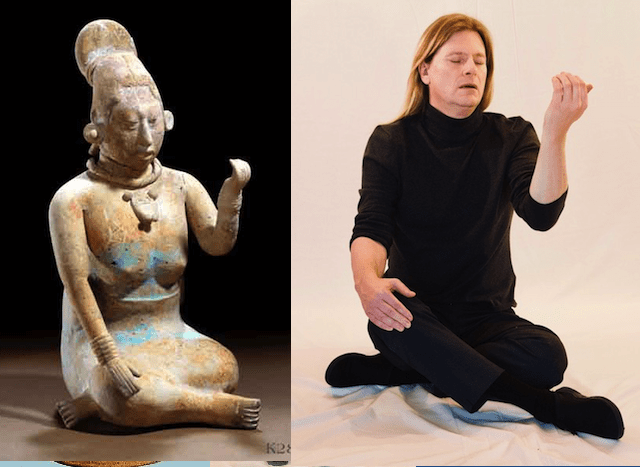
The Cuyamungue Institute, part 2 by Janet Maika’i Rudolph

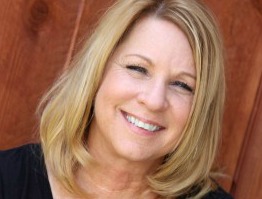
This is part 2 of a blogpost based on an interview I did with Laura Lee at the Cuyamungue Institute. Yesterday’s post concluded with the concept of natural body positions and how these inspired the founder, Dr. Felicitas Goodman. She was also inspired by yoga postures. Laura describes Dr. Goodman’s thinking.

With yoga postures, even sitting in them for five minutes, we can note some interesting physiological reactions. Non-invasive tests were done such as galvanic skin response, breath rate, motility of the intestines, with just sitting in a yoga posture. Interestingly, many of our postures that we see from around the world look like yoga postures. These can be sitting cross legged or kneeling with your hands and arms in a specific configuration in your lap. Goodman had the idea, ‘I should add that to my ritual.’ She started to experiment with postures. And indeed, that pushed it from, let’s have a trip with some drumming, to, oh my gosh — now here we’re touching the hem of something larger than ourselves.

Continue reading “The Cuyamungue Institute, part 2 by Janet Maika’i Rudolph”
The Cuyamungue Institute, part 1 by Janet Maika’i Rudolph

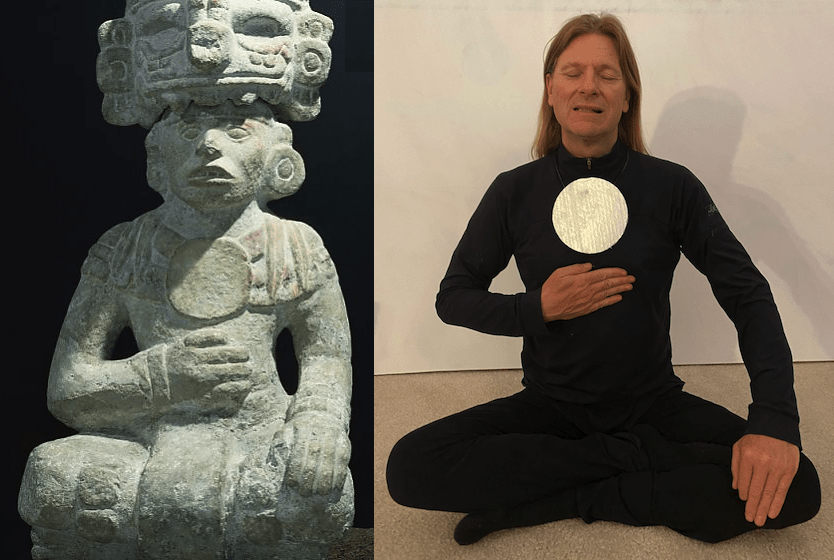
Director Paul Robear in a pose based on this artifact from Chichen Itza

The Cuyamungue Institute was founded in 1978, in Santa Fe New Mexico by Dr. Felicitas Goodman. It is based on work that Dr. Goodman was doing with ritual trance poses as a means to encourage ecstatic states, gain knowledge, and have otherworldly communications and experiences.  The poses Dr. Goodman studied are based on early statues and images found in various cultures. She became aware that these poses of ancient sculptures and drawings were often ritual instructions that people could replicate. By holding these positions in a ritualist manner, she found that people had these common or related experiences which she characterized loosely as healing, divination, metamorphosis, and/or spirit journeys.  This 2-part blogpost is about her journey and what she discovered. It is based on an interview I did with Laura Lee, who along with her husband Paul, are directors of the Cuyamungue Institute.

Continue reading “The Cuyamungue Institute, part 1 by Janet Maika’i Rudolph”

Integrating Snake Medicine Part 2

In Part 1 of this post, published yesterday, I described the first steps of my personal journey of soul recovery, including my first encounter with Green Snake, in statues, dreams and hypnotherapy. Those experiences led to choosing to tattoo Green Snake on my left arm. Read more about finding my Medicine and embracing my Golden Shadow as I stepped into an ancient lineage of Snake Healers.

Sometimes we encounter really sweet, or funny gems on the road of individuation… Let’s start with one like that!

Sweet Intermezzo (6 years ago…)

In the film The Matrix, Neo receives a message to “follow the White Rabbit.” Just before I met my partner, he encountered a live Green Snake slithering across a forest trail in Thailand, followed by a Neo-like dream to “follow the Green Snake.”

Continue reading “Integrating Snake Medicine Part 2”

Integrating Snake Medicine Part 1

This post describes some of the steps on my personal journey of soul recovery across many, many years. It can be traced back to when I was 3 or 4 years old. Each header reflects a significant moment towards finding my Medicine and embracing my Golden Shadow of stepping into an ancient lineage of Snake Healers.

Although many of the steps created an immediate shift in my consciousness, this kind of individuation usually doesn’t happen overnight. I’m sharing it to honour the unfolding trails across time, and to encourage people to surrender to their journey, while letting go of a specific outcome. Part 2 will be published tomorrow.

Continue reading “Integrating Snake Medicine Part 1”

Archives from the FAR Founders: Learning Compassion from Inmate Number 74799 by Cynthia Garrity-Bond

This was originally posted on July 21, 2017. This is the first post of our new series to highlight the work of the four founders of FAR, Garrity-Bond, Caroline Kline, Gina Messina and Xochitl Alvizo

Technically I was employed as a lab assistant at our community

Considered standard prison procedure, Michael was scheduled for an autopsy the following day. While my grief over Michael’s death was considerable, it was the pending autopsy that caused my immediate concern. As I pictured Michael on the cold table of steel, the crude instruments sawing and cutting into his already weathered body, I took it upon myself to somehow ease this last assault. I phoned the Tucson corner’s office, hoping to speak to the pathologist who would be performing Michael’s autopsy. With surprising bureaucratic ease, I was transferred to him. After introducing myself, I explained he would be receiving Prisoner 74799, my brother, from Tucson General, and that by all appearances this was just another disposable inmate whose criminal past simply caught up with him, sort of a karma-like ending. His thin, emaciated body, I warned, is covered in tattoos, which I feared might induce a harsher judgment upon this cast away soul. I asked the pathologist that when he begins the post, he please remember Prisoner 74799 was somebody’s son, somebody’s brother, father and friend and more importantly, that this man was loved. “Please” I pleaded, “try to see beyond the obvious signs of poor choices mapped onto his body, instead see he is more than his prison issued number and that Michael Paul, while far from saint, was a man who loved and was loved.”

Continue reading “Archives from the FAR Founders: Learning Compassion from Inmate Number 74799 by Cynthia Garrity-Bond”

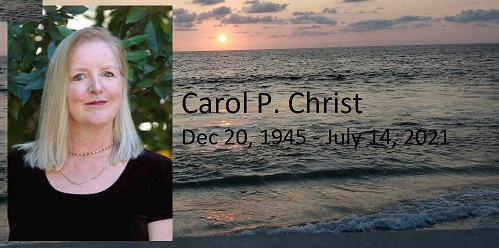
Legacy of Carol P. Christ: When Violence is Normal and Normalized

This was originally posted on January 14, 2019

Warning: this blog discusses spanking and bodily violence

“No Whips, No Punishments, No Threats: Women’s Control of Social Life” is the title of one of the chapters in Iroquoian Women, Barbara Alice Mann’s stunning reconstruction of female power in a matrilineal society. According to Mann, the European settlers were “unsettled” by the lack of strict punishment systems for children in Indian societies. “Spare the rod and spoil the child” was the backbone of European child-rearing practices. The settlers viewed Indian children as naughty, disobedient, disrespectful, and horror of horrors: self-possessed.

It is perhaps no coincidence that after reading this chapter, bodily memories of violence inflicted on me as a child began to resurface. My strongest bodily memory is of being hit repeatedly on my left upper arm by my younger brother’s fist. It is as if my arm is still stinging in that particular place. My mother wanted us to play together, but when we did, we usually ended up fighting. My brother, who was two and a half years younger, was later diagnosed with dyslexia and given “little red pills” to help him control his temper. I was a quiet child (there must have been reasons for that too), and though I soon realized that if I hit back I would only be hurt more, I learned to use my tongue against my brother. This too was a form of violence and my brother remembers my cruelty to this day. Once when I asked my mother what she wanted for her birthday, she responded, “Two children who do not fight.” I didn’t even try to give her that because I didn’t know another way.

Continue reading “Legacy of Carol P. Christ: When Violence is Normal and Normalized”

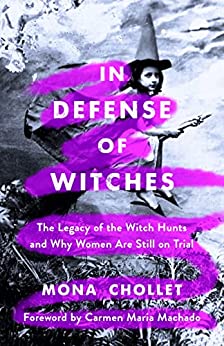
Life Still Shaped by the Witch Hunts? by Eline Kieft

In this article I reframe my understanding of feminism through the lens of Mona Chollet’s In Defence of Witches, and reflect on how my psyche as a woman today is still deeply influenced by the effects of the witch hunts in mediaeval times. 

Continue reading “Life Still Shaped by the Witch Hunts? by Eline Kieft”

From the Archives: Who Owns the Sacred? A Personal Search beyond (European) Indigenous Knowledge by Eline Kieft

This was originally posted on Jan 17, 2020

For almost 35 years nature has been my sacred place. As an 8-year old, I started to pray to Mother Earth even though the protestant tradition in which I grew up only recognised ‘God the Father’. I went outside in my inflatable rowing boat to seek solitude (as an only child in a quiet family!) on a small island in the lake of our local park. I practised rowing and walking quietly to not break the sacred silence. I collected herbs to brew infusions in my little thermos flask with boiled water brought from home. I sung to the moon, and danced my love for all creation back through my moving body. Over the last 15 or so years, I spent many days and nights at Neolithic monuments, dreaming in ancestral burial mounds, time traveling in stone circles in Cornwall, Wales, Scotland, England, Ireland and Brittany. This nature-based practice evolved naturally, and later incorporated my training with the Scandinavian Centre for Shamanic Studies and the School of Movement Medicine. Nature is where I reconnect most easily with the Sacred, and listen to the whispers on the great web of life in which all of nature is a great teacher. Nature, for me, is a strong place of prayer, solace, awe, reverence, gratitude, joy, guidance, reconnection, healing and transformation. 

Continue reading “From the Archives: Who Owns the Sacred? A Personal Search beyond (European) Indigenous Knowledge by Eline Kieft”

Hope Is Giving Birth in the Face of the Dragon by Beth Bartlett

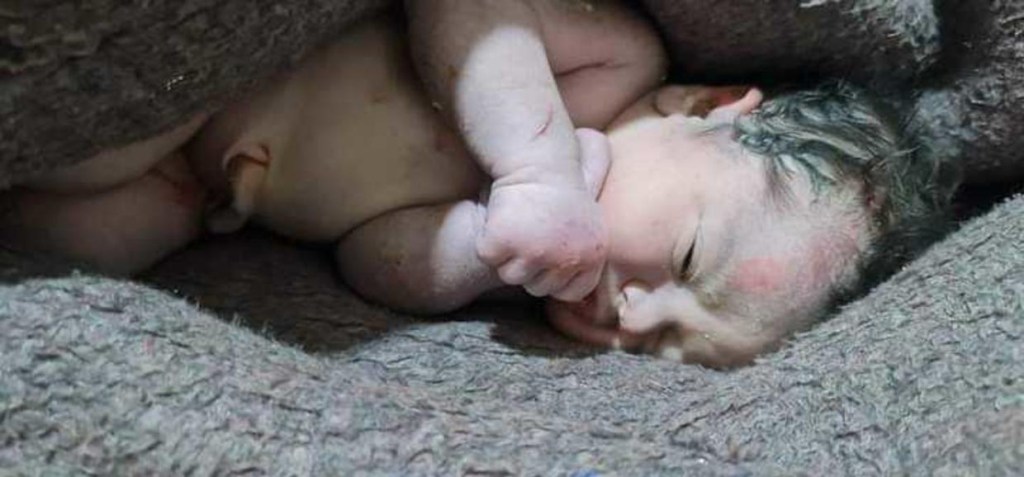
Syrian Baby

The image of the baby born under the rubble of the earthquake in Syria has been haunting me. So has the image in my mind of her mother, giving birth to her baby while trapped after the building, where she, her husband, and their children were sleeping, collapsed.  The baby’s uncle, when digging through the debris hoping to reach his brother and family, found the baby alive, her umbilical cord still attached to her mother. When he cut the cord, the baby let out a cry.  Tragically, her mother had died after giving birth, as had her father and siblings.

Continue reading “Hope Is Giving Birth in the Face of the Dragon by Beth Bartlett”

Legacy of Carol P. Christ: Woman and Nature: Our Bodies Are Ourselves

This was originally posted on June 26, 2017

This earth is my sister; I love her daily grace, her silent daring, and how loved I am how we admire the strength in each other, all that we have suffered, all that we have lost, all that we know. We are stunned by this beauty, and I do not forget: what she is to me, what I am to her.

These words are from Susan Griffin’s Woman and Nature which I often recommend as one of my favorite books. Over the years I have read this passage and others from Woman and Nature aloud with my students, and we have always been moved, most  of us to tears. More recently these words have become the center of the “Morning Blessing” on the Goddess Pilgrimage to Crete.

Continue reading “Legacy of Carol P. Christ: Woman and Nature: Our Bodies Are Ourselves”