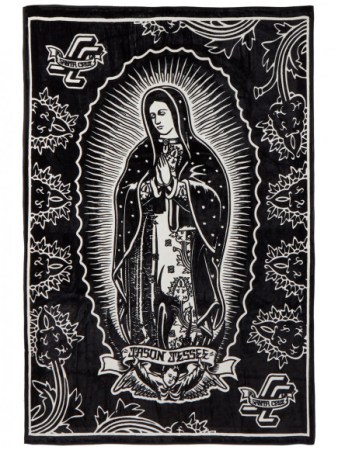
Re-Imaging Three Marys by Janet Sunderland

The recent #metoo movement, along with young women entering Congress, has pointed to an important question. Why, in this 21st Century, are these achievements remarkable? Why has it taken so long for women to be recognized as capable for these positions? One possible reason is the Christian mythology around women. However, to recreate the way women are viewed, we must re-imagine the women who have been standard-bearers for two thousand years.


Continue reading “Re-Imaging Three Marys by Janet Sunderland”

The Gift by Sara Wright

We drifted through

the green

hungrily absorbing

plant souls,

each twig, flower, and tree

has her own story to tell…


Such a joyful way

for me

to spend a

‘mother’s day.’

Being with him

when family

extends sharp claws

is an antidote to suffering.


“This is my church”

He said,

not for the first time.

I nodded.

He and I are almost

always in agreement

when it comes

to plants

and people.

Continue reading “The Gift by Sara Wright”

The Finish Line by John Erickson

I see it…do you?

It’s just within reach and I’m almost there…the proverbial finish line to my Ph.D.

That’s right folks, I’m graduating.

To say that this has been an easy journey, one that many of you have read about and witnessed, would be an understatement.  For many of us, that finish line is far away or getting there seems more like a hope and dream rather than a reality.  Whether or not it is because of economic hardships, life in general, or the regular types of “isms” that so many of us face while trying to better ourselves via academic enrichment, the struggle is real. Continue reading “The Finish Line by John Erickson”

Dear Mary by Sara Wright

This piece was written in response to Gina Messina’s recent Feminism and Religion piece “Who is God?”

Dear Mary,

When I responded to a post on feminism and religion this morning I wrote that you were my first goddess. As a child I knew little beyond that you were the “Mother of God,” and I found your presence immensely comforting, even seeking you out in secret, entering your rose garden in a local monastery. I needed you so.

Early in adolescence I learned that your life was one of purity, sacrifice, and loss. Your purity left me bereft. How could a young Victorian girl be “good enough” to serve such a figure? I was fierce and passionate – a thorny red rose – with an empty hole in my heart.

Sadly, I released you and chose your sister the whore, the Black Goddess in disguise… but I didn’t know that then; I only knew that the “black” woman succumbed to her flesh as I did, covered herself in shame…What lies Patriarchy tells…

Continue reading “Dear Mary by Sara Wright”

Eve is the Hero of the Garden of Eden, Part 2 by Janet Maika’i Rudolph

The serpent in the Bible is treated as Eve’s partner in crime, a malevolent seducer who is responsible for humankind’s expulsion from paradise. But did you know there are serpents who figure positively in the Bible? There are serpent priests, a feathered serpent and a healing serpent. Check out this passage:

Be ye therefore wise as serpents

Matthew 10:16

Levites were serpent priests as evidenced by the etymology of their name. The root word levi is seen in the name of the creature “leviathan,” the giant serpent. This is reminiscent of the Pythia, the oracle from Delphi whose title is derived from the root word python.

The feathered serpent referenced in Isaiah 30:6 is a seraph, usually translated as a “fiery flying serpent.”

Continue reading “Eve is the Hero of the Garden of Eden, Part 2 by Janet Maika’i Rudolph”

Eulogy for My Father by Natalie Weaver

Fourteen years ago, I was pregnant with William Valentine.  I had no idea what to expect.  I knew only that I was in a body, and it was pregnant.  Things happened to me, to my body, that seemed extrinsic to my person, so much so that for most of those forty weeks, I felt as though the doctor’s office was having the baby, and I was a mere observer.  But, when the time came to deliver the baby, I realized it was my body that was trying to make passage for another’s.  The particularities of myself and the baby’s self seemed to fade away into something more vital and primordial in the process of the transmission of life.  After a safe delivery, I felt a deep and curious gratitude that was beyond the gratitude I had for my child or for our health.  This strange gratitude was born of the passage I had been so fortunate to experience, that is, this novel yet ancient, essential yet unparalleled dimension of human being-ness.  I had given live birth, and I was grateful to know what that was like.  In that experience, I was more connected to my human brothers and sisters than I had ever been before, including to this new baby, who I knew in my deepest self was more fundamentally a brother human than even he was my own child.  I knew that in this transmission, I had helped a fellow traveler, and that transmitting life was simple even while it was giant in scope.  The experience was and would always be about walking with each other, from the cradle to the grave, in our vulnerability, in our fragility, in our humility, and in that walk, to find our strength, our dignity, and our luminescence, as persons, as creatures that think and speak and love.  To have been a party to another’s coming to be, this was an occasion of the greatest gratitude I had known.

In accompanying my father in this final stage of his life during these challenging and difficult months as he journeyed toward his death, I felt that same vital and primordial passage of being that I had in giving birth.  While it was not my body that this time labored and worked, I was party to his experience.  I witnessed his courage and another kind of transmission of life.  For, I saw a man go from self-concern to other-concern; from hope of getting well to hope to of making things better for others; I witnessed a man move from verbal complaint to silent focus; and I heard his relocation of worry for himself to concern for me because he knew I was hurting as I was watching him, mostly powerless to do anything but sit next to him. I saw a man graduate from a regular man to an elder and then to naked spirt in God’s care, and I was honored to be one of his midwives on that journey.  In his final hours, he became full of grace, and he fulfilled the trajectory of becoming the father and man he always intended to be.  It was an honor to behold, and I am grateful.

Continue reading “Eulogy for My Father by Natalie Weaver”

A Review of Decembers Past before We Move into the New Year by Marie Cartier

Last month I looked back over six years of postings I have done for FAR. In November,  I noticed that I usually during that month tend to review the year and find something to be grateful for.

I decided this month to follow that up by looking back at the posts I have done for the past six years at this time of year, right before the wheel turns into the New Year. I have the privilege of writing for FAR usually right after Thanksgiving and right after Christmas and before New Year’s. I tend to think of this time as a time of looking forward, and Thanksgiving as a time of looking back.

Continue reading “A Review of Decembers Past before We Move into the New Year by Marie Cartier”

Celebrating the Winter Solstice by Barbara Ardinger

Even though Jesus was born during the reign of Augustus, first Roman emperor, the empire didn’t celebrate that birth until three centuries later when his birth date was moved to mid-winter to match the birth date of the sun god Mithra. The Romans already had a long tradition of celebrating the winter solstice. This celebration was called the Saturnalia. Here are three days in December, taken from my daybook, Pagan Every Day. (When I wrote this book in 2003, I wrote longer days. The publisher demanded that I reduce every day to 300 words. I edited them all down to 301 words.)

December 17: Saturnalia begins

Saturn, who was conflated with the Greek Titan, Cronus, was an ancient Latin agricultural god whose name may derive from satur, “stuffed,” or sator, “a sower”; in either case he stands for abundance. He was a working god who oversaw viniculture and farming, the king of Italy during the golden age. When Jupiter conquered him, he hid himself (latuit) in the region that came to be called Latium. The Romans said Saturn’s body lay beneath the Capitol in Rome. Because his reign brought prosperity to the city, the state treasury and the standards of the Roman legions were kept in his temple when the army was at home. Saturn’s statue was bound in woolen strips to keep him from leaving Rome.

Continue reading “Celebrating the Winter Solstice by Barbara Ardinger”

Women v. Religion: The Case Against Faith and for Freedom BOOK REVIEW by Katie M. Deaver

In the book, Women v. Religion: The Case Against Faith and for Freedom, editor Karen L. Garst puts together the voices of women from a variety of backgrounds in an effort to present a case against faith.

While the introduction to the full volume suggests that women ought to turn away from all forms of religion the majority of the individual pieces that the book features focus on the Abrahamic religions: Judaism, Christianity, and Islam.  The included pieces are written from a variety of disciplines and viewpoints, some feature historical facts and timelines, while others are the raw and difficult personal stories of women struggling to leave the religions they were raised within.

Most of the articles dig into many of the traditional critiques of religion.  For example that the Abrahamic faiths are inherently patriarchal, and cannot be redeemed for women.  Others take these traditional arguments against religion a step further and argue that in addition to religion being a tool for female subjugation, religion has in fact inhibited Western progression and is a key reason why the United States has not yet had a female president, and why women continue to have to fight for their bodily and human rights.

Continue reading “Women v. Religion: The Case Against Faith and for Freedom BOOK REVIEW by Katie M. Deaver”

Queen of Pentacles: Sensual Materiality by Elisabeth Schilling

Most of us are trying to make it to a place of material comfort where we are living in a way that feels honorable. Some of us feel we could have made better decisions in the past so that we might have figured out how to do such before the age we are now. I recently did a tarot card reading that I interpreted as mainly positive or neutrally-revelatory. But one of the cards stood out from the rest, and I really didn’t understand it. I was feeling positive that day, and, even though I have often felt unsure and longing in my recent travels despite all I have accomplished materially and psychologically, I have to say it wasn’t a card I was expecting: the III of Swords, which symbolizes disappointment and heartache, especially due to mental happenings. What could I feel heartache at? Perhaps I am disappointed that creating that place of safety and material comfort seems a long way down the road.

Continue reading “Queen of Pentacles: Sensual Materiality by Elisabeth Schilling”