The Daughter, the Alliance-Maker (Women in the Book of Daniel, part 2) by Liz Cooledge Jenkins

Note: This is the second in a two-part series reflecting on women in the biblical book of Daniel. For part 1, see here.

The second female character I noticed while taking a deep dive into the book of Daniel appears even more briefly. Daniel 11:6-7 includes her story: “The daughter of the king of the South will go to the king of the North to make an alliance, but she will not retain her power, and he and his power will not last. In those days she will be betrayed, together with her royal escort and her father and the one who supported her. One from her family line will arise to take her place” (NIV). It is a brief story—and not a happy one, in the end. But I think it’s worth reflecting on.

In this chapter of Daniel, an unnamed supernatural messenger gives Daniel a detailed account of a long series of violent power struggles between various kings. Empires accumulate and then are broken up (vv. 3-4). One king is strong, but his commander proves stronger and overtakes him (v. 5). Attacks are victorious, and valuables are seized and carried off (vv. 7-8). Retreats are made (v. 9). Great armies are assembled (v. 10). Kings “march out in a rage” toward battle (v. 11). Armies are carried off, and thousands are slaughtered (v. 12). You get the idea. Everything is violent. Everything is bloody. Everything is one brutal war after another, one brutal kingdom after another, one brutal ruler after another. It all starts to blur together.

Continue reading “The Daughter, the Alliance-Maker (Women in the Book of Daniel, part 2) by Liz Cooledge Jenkins”
The Queen, the Memory-Keeper (Women in the Book of Daniel, part 1) by Liz Cooledge Jenkins

Note: This is the first in a two-part series reflecting on women in the biblical book of Daniel.

I recently had the chance to take a deep dive into the biblical book of Daniel. I think it’s the first time I’ve read the whole book of Daniel since I’ve started intentionally attending to the questions of feminist biblical interpretation: Where are women present? Where are women absent? What are they doing or not doing—perhaps prohibited from doing? How does this passage move its readers toward—or away from—gender equity and women’s empowerment? How does it speak to—or deny—women’s full humanity?

            The absence of women in most of the book of Daniel feels glaringly obvious to me.[1] The main characters include the Hebrew exile Daniel, Daniel’s three (male) friends, King Nebuchadnezzar, King Belshazzar, and King Darius. The angels look like men. The divinely appointed eschatological authority figure is described as being like a “son of man.” The particularly oppressive king who desecrates the temple, abolishes the ritual sacrifices, and sets up an “abomination that causes desolation”[2] is definitely male.

Where are the women?

Continue reading “The Queen, the Memory-Keeper (Women in the Book of Daniel, part 1) by Liz Cooledge Jenkins”

The Return of the Goddess to Our Human Consciousness by Caryn MacGrandle

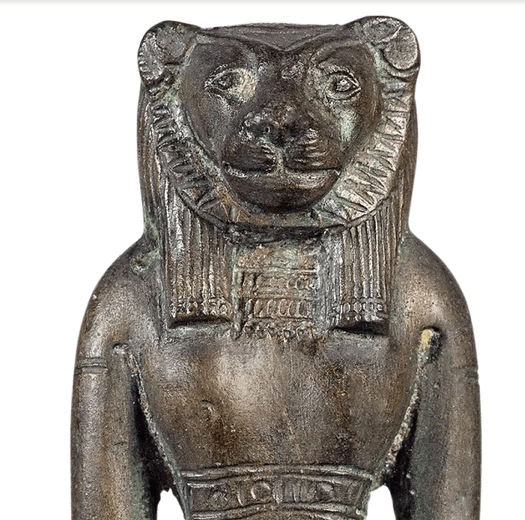
One of the over 700 granodiorite statues made of the Goddess Sekhmet almost 3500 years ago, “the Lady of the Place of the Beginning of Time.” 

Molly Remer of Brigid’s Grove, a fellow contributor here at Feminism and Religion recently wrote on the Mother Well section of the divine feminine app: “I feel like Inanna & Enheduanna are all around in recent months!”

Yes. I do as well.

A year or two ago, I read a book by Lauren Sleeman entitled ‘Behold’.  The premise of the book has remained with me:  a telling of the Goddesses, in particular Lilith, the Great Mother and Crone of the Cosmos, and Hekate, Goddess of the Dark Moon and the Mysteries of Life, who have been silently watching and waiting these past few thousand years to return to our human consciousness. 

Continue reading “The Return of the Goddess to Our Human Consciousness by Caryn MacGrandle”

From the Archives: Recognizing Abuse by Karen Tate

This was originally posted on March 8, 2019

I’ve been thinking a lot about abuse. Of course, most of us know about the domination, exploitation and  need for control meted out by patriarchy, but I wonder if we have actually normalized many abuses? Abuse in the home, in the workplace, in our culture. Perhaps  we accepted it unconsciously because so many of us are conditioned by religions that tell us to make noble sacrifice and tolerate suffering silently. I wonder if we’re calling it out when we see it – often and loudly – or if we’ve become conditioned to quietly accept the abuse with little push back.

My intent is not to offend anyone with this. I want to find common ground and defeat the polarization we find around us, but our President is the poster child for abusive behavior.  Do we recognize his lies and fear-mongering and so many of the ideas he gives credence and license to as abuse?  Not only is he eroding our democratic institutions but he poisons the political, social and cultural arena with negativity, fear and hate, rather than uplifting us and encouraging us to evolve and be the best version of ourselves. I equate him to poison in a well from which we must all drink.

Continue reading “From the Archives: Recognizing Abuse by Karen Tate”

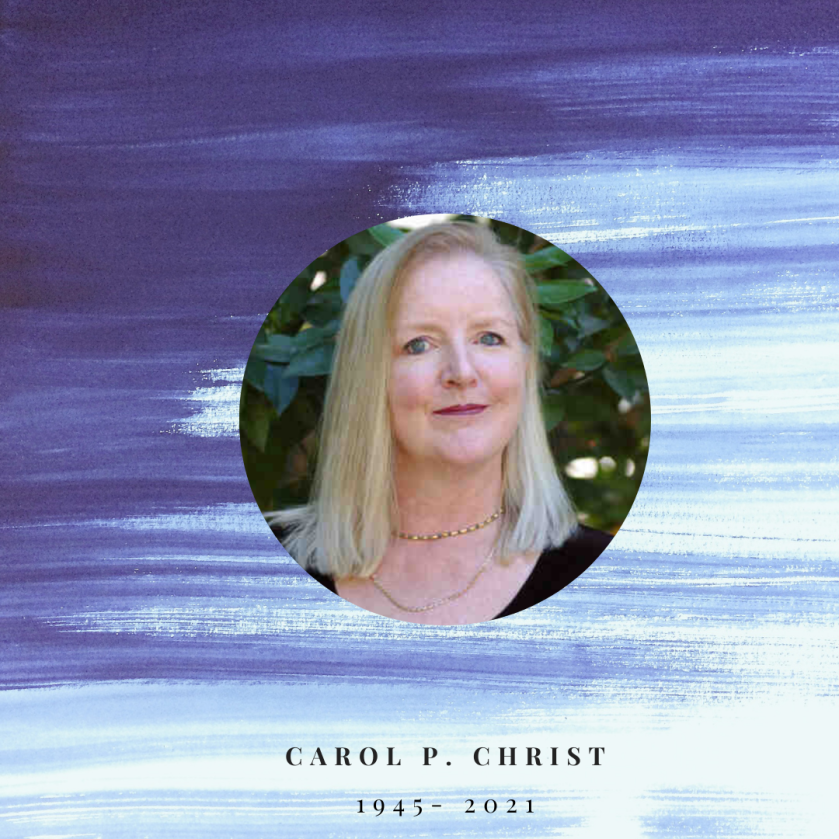
Legacy of Carol P. Christ: Time to Dismantle the Myth of the Nation State?

This was originally posted on February 25, 2019

I am a citizen of two countries currently being torn apart by popular nationalism. In Greece, the cry is “Macedonia is only Greek,” while in the United States a nation of immigrants is being told that it must fear being invaded by immigrants. The truth is that the idea of a nation state is a fiction created in the nineteenth century. It is high time to dismantle it.

Here is the Greek case. Phillip of Macedon invaded from the north and created a federation of Greek states in 338 BCE. His son Alexander the (so-called) Great conquered territories extending as far as India before his death in 323 BCE, establishing the seat of his empire in the newly founded city of Alexandria in Egypt. Phillip and Alexander are claimed as Greek, but in fact Phillip forced independent Greek-speaking city states into union under his rule.

Continue reading “Legacy of Carol P. Christ: Time to Dismantle the Myth of the Nation State?”

Legacy of Carol P. Christ: The Ninth Touchstone: Repair the Web

This was originally posted on September 3, 2018

As I reflected on the Nine Touchstones again recently, I was pleased to discover that the first and the eighth touchstones are articulations of the central values of egalitarian matriarchal societies. Few of us live today in egalitarian matriarchies, and it would not be possible for all of us to return to cultivating the land. I offer the Nine Touchstones in the hope that they can help us to find a way to express and embody the values of egalitarian matriarchal cultures in the modern world. The touchstones are intended to inform all our relationships, personal, communal, social, and political.

Continue reading “Legacy of Carol P. Christ: The Ninth Touchstone: Repair the Web”

From the Archives: Archy and Mehitabel by Barbara Ardinger

This was originally posted on December 1, 2019

Archy the Cockroach and Mehitabel the Cat were introduced to the world in 1916 by Don Marquis, a columnist for the New York Evening Sun. Marquis was more than a mere columnist; he was a social commentator and satirist admired by nearly every famous writer of the first quarter of the 20th century. Franklin P. Adams, for example, said Marquis was “far closer to Mark Twain than anybody I know” (see note).

Continue reading “From the Archives: Archy and Mehitabel by Barbara Ardinger”

Legacy of Carol P. Christ: Walk in Love and Beauty: A Touchstone for Healing

This was originally posted on July 9, 2018

Nurture life.

Walk in love and beauty.

Trust the knowledge that comes through the body.

Speak the truth about conflict, pain, and suffering.

Take only what you need.

Think about the consequences of your actions for seven generations.

Approach the taking of life with great restraint.

Practice great generosity.

Repair the web

In Rebirth of the Goddess, I offered Nine Touchstones of Goddess Spirituality as an alternative to the Ten Commandments. The Nine Touchstones are intended to inform all our relationships, whether personal, communal, social, or political.

Continue reading “Legacy of Carol P. Christ: Walk in Love and Beauty: A Touchstone for Healing”

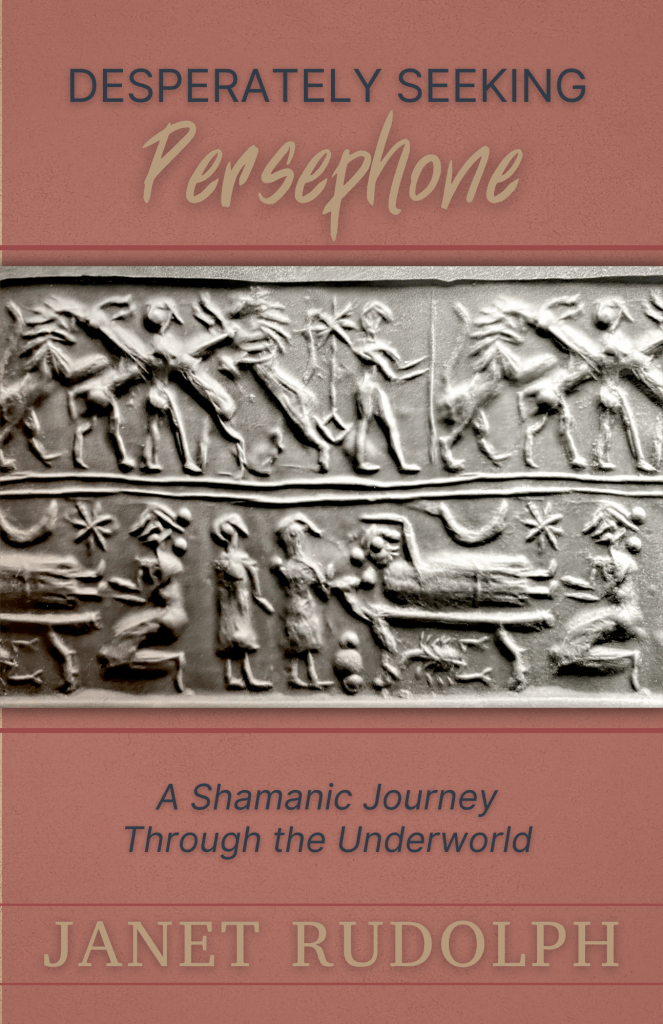
To Stand in the Presence of the Ancients! – Enheduanna, Part 2 by Janet Maika’i Rudolph

Yesterday I wrote about the priestess/scribe Enheduanna and her warrior/king father Sargon. I posited their connection to the codification of patriarchy. They did not invent it, as war and the diminution of women had been happening in some circles. I do wonder, however, if they furthered it along to a point of no return.

Another king of the time, Urukagina from circa 2350 bce[1] codified laws under the guise of reformation.  Some of his reforms were progressive in that they sought to protect the poorer classes against aristocracy and the priesthood.  But they also were clear to let women “know their place.” Here are the translated words from his laws:

“If a woman to a male has spoken . . .[bad] words(?) which exceed (her rank?), onto the teeth of that woman a baked brick shall be smashed, and that brick will be hung at the main gate.”

Continue reading “To Stand in the Presence of the Ancients! – Enheduanna, Part 2 by Janet Maika’i Rudolph”

Legacy of Carol P. Christ: Can You Kill the Spirit? What Happened to Female Imagery for God in Christian Worship?

This was originally posted March 16, 2015

When I first began to think about female language and images for God I imagined that changing God-He to God-She and speaking of God as Mother some of the time would be a widespread practice in churches and synagogues by now. I was more worried about whether or not images of God as a dominating Other would remain intact. Would God-She be imaged as a Queen or a Woman of War who at Her whim or will could wreak havoc on Her own people?

Forty years later, very little progress has been made on the question of female imagery for God. I suspect that most people in the pews today have never even had to confront prayers to Sophia, God the Mother, or God-She. Most people consider the issue of female language in the churches to have been resolved with inclusive language liturgies and translations of the Bible that use gender neutral rather than female inclusive language.

Continue reading “Legacy of Carol P. Christ: Can You Kill the Spirit? What Happened to Female Imagery for God in Christian Worship?”