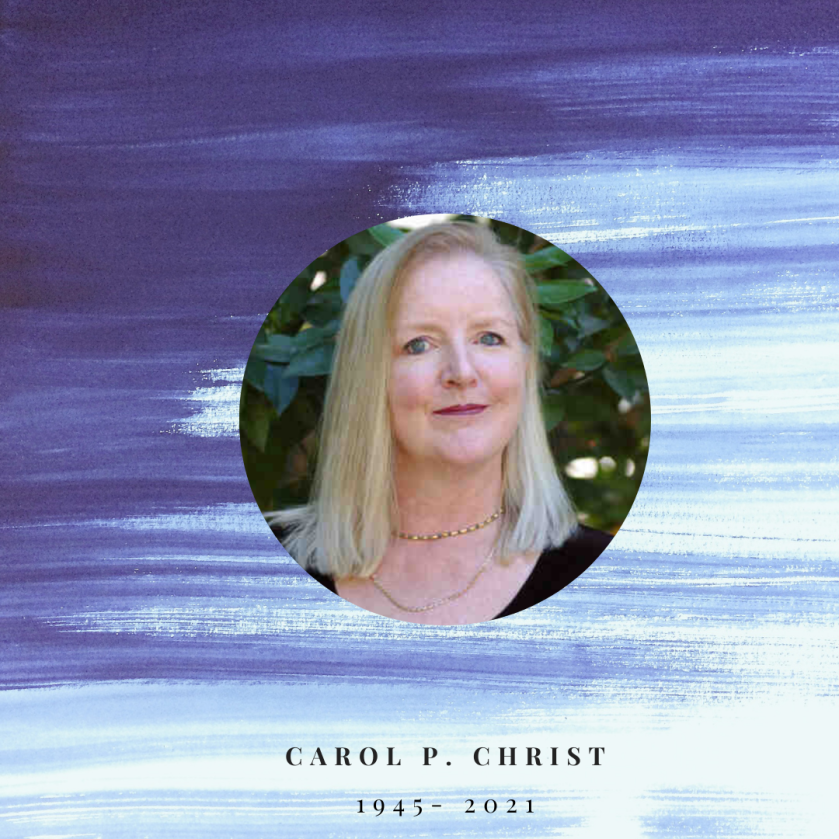
Legacy of Carol P. Christ: The Ninth Touchstone: Repair the Web

This was originally posted on September 3, 2018
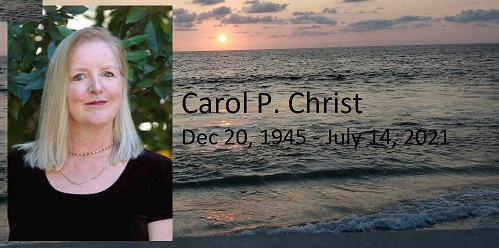
As I reflected on the Nine Touchstones again recently, I was pleased to discover that the first and the eighth touchstones are articulations of the central values of egalitarian matriarchal societies. Few of us live today in egalitarian matriarchies, and it would not be possible for all of us to return to cultivating the land. I offer the Nine Touchstones in the hope that they can help us to find a way to express and embody the values of egalitarian matriarchal cultures in the modern world. The touchstones are intended to inform all our relationships, personal, communal, social, and political.

Continue reading “Legacy of Carol P. Christ: The Ninth Touchstone: Repair the Web”
From the Archives: Archy and Mehitabel by Barbara Ardinger

This was originally posted on December 1, 2019

Archy the Cockroach and Mehitabel the Cat were introduced to the world in 1916 by Don Marquis, a columnist for the New York Evening Sun. Marquis was more than a mere columnist; he was a social commentator and satirist admired by nearly every famous writer of the first quarter of the 20th century. Franklin P. Adams, for example, said Marquis was “far closer to Mark Twain than anybody I know” (see note).

Continue reading “From the Archives: Archy and Mehitabel by Barbara Ardinger”

Legacy of Carol P. Christ: Walk in Love and Beauty: A Touchstone for Healing

This was originally posted on July 9, 2018

Nurture life.

Walk in love and beauty.

Trust the knowledge that comes through the body.

Speak the truth about conflict, pain, and suffering.

Take only what you need.

Think about the consequences of your actions for seven generations.

Approach the taking of life with great restraint.

Practice great generosity.

Repair the web

In Rebirth of the Goddess, I offered Nine Touchstones of Goddess Spirituality as an alternative to the Ten Commandments. The Nine Touchstones are intended to inform all our relationships, whether personal, communal, social, or political.

Continue reading “Legacy of Carol P. Christ: Walk in Love and Beauty: A Touchstone for Healing”

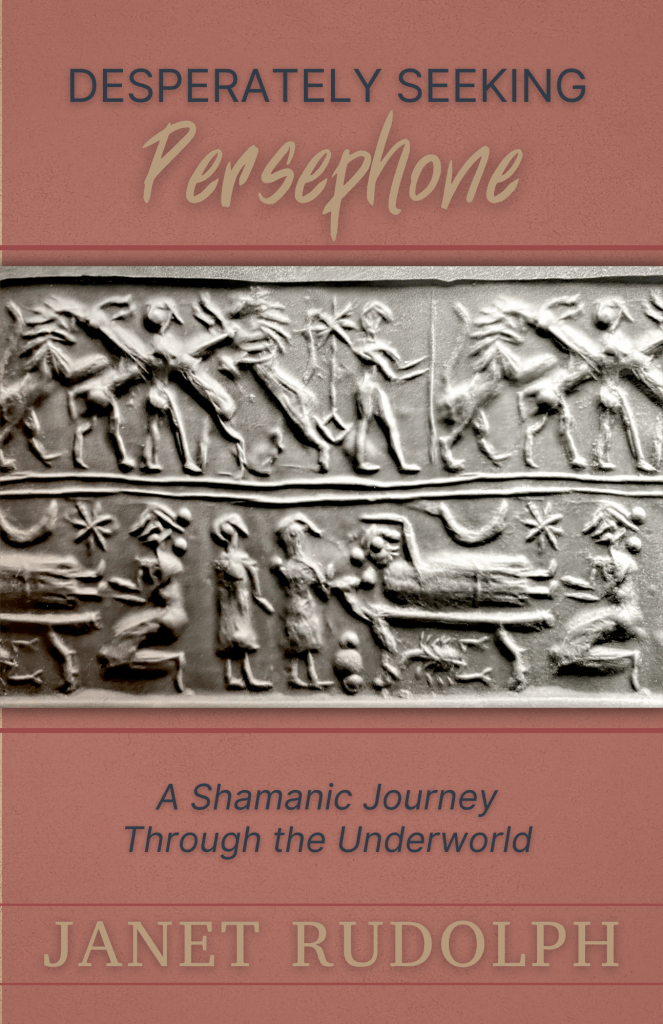
To Stand in the Presence of the Ancients! – Enheduanna, Part 2 by Janet Maika’i Rudolph

Yesterday I wrote about the priestess/scribe Enheduanna and her warrior/king father Sargon. I posited their connection to the codification of patriarchy. They did not invent it, as war and the diminution of women had been happening in some circles. I do wonder, however, if they furthered it along to a point of no return.

Another king of the time, Urukagina from circa 2350 bce[1] codified laws under the guise of reformation.  Some of his reforms were progressive in that they sought to protect the poorer classes against aristocracy and the priesthood.  But they also were clear to let women “know their place.” Here are the translated words from his laws:

“If a woman to a male has spoken . . .[bad] words(?) which exceed (her rank?), onto the teeth of that woman a baked brick shall be smashed, and that brick will be hung at the main gate.”

Continue reading “To Stand in the Presence of the Ancients! – Enheduanna, Part 2 by Janet Maika’i Rudolph”

Legacy of Carol P. Christ: Can You Kill the Spirit? What Happened to Female Imagery for God in Christian Worship?

This was originally posted March 16, 2015

When I first began to think about female language and images for God I imagined that changing God-He to God-She and speaking of God as Mother some of the time would be a widespread practice in churches and synagogues by now. I was more worried about whether or not images of God as a dominating Other would remain intact. Would God-She be imaged as a Queen or a Woman of War who at Her whim or will could wreak havoc on Her own people?

Forty years later, very little progress has been made on the question of female imagery for God. I suspect that most people in the pews today have never even had to confront prayers to Sophia, God the Mother, or God-She. Most people consider the issue of female language in the churches to have been resolved with inclusive language liturgies and translations of the Bible that use gender neutral rather than female inclusive language.

Continue reading “Legacy of Carol P. Christ: Can You Kill the Spirit? What Happened to Female Imagery for God in Christian Worship?”

Legacy of Carol P. Christ: SHEELA-NA-GIG

On a trip to Ireland several years ago, I was fortunate to have been able to see the Sheela-na-gigs in the National Museum of Dublin.  Two of these Sheelas including the one removed from the Seir Kieran Church of County Offaly, pictured below, are currently on display.  They stand at the doorway of a room dedicated to items from the medieval period and easily missed.  As there was little interest in them and they are not in cases, I was able to silently commune without interruption.

Continue reading “Legacy of Carol P. Christ: SHEELA-NA-GIG”

Legacy of Carol P. Christ: Maternal Gift Economy: Webinar Gifts

This was originally posted December 7, 2020

In the 1960s and 1970s, American-born Genevieve Vaughan was living in Rome with her husband, philosopher Ferruccio Rossi-Landi, and their three daughters. When Rossi-Landi, using Marxist models, began to write about language as a form of “exchange,” Vaughan was inspired to articulate her alternative theory based on the idea that language was developed and is learned through the gifts of the mother to the child. From that beginning, Vaughn developed an alternative theory of culture based on what she calls the “gift economy.”

Continue reading “Legacy of Carol P. Christ: Maternal Gift Economy: Webinar Gifts”

Legacy of Carol P. Christ: Curiosity About Everything and the Language of the Goddess

The was originally posted on April 14, 2014

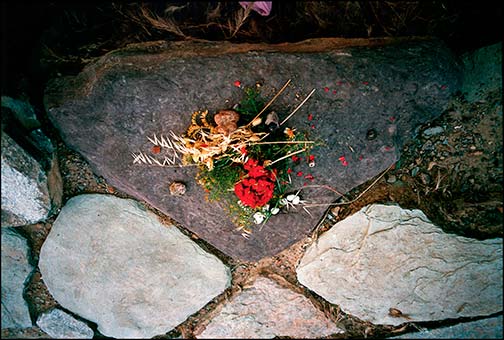
mochlos altar stone

My recent discovery of Marija Gimbutas on Youtube rekindled my admiration for her work. In her slide-lecture “The World of the Goddess” Marija Gimbutas allows us to follow the line of reasoning she used to decipher the “language of the Goddess” in Old Europe.

Careful attention to her lecture shows that Gimbutas did not close her eyes, dream, and then attach her own ideas and intuitions to the artifacts she later discussed. Rather, she catalogued groups of images with similar symbolism and used her knowledge of nature (what does a water bird or an owl look like?) and folklore (she collected thousands of songs connected to the agricultural and life cycles in her native Lithuania in the 1930s) to unlock the meaning of ancient symbols.

Continue reading “Legacy of Carol P. Christ: Curiosity About Everything and the Language of the Goddess”

Legacy of Carol P. Christ: Religions and the Abuse of Women and Girls: God Is the Problem

This was originally posted on November 12, 2018

At the 2009 meeting of the Parliament of World Religions, former US President Jimmy Carter called the worldwide abuse of girls and women the greatest unaddressed human rights crisis of our time. In the book that followed the speech, he compared sexism to the racism he witnessed in the US South, stating:

There is a similar system of discrimination, extending far beyond a small geographical region to the entire globe; it touches every nation, perpetuating and expanding the trafficking in human slaves, body mutilation, and even legitimized murder on a massive scale. This system is based on the presumption that men and boys are superior to women and girls.

Continue reading “Legacy of Carol P. Christ: Religions and the Abuse of Women and Girls: God Is the Problem”

Return to Mountain Mother[1] by Jeanne F. Neath

Mountain Mother, I hear you calling me.
Mountain Mother, we hear your cry.
Mountain Mother, we have come back to you.
Mountain Mother, we hear your sigh.

Lyrics by Carol P. Christ [2]. Sung to the tune of “Ancient Mother.” (origin unknown)

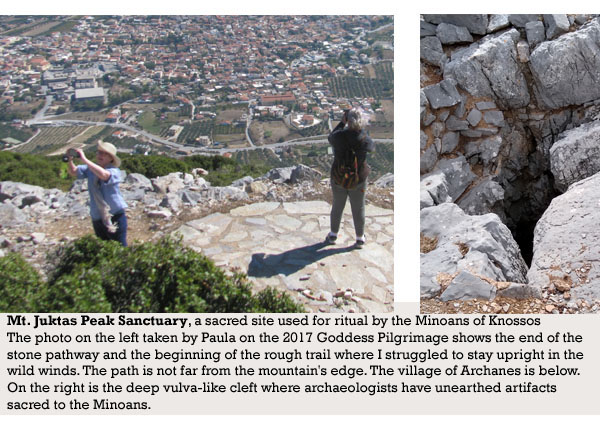
What do a bunch of feminist women do while riding a tour bus around the Mediterranean island of Crete? If they are on the Goddess Pilgrimage started by Carol Christ and continued by Laura Shannon, they sing songs honoring the Goddess. The song that drew me most from the first time I heard it on the fall 2022 Goddess Pilgrimage was “Mountain Mother.” Not surprising since the rocky, sparsely vegetated, yet hauntingly beautiful mountains of Crete surrounded us much of the time as our trusty bus wound its way up and down and around the island.

Continue reading “Return to Mountain Mother[1] by Jeanne F. Neath”