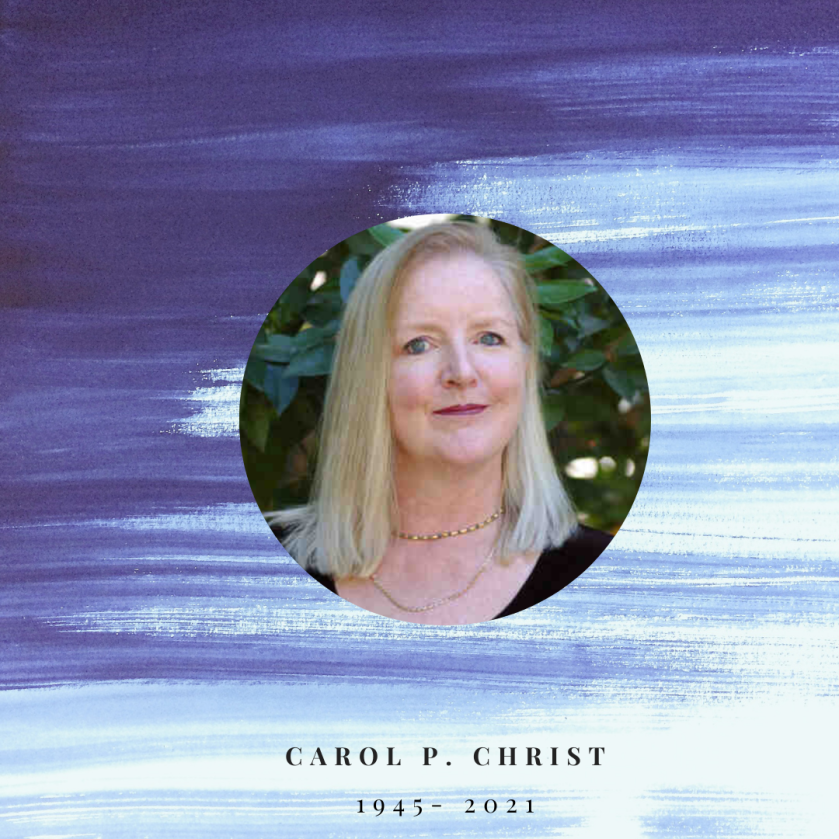
Legacy of Carol P. Christ: Life in the Tenements

This was originally posted on January 2, 2017

During my ancestor research, I have seen the word “tenement”—with the implication of poverty, filth, and disease–handwritten onto more than one death certificate. Last month, I visited the Lower East Side where my Irish 2x great-grandmother Annie Corliss lived in the tenements near the docks with her husband the Scottish seaman James Inglis and their nine children.

Though the tenements where they lived in the vicinity of Cherry Street a block from the East River have been torn down to build public housing, my newly discovered third cousin Hattie Murphy still lives in the area. She arranged for me to visit the “Irish Outsiders” house in the Tenement Museum on nearby Orchard Street in order to gain an understanding the conditions of life in the tenements in the middle of the nineteenth century.

Continue reading “Legacy of Carol P. Christ: Life in the Tenements”

Crete as the cradle of a culture of peace – Part Two by Laura Shannon

Part One of this article spoke of our collective yearning for peace, and the difficulty of imagining a peaceful world when we are taught to believe that “patriarchy and with it war and domination are universal and inevitable.” (Carol Christ, 2015)

But this is a myth. The peaceful civilisation of Bronze Age Crete lasted two thousand years with no sign of violence, slavery, or war. Most likely matriarchal, matrifocal, and matrilineal, ancient Crete embodied the final flowering of Old Europe. Art and archaeology reveal a life-loving people who honoured the earth, the Goddess, and nature, particularly mountains, caves, and trees. Key values and symbols of this culture of peace survive today in Cretan women’s dances and folk arts including pottery, textiles, baskets, and bread.

Continue reading “Crete as the cradle of a culture of peace – Part Two by Laura Shannon”

I Am Kaleidoscope by Janet Maika’i Rudolph

Art work designed by Jaysen Waller – http://www.jaysenwaller.com/

FAR was founded in June 2011 by four women, Xochitl Alvizo, Cynthia Garrity-Bond, Caroline Kline, and Gina Messina.  They are and have been revolutionary thinkers in the world of feminism. Below is a portion of what they write on our “About” page

“There is no single definition of feminism and this is a place of many voices. Important work in women’s studies in religion continues as more attention is paid to the intersection between gender, race, culture, and sexual identity, within feminism and religion.” They go on to say: “We establish this blog in the hope that feminist scholars of religion — and all who are interested in these issues — will use this forum to share their ideas, insights, and experiences, so that this community of thinkers will be nurtured as we explore diverse and new directions.”

Continue reading “I Am Kaleidoscope by Janet Maika’i Rudolph”

Legacy of Carol P. Christ: Essentialism Reconsidered

This was originally posted on September 15, 2014

In my Ecofeminism class we have been discussing essentialism because some feminists have alleged that other feminists, particularly ecofeminists and Goddess feminists, are “essentialists.” They argue that essentialist views reinforce traditional stereotypes including those that designate men as rational and women as emotional. I too find essentialism problematic, but I do not agree that Goddess feminism and ecofeminism are intrinsically essentialist.

Goddess feminists and ecofeminists criticize classical dualism: the traditions of thinking that value reason over emotion and feeling, male over female, man over nature. We argued that the western rational tradition sowed the seeds of the environmental crisis when it separated “man” from “nature.”

Goddess feminists and ecofeminists affirm the connections between women and nature in an environmental worldview that acknowledges the interconnection of all beings in the web of life.

Continue reading “Legacy of Carol P. Christ: Essentialism Reconsidered”

Legacy of Carol P. Christ: The Sacred Feminine or Goddess Feminism?

This was originally posted on January 25, 2016

Carol Molivos by Andrea Sarris 2

In recent years “the Sacred Feminine” has become interchangeable with (for some) and preferable to (for others) “Goddess” and “Goddess feminism.” The terms Goddess and feminism, it is sometimes argued, raise hackles: Is Goddess to replace God? And if so why? Does feminism imply an aggressive stance? And if so, against whom or what?

In contrast, the term “sacred feminine” (with or without caps) feels warm and fuzzy, implying love, care, and concern without invoking the G word or even the M(other) word–about which some people have mixed feelings. Advocates of the sacred feminine stand against no one, for men have their “sacred feminine” sides, while women have their “sacred masculine” sides as well.

Nothing lost, and much to be gained. Right? Wrong.

Continue reading “Legacy of Carol P. Christ: The Sacred Feminine or Goddess Feminism?”

Legacy of Carol P. Christ: Sacred Marriage or Unholy Cover-up?

This was originally posted on November 7, 2016

Many women are drawn to the image of the Sacred Marriage—perhaps especially those raised in Roman Catholic or Protestant traditions where sex is viewed as necessary for procreation but nothing more, and who learn that the naked female body as symbolized by Eve is the source of sin and evil. In this context, the positive valuing of sexuality and the female body found in symbols of the Sacred Marriage can feel and even be liberating.

Jungians have claimed that the Sacred Marriage is an archetype of the wedding between the “masculine” and the “feminine.” Many women have been attracted to this idea as well. It “softens” the radical feminist critique of patriarchy and male dominance. Rather than “castrating” the “phallocracy” as Mary Daly urged, we can think in terms of the “marriage” of qualities traditionally associated with male and female roles. Women, it is said, can use a good dose of ego and assertiveness traditionally associated with the masculine, while men need to have their dominating rational egos tempered by feminine qualities like care and compassion.

Continue reading “Legacy of Carol P. Christ: Sacred Marriage or Unholy Cover-up?”

Legacy of Carol P. Christ: Transcendence, Immanence, and the Sixth Great Extinction

This was originally posted August 4, 2014

In my recent blog “The Flourishing of Life and Feminist Theology” I discussed Grace Jantzen’s view that theology should focus on “natality” or birth and life, rather than life after death or life apart from this world. This week Tikkun magazine published its summer issue with a feature called “Thinking Anew about God.” In it two male thinkers, one Buddhist and one Christian, argue for a similar turn toward the world in their traditions. Their calls for religions to focus on this world were published the same week scientists warned that the world stands on the brink of the sixth great extinction.

I have come to believe that any religion espousing cosmological dualism (devaluing this world in favor of a superior reality such as heaven) and individual salvation (the idea that what ultimately happens to me is disconnected from what ultimately happens to you) is contributing to our world’s problems rather than offering a solution. … [Religions should] stop emphasizing the hereafter and focus instead on how to overcome the illusion that we are separate from this precious, endangered earth. –David Loy, Buddhist, writing in Tikkun Summer 2014

Continue reading “Legacy of Carol P. Christ: Transcendence, Immanence, and the Sixth Great Extinction”

Legacy of Carol P. Christ: The Flourishing of Life and Feminist Theology

This was originally posted on July 28, 2014

I first encountered the image and concept of “flourishing” in Grace M. Jatzen’s feminist philosophy of religion, Becoming Divine. For Jantzen “flourishing” is a symbol of a theology of “natality” or birth and life, which she contrasts to the focus on death and life after death in traditional Christian theologies.

Jantzen argues that the focus on death and life after death is a rejection of birth. Birth is rejected because birth through a body into a body implies finitude. Birth ends in death.  Jantzen argues that embracing natality means embracing finitude and death.

Continue reading “Legacy of Carol P. Christ: The Flourishing of Life and Feminist Theology”

Legacy of Carol P. Christ: TWO TORTOISES IN THE WEB OF LIFE

This was originally posted on March 14, 2014

The Gods made only one creature like them—man.  Greek TV documentary

The sight of a reptile or an amphibian usually provokes, at the very least, a feeling of repulsion in most people. Natural History of Lesbos

testudo marginata face

In the past days and weeks thetwo tortoises with whom I share my garden have woken up from a long winter’s sleep.  Henry, testudo marginata, has been up for a while now.  More than a month ago when I was cutting back and weeding in the area of the garden where he had been sleeping, Henry roused himself to sit in the sun near me for a few hours each day before creeping back under a shrub.  At first I thought I had disturbed him, but when he came back out day after day while I worked, I began to wonder if he was coming out to say hello.

Continue reading “Legacy of Carol P. Christ: TWO TORTOISES IN THE WEB OF LIFE”

From the Archives: The Three Mothers: Feminine Elements and the Early Kabbalah by Jill Hammer

This was originally posted May 22, 2108

For over ten years, I’ve been teaching a work of early Jewish mysticism known as Sefer Yetzirah, or the Book of Creation.  There are widely differing opinions on the book’s origin and dating, but many scholars date it to the sixth century.  Its core concept can be described simply: the Divine used the Hebrew letters as metaphysical channels to create the different aspects of reality: the directions, the elements, the planets, the months of the year, and so forth.  Each letter is a channel by which God creates a unique form or entity, and meditating on the letters provides us with a connection to divine creative power. In its discussion of the letters, Sefer Yetzirah shows a strong connection to feminine imagery, and thus helps the later kabbalah develop its own link to the feminine.

Continue reading “From the Archives: The Three Mothers: Feminine Elements and the Early Kabbalah by Jill Hammer”