Poppaea Sabina as portrayed on a Roman coin minted 62-65 CE.
As a follow up to my last post on Poppaea Sabina, I want to focus on Poppaea’s interest in astrology, one of the few facts about her that can be confirmed independently of the hostile (and hence questionable) depiction of her by the Roman historian Tacitus, who, apart from Josephus, is the primary source of information about her. Indeed, she may have practiced astrology, for as Empress she was given a celestial sphere on her birthday by the poet Leonidas, who said it was a gift “worthy . . . of her learning.” Another possible indication of Poppaea’s special interest in astrology is the fact that a large banquet hall in the Roman imperial mansion built during Nero’s reign (recently discovered), probably conceived of and designed before Poppaea’s death (perhaps with her input), had some rotational feature, effectively making it a planetarium.
Though Tacitus thus would appear to be accurate on Poppaea’s interest in astrology, there is good reason to be wary of sharing his negative opinion about it. He never expressly explains himself on the issue, but it is not hard to spot what bothered Tacitus about astrology and hence Poppaea. Famous for his appreciation of freedom of speech, Tacitus wistfully looked back on a time when that was a freedom enjoyed only by men. By contrast, ancient astrology was but one part of a comprehensive philosophy of nature that viewed the entire cosmos as governed equally by male–and female–powers. Continue reading “Astrology and Its Relevance to the Jewish (and Christian) Belief of Poppaea by Stuart Dean”
Marjorie Suchocki says that feminist theology needs a metaphysics, a coherent world view that can hold together what we might otherwise be seen as a series of unrelated assertions made by feminists. Metaphysics is one of those terms that make most people cringe. If they have any idea at all what the word means, they might categorize metaphysics as the most abstract and out of touch with reality aspect of philosophy. In the Platonic tradition where ideas precede reality, metaphysical truths are revealed by rational contemplation of transcendent principles that precede the world. “I think, therefore, I am,” Descartes said. This notion of metaphysics makes me cringe too.
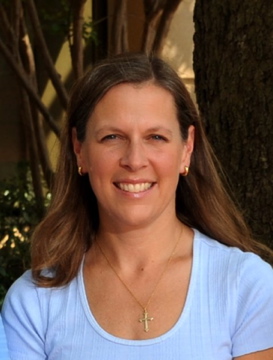
Feeling safe again is often the healing and elusive aspiration of a person like me.
I have been living with the deep and cellular residuum of sexual trauma for most of my life—over thirty of my going-on forty-six years.
For many years, the grief and shame of losing my innocence cultivated an intense orientation to life’s doing. Safety for me back then was activity, noise, frenetic schedules, and a constant soundtrack to my life that meant I never had to be quiet with myself. Safety was in the predictable metrics of success that I could use to measure my self worth. I never had to stop and admit that I didn’t feel safe, ever.
I got a lot done all those frenetic years and my diligent efforts were affirmed with everything from scholarships to awards to pay raises.
But, trauma does not allow itself to be ignored. It demands attention. Its cellular ghosts haunt their host. They must be acknowledged, sometimes cast out, sometimes befriended, other times adapted or transformed. My trauma is tethered to the violence of a dangerous world, a world that knows no boundaries when it comes to annihilating innocence.
On January 26, 2015 Alexis Tsipras will be in the process of forming a new anti-austerity government in Greece. Some believe this will be a new beginning not only for Greece, but for the world–if others follow the Greeks in resisting the domination of their economies by the international monetary interests that represent the 1%.
The bondholders and the international press tend to portray the Greek economic crisis as a morality play in which foolish Greeks borrowed too much and must suffer the consequences to pay back their loans. If Greece were a lazy teenager appearing on Judge Judy, tough love might be the answer.
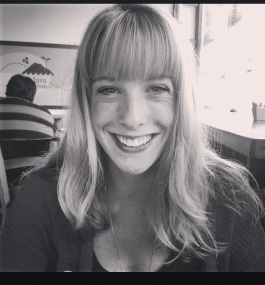
When Kate Kelly faced excommunication from the Church of Jesus Christ of Latter-Day Saints in June 2014, much of the world took notice. The D.C.-based human rights lawyer garnered wide-spread attention for founding Ordain Women, a movement to push for advocacy of female ordination in her Mormon faith. A ripple of press from The New York Times to The Huffington Post chronicled Kelly’s waves of activism and its subsequent consequences: excommunication in absentia on June 23 by her former church leaders in Virginia.
When I decided to become a career woman, I thought I had no role models in my family. My parents (who sometimes considered me the black sheep) would have agreed. Imagine my surprise to find a matriarchal family and three generations of businesswomen women among my Swedish family in Kansas City!
My great-aunt Edith who was a stenographer, secretary, and notary public was a fixture at family gatherings. When I knew her, she was living in California with her two brothers who also were not married. Until their father died, they had lived their whole lives in the family home in Kansas City. I sensed that though my family respected my uncles, they felt sorry for Aunt Edith. It certainly was never suggested to me that instead of getting married and being supported by a husband, I could become a self-supporting working woman like my aunt. Continue reading “Strong Female Role Models among Swedish Immigrant Ancestors in Kansas City by Carol P. Christ”
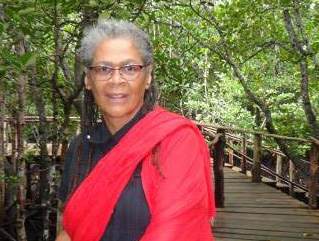
It has been a marvelous experience for me, these past few years, to be connected with this community Feminism and Religion. Still, sometimes even good things have to come to an end. I’ve decided to discontinue my regular blog contributions. The organizers have graciously allowed me the possibility to do a guest blog in the future; so I may yet contribute.
Here’s the thing: I don’t think folks who read this blog know fully just what goes on—seemingly seamlessly in the background. So before I go, let me expose how this has been for me, to give greater credibility to my first sentence: it has been a marvelous experience.
I was asked to start blogging with FAR while living in another country, another time zone, and inconsistent internet access. Truth be told, inconsistency characterizes my life-work since I travel extensively and cannot predict the regularity of the internet in some of the parts of the world where I might be located. Still I made the commitment to blog twice a month, every first and third week. Continue reading “Good Things Come to an End by amina wadud”
“So, when we in the West talk about religion as the cause of this violence, how much are we letting ourselves off the hook, and using religion as a way to ignore our role in the roots of this violence?” Karen Armstrong, author of Fields of Blood This statement was made by scholar of religions Karen Armstrong in an interview in Salon magazine in response to characterizations of Islam as a violent religion by Bill Maher and others. Speaking in the context of the rise of anti-Islamist prejudice in Europe, Armstrong said that Maher’s demonization of “the other” was the kind of talk that could lead us back to the concentration camps.
Two New Years’ Eves ago, I came to the realization that I did not need to watch the television countdown to ring in midnight and begin the New Year. I had always watched the show with my family as a child, and even while it made me feel curiously bad, I still somehow felt like it was an obligatory component of the day, right up there with kisses, well wishes, blowers, horns, and sparkling wine. Since we seldom went to an actual New Year’s party, it was a way of connecting with the world. I gave it up, though, when I ultimately deemed the musical guests and hosts to be unviewable.
I was not looking to make a new tradition per se that year when I decided to light a hunk of myrrh in the fireplace. The myrrh had come to me as a gift in a Three Kings Christmas set. It made a pretty decent blaze because I had placed it atop a bed of shallow candle wax from an old votive candle. Let me say, while it smelled lovely and burned a long time, I do not recommend doing this – the fire became alarmingly vigorous for a little while. Anyway, I spread a cloth on the floor and set out some food, calling my family together to sit in a circle by the hearth. We dimmed the lights, and by fire I read the Epic of Gilgamesh (with some tasteful PG 13 edits) from 11:00 pm until 1:00 am. I had been reading great epics to the kids, and it seemed somehow appropriate to return to Babylon that year. We did not mark the New Year at a precise moment but rather sailed into it on the tides of an ancient tale. It was a revelation to us all, mostly because we were reclaiming that night from the media usurpers who had defined it for us for most of our lives.
This year, we intended to do something similar until we ended up throwing an impromptu party for some friends and their children. I knew they would all have limited interest in my second annual fire reading, so we just fed them and eventually counted down the final moments of 2014 on my watch. But, after they left, we returned to the myth, this time reading the Babylonian Epic of Creation. We hit the mark, as the story itself was ritually performed at each New Year. It carried us deep into the first day of 2015 and was also a great revelation. Continue reading “Stories for (Re)creation in the New Year by Natalie Weaver”
I wish the analysis that accompanies this quote had been mine, but maybe I should be glad that it comes from an insightful young man who goes by the name liamcdg. He argues that the real beef the New York police have with Bill de Blasio is his challenge to their definition of masculinity as dominance, or shall we say white male dominance.
As noted by liamcdg, in the NYPD version of reality, parents should teach children to comply “to comply with New York City police officers even if they think it’s unjust.” In terms of competing definitions of masculinity, the NYPD version is that men in power should be respected simply in virtue of their position, even if they are acting or appearing to act unjustly. In other words we should respect the powerful because they are powerful.
To be empathetic is to be able to put yourself in another person’s place, and in its literal meaning, to feel the feelings of another. In the recent public conversations about race and the police, both Obama and de Blasio have invited white Americans to put themselves in the place of a black man stopped by the police for little or no reason and to ask themselves how they would feel in that situation.
In so doing, liamcdg asserts, Obama and de Blasio were not only trying to explain the feelings of those on the other side of the racial divide, but they were also redefining masculinity. We all know that according to traditional stereotypes, the realm of feeling is the realm of women. And of course we also know that real men don’t cry. Yet what is happening to black men is enough to make anyone who feels their feelings want to cry.
The conflicts between de Blasio and the police and between Obama and a large segment of the older white male voting public may have as much to do with the challenge to white male privilege as it has to do with any particular event or issue. White male privilege involves a complex interconnection of race and sex. It is about the power that comes or is expected to come to one simply by virtue of being born into a white male body.
Forty years ago, inspired by the feminist movement, men began to speak about redefining masculinity. This was easier said than done. It is so easy to accuse men who criticize male power as domination of being “sissies,” “girls,” or “gay.” Even men who might want to discuss the subject may be afraid of being labeled.
I say the fact that the NYPD is turning its back on de Blasio is one measure of how far we have come. I suggest that the NYPD recognizes that a different definition of masculinity and male power is being born right before their eyes. And it is this that they cannot bear to see.
We have been taught that feeling and feeling the feelings of others belongs in the feminine realm. What if it doesn’t? What if in the end male power and female power are much the same? And what if they both begin with empathy?
What if Freud got it wrong? What if males do not have to differentiate themselves from their mothers by becoming “not like” women and girls? What if masculinity and femininity are not polar opposites? What if all any of us has to do is to learn to embody the qualities of those who nurture us?
We are beginning to glimpse a different world. Any thoughts on how to bring the NYPD and other older white males into a new world along with us?



 Feeling safe again is often the healing and elusive aspiration of a person like me.
 When Kate Kelly faced excommunication from the Church of Jesus Christ of Latter-Day Saints in June 2014, much of the world took notice. The D.C.-based human rights lawyer garnered wide-spread attention for founding
  It has been a marvelous experience for me, these past few years, to be connected with this community Feminism and Religion. Still, sometimes even good things have to come to an end. I’ve decided to discontinue my regular blog contributions. The organizers have graciously allowed me the possibility to do a guest blog in the future; so I may yet contribute.
 Two New Years’ Eves ago, I came to the realization that I did not need to watch the television countdown to ring in
