Biblical Poetry, 5th Installment

This is the 5th in a series of work I have been doing to translate passages of the bible into poetry that strips out the patriarchal overlays. You can read the previous posts.

In this installment I am grouping together some passages that deal with vibrational energy and its role in creation. We humans often express sacred vibration as song or chant. When we get into the vibrational flow they are truly uplifting. In the translations below, I have kept two of the words in Hebrew because of their wonderful vibrational essences:

Continue reading “Biblical Poetry, 5th Installment”

Bill Cosby and Our Wounded Hearts by Janet MaiKa’i Rudolph

This blogpost is a rewrite and an update from one I wrote on Jan 26, 2020 (I’m Getting Triggered by the Impeachment Trial and I Bet I am Not Alone). I was writing about The Former Guy’s 2nd impeachment trial which rattled my bones and hurt my heart. How often have we seen angry men (and sometimes women) abusing women, abusing the earth, abusing the vulnerable, abusing immigrants, abusing power? And yet the pattern never seems to end. In many cases, they not only get away with it, it is actually celebrated.  

In that 2020 blogpost I included Bill Cosby’s case as a success story. Look how hard it had been, how many years, how many accusers it took for justice to give us the illusion of being meted out. And now pulled away.

In January 2020 there was a blunder (or so they called it) at the National Archives’ in their exhibit titled “Rightfully Hers.” They put up an image of the 2017 Women’s March and blurred out the protest signs. Oh, the irony to blur out women’s voices in an exhibit named Rightfully Hers. Yes, they apologized. But they had to get caught first. 

Continue reading “Bill Cosby and Our Wounded Hearts by Janet MaiKa’i Rudolph”

Deluge by Sara Wright

It’s time to submit another post to FAR, the only blog site I follow, and a place where I have found genuine support and even a sense of community, which for me is a great gift. Mostly, I experience myself as an outsider.

Lately though, I have found myself struggling to stay with  feminist issues. As a naturalist and lover of the earth I am continuously overwhelmed by more bad news and the apparent indifference of so many to what’s happening to people and this planet. Writers on this blog do address how these times are affecting women but less frequently how our issues are intimately related to what’s happening to the earth. Personally I am obsessed, and can’t seem to focus or write about any topic that doesn’t address these issues or how I feel about what’s happening here – climate change is catastrophic, as is the loss of non – human species. The poem/prose that follows is the kind of writing that rises out of some dark place inside me where much of time I feel like I am drowning.

Continue reading “Deluge by Sara Wright”

Biblical Poetry, Continued by Janet Maika’i Rudolph

This is the 4th in a series of work I have been doing to translate passages of the bible into poetry that strips out the patriarchal overlays. You can read the previous ones here: Part 1, Part 2, and Part 3.

In this installment I have picked out some passages I really like but that I feel their power and beauty have been deeply hidden. I seek to reveal those hidden wisdoms.

To review; my usage of the 2 main names of divinity:

YHVH or LORD, I translate as Vibration.Being

EL or god, I translate as All-Potential Powers.

I discuss my reasons for these translations in my prior posts referenced above.

Genesis 3:6

And when the woman saw that the tree was good for food,
 and that it was pleasant to the eyes,
and a tree to be desired to make one wise,
she took of the fruit thereof, and did eat,
and gave also unto her husband with her; and he did eat.
KJV (King James Version)

and the woman saw that the function of the tree
is for nourishment and that he is yearning to the eyes
and the tree was a craving to make calculations
and she took from his produce and she ate
and she gave also to the man with her and he ate
Benner Mechanical Translation[i]

When the woman saw the tree, she recognized herself
She recognized and remembered beauty and wisdom
She took its seeds within her in knowing wholeness
She gifted its seeds to her husband in knowing wholeness
MPV (Mystic Pagan Version – my own translations)

Note for Genesis 3:6 – the word for “food” in the KJV version of this passage is “maakal” (Strong’s 3978). The word used for to eat is “akal” (Strong’s 398). Both are built on the root word “kl” which means complete or whole and traditionally refers to how food or nourishment makes us whole.[ii] I would add that in the context of spirit, it is that essence or element that we fill ourselves with to achieve a sense of wholeness.  

Genesis 49:25

Even by the God of thy father,
who shall help thee;
and by the Almighty, who shall bless thee with blessings of heaven above,
blessings of the deep that lieth under,
blessings of the breasts, and of the womb:
KJV

from the mighty one of your father,
he will help you,
and with Shaddai [my breasts] he will respect you,
presents of the sky from upon
the presents of the deep sea stretching our underneath
presents of the breasts and bowels.
Benner

The All-Potential Powers of your ancestors
Who watches compassionately over you
With nourishment from the dripping milk of the cosmos
And blessings from the misty cauldrons of the goddess Tiamat
Blessings of the breast, and the loving womb
MPV

Notes on Genesis 49:25: this passage had to have been a very old pre-biblical blessing. We don’t often see blessings that are clearly given by female divinity figures, or in this case, a divinity that has breasts and womb. Even in the conservative, male-centric King James Version the blessing is of the breast and the womb. The word for breasts is “shad.” To take this theme a step further, the phrase El Shaddai or Shaddai appears 48 times in the Bible. In English, El Shaddai is usually translated as “God Almighty” and Shaddai as “Almighty.” Sometimes they are translated as “God, the One of the Mountain.”[iii] Both are almost always referred to in scholarly discussions with the pronoun “he.” 

I have put the following two passages together because they speak to the same theme. One is a Psalm and the other a Proverb. I really like them because they both speak to the condition of our hearts. As some of you know I am an alaka’i of Aloha International. That is a spiritual guide of Huna or Hawaiian Adventure Shamanism. I love the lessons of Huna which foremost and foundationally remind us to keep a loving and open heart. Aloha not only means hello and good-bye, it means “the breath [ha] we all share,” and it means LOVE. Picture this, the Hawaiian people greet and part from each other which a statement of connection and love. The first principle of Huna is “the world is what you think it is.” The lesson behind this is that what is in our hearts will shape our experiences and ultimately our world. I believe that this is the lesson behind these biblical passages. (I have also included the New International Version for Proverb 4:23 because I think it is particularly beautiful.)

Psalm 37:4

Delight thyself also in the LORD;
and he shall give thee the desires of thine heart.
KJV

Cherish thyself in harmony with Vibration.Being
And gifts will be returned as per the radiance of thy heart.
MPV 

Proverbs 4:23

Keep your heart with all diligence,
For out of it spring the issues of life. 
KJV

Above all else, guard your heart,
For everything you do flows from it.
 (New International Version)

Treasure your heart in lovingkindness,
For it is the wellspring of your life.

MPV 


[i] https://www.ancient-hebrew.org

[ii] Benner, Lexicon; 146-147.

[iii] The Jewish Study Bible; 37.

Bio

Janet Maika’i Rudolph. “IT’S ALL ABOUT THE QUEST.” I have walked the spirit path for over 25 years traveling to sacred sites around the world including Israel to do an Ulpan (Hebrew language studies while working on a Kibbutz), Eleusis and Delphi in Greece, Avebury and Glastonbury in England, Brodgar in Scotland, Machu Picchu in Peru, Teotihuacan in Mexico, and Giza in Egypt. Within these travels, I have participated in numerous shamanic rites and rituals, attended a mystery school based on the ancient Greek model, and studied with shamans around the world. I am twice initiated. The first as a shaman practitioner of a pathway known as Divine Humanity. The second ordination in 2016 was as an Alaka’i (a Hawaiian spiritual guide with Aloha International). I have written three books: When Moses Was a ShamanWhen Eve Was a Goddess, (now available in Spanish, Cuando Eva era una Diosa), and One Gods. In Ardor and Adventure, Janet.now available in Spanish. Cuando Eva era una Diosa

More Biblical Poetry by Janet Maika’i Rudolph


This is the 3rd in a series of Biblical poetry where I am “translating” verses of the Bible. You can read the first two here: Biblical Poetry and Biblical Poetry, Part 2.

One of my primary purposes of doing this work is to strip away patriarchal veneers that have been layered upon original teachings. I reach into ancient pagan knowledge in order to reclaim what I believe to have been lost.

Below is each verse in 3 versions. First is the King James Version (KJV) for familiarity, the second is Jeff Benner’s Mechanical Translation (Benner) which uses a consistent translation for each word. I use his translations to get a better sense of how the words originally fit together.[i]

Continue reading “More Biblical Poetry by Janet Maika’i Rudolph”

Teacher Appreciation Week & Appreciating Teaching by Sara Frykenberg

Part of discovering my love for teaching and moving through my anxiety involved reconsidering my “ideals” of teaching, which were numerous and high minded.

I always wanted to be a teacher. Sure, I had other career dreams as a child too. I wanted to be a model, because I wanted to be pretty like a model. I wanted to be a flying missionary to please my father—you see, it was not quite enough just to do missions. I also needed “save” (pun intended) people with my daring airplane recuses. And in moments of practical mindedness, I thought I should definitely be a “cleaning lady” (aka a housekeeper), because I was very good at cleaning, which was a way of life and survival in my home. But “teacher” was a persistent calling, so I followed in my teacher-mother’s footsteps AND tried to satisfy paternal aggrandizement by becoming a professor.

It occurred to me recently that I have actually been teaching now for nine years. I’ve also discovered in the last few years that I like teaching. And no, I didn’t always know this. I always wanted to like teaching; and sometimes I was sure that I did indeed like teaching. But non-teaching associated trauma during my early career and my social anxiety also sometimes made (and makes) the process excruciating. (Neo-liberal and late-capitalist academic practice, politics and policy don’t help either.) Part of discovering my love for teaching and moving through my anxiety involved reconsidering my “ideals” of teaching, which were numerous and high minded.

Continue reading “Teacher Appreciation Week & Appreciating Teaching by Sara Frykenberg”

What Does a Woman Want? by Esther Nelson


Sigmund Freud (1856–1939), well-known Austrian neurologist and founder of psychoanalysis, “…said once to Marie Bonaparte: ‘The great question that has never been answered, and which I have not yet been able to answer, despite my thirty years of research into the feminine soul is, ‘What does a woman want?’” (“Was will das Weib?”) ― Sigmund Freud: Life and Work (Hogarth Press, 1953) by Ernest Jones.


I don’t believe Freud ever answered the question posed here satisfactorily.  Women’s desire—even today—hovers in the taboo category.  After all, in our hierarchal, patriarchal society women’s wants/desires are mediated through social structures and institutions that favor men.  It’s easy to overlook since we all are spawned and then swim in those patriarchal waters.

Continue reading “What Does a Woman Want? by Esther Nelson”

Biblical Poetry, Part 2 by Janet MaiKa’i Rudolph

Last month, I wrote about a new project I have been playing with which is to re-write biblical verses as spiritual poetry rather than follow along with stricter translations (although truth be told, my translations have never been strict). My main goal is to strip away the layers of patriarchy that grew up around universal, earth-based, mystical lessons. In my last blogpost I wrote about why I translate El (god in English versions) as All-Potential Powers. You can read it here: https://feminismandreligion.com/2021/04/15/biblical-poetry-by-janet-maikai-rudolph/

I have written before about my translation of YHVH as mother/father creator. You can read that here: https://feminismandreligion.com/2019/03/05/eve-by-any-other-name-by-janet-rudolph/ 

YHVH, the sacred 4 letter tetragrammaton, is always translated as LORD in the bible. It is truly a wondrous name with many layers of meaning which the English one-word term LORD doesn’t capture. I find that the English translations of these two words – LORD and god – are dull and without sacred energetic aspects. In ancient times, the words used to depict divinity in general, and YHVH specifically, were meant to be intoned and chanted.

Continue reading “Biblical Poetry, Part 2 by Janet MaiKa’i Rudolph”

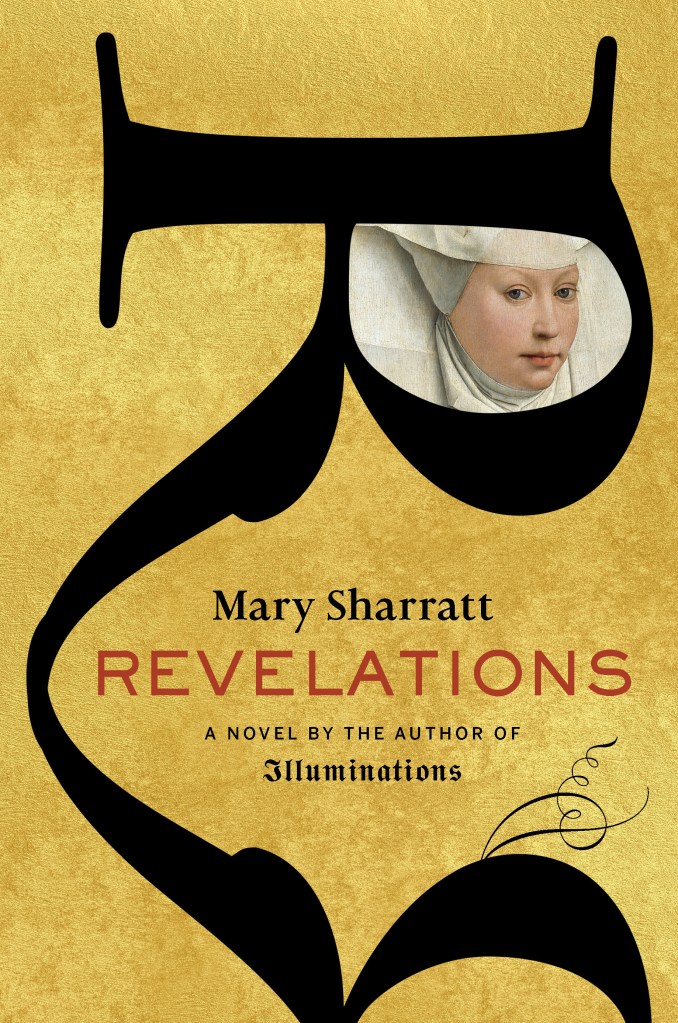
REVELATIONS: The Mysticism of Julian of Norwich and Margery Kempe

My new novel REVELATIONS is drawn from the lives of two medieval mystics who changed history—Julian of Norwich and Margery Kempe, two very different women whose paths converged and who, I believe, have much to teach us today.

Women’s spiritual experience is a theme that keeps coming up in my novels. Perhaps some of you have read my novel ILLUMINATIONS, about the visionary abbess, composer and polymath, Hildegard von Bingen.

As a spiritual person myself, I’ve always found it frustrating how women have been side-lined and marginalized in every established religion in the world. Yet from time out of mind, mystic and visionary women of all faith traditions have offered radical resistance. They have subverted institutional patriarchal religion from within and found their own direct path to the divine by plunging into the deep mysteries of the soul on a path of inner revelation. Julian of Norwich called God Mother and devoted her life to writing about the Motherhood of God. Similarly, Hildegard of Bingen wrote about her visions of the Feminine Divine. This isn’t a modern feminist interpretation. It’s right there in the original texts.

Like us today, Julian of Norwich and Margery Kempe lived in a time of pandemic and social upheaval, yet both women bore witness to the divine promise that ultimately all shall be well.

Continue reading “REVELATIONS: The Mysticism of Julian of Norwich and Margery Kempe”

Feeling Weary about US Politics by Carol P. Christ

Carol by Honegger cropped

Like many of you, I was anxious and angry during most of the Trump administration years. I watched MSNBC avidly, hoping against hope that a) he could be stopped or b) he would be impeached. Now that he is gone, it would be nice to be able to take a “breather” (I wasn’t breathing regularly during the Trump years), a break from thinking about US politics all the time, but sadly, the political situation in the United States continues to require attention.

President Biden has pleasantly surprised me with his progressive domestic agenda and his decision to remove troops from the heretofore endless war in Afghanistan. Nonetheless, he has proposed an increase in the military budget. Dwight David Eisenhower, who warned of the increasing power of “the military-industrial complex” as he left office, must be turning over in his grave.

Most worrying of all is the fact that so many Americans voted for Donald Trump, believe that the election was stolen from him, and support white supremacy, while the Republican party refuses to deviate from the Trumpian worldview.

As if it could not be any worse, police killings of innocent black men by white officers and mass killings by young white men with easy access to automatic weapons are proliferating. Moreover, Republican-inspired voting restriction legislation is once again threatening the foundations of our democracy. Continue reading “Feeling Weary about US Politics by Carol P. Christ”