
Suppose, suppose just once, once in all these centuries, the slippery gods keep their word and Achilles is granted eternal glory for his early death under the walls of Troy. . .? What will they make of us, the people of those unimaginably distant times? One thing I do know: they won’t want the brutal reality of conquest and slavery. They won’t want to be told about the massacres of men and boys, the enslavement of women and girls. They won’t want to know that we were living in a rape camp. (324)
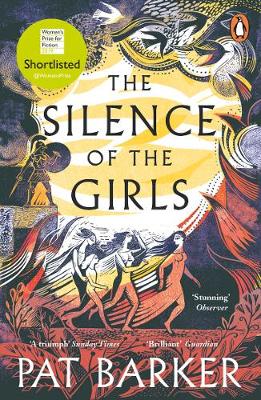
In The Silence of the Girls Pat Barker retells the story of the siege of Troy from the perspective of Breseis, a captured Trojan princess who became the slave and concubine of Achilles and Agamemnon. She was among the “spoils of war” allotted to the “great heroes” to “honor” their success as killers in war. Breseis does not tell her story of terror in The Iliad, but despite her not speaking, her story and that of the other captured and raped women—many of whom fared much worse that she did–is there is plain sight.
The problem is not that we who have read The Iliad don’t know these women were living in a rape camp. The problem is not that we have read The Iliad do not know that the heroes of the Trojan war were awarded women and loot as a reward for good fighting. Nor is the problem that we do not know that in the times of the Trojan war a man’s “honor” was everything to him and that it was defined by the prizes (women and loot) that he commanded, as well as by the respect of other men his deeds and property inspired.
When I first taught The Iliad in 1972, I was appalled by the women’s story. While my colleagues spoke of the “spear captive” who was the focus of the conflict between Achilles and Agamemnon, I urged them to call her a “rape victim.” Needless to say, I was summarily silenced. “That is not the point of the story,” I was told. “This is a story about men, their glorious deeds, and the honor due to warriors. This story speaks of the origin of culture.” A few guffaws signaling agreement followed. And that was the end of the discussion.
Although I enjoyed reading The Silence of the Girls, it did not provide me with any new insights into the horrors of war or the pervasiveness of rape in war. These were stories I already imagined. Indeed, rape, looting, slavery, and the spoils of war are at the heart of my “A New Definition of Patriarchy.”
The question I ask after reading The Silence of the Girls is how western culture managed to “silence” the women whose stories were there in plain sight for anyone who read The Iliad to see. Breseis was forced to have sex with and wait upon the man who killed her four brothers and her husband and who treated her as a possession not as a person. (283) She learned that when Achilles tired of her, she would probably be offered to his favorite men, and when they had their fill of her, she would be sent to live with the women who were at the mercy of the foot soldiers. “But that’s war,” (284) the Trojan king Priam replied when she asked him to help her escape.
There is more than one “conspiracy of silence” at play here. The conspiracy was compounded when the first person who questioned euphemisms such as “spear captive” was ridiculed and when every man or woman who recognized that rape is an ordinary part of war was told to keep silent about that. It was justified by the phrase “that’s war.”
If The Iliad is the origin of western culture, then western culture originated in a rape camp. Let’s not keep silent about that any longer! We must name the atrocities at the origins of so-called “culture” if we wish to create a more just world. These atrocities did not end with the Trojan war. They continue up to the present day. Ask any woman who has been in the path of invading armies. Ask the soldiers what they did and were permitted to do.
Refuse to accept the aeons-old cover-up: “that’s war.” If that is war, it is time to end war.
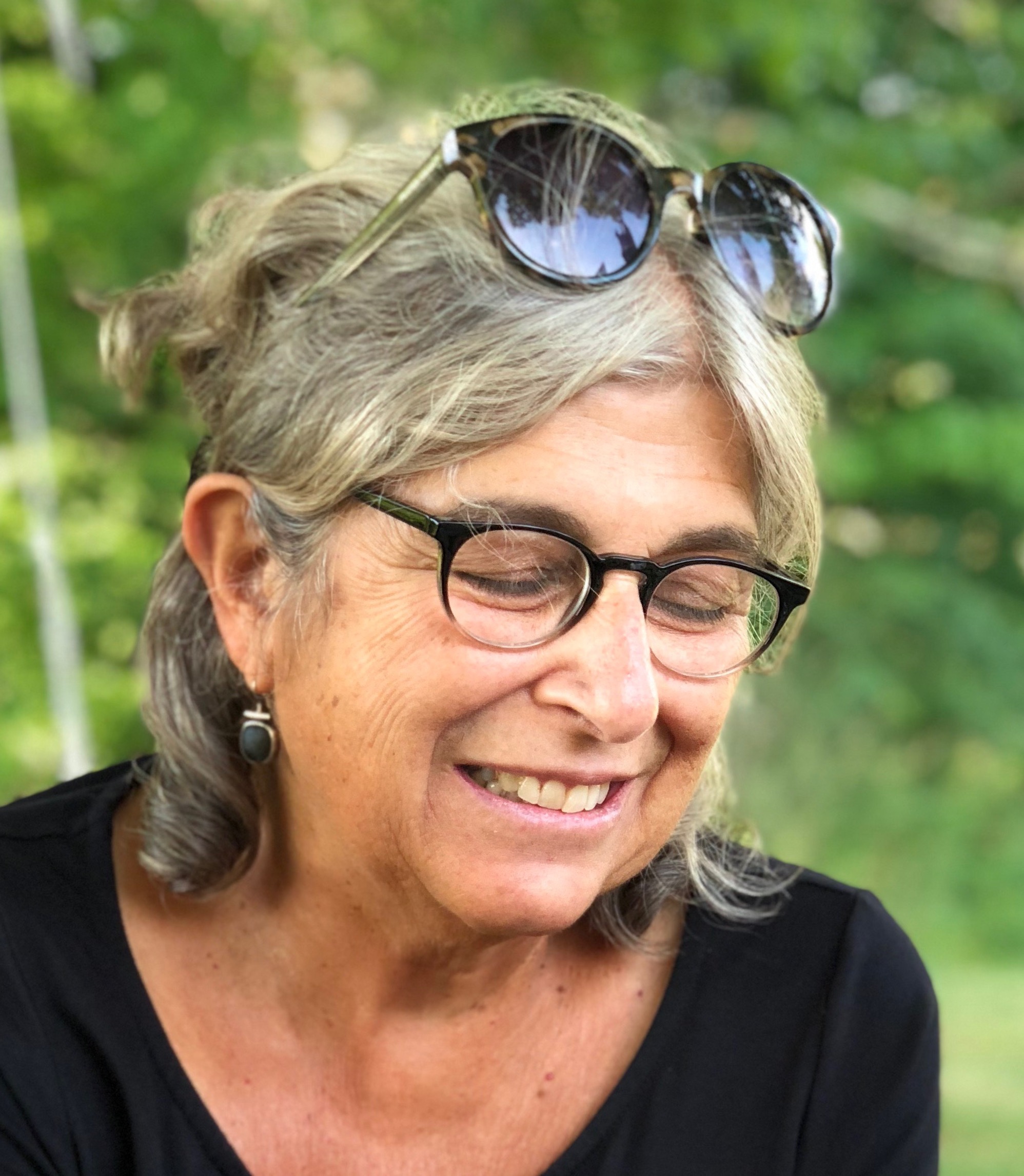
Carol P. Christ is an internationally known feminist and ecofeminist writer, activist, and educator who lives in Heraklion, Crete. Carol’s recent book is Goddess and God in the World: Conversations in Embodied Theology. Carol has been leading Goddess Pilgrimage to Crete for over twenty years: join her in Crete. Carol’s photo by Michael Honneger.
Listen to Carol’s a-mazing interview with Mary Hynes on CBC’s Tapestry recorded in conjunction with her keynote address to the Parliament of World’s Religions.


 Today a couple of friends and I were discussing egalitarian matriarchal values. I stated that in these societies there is no great difference in male and female personalities because both males and females are expected to be as kind and loving and generous as their own mothers. “Oh no I would not want that,” the other woman responded. “I want my man to be masculine–not wishy washy or namby pamby.” This woman soon acknowledged that she did not want her man to be dominant or aggressive. Yet her first reaction was to reject the idea that men might do well to emulate the values of their mothers.
 When I moved from Lesbos to Crete, I decided to take some 30 large and medium-sized handmade terra cotta pots acquired over the years along with me. As I had been living part-time in Crete for several years, most of the plants had died, but I managed to salvage freesia bulbs, chives, and cuttings from nutmeg-scented geraniums.
 How to come to terms with the most maligned or vulnerable aspect of ourselves—whether it be race, ethnicity, religion, gender, sexuality, physical ability, or any other trait—remains among the most pressing questions of our time. Should we try to “pass,” identifying with the oppressor and denying or rejecting who we are? Should we assume a militant, defiant stance, wreaking vengeance on those who have harmed us? Or can we find a way to embrace and affirm ourselves, neither denying nor reifying the pain of our individual and collective pasts? Can we love those who have harmed us?
 Shortly after Kamala Harris was announced as Joe Biden’s choice for his Vice Presidential running mate, a panel of black women were asked, “How do you feel right now?” “I feel heard” was the simple yet profound response of one of them. As is well-known to those who follow the polls, black women voters are the backbone of the Democratic party. In the primary election, black women in South Carolina delivered the Presidential nomination to Joe Biden. Yet all too often black women have felt that their votes were taken for granted.
 Friends, it has been a few months since I’ve posted in this community. I’m amazed at how much our world has changed since then. Here in the northern hemisphere, spring came and went. It felt like a tide of turmoil rolled in, leaving debris all along the shore and now we are trying to clean it up while keeping our eyes on the sea for more dangerous waves that are coming.
 Jill Hammer’s recent post on midrash surrounding
 Feminism and Religion