Women’s March 2019–Orange County, California! by Marie Cartier

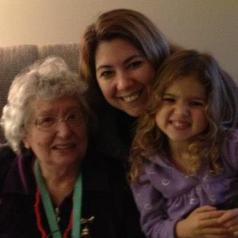
Author (Marie Cartier) pictured on right Photo by: Kimba Wild All other photos by the author.

As I have done in 2017 and 2018, I am showcasing photos of protest and resilience from The Women’s March, which began as a response to the “election” of 2016, and was a show of solidarity of women, especially in response to Trump’s remarks overheard from an Access Hollywood tape that he was entitled to “grab pussy” because he was “a star.” Hence the creation of the iconic “pussy hat” and the many signs which read then and now, “pussy grabs back.”  He lost the popular vote by over 3 million, but was still elected. Women grabbed back.

The country erupted with a march that was the largest protest march the US had ever seen, with Los Angles having the largest of those marches. In 2017 organizers had planned for 100,00 and over 750,000 showed up—over three quarters of a million people.

In the previous photo essays you can see what women and others were saying in Los Angles (and mirrored around the globe).

This year, I went to Orange County, CA. Famously in the 2018 midterm election, the Orange Curtain came down—and now Orange County of California is blue! Many protesters celebrated this new blue wave. Since Santa Ana is a city with a huge Latinx population, many protesters held signs illustrating solidarity with immigrants and an embedded protest was staged against deportations. Also showing was what is happening with the “promise” of DACA, the health of Ruth Bader Ginsberg, the upcoming elections, and overall girlhood. These were all some of the rather recent illustrations of protest at this year’s Women’s March.

Continue reading “Women’s March 2019–Orange County, California! by Marie Cartier”
Tree of Life: The Festival of the Trees in an Age of Treefall by Jill Hammer

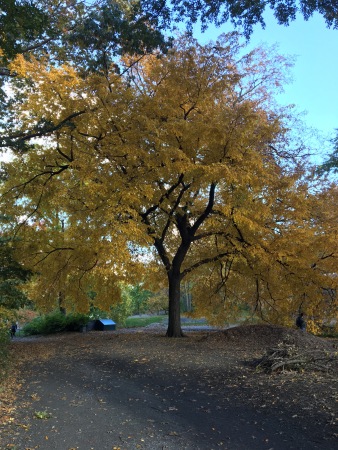
Almost every day, I walk in Central Park.  There are certain trees there I’ve come to know: the gnarled cherry trees by the reservoir, the bending willows and tall bald cypress by the pond, the sycamores that drop their bark each summer, the hawthorn not far from Central Park West.  Lately I’ve been taking photos of the trees to try to capture their essence, their posture in the world.  The trees around me feel like friends, which is what an ancient midrash (interpretation/legend) called Genesis Rabbah says about trees: that they are friends to humankind.  To me, they’ve always been a central manifestation of Mother Earth.

Currently, the national parks in the United States have no staff because of the government shutdown. Some people have taken the opportunity to cut down the rare and endangered Joshua trees in the Joshua Tree National Park—just for fun, I guess, or as a trophy of some kind.  Meanwhile, President Bolsonaro of Brazil recently has indicted that he wants to remove protection for the rainforest, in order to allow development.  It appears that my friends the trees have enemies.  Sometimes the enmity is for personal/corporate gain, and sometimes the enmity seems to have no reason at all.

Continue reading “Tree of Life: The Festival of the Trees in an Age of Treefall by Jill Hammer”

Iroquoian Women: Power Held and Shared by Carol P. Christ

According to Barbara Alice Mann, author of Iroquoian Women, women were at the center of a matrilineal Iroquoian society that could be called (though she does not call it that) an “egalitarian matriarchy.” As in other egalitarian matriarchies, including those of the Mosuo and the Minangkabau, women both hold power and share it with men. According to Peggy Reeves Sanday who studied many societies in the anthropological records, female power does not mean female domination.

In attempting to reconstruct the role of women in Iroquois society, Mann first had to engage in a painstaking deconstruction of the scholarly consensus that men ruled among the Iroquois. Believing that male dominance is universal, scholars ignored or explained away a great deal of evidence that Iroquoian women were and are at the center of Iroquoian society. Those who believe that academic scholarship is objective or relatively objective may have to revise their opinions after reading the masses of evidence of witting and unwitting distortion of Iroquois society that Mann uncovers. In order to reconstruct the role of women in Iroquoian society, Mann also had to deal with the fact that the American government destroyed much of Iroquoian oral tradition through policies of forced assimilation that removed children to government schools and forbade the speaking of native languages. Continue reading “Iroquoian Women: Power Held and Shared by Carol P. Christ”

Ancient Dreamer by Elizabeth Cunningham

Raised view fallen autumn leaves deciduous trees

The poems below are excerpted from my new (I hope forthcoming) collection, Tell Me the Story Again. Ancient dreamer’s voice is one among many voices including sorrow singer, temple sweeper, sword woman, morose fool, merry drunk, grey cat and mouse, stone mountain, skeleton woman, mother rain and many more. The voices speak from a time perhaps just after (or long before) our time, in a real and magical world.

I chose to excerpt ancient dreamer’s poems because winter is the time, in Celtic lore, of the Cailleach, the old one, the divine hag.  When I began writing the poems in 2014, my mother-in-law, then age 101, was in the last stages of her life. She slept and dreamed most of the time, and I would sit and daydream with her. She died two months before her 102nd birthday. When I took up the collection again in 2018 to complete it, ancient dreamer remained a strong presence and has the last word.  

Continue reading “Ancient Dreamer by Elizabeth Cunningham”

The Feminine in God by Vanessa Rivera de la Fuente

10268143_artmajeur-divine-feminine-womanhood-art-resting-in-gold-gioia-albano-2014-300-dpi-mod

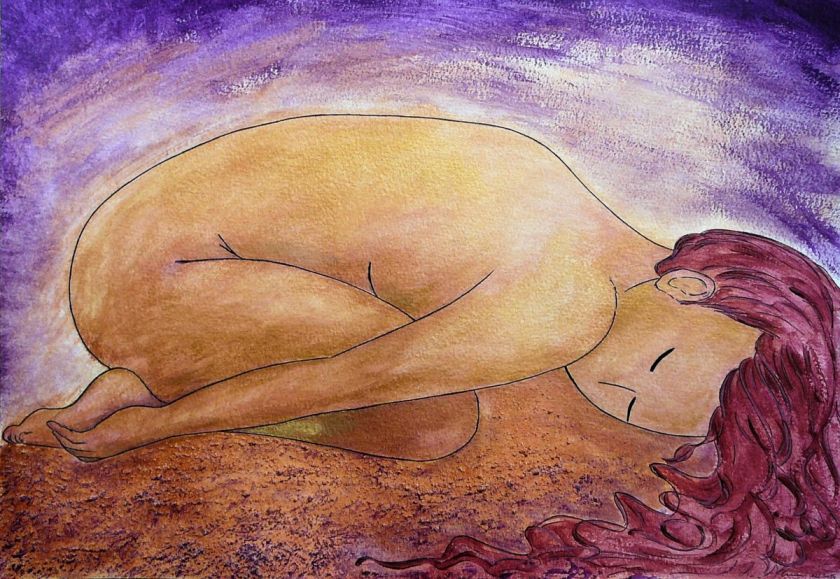
An expert traveler knows that the best part of leaving is coming back. I am happy to open another year writing here again, after a necessary break, since writing is the way I maintain my strong ties with my critical spirit and this community that I cherish and has become through the years, my safe space.

Let me start with this. At the end of last year I was teaching a course on Gender, Women and Islam for social science students at a College in Mexico. One of the question I was often asked was: Madam, Is God a She? Continue reading “The Feminine in God by Vanessa Rivera de la Fuente”

Dissent by Gina Messina

71517_10200316462096891_2039548303_nI often share that what I’ve learned about strength, perseverance, and responsibility, I learned from my grandmother and namesake, Gina. In November we celebrated her life and said goodbye to the pioneering woman who overcame the greatest of obstacles to lead a life of dissent.   

Gina Sr. was born in Camaiore, Italy in 1926. She lived through WWII, was captured and escaped from Nazi soldiers three times, and walked 200 miles to find safety. Following the war she found herself on a boat filled with war brides headed to the U.S. and never saw her family again. She divorced in the early 60’s becoming a single mother and social pariah, and survived the loss of three of her children. Continue reading “Dissent by Gina Messina”

When Violence is Normal and Normalized by Carol P. Christ

Warning: this blog discusses spanking and bodily violence

“No Whips, No Punishments, No Threats: Women’s Control of Social Life” is the title of one of the chapters in Iroquoian Women, Barbara Alice Mann’s stunning reconstruction of female power in a matrilineal society. According to Mann, the European settlers were “unsettled” by the lack of strict punishment systems for children in Indian societies. “Spare the rod and spoil the child” was the backbone of European child-rearing practices. The settlers viewed Indian children as naughty, disobedient, disrespectful, and horror of horrors: self-possessed.

It is perhaps no coincidence that after reading this chapter, bodily memories of violence inflicted on me as a child began to resurface. My strongest bodily memory is of being hit repeatedly on my left upper arm by my younger brother’s fist. It is as if my arm is still stinging in that particular place. My mother wanted us to play together, but when we did, we usually ended up fighting. My brother, who was two and a half years younger, was later diagnosed with dyslexia and given “little red pills” to help him control his temper. I was a quiet child (there must have been reasons for that too), and though I soon realized that if I hit back I would only be hurt more, I learned to use my tongue against my brother. This too was a form of violence and my brother remembers my cruelty to this day. Once when I asked my mother what she wanted for her birthday, she responded, “Two children who do not fight.” I didn’t even try to give her that because I didn’t know another way. Continue reading “When Violence is Normal and Normalized by Carol P. Christ”

Emotional Labor, Elastigirl, & Me by Kay Bee

Last year, I turned 40 and started grad school while working part time at the public library as the Children’s Services Manager, living in a cohousing community, volunteering with my Sisterhood, and raising three teenagers. I’m between semesters at the moment and I’ve had a chance to do some reading by choice instead of reading by syllabus. One of the titles I picked up during this semester break was Fed Up: Emotional Labor, Women, and the Way Forward by Gemma Hartley.

I’ve also had the chance to curl up with my family and watch a few movies. In addition to our epic Marvel chronology review project, we decided to snag the library’s copy of Incredibles 2 (2018) for family movie night. Despite the fact that the original movie released when our eldest child was only a year old, my teenagers have always been fans of Baby Jack-Jack and were excited to see this sequel fourteen years in the making.

I was about halfway through Hartley’s book when we sat down to watch the Parr family pick up right where they left off at the end of The Incredibles (2004). And less than a quarter of the way through the film when Fed Up and Incredibles 2 collided spectacularly inside my head. I spent the rest of the film thinking about emotional labor, parenting, and midlife career change. Continue reading “Emotional Labor, Elastigirl, & Me by Kay Bee”

“Old South Asia” and “Old Europe”: New DNA Research Suggests Tantalizing Relationships by Carol P. Christ

When European scholars began to study Sanskrit they were surprised to discover linguistic similarities between Sanskrit and Greek and Latin. Old Persian was found to be even closer to Sanskrit. Scholars thus began to speak of related groups of Indo-European languages stemming from an earlier language they called Proto-Indo-European.
Tracing the earliest incursions of Indo-European speakers into Europe from the north along the Danube River, Marija Gimbutas hypothesized that the Indo-European homeland was in the steppes north of the Black and Caspian Seas. DNA research has confirmed Gimbutas’ view: Indo-European-speaking men from the Yamnaya cultural group who carried the YDNA gene R1b–which now is the largest YDNA group in Europe–arrived in large numbers about 2500 BCE from a homeland north of the Black and Caspian Seas.

Until now DNA evidence confirming the Indo-European incursion into India has been lacking. Hindu nationalist groups and some scholars have rejected the Indo-European hypothesis because it suggested that Hinduism and by extension “Indian culture” had a “foreign” origin.

Recent DNA research forwarded to me by Goddess scholar, iconographer, and bibliographer Max Dashu confirms that Indo-European-speaking Yamnaya men carrying the R1a gene entered Persia (Iran) and India in the second millennium (2000-1000 BCE). Moreover, this new DNA study finds the R1a gene in India to be located primarily in the Brahmin or priestly caste associated with the introduction and preservation of the Vedic religion and the Sanskrit texts. Continue reading ““Old South Asia” and “Old Europe”: New DNA Research Suggests Tantalizing Relationships by Carol P. Christ”

Mantra and Meditation in Buddhist Hospice Chaplaincy to Alleviate Anxiety by Karen Nelson Villanueva

Karen Nelson Villanueva has recently successfully defended her doctoral dissertation, “Invoking the Blessings of the Tibetan Buddhist Goddess Tara Through Chanting Her Mantra to Overcome Fear,”

Mantras are not just the prescribed sound formulas or sentences found in Eastern religions, but they can also be thought of as the words or phrases that we continually repeat to ourselves. The word mantra comes from Sanskrit and its roots are manas-, meaning “mind,” and -tras, which can be translated as “tool.” Thus, mantra is a tool to protect the mind.

How often do we engage in negative self-talk like “It’s my fault” or “I’m to blame for what’s happened to me” or “No one loves me”? These expressions can become mantras, as we believe their messages from constant repetition. In hospice and hospital settings, one often finds patients who have convinced themselves that “This is God’s punishment” or “Everyone has forgotten me” or “I’m so scared.” These phrases, rather than protect the mind, become what is believed by the mind and may lead to increased anxiety, stress, and depression, and consequently the need for spiritual and emotional support.

Chaplains, as members of the care team in hospice and hospitals, provide spiritual and emotional support to patients and their families. Most often, chaplains attentively listen to patients and their caregivers (often family members) about the patients’ life story, their relationships, their dreams unfulfilled, and their wishes for those whom they are leaving behind. Chaplains take part in family meetings where decisions are made about patients’ care, sometimes interjecting to ask for clarification of medical terms and to ensure that the family understands. Sometimes, the chaplain will lead prayer with the patients and their families, and at other times, the chaplain will pull other tools from her toolbox such as mantra meditation.

Continue reading “Mantra and Meditation in Buddhist Hospice Chaplaincy to Alleviate Anxiety by Karen Nelson Villanueva”