A Ritual to Bless Our Children by Barbara Ardinger

It was maybe twenty-five years ago that I first got addicted to the Sunday morning news/talk shows. I’d turn on the TV at 7 a.m., watch an hour of local news, then Stephanopoulos at 8 a.m., then MSNBC until noon or later. Not anymore. This morning, I turned the TV off at 10:00 and immediately got into the shower to wash off what I’d been hearing. I’m worn out by the news!

Now don’t get me wrong. I am totally against any “normalizing” of the Troll-in-Chief. In fact, I’m convinced we ought to pack him into capsule with about a hundred cheeseburgers and without his phone and fire him off to one of the outer planets. Maybe Saturn, which astrologically forces us to face ourselves and to get to work and learn our life lessons.

Continue reading “A Ritual to Bless Our Children by Barbara Ardinger”

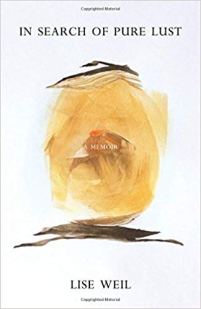
Review: In Search of Pure Lust, author Lise Weil by Sara Wright

In this remarkable memoir one woman’s life is set in the collective context of the women’s movement as a whole, and through Lise Weil’s eyes we get to see the “both and” quality of her struggle to understand the wound caused by what went wrong not only in her personal relationships with women, but between the powerful women who inspired the women’s movement in the first place. We can only heal this wound personally and collectively if we are willing to self-reflect, ask difficult and painful questions, and take responsibility for our actions, something that the author is willing to do. By addressing our own mother-daughter and woman to woman betrayals, choosing to respect one another’s differences regardless of sexual orientation, color, race, religion etc. we can finally unite with one purpose – to save ourselves and the planet.

What Lise proposes – namely, that Lesbian Visionary Thinking opened the door to women re–imagining women as powerful agents in their own lives even as they became women who acted upon these visions – is, I believe, truth. Lesbian visionaries envisaged a woman centered culture and created one. Many of us realize today that without a feminist standpoint, the ravages of patriarchy are going to destroy us all.  We have much to learn from reading this story. Continue reading “Review: In Search of Pure Lust, author Lise Weil by Sara Wright”

A Better World is Impossible Today (#WETOO) by Adam F. Braun

At the end of the second Matrix film (Reloaded), Neo (the messianic figure, “The One”) is told by the Architect of the Matrix, itself a program in the system, that Neo was in fact the sixth iteration of messianic figures that the Matrix had itself created.  In such a case, what hope is there when the System creates messiahs in order to produce a hope it allows—a hope it allows for the sake of reproducing itself through the exploited labor of others, who are able “to get by” because they have this same hope.  A hope that a better world is possible.

In the midst of the young #metoo movement in Japan, this story emerges from one of its medical schools:

Japan’s government urged a medical university to promptly disclose the results of an investigation into its admissions process Friday after reports alleged it had altered the test scores of female applicants for years to deny them entry and ensure fewer women became doctors. Continue reading “A Better World is Impossible Today (#WETOO) by Adam F. Braun”

A Total Eclipse of the Moon by Carol P. Christ

The morning after the July 27 total eclipse of the moon, I wrote:

I am a-mazed and still in awe. Last night I saw the eclipse and the blood moon from my favorite tavern in Pachia Ammos. We pulled the table out from the roof shelter and positioned our chairs so that we were looking at the high mountains where the moon came up, almost full, the night before. The mountains are sheer exposed rock that seems to have risen up from the sea. In the evening light they were bathed in the rose glow of the setting sun.

I read that the eclipse would last from 8: 22 until 2: 28, but at 8: 22 the moon was still hidden behind the mountains. Soon someone shouted, “it’s coming,” pointing to lacy clouds capping one of the peaks that had suddenly become luminescent. The clouds disappeared leaving only a faint light emerging from behind the mountain. When the moon finally rose about 9, the eclipse had already begun. It looked like someone had taken a small bite from the lower left side of a cookie. It was very white and there was no sign of the promised red moon. Mars was positioned to the lower right of the moon, so large and so bright I had mistaken it for Saturn a few nights earlier. Continue reading “A Total Eclipse of the Moon by Carol P. Christ”

Practice Great Generosity by Carol P. Christ

Nurture life.

Walk in love and beauty.

Trust the knowledge that comes through the body.

Speak the truth about conflict, pain, and suffering.

Take only what you need.

Think about the consequences of your actions for seven generations.

Approach the taking of life with great restraint.

Practice great generosity.

Repair the web

In Rebirth of the Goddess, I offered Nine Touchstones of Goddess Spirituality as an alternative to the Ten Commandments. The Nine Touchstones are intended to inform all our relationships, whether personal, communal, social, or political.

The eighth touchstone asks us to practice great generosity.

Confronted by the great generosity of village Cretans who have far less than I do, I was provoked to examine my own values. Having been brought up in a family that always had enough to eat but often did not have enough to buy me everything I wanted, I was taught to “count my pennies” and to “save for a rainy day.” I began babysitting at the age of ten and as a teenager used my savings to buy fabric and patterns and sewed almost all of my own clothing. My brother and I fought constantly about who would get “the biggest piece” of whatever sweet was on offer.

The habits I learned early have served me well in some ways. I do not spend more than I have, and I have invested wisely. I am for the most part a kind person, but the practice of great generosity in regard to the money I have does not always come easily to me. Sometimes I give generously to charities, but I am not consistent. (Note to self: you can do better.) Moreover, it is not part of my cultural upbringing to offer to pay for someone else’s meal or to give gifts, not only on birthdays and holidays, but every day.

I sensed that the generosity I experienced among the Cretan people had ancient roots. Now I understand that this practice may have been passed down from egalitarian matriarchal cultures in which the generosity associated with mothers was considered to be the highest value—to be practiced not only by women but by men as well, not only in the home, but in the world as a whole. It is my belief that before war and the spoils of war became commonplace, people were valued not by what they had (or hoarded) but by what they were willing to give. These values were, and in some places still are, practiced in rural farming communities.

In a recent weeks Alexandria Ocasio-Cortez has been telling Americans that democratic socialism “means that we should guarantee basic elements of dignity and human life: education, health care, housing, food. It’s about guaranteeing a minimum level of dignity in the United States.” I have often said that I would be more than willing to pay higher taxes order to ensure basic dignity to all Americans. (I am not happy about paying taxes to the war machine: Barbara Lee speaks for me.)

In response to Republican attacks on socialism, Paul Krugman examined democratic socialism in Denmark. Krugman noted that:

American politics has been dominated by a crusade against big government; Denmark has embraced an expansive government role, with public spending more than half of G.D.P. American politicians fear talk about redistribution of income from the rich to the less well-off; Denmark engages in such redistribution on a scale unimaginable here.

Moreover:

Danes are more likely to have jobs than Americans, and in many cases they earn substantially more. Overall G.D.P. per capita in Denmark is a bit lower than in America, but that’s basically because the Danes take more vacations. Income inequality is much lower, and life expectancy is higher.

Growing up, I was taught that giving to others requires selflessness and personal sacrifice. In other words, giving is not always “fun.” My parents and my church were wrong about that. Unless we are completely cut off from our inborn capacity for empathy, most of us would be much happier knowing that our neighbors and others with whom we share the world have enough to survive and thrive. Krugman finds that:

The simple fact is that life is better for most Danes than it is for their U.S. counterparts. There’s a reason Denmark consistently ranks well ahead of America in measures of happiness and life satisfaction.

Growing up, I was also taught that “it is better to give than to receive.” I didn’t believe that then, but I am beginning to believe it now.

The eighth touchstone asks us to practice great generosity.

Doing so will not only help others. It will also make us happier to be alive.


Also see: Ethics of Goddess Religion: Healing the World , Nurture Life: Ethics of Goddess Spirituality,  Walk in Love and Beauty: A Touchstone for Healing,  Trust the Knowledge that Comes through the Body: Heal Yourself, Heal the World,  Speak the Truth About Conflict, Pain, and Suffering, Take Only What You Need, Think About the Consequences of Your Actions for Seven Generations, Approach the Taking of Life with Great Restraint


Carol P. Christ is an internationally known feminist writer, activist, and educator currently living in Lasithi Prefecture, Crete. Carol’s recent book written with Judith Plaskow, Goddess and God in the World: Conversations in Embodied Theology, is on Amazon. A Serpentine Path: Mysteries of the Goddess is on sale for $9.99 on Amazon. Carol  has been leading Goddess Pilgrimage to Crete for over twenty years: join her in Crete. Carol’s photo by Michael Bakas.



Vengeance Is Mine, Saith the Holy: Fear, Faith, and Divine Wisdom by Tallessyn Zawn Grenfell-Lee

Be afraid. Be very afraid.

That seems to be the refrain these days, particularly in politics. The more you terrify people, the more likely they are to vote, protest, and otherwise engage in political activism.

Well, maybe not. Apparently, hammering people with more and more reasons to live in terror actually tends to demoralize and paralyze us.[1] A little bit of fear goes a very long way. A certain amount does indeed motivate people – like a deadline, for example; that nervous energy can make us highly productive, efficient, and focused. Moreover, Gavin de Becker, author of The Gift of Fear, argues that we need to listen carefully to our bodies’ fear response, because our society has trained people – particularly women – to suppress gut instincts that otherwise would have saved them from violent situations.

Interestingly, when we understand not only how to recognize warning signs but also how to trust our intuition to identify potential danger, we feel empowered and live with less anxiety and fear the rest of the time. Validating the ‘gift of fear’ makes us less fearful. Nonetheless, there must be something lucrative to the politics of fear, because studies have shown fear is at an all time high in America, particularly the use of fearmongering as a political strategy. It turns out, fear sells, big time, and it is a pretty great way to further ideas of us vs. them and to undermine a sense of community, of the “neighborhood.”

Continue reading “Vengeance Is Mine, Saith the Holy: Fear, Faith, and Divine Wisdom by Tallessyn Zawn Grenfell-Lee”

The Four Phases of the Feminine Way by Elisabeth Schilling

For so long I’ve been wandering in the maiden stage, but now I am a mother, to myself, since I’ve made hard decisions to loosen or cut ties with people who have not always acted in my best interest in their attached and, at least to me, manipulative ways; I have long felt a mother to whatever group of students I have the honor of guiding; and I moonlight as a card reader/astrological guide where I feel I can nurture and provide compassionate advice to those who desire a connection from the universe. The way I practice is that I allow my empathy and research about ourselves to encounter the client’s own internal wisdom. There is not anything that qualifies me to be a teacher or reader any more than anyone else. We are all guru to each other when we listen closely.

I am not sure why I have never wanted to be a mother of a child. Not-wanting has felt very natural to me. Now that I have put some distance between myself and my own mother, her voice and so her desires are not so much hovering over me. I feel free and good about my decisions, about following the path that is normal for me.

But what I really love about the four phases of the feminine way – maiden, mother, maga, and crone — is that we do not necessarily need to always identify with the stage that aligns with our age or any rites of passage. I remember going to a goddess ceremony in California where we could speak from any of the perspectives we felt aligned with that at the time and explain why.

Continue reading “The Four Phases of the Feminine Way by Elisabeth Schilling”

Medieval Torture Devices and the Goddess by Colette Numajiri

There is a campy dinner and tournament “castle,” Medieval Times, in our city in which you can eat and watch a fully- costumed period play complete with stunning Spanish horses in an indoor arena. Inside of this building, for a mere additional $2, there is a “torture chamber” attraction, a mini museum with a dozen or so of actual torture relics used in the Medieval Inquisition (or accurate looking replicas of them!) along with illustrations from the era.

In this collection they have what appears to be an authentic orifice-expanding “pear” and a “breast ripper” (see and read photo below) among other devices meant to inflict pain and often death to those with the misfortune to be accused.

The actual “Medieval Times” period was a horrific and bloodstained era when the NEW ORDER (the established Catholic and new Protestant churches) set out to “Christianize Europe.” They succeeded and became beyond wealthy by creating a WIDESPREAD FEAR of WOMEN, gaining power over more than half of the population and confiscating their money and land.

There is an hour long film funded by the Canadian government called: “THE BURNING TIMES” that tells the story of the people (85% women) that were brutally killed over a 300 year period in what was the WOMEN’S HOLOCAUST.

Continue reading “Medieval Torture Devices and the Goddess by Colette Numajiri”

Approach the Taking of Life with Great Restraint by Carol P. Christ

Nurture life.

Walk in love and beauty.

Trust the knowledge that comes through the body.

Speak the truth about conflict, pain, and suffering.

Take only what you need.

Think about the consequences of your actions for seven generations.

Approach the taking of life with great restraint.

Practice great generosity.

Repair the web

In Rebirth of the Goddess, I offered Nine Touchstones of Goddess Spirituality as an alternative to the Ten Commandments. The Nine Touchstones are intended to inform all our relationships, whether personal, communal, social, or political.

The seventh touchstone asks us to approach the taking of life with great restraint.

Continue reading “Approach the Taking of Life with Great Restraint by Carol P. Christ”

Lessons from Shofetim by Ivy Helman.

29662350_10155723099993089_8391051315166448776_oThis is the first part of a series of reflections on the weekly Torah portions.  For those of you unfamiliar with Judaism, we read the Torah in sections.  There are 52 parshot (or portions), one parshah (portion) is read each week (most often during Shabbat morning services).  It is common for rabbis, prayer leaders or someone of the congregation to offer reflections on the week’s parshah at Shabbat services.

The parshah for this week is Shofetim.  It is Devarim/Deuteronomy 16:18 – 21:9 and will be read this Shabbat, 18 August.  Shofetim discusses a range of topics: setting up of a system of judges to make important decisions for Israel; the entitlements of the Levites; the rules of warfare; the importance of justice and just governments; and the acknowledgment of G-d as the true and highest Judge.  It also warns Israel against false prophets and practices of idolatry.  Shofetim contains a number of well-known verses including ‘justice, justice you shall pursue…(16:18),’ and notorious punishments like “…a tooth for a tooth; an eye for an eye…(19:21)”  Continue reading “Lessons from Shofetim by Ivy Helman.”