

The garden gives me a place to ask what it means to belong to a living world. In Boston, where my growing space occupies roughly 1,000 square feet, that question takes practical form. There is soil to tend, water to carry, a season to understand, and a body doing the work. My grandparents cultivated land in Jamaica. Returning there helped me recognize how deeply that relationship mattered to my life. Growing in the city became a way to carry it forward under different conditions.
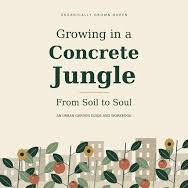
In my book, Growing in a Concrete Jungle: From Soil to Soul, I approach gardening through food, cultural memory, everyday wellbeing, and seed stewardship. Here, I extend those concerns into a spiritual question: What changes when regeneration includes our bodies, our relationships, and our capacity to receive care? I understand regeneration as an embodied spiritual practice when tending life teaches us to attend to the conditions that sustain it. Soil, stars, and sexuality offer different ways to examine that attention.
Soil and the foundations of care
This reflection begins with one garden and one family history. Its spiritual meaning emerges through interpretation and practice. I do not assume that every grower shares my beliefs. The garden offers experiences through which I can ask about the sacred while respecting other understandings of life.
A harvest draws attention toward what is visible. Soil asks us to consider what makes that visibility possible. A tomato becomes the centerpiece of a meal while the conditions supporting its roots remain unnoticed. My garden returns me to those conditions: What am I adding? What am I taking away? What will support this space through another season?
These are also spiritual questions. A person can appear productive while the foundations of their life are depleted. We praise achievement while overlooking exhaustion, loneliness, hunger, or inadequate support. Thinking from the soil upward changes the order of attention. It asks us to care about foundations before demanding growth. The grower belongs within that care. A garden that exceeds my available energy requires a different plan.
Compost offers an image for reconsidering experience. Plant material contributes to future growing; a disappointment may become a question, and a mistaken assumption may become knowledge. Yet human pain does not automatically become wisdom. Nobody should be required to make suffering useful. Some losses remain losses. Regeneration must leave room for grief, asking what care is possible now without making renewal a condition of worth.
My record of Egyptian walking onions makes humility concrete. I planted 60 and observed 18 emerging. That count did not explain the others or establish whether more would appear. It gave me an observation to revisit. I could remain attentive without inventing certainty. Spiritual life also contains unanswered questions that deserve patience rather than premature conclusions.
The stars stand for the larger world within which our days unfold. They invite orientation, wonder, and attention beyond the immediate task. Looking toward the night sky shifts my sense of scale. My deadlines occupy only a small part of time. That awareness creates space to consider how I inhabit my days and what deserves my attention.
Stars and the rhythm of living
Jamaican growing knowledge carries meaning for me in Boston, but its timing cannot simply be transferred. Warmth, light, weather, and the growing space shape what becomes possible. A familiar crop still needs suitable conditions. Belonging requires attention to where we are. Rhythm, therefore, involves repetition and responsiveness: a calendar offers structure, while observation tells me when to adjust.
By rhythmic tone, I mean the felt quality of that relationship: the pace of a day, the room between tasks, and the movement between effort and rest. A rushed garden visit and an unhurried one may involve identical chores yet leave different impressions. Rhythm concerns how we experience time as well as how we measure it.
The moon can offer symbolic language for emergence, fullness, withdrawal, and renewal. Such imagery does not establish that bodily cycles must synchronize with lunar phases. Metaphor can support reflection without becoming a biological claim. Nor does every cycle return us to the beginning. Aging, migration, grief, and changing responsibilities transform familiar practices. Spiritual attention means recognizing the present season rather than requiring it to repeat an earlier one.
Sexuality and embodied dignity
Sexuality belongs in this conversation because bodies participate in intimacy, desire, vulnerability, and connection. An account of spiritual wellbeing should make room for those experiences, alongside privacy and the freedom to decide whether to share them. Sexual orientation, pleasure, consent, and closeness carry different meanings across individual lives. People who experience little or no sexual attraction can also have rich spiritual lives.
An ethic of regeneration asks whether relationships support the people within them. Can boundaries be expressed and respected? Is care reciprocal? Can someone change their mind? These questions place consent at the center of embodied spirituality. Sacred language must never override autonomy. The garden prompts questions about care, but plants cannot model human consent. People speak, refuse, negotiate, and define their own relationships.
Pleasure also deserves thoughtful attention. A meal, a flower, a familiar scent, or freely chosen intimacy can invite appreciation. Pleasure need not demonstrate usefulness to deserve a place in life, but it requires regard for everyone’s freedom and wellbeing. Generativity likewise extends beyond fertility and parenthood. Teaching, friendship, art, gardening, and preserving knowledge can sustain life. Spiritual worth does not depend on reproduction.
Listening to our cycles
The garden makes change visible. Spring preparation differs from summer care. Autumn brings harvesting, saving seed, and preparation; winter gives planning and review another place. Our bodies also experience patterns of energy, appetite, sleep, desire, and recovery. For some, menstruation forms part of that experience. Its significance varies, and no spiritual interpretation should be imposed on another person’s body.
I connect spirituality with cycles through permission to notice. What is my capacity today? What needs care? What can wait? What company would help? These questions require neither a perfect pattern nor a calendar that explains every feeling. Alongside watering notes, a garden journal can record whether a task felt manageable, whether help was needed, or whether the grower had taken on too much.
Listening requires material support. People cannot always rearrange work around fatigue, afford nourishing food, or find somewhere safe to rest. Spiritual attention therefore carries communal responsibilities. Shared work, accessible spaces, practical assistance, and humane schedules can make care possible. My body affects my gardening; the garden’s design affects my body; relationships affect whether help is available. Overall being emerges within these connections.
Ancestry and the practice of belonging
Growing Jamaican callaloo and red okra in Boston gives cultural memory a practical place. A crop connects a growing decision to a meal, and a meal to a story. My grandparents’ relationship to land helps explain why I grow, without authorizing me to speak for every Jamaican family. Honoring ancestry means keeping particular people and experiences visible.
Remembrance takes shape through choosing crops, learning their needs, preparing harvests, and sharing knowledge. Adaptation allows continuity across climates. Sharing also requires responsibility: ask what someone needs, credit knowledge, respect expertise, and leave room for refusal. An urban garden exists within unequal access to land, resources, food, and time. Its gifts matter while larger structural needs remain unresolved.
These relationships continue through small decisions about who receives a harvest, who carries water, and whose knowledge shapes the work. Community becomes tangible when responsibilities are discussed and help answers an expressed need. Reciprocity gives spiritual reflection a practice that others can recognize and share.
A practice of returning
My book’s sequence is simple: Observe. Experiment. Learn. Adapt. Repeat. Applied spiritually, it encourages humility and responsiveness. Soil asks what sustains us. Stars invite orientation within time and mystery. Sexuality asks how desire and relationship can honor dignity. I return to my Boston garden with family history, unfinished questions, and bodily limits. Through ordinary acts of tending, resting, receiving, and trying again, I practice belonging by caring for life’s conditions, including my own.

BIO: Toya L. Walker is a multidisciplinary storyteller, regenerative gardening consultant, urban farming educator, and published writer whose work centers environmental storytelling, cultural memory, healing, and community transformation. Through a combination of literary writing, educational engagement, and land-based practice, she has built a creative brand rooted in authenticity and experiential narrative.
Rather than approaching writing as a separate discipline, Walker’s editorial and literary work emerges directly from her lived experiences in urban agriculture, regenerative gardening, consulting, and community education. Her writing explores how land, memory, identity, and environmental systems intersect within everyday life.
Her published and recognized works include What the Ground Remembers, a reflective narrative on winter gardening and ecological memory; Pill Popper, a recognized microfiction work exploring embodied and cultural experience; and One Hour, One Room, an award-winning narrative focused on transformation and personal growth.
Her work has been recognized across literary, editorial, and cultural publication spaces, including nominations in flash fiction and poetry. Through a consistent editorial submission strategy and a strong thematic voice, she has successfully translated personal narratives into published and compensated creative work.
Walker continues to expand her interdisciplinary practice through storytelling, environmental education, regenerative systems, consulting, public speaking, and community-centered creative work under the OrganicallyGrownQueen brand.
https://organicallygrownquee.etsy.com/listing/4589022887
Discover more from Feminism and Religion
Subscribe to get the latest posts sent to your email.

