The Hate U Give by Esther Nelson

These days I live in a perpetual state of simmering outrage given the popular support of the “goings on” and happenings within our current administration.  The lies, the deceit, the xenophobia, the racism, the misogyny, the homophobia, the anti-intellectualism—things that have been around a good long time, but now seem to have settled in comfortably with those who have the power to keep it all in place.  I’m discouraged.

But then, there’s this:

The Hate U Give, a YA (Young Adult) novel authored by Angie Thomas, spent 50 weeks at the top of the New York Times bestseller list after its publication in February 2017. The book has received numerous awards and also has enjoyed an immense popularity.  It has also generated considerable controversy.

The following is the author’s profile from Amazon’s website:  “Angie Thomas was born, raised, and still resides in Jackson, Mississippi as indicated by her accent. She is a former teen rapper whose greatest accomplishment was an article about her in Right-On Magazine with a picture included. She holds a BFA in Creative Writing from Belhaven University and an unofficial degree in Hip Hop. She is an inaugural winner of the Walter Dean Myers Grant 2015, awarded by We Need Diverse Books.”

Continue reading “The Hate U Give by Esther Nelson”

Updating our Fairy Tales by Anjeanette LeBoeuf

Anjeanette

The rising voices of female empowerment, consciousness, and position has been an undertaking in the last two centuries. Yet societies are still using fairy tales; tales that were written at least 500 years ago. Many of the fairy tales can be read in a 21st Feminism lens as being harmful and products of a patriarchal society. The movement can only gain more strength and momentum if we start from the ground up – reworking the stories, fables, and myths we teach our children, we make into movies, and that children want to dress up as.

Continue reading “Updating our Fairy Tales by Anjeanette LeBoeuf”

A Silhouette of a Woman, the Menorah, and a Pillar of Light: Discovering the Origins of the Goddess in Judaism by Alaya A. Dannu

2.24.2017

During a meditation before bed, I saw an image of a candelabra similar to what Jewish people use for Hanukkah. It was yellow/gold in color, engraved/etched onto a surface. All at once I saw the imagery of a star, a silhouette of a woman, and a beam of light move from the base of the candelabra through the top and beyond.

In these moments, I did not understand the significance of or the relationship between these images. What did a feminine figure have to do with the Jewish candelabra? What is the name of their candelabra? I could not even recall the name of it. It was something I grew up knowing the name of, as it was an image that I frequently saw beside the kinara of Kwanzaa in my school-aged years.

Because I was sheltered from the Abrahamic religions, my mother opted for participating in Kwanzaa as a means to shield me from any potential bullying from my classmates, and to celebrate a part of my diverse heritage. It was already a problem for my peers and the adult staff at school that I chose to identify as a Jamaican-American or a mixed person, as opposed to African-American. To tell a group of African-American Christians or those with an Afro-centric view that I didn’t celebrate Christmas or Kwanzaa, or that my mother taught me to listen to my dreams and intuition, would only serve as a means to further isolate myself; and by extension, my little sister. So celebrate Kwanzaa we did, until I began high school.

Continue reading “A Silhouette of a Woman, the Menorah, and a Pillar of Light: Discovering the Origins of the Goddess in Judaism by Alaya A. Dannu”

On a Friend’s Departure by Vanessa Rivera de la Fuente

photo

On June 25th, I received the news that my friend Zubeida Shaikh had passed away in South Africa. This took me by surprise. The last time Zubeida and I exchanged communication, she was as always, strong, determined and full of life, ready to realize her dreams. Zubeida Shaikh was an avid reader of feminism and religion. I would like to remember her in this space, thanks to which she and I met in life. In 2015, a little before my trip to South Africa, Zubeida sent me an email. She had read my article “Enemy of Islam” and it “was speaking to her”.

So, few weeks after my arrival in Cape Town, we met in the Parliament of the Republic of South Africa, her place of work until 2017, where I visited her in her office and we talked at length about feminism, violence against women and resilience, putting our own stories with patriarchy and abuse on the table. Then we spent the afternoon together. She was the first person from South Africa that I met. She was my first friend in South Africa. Continue reading “On a Friend’s Departure by Vanessa Rivera de la Fuente”

The Play of Emotional Insecurity and Pull by Elisabeth Schilling

It is not easy navigating the world with fragile boundaries, self-worth, and a potential history of manipulations. I often seek wisdom in spiritualities and unfamiliar religions because I need a substitute for the childhood traditions I have abandoned as a raft mid-stream. I am attracted to fashioning another raft, this one not pre-fabricated but gathered over some time by reaching for branches and tendrils. I am never confident about my assessments concerning relationships, and I mostly avoid going very deep with people anyhow or keep my head down so as to go unnoticed or divert the interest of others because I don’t yet know how to have healthy relationships that entail elements of balance or stay more-or-less in the middle way. It is awkward and fumbling to do life on one’s own, and I am hardly a victim. I completely admit that healing is within my purview and I simply have not tried hard enough, or that I just need to accept that no relationship is perfect and one cannot exactly have pleasure without pain, and so allow my body to sink into the underwater worlds and be taken by the sensory suctions of sea urchins and stings of jelly fish. Perhaps a relationship can also be one of peace and calm passions where those involved keep their attachments in check. I guess that is possible. 

Continue reading “The Play of Emotional Insecurity and Pull by Elisabeth Schilling”

Fourth Wave Feminism By Nurete Brenner

NureteMany of us have a growing sense that we are at a crucial inflection point in our civilization and at a crossroads for the future of our planet. I’m not sure if that point needs to be defended, explained or expounded upon. To me it seems completely transparent, glaringly and frighteningly obvious. I live with that knowledge constantly, which translates into grief for the biodiversity that has already been lost and is accelerating; fear for the turmoil and human-made ecological catastrophes that will cause more and more people to lose their land and homes, leading to increased acts of violence towards the vulnerable;  and anger towards the elites of the world who siphon up the resources of our planet for themselves and then barricade themselves behind their wealth. 
Grief, fear, and anger. These are the emotions of the shadow lands and these are the emotions that we usually try to deny and deflect.  These are the dark places of the soul. But, if we continue to reject these negative emotions rather than acknowledge and address them, they will return to confront us over and over again. We, as a society, have gone off course, have created a machine that is trampling all that is beautiful on our bountiful and giving, blue and green planet.  Continue reading “Fourth Wave Feminism By Nurete Brenner”

The Wings of the Butterfly by Vanessa Rivera de la Fuente

0e324b7dc38871515f6637945ede9a65


Shhhhh… good women are quiet.
My mother was a beautiful woman, she never complained.

Denial is a silent violence that aims to make invisible a trauma maybe evident or not, to make it acceptable as normal and allow the victims of this trauma to be exploited from a system of oppression or people in power. Denial is that voice sugarcoated with correctness that asks us to shut up and sit down on our own pain so as to not disturb anyone. Is a silence that yells loudly, because sooner or later it will speak through the different ways we hurt ourselves and others.

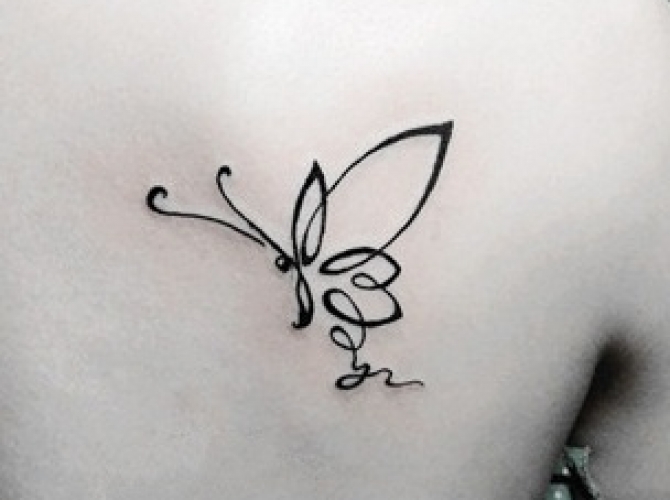
It is not a mystery that women all over the world are subjected to a variety of violence and oppression. Women and girls are hijacked, raped, assaulted, murdered, their experiences mocked or banalized and their bodies thrown around like trash. People get outraged asking how this is possible? Well, this is possible because when a girl is born, she is “bestowed” the foundational denial that will allow the normalization of this violence and belittling during all her life: The denial that she is a human being. Continue reading “The Wings of the Butterfly by Vanessa Rivera de la Fuente”

Please, Let’s Give Feminists a Break by Sara Wright

Please, Let’s Give Feminists a Break.

I remember so vividly entering graduate school in my early forties and being told I was an “eco – feminist” by my professors. What does that phrase mean I asked having no relationship that I knew of to feminism. Feminists, I thought vaguely, naively, even stupidly, burned bras and hated men…

I was asked to read “Woman and Nature; The Roaring Inside Her” by Susan Griffin to help me see who I was, and after finishing this one book I submerged myself in feminist writings like a starved woman – child. My teachers were right. I was a feminist – an eco –feminist because I had already made the connection between what was happening to the Earth and what had happened to me. Every tree that was chopped down was a part of me, every stream that was polluted was a part of me, every animal that was slaughtered was a part of me because I was a part of Nature. I owed my life to Nature, the only mother I had ever had. I loved Her, honored her, became her fierce advocate and in the process She eventually taught me to love myself.

Continue reading “Please, Let’s Give Feminists a Break by Sara Wright”

We Don’t Need Armed Guards, We Need Grandmas by Karen Moon

(Written the day after the Parkland high school, Florida shooting.)

Last night, my husband and I went outside to our driveway to sit in the car and have a beer.  Those of you with lots of children will understand that sometimes you just do not have the time, energy or funds for babysitting, but at least we have some uninterrupted time to talk to each other. Our youngest is six years old, so the older ones can easily watch her for twenty minutes.  We are not leaving toddlers to fend for themselves.  And it is cold out.  That is why we are in the car.

Only last night, there was no ‘unwinding’ going on. Somehow, we started speaking about the Parkland, Florida high school gun shooting, and his voice became raised.

He calls it ‘Meditarranean’ and ‘passionate’; I call it an ineffective way of communicating.  I would like to say that I replied calmly. But I did not. He had me, and my voice became raised in response.

Continue reading “We Don’t Need Armed Guards, We Need Grandmas by Karen Moon”

Toil and Trouble (Part 1) by Barbara Ardinger

…and Ella can’t remember the last real meal she had. After supper with the refugees in the witch’s house, she and the witch put their heads together to begin making significant plans. She’s also been meeting all the refugees who now live on the witch’s farm. She knows first-hand why these people fled the capital and the other cities. “Oh, lordy, yes,” she says. “I used to know all the important people. My dear sisters and I went to all the big events, ate the finest cuisine—” suddenly remembering where she is, she looks down at the table “—oh, dear, but I don’t mean to criticize your cuisine.”

The ravens, all perched on the backs of chairs look straight at her. “Good food, this,” says Kahlil, “except these girls don’t serve eyeballs.” “Stop that,” Domina whispers (if ravens can be said to whisper). “Don’t be so picky. Everybody here gets enough to eat.”

Ella, who is more used to cats and dogs and the occasional parakeet than to ravens, blinks and continues. “I wish I knew where my sisters are now. Thanks to our ‘relationships’ with the princes, we were High Society and—”

Continue reading “Toil and Trouble (Part 1) by Barbara Ardinger”