Practice Great Generosity by Carol P. Christ

Nurture life.

Walk in love and beauty.

Trust the knowledge that comes through the body.

Speak the truth about conflict, pain, and suffering.

Take only what you need.

Think about the consequences of your actions for seven generations.

Approach the taking of life with great restraint.

Practice great generosity.

Repair the web

In Rebirth of the Goddess, I offered Nine Touchstones of Goddess Spirituality as an alternative to the Ten Commandments. The Nine Touchstones are intended to inform all our relationships, whether personal, communal, social, or political.

The eighth touchstone asks us to practice great generosity.

Confronted by the great generosity of village Cretans who have far less than I do, I was provoked to examine my own values. Having been brought up in a family that always had enough to eat but often did not have enough to buy me everything I wanted, I was taught to “count my pennies” and to “save for a rainy day.” I began babysitting at the age of ten and as a teenager used my savings to buy fabric and patterns and sewed almost all of my own clothing. My brother and I fought constantly about who would get “the biggest piece” of whatever sweet was on offer.

The habits I learned early have served me well in some ways. I do not spend more than I have, and I have invested wisely. I am for the most part a kind person, but the practice of great generosity in regard to the money I have does not always come easily to me. Sometimes I give generously to charities, but I am not consistent. (Note to self: you can do better.) Moreover, it is not part of my cultural upbringing to offer to pay for someone else’s meal or to give gifts, not only on birthdays and holidays, but every day.

I sensed that the generosity I experienced among the Cretan people had ancient roots. Now I understand that this practice may have been passed down from egalitarian matriarchal cultures in which the generosity associated with mothers was considered to be the highest value—to be practiced not only by women but by men as well, not only in the home, but in the world as a whole. It is my belief that before war and the spoils of war became commonplace, people were valued not by what they had (or hoarded) but by what they were willing to give. These values were, and in some places still are, practiced in rural farming communities.

In a recent weeks Alexandria Ocasio-Cortez has been telling Americans that democratic socialism “means that we should guarantee basic elements of dignity and human life: education, health care, housing, food. It’s about guaranteeing a minimum level of dignity in the United States.” I have often said that I would be more than willing to pay higher taxes order to ensure basic dignity to all Americans. (I am not happy about paying taxes to the war machine: Barbara Lee speaks for me.)

In response to Republican attacks on socialism, Paul Krugman examined democratic socialism in Denmark. Krugman noted that:

American politics has been dominated by a crusade against big government; Denmark has embraced an expansive government role, with public spending more than half of G.D.P. American politicians fear talk about redistribution of income from the rich to the less well-off; Denmark engages in such redistribution on a scale unimaginable here.

Moreover:

Danes are more likely to have jobs than Americans, and in many cases they earn substantially more. Overall G.D.P. per capita in Denmark is a bit lower than in America, but that’s basically because the Danes take more vacations. Income inequality is much lower, and life expectancy is higher.

Growing up, I was taught that giving to others requires selflessness and personal sacrifice. In other words, giving is not always “fun.” My parents and my church were wrong about that. Unless we are completely cut off from our inborn capacity for empathy, most of us would be much happier knowing that our neighbors and others with whom we share the world have enough to survive and thrive. Krugman finds that:

The simple fact is that life is better for most Danes than it is for their U.S. counterparts. There’s a reason Denmark consistently ranks well ahead of America in measures of happiness and life satisfaction.

Growing up, I was also taught that “it is better to give than to receive.” I didn’t believe that then, but I am beginning to believe it now.

The eighth touchstone asks us to practice great generosity.

Doing so will not only help others. It will also make us happier to be alive.


Also see: Ethics of Goddess Religion: Healing the World , Nurture Life: Ethics of Goddess Spirituality,  Walk in Love and Beauty: A Touchstone for Healing,  Trust the Knowledge that Comes through the Body: Heal Yourself, Heal the World,  Speak the Truth About Conflict, Pain, and Suffering, Take Only What You Need, Think About the Consequences of Your Actions for Seven Generations, Approach the Taking of Life with Great Restraint


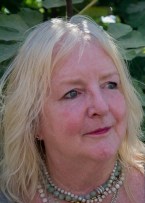
Carol P. Christ is an internationally known feminist writer, activist, and educator currently living in Lasithi Prefecture, Crete. Carol’s recent book written with Judith Plaskow, Goddess and God in the World: Conversations in Embodied Theology, is on Amazon. A Serpentine Path: Mysteries of the Goddess is on sale for $9.99 on Amazon. Carol  has been leading Goddess Pilgrimage to Crete for over twenty years: join her in Crete. Carol’s photo by Michael Bakas.


Vengeance Is Mine, Saith the Holy: Fear, Faith, and Divine Wisdom by Tallessyn Zawn Grenfell-Lee

Be afraid. Be very afraid.

That seems to be the refrain these days, particularly in politics. The more you terrify people, the more likely they are to vote, protest, and otherwise engage in political activism.

Well, maybe not. Apparently, hammering people with more and more reasons to live in terror actually tends to demoralize and paralyze us.[1] A little bit of fear goes a very long way. A certain amount does indeed motivate people – like a deadline, for example; that nervous energy can make us highly productive, efficient, and focused. Moreover, Gavin de Becker, author of The Gift of Fear, argues that we need to listen carefully to our bodies’ fear response, because our society has trained people – particularly women – to suppress gut instincts that otherwise would have saved them from violent situations.

Interestingly, when we understand not only how to recognize warning signs but also how to trust our intuition to identify potential danger, we feel empowered and live with less anxiety and fear the rest of the time. Validating the ‘gift of fear’ makes us less fearful. Nonetheless, there must be something lucrative to the politics of fear, because studies have shown fear is at an all time high in America, particularly the use of fearmongering as a political strategy. It turns out, fear sells, big time, and it is a pretty great way to further ideas of us vs. them and to undermine a sense of community, of the “neighborhood.”

Continue reading “Vengeance Is Mine, Saith the Holy: Fear, Faith, and Divine Wisdom by Tallessyn Zawn Grenfell-Lee”

Approach the Taking of Life with Great Restraint by Carol P. Christ

Nurture life.

Walk in love and beauty.

Trust the knowledge that comes through the body.

Speak the truth about conflict, pain, and suffering.

Take only what you need.

Think about the consequences of your actions for seven generations.

Approach the taking of life with great restraint.

Practice great generosity.

Repair the web

In Rebirth of the Goddess, I offered Nine Touchstones of Goddess Spirituality as an alternative to the Ten Commandments. The Nine Touchstones are intended to inform all our relationships, whether personal, communal, social, or political.

The seventh touchstone asks us to approach the taking of life with great restraint.

Continue reading “Approach the Taking of Life with Great Restraint by Carol P. Christ”

Take Only What You Need: Can We? by Carol P. Christ

Nurture life.

Walk in love and beauty.

Trust the knowledge that comes through the body.

Speak the truth about conflict, pain, and suffering.

Take only what you need.

Think about the consequences of your actions for seven generations.

Approach the taking of life with great restraint.

Practice great generosity.

Repair the web


In Rebirth of the Goddess, I offered Nine Touchstones of Goddess Spirituality as an alternative to the Ten Commandments. The Nine Touchstones are intended to inform all our relationships, whether personal, communal, social, or political.

The fifth touchstone, “Take only what you need” may be the most difficult one for modern human beings to follow. Those of us not living in traditional un-modernized villages have more things, from cars to big houses, to clothes to electronic devices, than we really need. Those of us in the middle and upper classes have so much more than we need, that the mind boggles when we begin to think about whether we need everything we have or want to have.

In capitalist societies, advertising is geared to cause us to want things we don’t really need, whether it be a new pair of shoes when we already have than we can wear to the most up-to-date ipad or smart phone when the one we have still works just fine. For many of us “shopping therapy” is our first response to boredom, anxiety, or depression. Buying something brings an adrenaline rush that temporarily makes us feel better.

In some indigenous cultures, the notion of taking only what you need is rooted in a deep feeling for and understanding of the interdependence of life. These cultures teach the young that taking from the web of life always has a cost. Yes, you can pick the plants you need to eat and the others you need as herbal remedies. But when you do, you thank the plant whose life you have taken, by leaving a gift. You would learn never to pick all of the plants in a particular area because you always leave some for others and some to die and go to seed so there will be the same plants in the same place the next year. You would never throw food away because you would not have taken or prepared more than you needed, and if you had something left over, you would offer it to a neighbor.

If you grew and picked flax or sheared wool and spun it into thread and then wove the fabric that would become your sheets and blankets and clothing, you would learn to treasure what you have as the work of your own or your mother’s or grandmother’s hands, and you would not consider these precious items to be disposable. In fact you might feel sad when something wore out, knowing that you would never have the joy of using or wearing it again and knowing that you cannot replace the tangible memories associated with it.

How far we have come from this mentality, for many of us, in only a few generations. We are always looking for the newest and so ready to throw out or replace anything that we ourselves or others might consider dated or old-fashioned.

We are destroying ecosystems and using up the world’s resources to meet our needs. The notion that the world should be our resource is part of the problem. If we do not curb our need and our greed, species will continue to go extinct and the generations that come after us will struggle to survive. This is a political, not only a personal issue. We must move towards a green sustainable energy and green sustainable economies.

It is not likely that anyone reading this blog—myself included—will ever reach the state of being where we consistently take only what we need. But we can try little by little to appreciate what we have and not to keep wanting and then buying the things we do not need. We can live with so much less than we think we can. If we could stop having to have what we think we want, we might find that there is more than enough to go around. We might be able to create a world where no one has to go without and where everyone can experience the joy and grace of life.

Also see: Ethics of Goddess Religion: Healing the World , Nurture Life: Ethics of Goddess Spirituality,  Walk in Love and Beauty: A Touchstone for Healing,  Trust the Knowledge that Comes through the Body: Heal Yourself, Heal the World, and Speak the Truth About Conflict, Pain, and Suffering


Carol P. Christ is an internationally known feminist writer, activist, and educator currently living in Lasithi Prefecture, Crete. Carol’s recent book written with Judith Plaskow, Goddess and God in the World: Conversations in Embodied Theology, is on Amazon. A Serpentine Path: Mysteries of the Goddess is on sale for $10.98 on Amazon. Carol  has been leading Goddess Pilgrimage to Crete for over twenty years: join her in Crete. Carol’s photo by Michael Bakas.
 

Speak the Truth about Conflict, Pain, and Suffering: It Is Not All Love and Light by Carol P. Christ

Nurture life.

Walk in love and beauty.

Trust the knowledge that comes through the body.

Speak the truth about conflict, pain, and suffering.

Take only what you need.

Think about the consequences of your actions for seven generations.

Approach the taking of life with great restraint.

Practice great generosity.

Repair the web


In Rebirth of the Goddess, I offered Nine Touchstones of Goddess Spirituality as an alternative to the Ten Commandments. The Nine Touchstones are intended to inform all our relationships, whether personal, communal, social, or political.

Ours is a broken world. We must speak the truth. Spirituality is not only about “love and light.” Goddess Spirituality, which I often call Goddess feminism, grew out of the feminist movement, which was born in the recognition that all is not well in the world. A central insight of Goddess feminism is that women need the Goddess because when we picture God as exclusively male, we create a world in which boys and men believe they are like God, while girls and women believe they are less than men and God.

In this world in which rape is an ordinary part of war, women are paid less than men for the same work, sexual harassment and sexual aggression are tolerated in workplaces, one in three women will suffer physical or sexual violence from an intimate partner and many of them will be murdered by an intimate partner. Feminism was born when women began to speak up about these injustices and many others. Continue reading “Speak the Truth about Conflict, Pain, and Suffering: It Is Not All Love and Light by Carol P. Christ”

Trust the Knowledge that Comes through the Body: Heal Yourself, Heal the World by Carol P. Christ

Nurture life.

Walk in love and beauty.

Trust the knowledge that comes through the body.

Speak the truth about conflict, pain, and suffering.

Take only what you need.

Think about the consequences of your actions for seven generations.

Approach the taking of life with great restraint.

Practice great generosity.

Repair the web


In Rebirth of the Goddess, I offered Nine Touchstones of Goddess Spirituality as an alternative to the Ten Commandments. The Nine Touchstones are intended to inform all our relationships, whether personal, communal, social, or political.

Though several of the touchstones are influenced by indigenous teachings, the third touchstone, “trust the knowledge that comes through the body,” is a response to the separation of mind and body common in western cultures. In the Symposium, Socrates taught that the journey of the soul begins in the appreciation of physical beauty, but ends in the contemplation of unchanging transcendental beauty. Christian ascetics believed that the body must be disciplined and subdued in order for the mind to commune with divinity. Up through the present day, Christians are taught that the pleasures of the body are a temptation because we are destined for something “higher.” Continue reading “Trust the Knowledge that Comes through the Body: Heal Yourself, Heal the World by Carol P. Christ”

Walk in Love and Beauty: A Touchstone for Healing by Carol P. Christ

Nurture life.

Walk in love and beauty.

Trust the knowledge that comes through the body.

Speak the truth about conflict, pain, and suffering.

Take only what you need.

Think about the consequences of your actions for seven generations.

Approach the taking of life with great restraint.

Practice great generosity.

Repair the web


In Rebirth of the Goddess, I offered Nine Touchstones of Goddess Spirituality as an alternative to the Ten Commandments. The Nine Touchstones are intended to inform all our relationships, whether personal, communal, social, or political.

The second touchstone, “Walk in love and beauty,” derives from the insight that love and beauty are the great gifts of bounteous earth. Just recently at a meeting of the Green Party Greece, one of our representatives in Parliament, Giorgos Dimaras, said to me, “It all begins with love.” He understands that our Green Party principles of environmental sustainability, social justice, no violence, and participatory democracy are rooted in the prior value of love. If we do not love nature, then why would we care about saving it? If we do not love others, why would we care about injustice and suffering? If we do not love the world, why would we care about creating peace on earth? If we do love others, why would we care about creating ways to ensure that everyone’s voice is heard in our families, communities, and societies? Continue reading “Walk in Love and Beauty: A Touchstone for Healing by Carol P. Christ”

Interdependence Day by Mama Donna Henes

I was recently invited to address a gathering of resident chaplains in the pastoral care department of a major urban medical center. Specifically, they asked me to present the shamanic point of view of team building with an emphasis on creating alliances and community.
There is no such thing! From a shamanic point of view (as well as quantum scientific thought) separation is a false concept. It is redundant to think of reaching out to build teams, alliances, and communities, since we are already all connected, allied, joined together as one. The fact is there is no such thing as opposing sides.There is only one side: just us folks, all of us everywhere, trying to live life as best we can, much more alike than different. There is no us and them. There is only us. We — all of us who occupy this planet: organic and inorganic; living and not; past, present, and future —are the world. Continue reading “Interdependence Day by Mama Donna Henes”

Nurture Life: Ethics of Goddess Spirituality by Carol P. Christ

Nurture life.

Walk in love and beauty.

Trust the knowledge that comes through the body.

Speak the truth about conflict, pain, and suffering.

Take only what you need.

Think about the consequences of your actions for seven generations.

Approach the taking of life with great restraint.

Practice great generosity.

Repair the web


In Rebirth of the Goddess, I offered Nine Touchstones of Goddess Spirituality as an alternative to the Ten Commandments. The touchstones are not commandments delivered from outside the world, nor are they accompanied by the promise of reward in heaven or the threat of punishment in hell. Rather, the Nine Touchstones are based upon observation of the world and rooted in the insight that human and other beings are connected in the web of life. They are intended to inform all our relationships, whether personal, communal, social, or political.

As I review the Nine Touchstones two decades after I first intuited and reflected on them, I marvel at my younger self. When I write, I often enter into a kind of trance in which words emerge from a place in myself that lies deeper than my conscious rational mind. I do not know that I know something until the words take shape on the page, and even then, their meaning unfolds over time. Something like this must have happened with the Nine Touchstones. I was drawn to the Native American teachings expressed in several of the touchstones even though I did not fully understand their context or meaning at the time. I was drawn to maternal values without knowing that they are the basis of ethics in egalitarian matriarchal cultures. Continue reading “Nurture Life: Ethics of Goddess Spirituality by Carol P. Christ”

How “Egalitarian Matriarchy” Works among the Minangkabau of West Sumatra by Carol P. Christ

Currently I am reading Peggy Reeves Sanday’s a-mazing book Women at the Center: Life in a Modern Matriarchy for the third time. In it Sanday describes the living egalitarian matriarchal culture of four million people of the Minangkabau culture of West Sumatra, Indonesia. Sanday spent parts of two decades living among the Minangkabau before publishing her book. I can understand why it took her so long to come to terms with a culture so different from our own.

The Minangkabau are matrilineal, defining family relationships through the mother line. They are also matrilocal: extended families live in big houses traditionally crowned by symbolic buffalo horns reaching to the sky; husbands, affectionately called “roosters” come to live in the “chicken coop” of their wives. The big houses and surrounding farmlands are held in common by the maternal clan. This much is relatively easy to understand, once we are willing to accept that not all societies are patriarchal, patrilineal, and patrilocal. Continue reading “How “Egalitarian Matriarchy” Works among the Minangkabau of West Sumatra by Carol P. Christ”