Dear Mary by Sara Wright

This piece was written in response to Gina Messina’s recent Feminism and Religion piece “Who is God?”

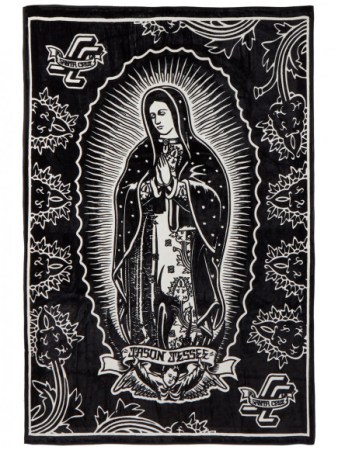
Dear Mary,

When I responded to a post on feminism and religion this morning I wrote that you were my first goddess. As a child I knew little beyond that you were the “Mother of God,” and I found your presence immensely comforting, even seeking you out in secret, entering your rose garden in a local monastery. I needed you so.

Early in adolescence I learned that your life was one of purity, sacrifice, and loss. Your purity left me bereft. How could a young Victorian girl be “good enough” to serve such a figure? I was fierce and passionate – a thorny red rose – with an empty hole in my heart.

Sadly, I released you and chose your sister the whore, the Black Goddess in disguise… but I didn’t know that then; I only knew that the “black” woman succumbed to her flesh as I did, covered herself in shame…What lies Patriarchy tells…

Continue reading “Dear Mary by Sara Wright”

I Celebrate Love by Elise M. Edwards

Happy Valentine’s Day!  I know, I know… so many of us do not like this holiday.  It’s too commercialized, we say.  We don’t need card-makers or florists to tell us how or when to show affection.  Some of us don’t like Valentine’s Day because it reminds us of loves we have lost or never found.  I get it.  This day can seem shallow, overhyped, and falsely sentimental.  It can be lonely.  And yet, I won’t let today pass without celebrating and honoring love.  Love is too important to concede to commercial interests.
Love, in its many forms, keep us alive and able to endure. Love is powerful because it is expansive, growing in unexpected places and ways.  We tend to separate our celebrations of romantic love, friendship, familial love, self-love, and religious devotion.  We make distinctions between our valentines and “galentines.”  Rarely do we shout for joy in ecstatic worship while also celebrating the passionate longings of our innermost desires.  But occasionally, in my religious tradition, we let our disparate loves come together.  We unite them on holy feast days, enjoying the sensual pleasures of good food and company to mark spiritual occasions.  So that’s my inspiration.  Today, I’m celebrating love by reflecting on various forms of love merged together and sharing insight from poets and mystics about the power and beauty experienced in love.

Continue reading “I Celebrate Love by Elise M. Edwards”

Eve is the Hero of the Garden of Eden, Part 2 by Janet Maika’i Rudolph

The serpent in the Bible is treated as Eve’s partner in crime, a malevolent seducer who is responsible for humankind’s expulsion from paradise. But did you know there are serpents who figure positively in the Bible? There are serpent priests, a feathered serpent and a healing serpent. Check out this passage:

Be ye therefore wise as serpents

Matthew 10:16

Levites were serpent priests as evidenced by the etymology of their name. The root word levi is seen in the name of the creature “leviathan,” the giant serpent. This is reminiscent of the Pythia, the oracle from Delphi whose title is derived from the root word python.

The feathered serpent referenced in Isaiah 30:6 is a seraph, usually translated as a “fiery flying serpent.”

Continue reading “Eve is the Hero of the Garden of Eden, Part 2 by Janet Maika’i Rudolph”

Challenging Christian Feminists to Re-Imagine the Goddess by Carol P. Christ

From the 1993 Re-Imagining Conference:

Our mother Sophia, we are women in your image:
With the hot blood of our wombs we give form to new life.
With the courage of our convictions we pour out our life blood for justice.
Sophia-God, Creator-God
let your milk and honey pour out,
showering us with your nourishment.

From my reflections on the Re-Imagining Conference presented at Hamline University on Novemeber 1, 2018:

One reason the creative re-imagining of God as female has not taken hold in churches and synagogues is fear of paganism and the Goddess. The creators of the Re-Imagining Sophia ritual took great care to guard against this charge by connecting it to Bible and tradition. Commenting on the reasons for the backlash against the Re-Imaging Conference, Sylvia Thorson-Smith stated:

One was the liturgical use of the biblical image of Sophia – but blown up as evidence of Goddess worship. Second was the milk and honey ritual – an ancient part of early Christianity, but attacked as a pagan substitute for communion.

While I understand her reasons for doing so, “the lady doth protest too much, methinks.” Continue reading “Challenging Christian Feminists to Re-Imagine the Goddess by Carol P. Christ”

Religions and the Abuse of Women and Girls by Carol P. Christ

At the 2009 meeting of the Parliament of World Religions, former US President Jimmy Carter called the worldwide abuse of girls and women the greatest unaddressed human rights crisis of our time. He stated that this problem is “largely caused by a false interpretation of carefully selected religious texts and a growing tolerance of violence and warfare.” Carter discussed these issues in A Call to Action.

In my address to the Parliament of World Religions on November 5, I will agree with Carter that religions play a major role in the abuse of women and girls, but I will question his view that religion’s contribution to the abuse of women and girls stems from the misinterpretation of a few selected texts. Rather I will argue that patriarchal ideas permeate most of the so-called great religions. Continue reading “Religions and the Abuse of Women and Girls by Carol P. Christ”

EcoJustice and Our Relationship with God by Gina Messina

Version 2This semester I am teaching the course EcoJustice and chose Sallie McFague’s A New Climate for Theology as our foundational text. Something I greatly appreciate about McFague is that she continually calls us to radically redefine our understanding of the Divine and of our roles as human beings — fundamental questions that could easily lead to an existential crisis as one student reminded me. 

My class and I ponder these questions, discussing our own interpretations of God, why we exist, what it means to pray, and understandings of salvation. Not surprisingly, many of us have an anthropocentric theology — one that puts ourselves at the center. We are so focused on what we need from God, we forget to ask what God needs from us.  Continue reading “EcoJustice and Our Relationship with God by Gina Messina”

Sex is a Feminist Issue: An Interview with Rev. Dr. Beverly Dale by Jera Brown

Sex is a feminist issue. Harmful perspectives on sex and our physical bodies have been used to disempower and invalidate the sexuality of women, LGBTQIA folks, and people of color. It runs through our theology and cultural traditions within the church.

I run a personal blog which speaks positively about sex and queerness. And when folks find it, frequently, their first questions to me is what other resources are out there that teach a better Christian perspective? I often tell them to start with The Incarnation Institute for Sex and Faith.

IISF offers “inclusive, science-friendly, sex-positive” educational programming for church leaders and lay people. Founder Rev. Dr. Beverly Dale, affectionately known as “Rev Bev,” is ordained through the Christian Church (Disciples of Christ) and currently teaches courses on sexuality and religion at Lancaster Theological Seminary.

The institute recently released a four-part web series, Reading the Bible with Sex-Positive Eyes, which includes the topics: “Introduction to Christian Sex Negativity: The Beginnings,” “Discerning Truth, Discerning Culture,” “Sex in the Bible: The Good, The Bad & the Ugly,” and “Sex: Whether, When, and How.”

I interviewed Rev Bev about the new series.

Continue reading “Sex is a Feminist Issue: An Interview with Rev. Dr. Beverly Dale by Jera Brown”

Knowing my Voice through Writing by Elise M. Edwards

elise-edwardsOver the summer, I’ve been writing more than I do during the traditional academic year when other tasks consume the bulk of my workday.  I have spent more time experiencing the joy of creative discovery and production, but I’ve also had more time confronting the difficulties of creative work as I’ve wrestled with some of its unique challenges.  One of those challenges has been to refine my academic writing voice. I’ve approaches the challenge of developing my voice as both a spiritual and feminist practice and this has helped me find confidence in my work.

Continue reading “Knowing my Voice through Writing by Elise M. Edwards”

Thus Saith Eve BOOK REVIEW by Katie M. Deaver

“I am the Queen of Sheba and I am not impressed.”  This is the first line of one of the monologues from chris wind’s book Thus Saith Eve.  This book features 18 stories of biblical women, and a 19th, Lilith, from Jewish mythology.  Each monologue offers a new interpretation and gives a voice to the women that we think we know.

In this book the voices and personalities of women such as Noah’s wife, Mary of Bethany, Zipporah, and Vashti are reimagined in an exciting and empowering way.  Each of the stories also features an appendix where the reader can learn more about the biblical or mythological context of the woman who is telling her story.

As in her other works, wind uses historical people, events, and understandings to build a truly wonderful source of feminist fiction.  In addition to being an extremely enjoyable and thought provoking read, the monologues can also be used for audition and performance pieces.  On her website wind explains that two of the monologues, “I am Eve” and “I am Mary” can be performed with specific musical selections in the background.  You can find those selections linked to her website above.


Continue reading “Thus Saith Eve BOOK REVIEW by Katie M. Deaver”

My Church Won’t Let Me Call the Divine “Father” by Trelawney Grenfell-Muir

I had a startling experience in church recently. It was Father’s Day, and the pastor was talking about how “God is our heavenly Father.” For the first time in 17 years, that idea held some appeal to me. But no sooner did the thought enter my mind, then it was ripped away by the realization that my church will never allow me to symbolize the divine as a “father.”

I grew up with “God the Father” language saturating my churches. I also grew up with a rageful, unsafe, sometimes abusive father, who was also wonderful, empowering, and feminist in many ways. Seventeen years ago, I attended my first seminary lecture on the topic of Feminist Theology. That day changed my life, as did my exposure to feminist theology throughout seminary and at a queer Methodist congregation. My journey took me through more scholarship and liturgy, jobs as chaplain or as assistant pastor struggling to convince my communities that sexism matters, parenting young daughters who lament their own subconscious male divine programming, and finding a prophetic call to speak, write, and sing the Female Divine. Continue reading “My Church Won’t Let Me Call the Divine “Father” by Trelawney Grenfell-Muir”