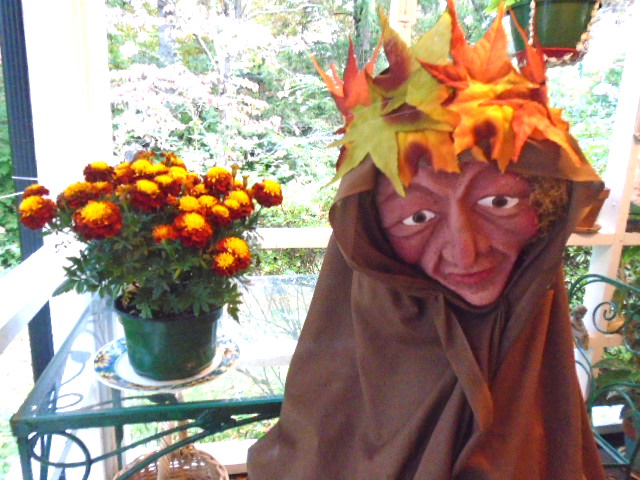
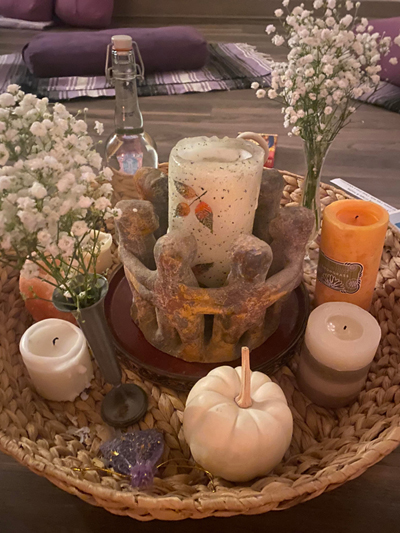
The Cailleach is a Celtic Ancestor-Goddess, a Divine Hag, a Crone who controls the winter winds in the far reaches of remote places. Living in the still-wild mountains of Western North Carolina, I’ve found it is easy to conjure up the Cailleach rising up through a rhododendron “hell.” She certainly took my breath away, and captured my consciousness, when I wrote this poem in 1995. Some years later, Lisa Sturz of the Red Herring Puppets created for me the eight-foot tall, wearable Grandmother puppet you see here. She has appeared in a number of my theater productions to the Goddess, while the poem was being dramatically read, with improvised music on the psaltery. Grandmother is happy to be coming out of my basement once more, for the Samhain service at our Unitarian church here in Black Mountain.
A few weeks back, author and historian Jemar Tisby tweeted that an acquaintance of his “described their general experience with white evangelicals as ‘people who don’t have any questions.’ I immediately knew what they meant.” The tweet gained some traction, with 62.1k “likes” at the time I’m writing this. The next week, Tisby followed up with a thoughtful reflection piece, expanding on his own experience with white evangelicals needing to have answers to every question, from “How old is the earth?” to “How should Christians vote?” Tisby unpacks the dangers of this kind of arrogant certainty, inviting Christians instead to embrace mystery, curiosity, and learning.
I resonate with many of Tisby’s observations and reflections. From my experience (including thirteen years in evangelical churches and a Master of Divinity degree from an evangelical seminary), I wouldn’t say these things are true of every single white evangelical—but they’re definitely true enough of the movement as a whole that they are very much worth naming, engaging, and challenging. I appreciate Tisby’s work.
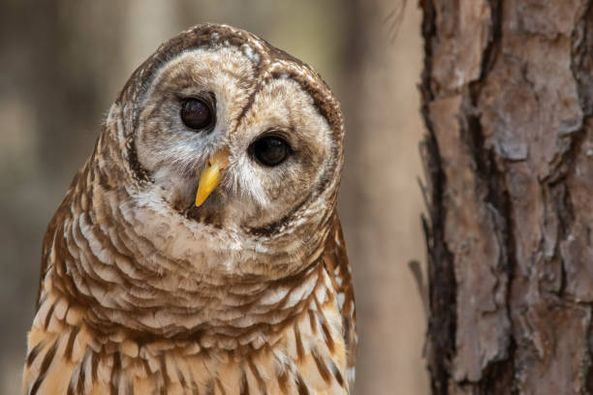
Throughout these years that I have focused on animals and their spiritual meanings – often in ways that relate to goddesses – I’ve heard from many people about their own encounters with animals. It seemed that for me animals mainly showed up in images and words. But now different animals have been showing up in my life while out in nature.
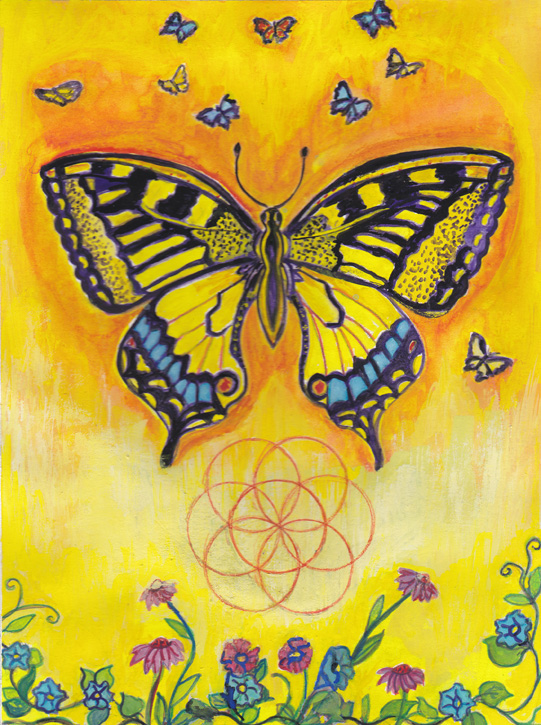
This past summer I was visited by Butterfly. A large Yellow Swallowtail graced my yard for several days on several occasions – a positive sign of ongoing transformation. In September a big colorful swallowtail caterpillar was chomping away at a parsley plant in my herb garden. Not long after a Black Swallowtail appeared with more Butterfly messages of joy and transformation.
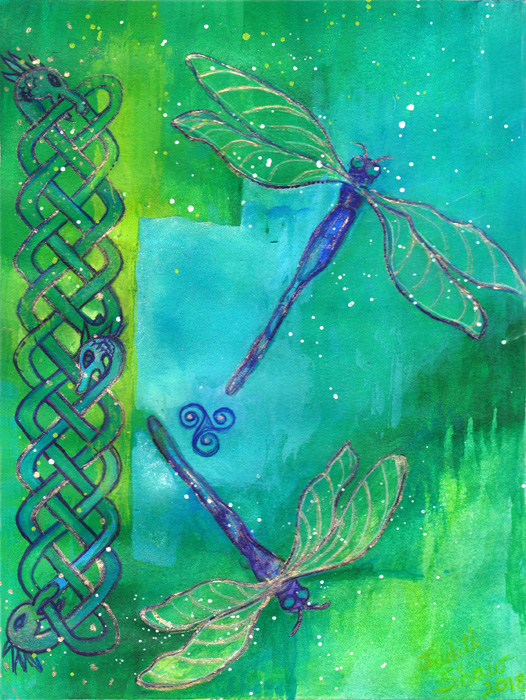
Butterfly – Soul Transformation by Judith Shaw
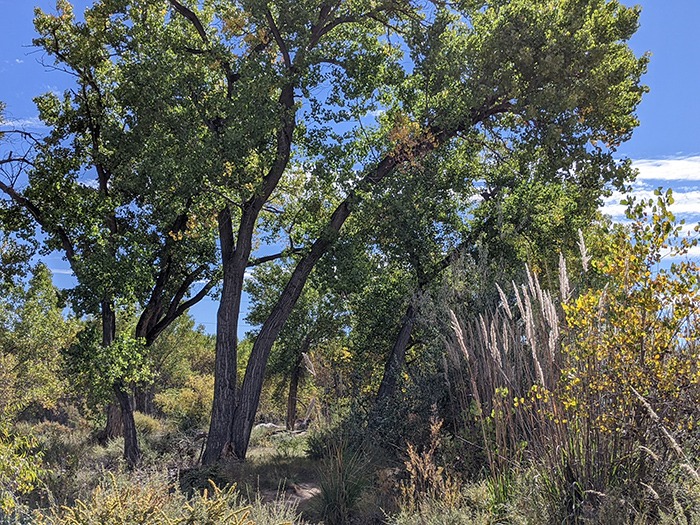
Recently I lost that positive feeling of joy and the promise given by transformation – feeling instead a sense of stagnation, of not having achieved my goals and wondering what I needed, to create change and revitalization. With no answer in sight, I activated my go-to cure for the blues – a bike ride in the Bosque – Albuquerque’s cottonwood forest growing along the Rio Grande.
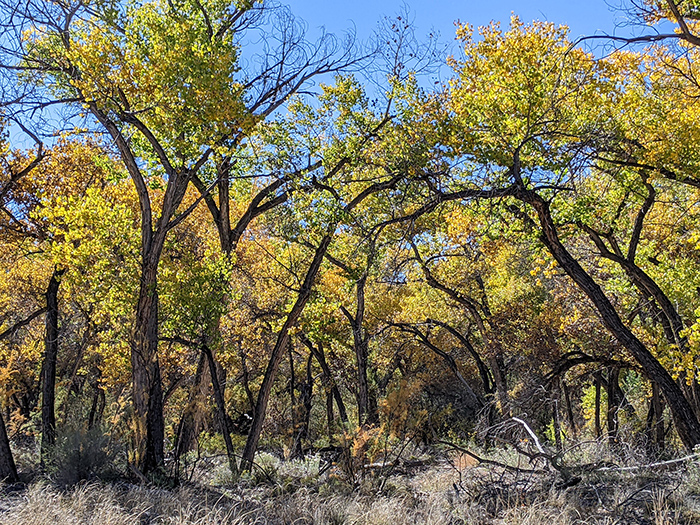
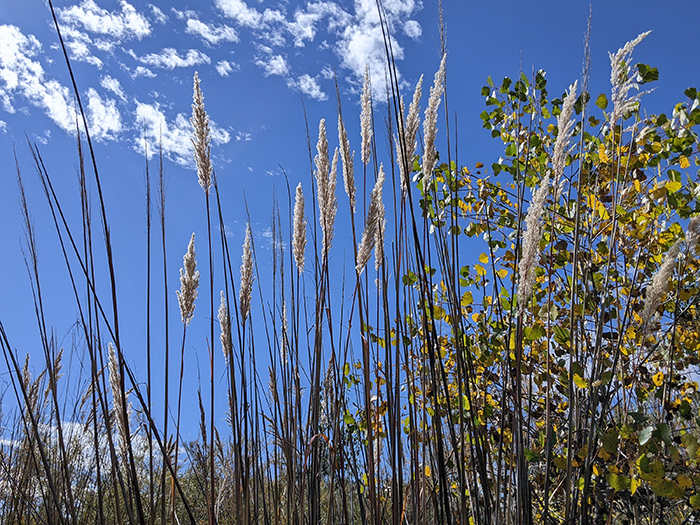
It was a glorious autumn day in the cottonwoods – hues of green turning, turning turning into orange, yellow, gold – sun-white grass heads shimmering in the sun, framed by a deep turquoise blue sky.
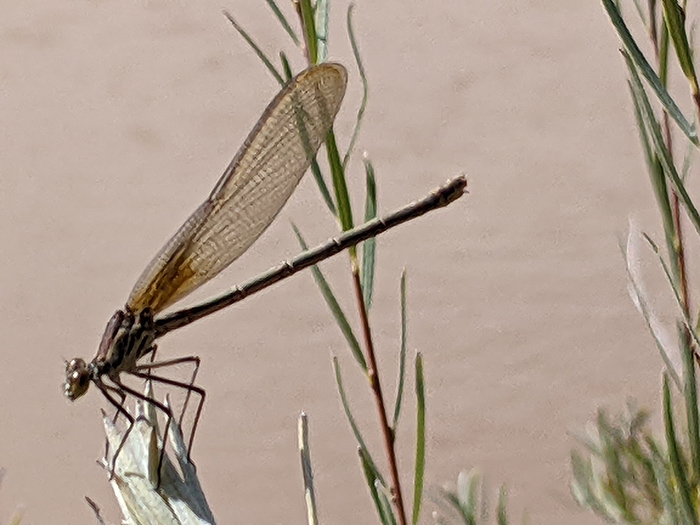
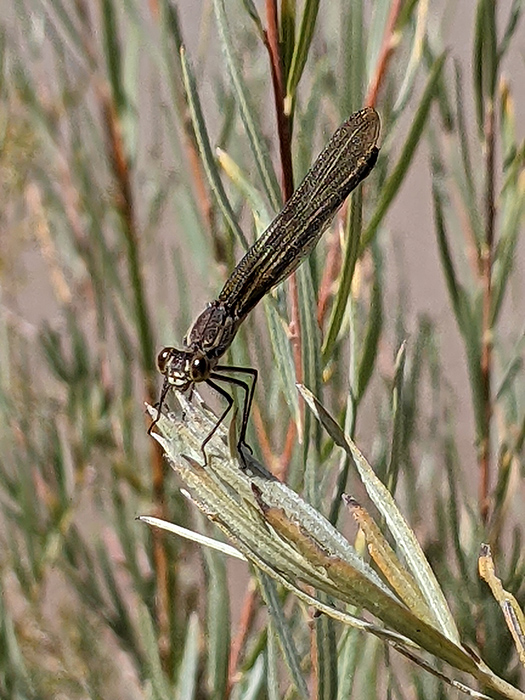
Stopping by the river, Dragonfly lit on a stalk of grass, swaying over the water. It remained. I photographed it – moved in closer. It remained. Breathe… wait…. look…. It remained. Suddenly Dragonfly darted – up, down – left, right – circled round – quickly, quickly and then returned to the stalk. It remained. Same sequence repeated ending on the stalk.
Still it remained. I spoke with Dragonfly while gazing at its huge eyes. Eyes that lead to true sight. “Dragonfly,” I said “Show me the way to a positive transformation, give me a sign. With your true sight lead me to an answer, a resolution to my dilemma.”
I repeated these words several times as Dragonfly remained – a few times flitting about – yet always returning. Dragonfly was still perched on its stalk when I finally moved on.
Returning to the cool shadows under the trees, I trekked along. Arriving at a spot where the trees opened up to the banks of the river was a downed tree – a good spot for a river view.
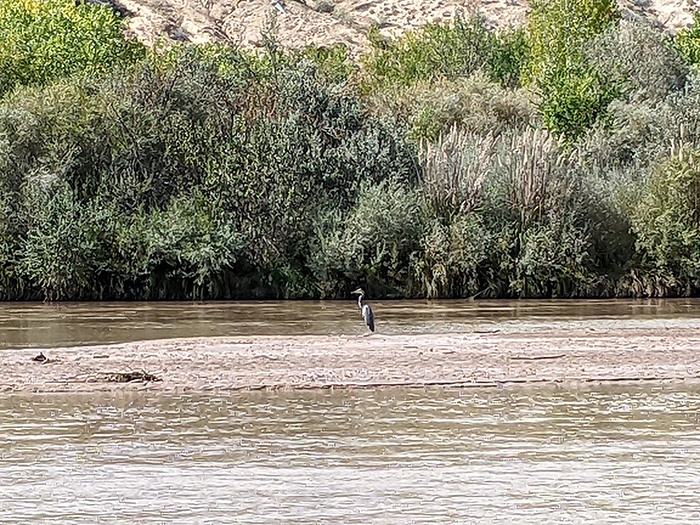
Shortly I noticed a lone bird, standing tall on a small island in the far side of the river It stood and it stood – same position – same spot. It was tall like a crane – many are arriving now. But no, something was different – it wasn’t a crane. It was grayer with fringe-edged feathers around its neck. With the help of my phone camera I discovered it was a Great Blue Heron. I was amazed!
“Ah ha!” I thought. “So this is my sign. Blue Heron has the wisdom I need now”
Not yet having investigated Great Blue Heron I had to wait until I got home to my computer and the wealth of information on the internet. What I discovered was not what I was hoping for.
As I had been struggling with what I needed to instigate the changes wanted, all I could focus on was who to connect with, what action to take, what project to start…. But Great Blue Heron delivered a completely different message.
Blue Heron brings messages of solitude, of standing still and waiting patiently for what you need to come to you. This is how Blue Heron hunts. Blue Heron encourages calm while watching for opportunities to arrive. Blue Heron says that only after calmly waiting, will opportunity arrive – which you must catch quickly or it will disappear.
Dragonfly, embodiment of transformation and true sight, led me to Blue Heron who then informed me that my usual way of doing and fixing and forging ahead would not work. Blue Heron called me to stop, to remain in my solitude and to wait. Now I can only trust that with patience and quiet meditation I will be able to flow with all of the forces active at this time and the path to the realization of my goals will become clear.
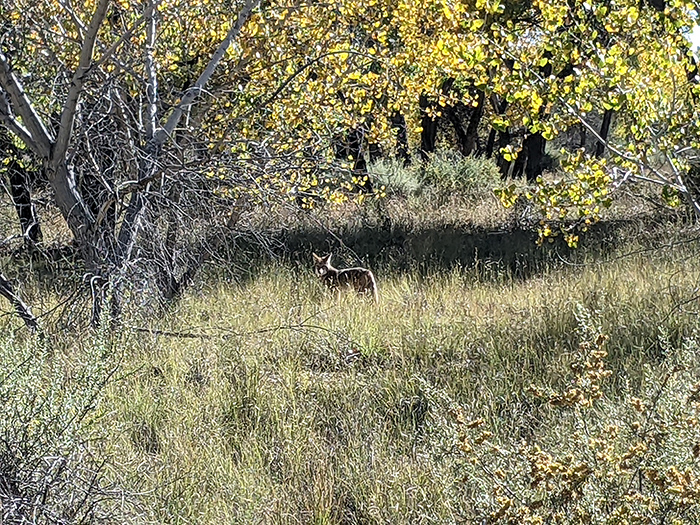
A week later, while on a bike-riding break from working on editing the stories for the Animal Wisdom deck, Coyote popped up in my path a mere 25 feet away before hightailing it across the way. I suppose I should expect the unexpected in this time of calm waiting.
I hope you too can find meaningful messages from the animals that appear in your life – messages that help rediscover the wisdom of our ancestors and support the reemergence of the feminine principle in your life.
Judith Shaw, a graduate of the San Francisco Art Institute, has been interested in myth, culture and mystical studies all her life. Not long after graduating from SFAI, while living in Greece, Judith began exploring the Goddess in her art. She continues to be inspired by the Goddess in all of Her manifestations. Originally from New Orleans, Judith makes her home in New Mexico, The Land of Enchantment.
One of the aspects of feminism that really disturbs me is the SILENCE around aging. Reflections on our personal lives are a critical piece that can help women to deal with this inevitable process. Oh, we write about the “wisdom” of the crone, the powers of the “Old Ones”, but we don’t share the poignant, dark, or terrifying aspects of personal aging leaving women without female empathy and companionship when we need it most. I am committed to breaking this silence. My birthday poem speaks to the pattern that lies behind my life and how it determined to an extent how I have lived. Chosen or not.
We come out of a culture that believes that each person has ‘free will’ and therefore the choices we make are our own. I challenge this concept because my life experience has taught me otherwise. Within the constraints of the patterns we live we do have choices. So this is a “both and” approach. Coming to terms with constraining patterns can be painful, but only then can we make choices that allow us to make peace with our lives.
Not too long ago I heard someone deride members of a seminar who were building labyrinths in the olive groves of Greece as “a bunch of tree-huggers.” I bristled! I probably first heard of the Chipko tree-hugging movement which is led by women in the 1970s and 1980s. Because I love nature, I naturally assumed hugging trees is a good thing. Originally, I had no idea that the tree-hugging movement was about much more than saving trees from being felled in the interests of short-term profit.
I did not know that the deeper purpose of the movement is to save a way of life based on forest-culture that is being threatened by the imposition of western ideas and practices promoted by colonialism and its successor, the green revolution. Nor did I know that the traditional forest-culture of India is the provenance of women: more than 4000 years of observing and experimenting created a “women’s knowledge” passed down from mother to daughter.
In January of this year, I put out the call for a Sacred Circle at a local Healing Arts Center. Over 150 people responded interested from a Facebook invite. Thirteen showed up.
From strangers, we have become friends and a community.
One was on the verge of checking herself in to a rehab.
She celebrated six months sobriety the other month in Circle.
We’ve had our share of potential drama. Egos and self-esteem issues and the potential pitfalls of being human. But we’ve made it through. Returning again and again to love to hope to dreams.
We’ve watched each other change and grow and open up.
A Modern Pilgrimage to the Isle of Lewis & Harris, Part 2
In the previous post of October 14th, I introduced my recent pilgrimage to meet the Goddess, honour the physical and psychological changes that have happened inside me recently. I described the different mountain ranges that resembles the bodies of sleeping women, and an ancient well dedicated to the Celtic goddess Brighde.
If I was traveling over the body of the goddess, the Callanish Standing Stones would be her navel. It seems as if energy is flowing out from there to all edges of the island. The shape of the site resembles a Celtic cross. Unusual is that the site consists of one large, central standing stone, surrounded by 13 stones, and with stone avenues to the cardinal directions. With its solar alignment, paraphrasing Jill Smith, the configuration looks like a cosmic dancer who juggles the sun from east to west. The “arms” are aligned exactly with the sunrise and sunset at this time of year.
Model of the Standing Stones as seen from above, in Callanish Visitor Centre
Callanish 1, the main stone circle, is connected to 11 other sites across the island, some circles, some solitary standing stones. Together they are called the Callanish Complex. I visited Callanish 1 many times that week, and I was lucky to spend the Autumn Equinox there.
I’ve never come across stones that were so alive and expressive. Light would bounce off differently at different times of the day, accentuating irregularities, dulling, or sharpening edges, emphasising different aspects. I saw lion and wolf heads, young maidens, hooded wanders, gargoyle and dragon-like creatures, dolphins and even a Horned Dancer… Most importantly, it felt like in each of the stone circles in the area (Callanish 1, 2, 3, 4, and 8), there was at least one stone resembling a woman’s body, and I came to think of them as the Grandmother Guardians. They had a real living presence, that became even stronger as the day-visitors disappeared.
Usually there were 2-5 people there, sometimes I found myself alone. The sunset of the Equinox, however, drew many more people. There were about twenty tourists, who were taking snapshots of this magnificent light show, leaning, or pushing against the stones, talking, and giggling. Several professional photographers tried to capture a magical moment. And there were 5-7 fellow pilgrims, whom, like me, would stay long into the night. Everyone was so focused on the sunset, was I the only one who noted the rainbow in the east?
The below images were literally taken a minute apart – rainbow to the east, sunset and silhouettes to the west.
Rainbow during the Sunset at Callanish 1, on the Autumn Equinox, September 22, 2022Sunset at Callanish 1, on the Autumn Equinox, September 22, 2022
Eventually the tourists and photographers disappeared, and the rest of us gathered at the heart of the circle, in the remains of an ancient burial mound. With African and shamanic drums, a whistle, a singing bowl, an old man tapping his walking stick to the bottom of his tin mug, and some rattles, we improvised a rhythmic invocation to the spirits of the stones. With the rain becoming heavier, I soon found myself alone with the stones. Now I could finally sing, dance, weave between the stones without disrupting anyone, lean into the stones, close my eyes, and pray.
I felt very aware of the ‘balance’ in the year, the point of equally long days and nights. I asked for guidance on balance in my own life: between work and leisure, between doing and resting, between the first and second half of my life, between gathering wood for the fire and sharing it, between birth and death, and how I can better look after my body and energy living with an invisible auto-immune condition in these fast and demanding times.
After the rain departed, the clouds tore open, revealing the clearest and most brilliant night sky I’ve ever seen. The silhouettes of the stones reaching up into the night was truly magnificent. Moving, weaving, pausing, I made my way clockwise around all the 13 stones in the circle. I stood at either side of the stones, outer and inner, and took my place in between them, as if I was a moving stone myself. I reflected on centre and circumference, on axis, on direction, on the wheel of life, turning, turning, turning, turning… and felt connected to similar circles across Europe lighting up in the darkness, as a radiant hub of energy-places.
Photo Collage: Impression of Night Sky, by Eline Kieft October 1, 2022
After having completed my weaving of the circle, by which time I had enjoyed half of my ginger tea for a warm kick, I decided to return to our cottage – also an act of balance. Having a cold already, I did not quite have the proper gear to stay out in the windy and rainy night. My lovely bed was calling! On my way home I saw three deer next to the road. I stopped the car and could be with them for several moments before they wandered off.
I had been so attuned to the rhythms that I woke up well before the alarm. I laid in the comfortable darkness, until it was time to return to the stones to witness the sunrise. My mom came along this time. Again, there were several photographers ready for ‘the moment’ (no tourists at this hour!). I just HAD to dance, and chose my spot at the far western end, out of line of any cameras. A dance of ground, earth, mountain, honouring the mother and my mother, weaving the light, the turn of seasons, changing, praying, calling, giving thanks, celebrating, welcoming, and letting go. Strong, soft, vibrant, still…
Both Images of Sunrise at Callanish 1, on the Autumn Equinox, September 23, 2022
Standing against the central menhir, looking east, we finished the last of the ginger tea. So special to be able to share this together. Mother and daughter in a circle of ancient Grandmother Guardians, witnessing the sun rise on a new day. Sacred land, ongoing cycles of time, and a modern-ancient pilgrimage…
It will take many moons to fully digest and integrate the richness of this journey, but I already know this precious experience seeped deep into my bones.
May the magic of the land touch you too, wherever you are.
Mother and Daughter – this photo was in fact taken at another moment, against another stone, mid-afternoon on 22nd…
I’d love to invite you for my series of Embodied Spirituality Masterclasses that are going to start today, 21st October! Have a look if you’re interested in reconnecting body and spirit, re-anointing the body as sacred, nature as a temple, contemporary ceremony and much more… You can still join until Christmas, so don’t worry if you can’t make the first session live, it will be available in replay!
Jill Smith is a deep well of goddess lore on Lewis:
Mother of the Isles (2003)
The Callanish Dance (2000)
Bio
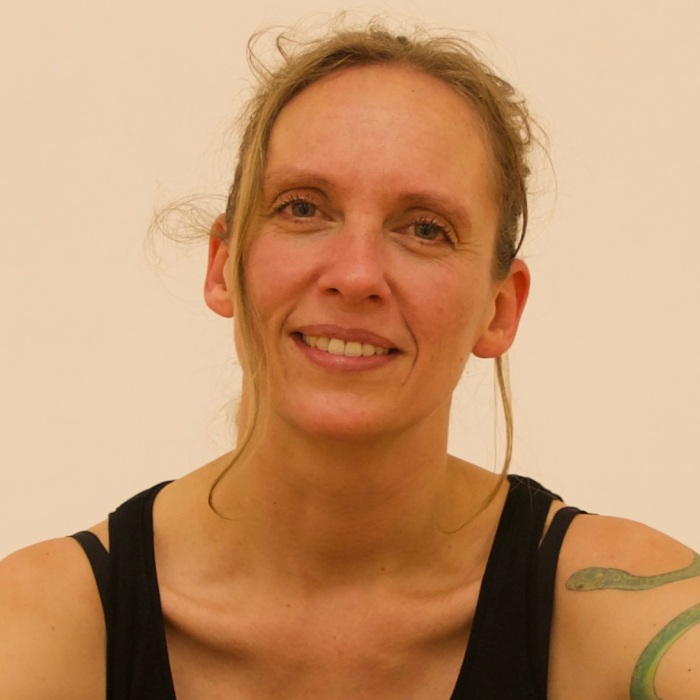
Eline Kieft danced from a young age, including rigorous classical and contemporary training to become a professional dancer. She then studied anthropology, deepening her fascination with worldwide similarities between indigenous traditions regarding intangible aspects of reality and other ways of knowing, including embodied epistemologies and shamanic techniques.
She completed her PhD in dance anthropology at Roehampton University, trained in depth with the Scandinavian Centre for Shamanic Studies and the School of Movement Medicine. Eline worked at the Centre for Dance Research (C-DaRE) at Coventry University for five years, where she created a Somatics Toolkit for Ethnographers, and pioneered soulful academic pedagogy. Her recent book Dancing in the Muddy Temple: A Moving Spirituality of Land and Body was well received as a unique blend of theory and practice and a medicine for our times.
She is now a full-time change-maker and facilitates deep transformation through coaching and courses both online and in person. Her approach The Way of the Wild Soul offers a set of embodied, creative, and spiritual tools to re-connect with inner strength and navigate life’s challenges with confidence.
In the past two years, I began a project which I call biblical poetry. I had been doing my own translations of biblical verse based on the hieroglyphic meanings of Hebrew words. Ancient Hebrew or Semitic Early writing grew out of the hieroglyphs of Egypt. Since hieroglyphs are pictures, we are able to use the rebuses or picture puzzles to glean the original or at least older meanings of words. I have begun to see these a route to interpreting meanings from before the dawn of patriarchy. This door to understanding appeals to my religious/spiritual/feminist sensibilities. At first, I attempted to stay somewhat true to the well-known meanings as they have come down through the ages. When I began my poetry project, I broke out of that structure to reveal the more mystical/shamanic/pagan meanings that I find beneath the words. At the bottom of this post, I have links to a few of my past biblical poetry posts.
The bible is quite large, so this is an encompassing project with lots of material to explore. This month, I wanted to take a look at how the concept of beauty is treated in the bible. The word for beauty is yaphah. Yaphah can also mean miracle and wonder as well as beauty. Let’s stop for a minute to unpack that. When we think of the word beauty in our culture, the thought is generally about how someone looks (unusually a female someone). But just the Hebrew word alone broadens the meaning. If beauty is someone or something that is wondrous and has miraculous qualities than it goes well beyond cultural standards of how someone looks. If you love someone, they would be beautiful to you because they would be wondrous. Biblical usages and translations tend to focus on beauty, mostly women, sometimes cows (yep cows) and a few handsome men in the mix. But I found that yaphah doesn’t have to be a vision that relies on one’s eyes.
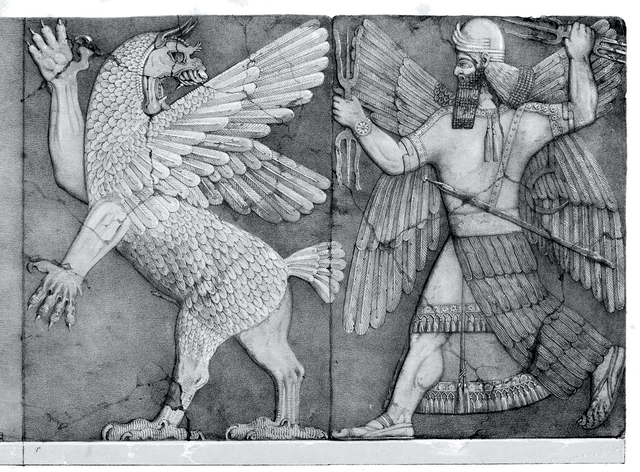
Last night I found myself crying over Tiamat. Tiamat is one of the most ancient Babylonian Creatress Goddesses. She is known as the Goddess of the Salty Sea and is considered the primordial Creatress in Sumerian religion. Tiamat was slaughtered in the vilest of ways to demonstrate the death of the Goddess and the rise of the God. She was defiled and written about in such a way as to discredit women and provide justification for the slaughtering, defiling, and enslavement of “enemy” women abroad and “bad” women at home.
As I was reading Carol Christ’s Rebirth of the Goddess, I found myself shaken to the core at the ways in which Tiamat was defiled and destroyed in the “epic” called the Enuma Elish. As someone who is well aware of the ways in which the Goddess and women have been usurped throughout time and space, I was still so broken down after reading it that I had an actual ugly cry in my living room. I want to tell you to read the Enuma Elish to understand why I feel this way, but I also want to warn you about the way you might feel afterwards. It is a difficult read.